Choose the best cardio machine for home by space, joints, noise, budget, subscription risk, and realistic weekly use.
- Pick by space, joints, noise, subscription tolerance, and repeatability.
- Bike or walking pad fits most homes; rower wins for compact full-body conditioning.
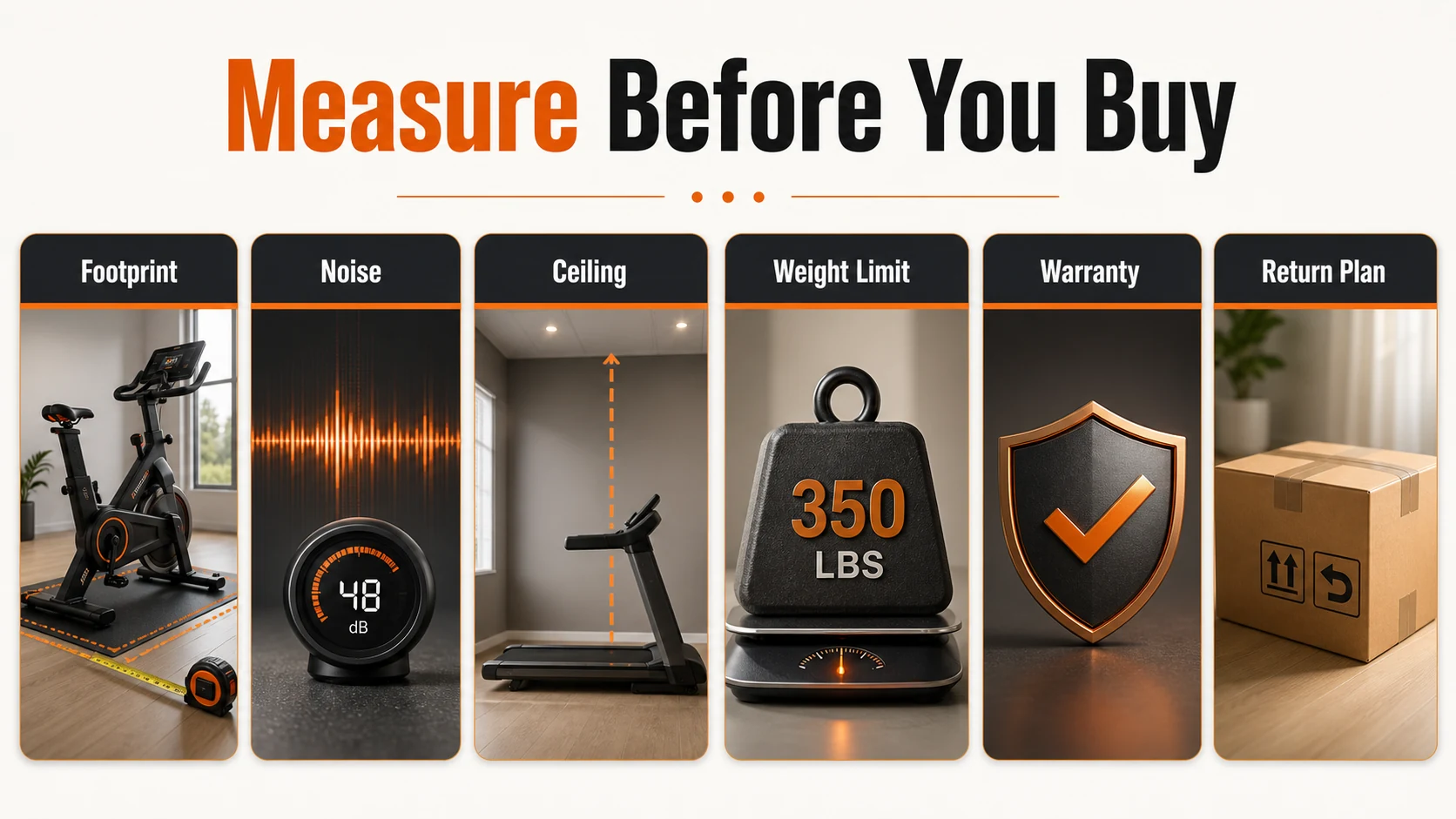
- Measure footprint, ceiling clearance, weight limit, warranty, and return logistics before buying.
Bottom line The right cardio machine should remove friction from your week, not create another room problem.
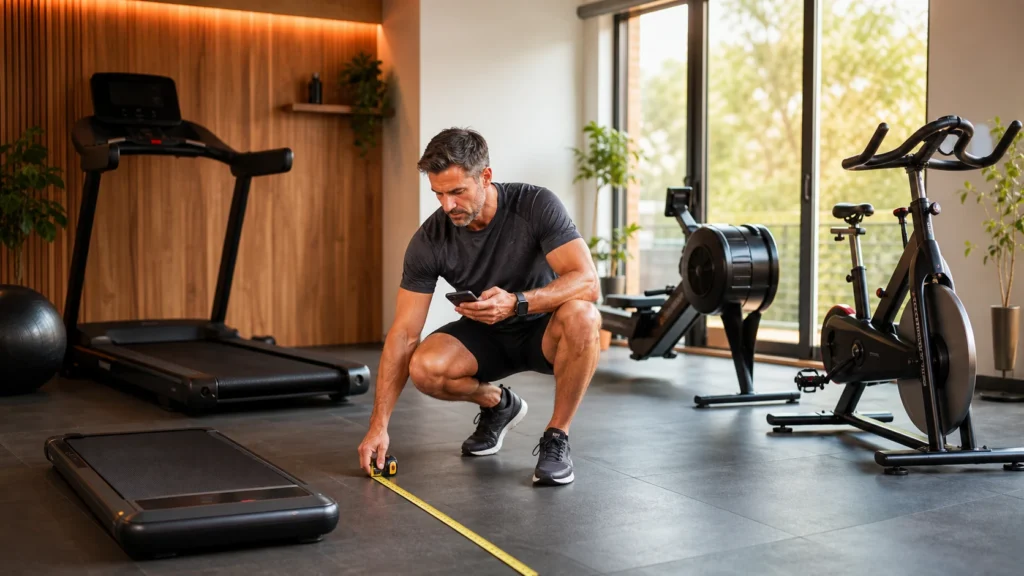
The best cardio machine for home is not the machine that burns the most calories in a lab chart. It is the machine that fits your room, joints, noise limits, budget, subscription tolerance, and weekly schedule well enough that you actually use it.
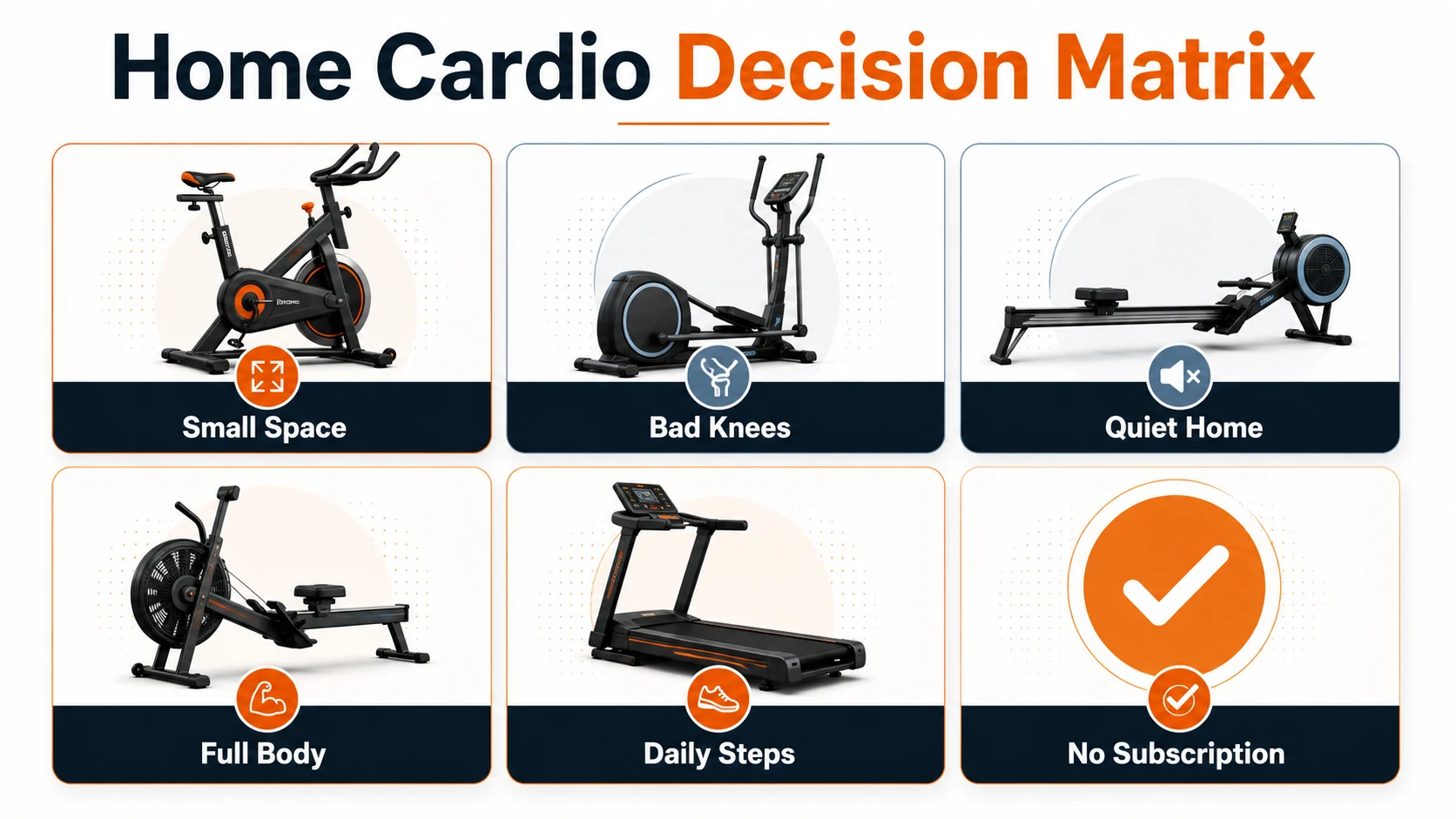
For many homes, that means a bike, rower, or walking treadmill before a huge screen-heavy machine. For bad knees, start with a bike or elliptical. For full-body conditioning, compare a rower with an air-bike style option. For daily step volume, a walking pad or treadmill may beat everything else.
Quick Summary: best cardio machine for home
- Best for most homes: a quality exercise bike because it is quiet, low-impact, and easy to repeat.
- Best full-body machine: a rower, especially if you want intervals and compact vertical storage.
- Best for daily steps: a walking pad or treadmill, depending on whether you need walking only or real incline/run capacity.
- Best for bad knees: recumbent bike, upright bike, or elliptical before running impact.
- Do not buy before measuring: footprint, noise, ceiling clearance, max user weight, warranty, and return logistics.
Most cardio-machine guides rank equipment like trophies. That is backwards. The machine only matters if it removes friction from your week.
The practical target is not punishment. The CDC adult activity guidance points most adults toward repeatable weekly aerobic work plus strength training. Your home machine should make that easier, not make your room look like a showroom.
Best Cardio Machine by Real Buyer Scenario
Start with your constraint, not the product category. A great treadmill is still a bad buy if the room is too small, the floor is too loud, or you only wanted low-friction walking during calls.
Exercise bike. It is quiet, low-impact, and easy to use for 20 to 45 minutes without setup drama.
Walking pad or folding bike. Storage and noise matter more than maximum training ceiling.
Recumbent bike, upright bike, or elliptical. Avoid assuming running impact is mandatory for fitness.
Walking treadmill or bike. The winner is the machine you can repeat while managing food, sleep, and recovery.
Rower. It is compact, measurable, and powerful when technique is clean.
Simple rower, basic bike, or treadmill with useful manual controls. Do not buy a screen you will not pay to use.
Treadmill vs Rower vs Bike vs Elliptical vs Walking Pad
If the low-impact elliptical route already fits your needs, use the dedicated best elliptical machine for home guide to compare stride length, room fit, step-up height, warranty, and ownership costs.
| Machine | Best for | Watch out for | Home fit | PrimeForMen verdict |
|---|---|---|---|---|
| Exercise bike | Quiet Zone 2, low-impact sessions, comeback training. | Saddle comfort, bike subtype, boredom, app costs. | Excellent for apartments and shared homes. | Best first pick for most homes. |
| Walking pad | Daily steps, home office, low-friction walking. | Short deck, lower speed, no incline/run capacity. | Excellent if storage is the main issue. | Best for movement volume, not athletic training. |
| Treadmill | Walking, incline work, run/walk intervals, runners. | Noise, deck size, motor, delivery, returns. | Best with a dedicated corner, garage, or basement. | Best when walking/running is the habit you will repeat. |
| Rower | Full-body intervals, compact storage, measurable conditioning. | Technique learning curve, fan noise on air rowers. | Good when vertical storage is possible. | Best conditioning machine if you respect technique. |
| Elliptical | Standing low-impact cardio, longer moderate sessions. | Stride length, ceiling clearance, big footprint. | Better for dedicated rooms than tiny apartments. | Best low-impact standing option. |
| Stair stepper / air bike | Hard conditioning, short sweat-heavy sessions. | Noise, joint tolerance, high effort, poor beginner fit. | Specialist choice, not the default first machine. | Buy only if you already like that pain profile. |
Amazon.com Picks: Home Cardio Machines Worth Comparing
Disclosure: This guide includes Amazon affiliate links. PrimeForMen may earn a commission if you buy through them at no extra cost to you. These picks are category anchors, not guarantees that one model fits every body, room, or budget.

Treadmill pick
Horizon Fitness 7.0 AT Treadmill
Best when walking, incline work, and run/walk intervals are the main reason you want a machine.
- Better fit for runners than a tiny walking pad.
- Check deck size, folded footprint, ceiling clearance, and delivery weight.
- Good option when you want treadmill training without building the whole room around a huge screen.

Rower pick
Concept2 RowErg
Best for full-body conditioning, intervals, and a durable no-nonsense machine that stores upright.
- Strong benchmark for repeatable row intervals and simple progress tracking.
- Stores vertically, which helps if floor space matters.
- Skip it if you refuse to learn rowing technique first.

Low-impact bike pick
Schwinn 230 Recumbent Bike
Best when knee comfort, seated support, and quiet Zone 2 work matter more than standing sprints.
- Recumbent position can make longer easy sessions more tolerable.
- A good fit for TV, podcasts, heart-rate-zone work, and comeback training.
- Measure length carefully; recumbent bikes are not always as compact as they look.
Walking pad pick
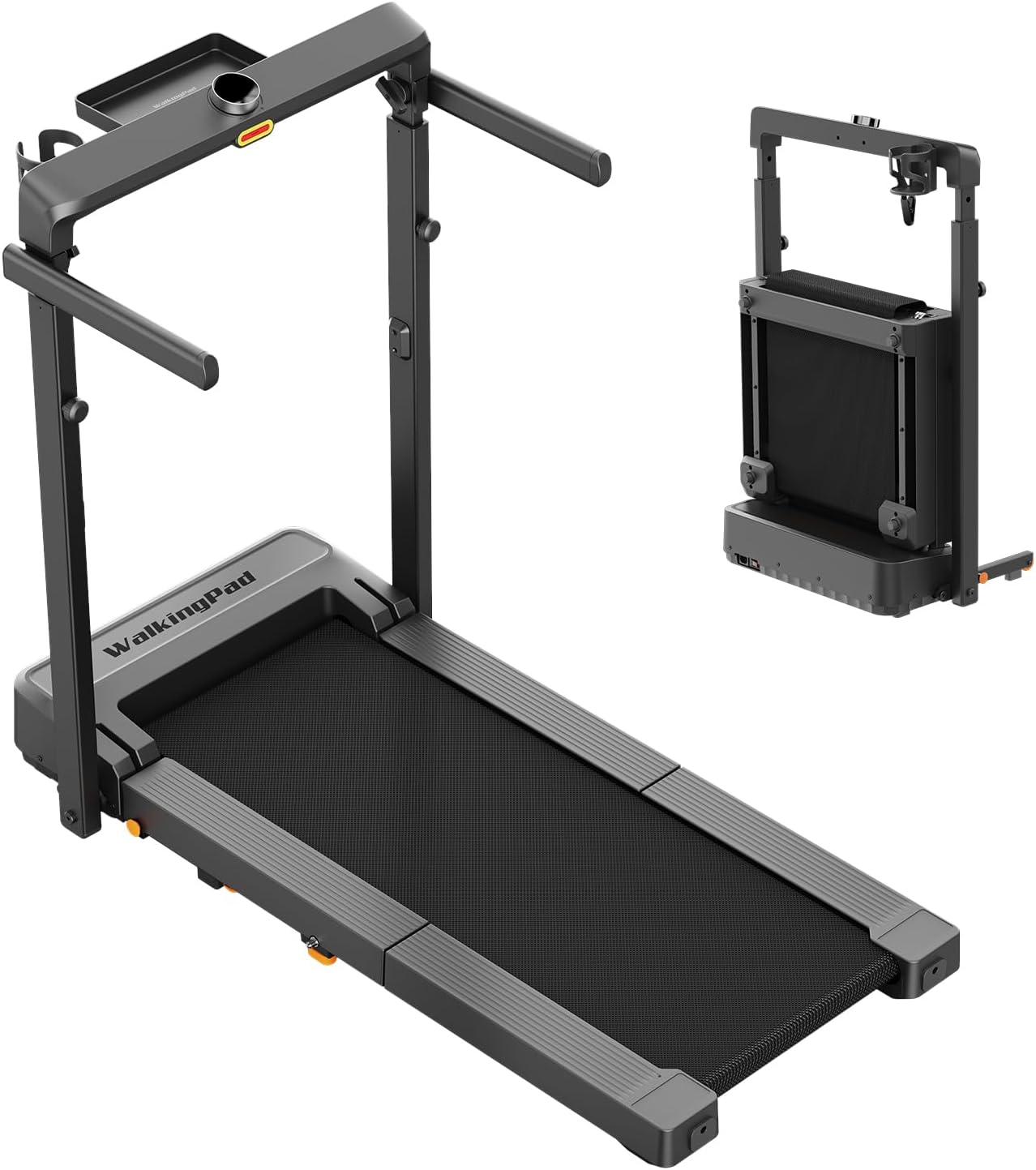
WalkingPad C2 Foldable Walking Pad
Best for home-office steps and low-friction walking volume, not serious running.
- Useful when daily steps are the bottleneck and storage is limited.
- Works best for walking blocks, calls, and desk-adjacent movement.
- Do not buy it as a substitute for a stable running treadmill.

Elliptical pick
SOLE E25 Elliptical
Best when you want standing low-impact cardio and do not want treadmill impact.
- Good category fit for low-impact steady work without sitting.
- Stride feel, ceiling clearance, and assembled footprint matter more than photos.
- Better for dedicated spaces than rooms where the machine must disappear after use.
*Check current price, delivery, warranty, return window, assembly requirements, and what features work without an ongoing subscription before buying.
Exercise Bike Types: Do Not Treat Bike as One Category
An exercise bike is often the best cardio machine for home because it is quiet and repeatable. But the subtype matters.
| Bike type | Best for | Skip if | Buying note |
|---|---|---|---|
| Upright bike | Compact Zone 2, simple cardio, small rooms. | You need back support or class-style standing rides. | Check seat adjustability and stability. |
| Recumbent bike | Knee comfort, back support, longer easy sessions. | You want aggressive cycling feel or standing climbs. | Measure total length; recumbent frames can be long. |
| Indoor cycling bike | Classes, intervals, strong ride feel. | You hate saddle pressure or subscriptions. | Check app dependency and shoe/pedal setup. |
| Air bike | Hard intervals and conditioning. | You share walls or want quiet Zone 2. | Very effective, very loud, not relaxing. |
| Folding bike | Budget, storage, occasional easy sessions. | You are tall, heavy, or train hard. | Check max user weight and wobble risk. |
Walking Pad vs Treadmill
A walking pad is a small-space movement tool. A treadmill is a training machine. The difference matters.
You want more daily steps, desk walking, quiet low-speed movement, and easy storage.
You want incline walking, faster walking, run/walk intervals, a longer deck, and more stability.
A cheap walking pad will not feel like a running treadmill. Buy for the session you will actually do.
Rower Types: Air vs Magnetic vs Water
Rowers are strong home-cardio tools because they combine legs, trunk, and upper body without needing a huge footprint. The resistance style changes the feel.
| Rower type | Feel | Noise | Best for |
|---|---|---|---|
| Air rower | Responsive and performance-oriented. | Moderate to loud. | Intervals, metrics, athletic conditioning. |
| Magnetic rower | Smoother and more controlled. | Usually quieter. | Apartments and steady sessions. |
| Water rower | Heavier, smoother pull feel. | Water sound plus mechanical noise. | People who like the feel and furniture-like look. |
The Home Fit Matrix: Footprint, Noise, Ceiling, Storage
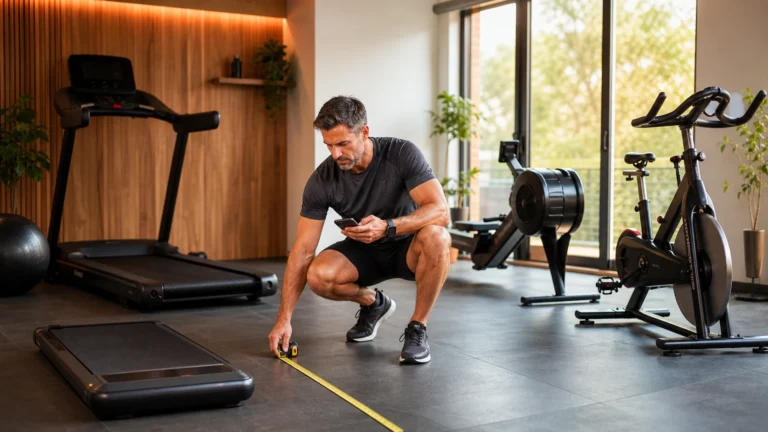
Before buying any home cardio machine, measure the room as if the return will be difficult, because it often is.
| Machine | Footprint | Noise risk | Storage | Main warning |
|---|---|---|---|---|
| Exercise bike | Low to medium | Low with magnetic resistance | Usually manageable | Saddle comfort and subtype matter. |
| Walking pad | Low | Low to medium | Excellent | Not a running treadmill. |
| Treadmill | High | Medium to high | Medium if folding | Deck, motor, weight, and return logistics. |
| Rower | Medium | Air louder, magnetic quieter | Good if vertical storage works | Technique comes first. |
| Elliptical | Medium to high | Low to medium | Weak | Stride and ceiling clearance. |
| Air bike | Medium | High | Medium | Apartment-unfriendly fan noise. |
Specs That Actually Matter Before Buying
Product photos hide the details that create regret. Use this checklist before any serious purchase.
Belt size, motor, max speed, incline, deck cushioning, max user weight, folded size, warranty.
Speed range, deck length, folded height, remote/app control, weight limit, motor noise.
Bike subtype, resistance style, seat adjustment, handlebar reach, flywheel feel, app dependency.
Resistance type, rail length, storage position, monitor, seat comfort, technique learning curve.
Stride length, step-up height, ceiling clearance, handle feel, assembled footprint, warranty.
Delivery type, return window, restocking fee, floor protection, plug access, and service support.
Subscription Costs and Locked Features
Connected cardio can be useful when it keeps you training. It can also make a machine less useful if key features depend on a subscription you stop paying for.
| Ecosystem / type | Risk | Recommendation |
|---|---|---|
| iFIT / NordicTrack / ProForm | Some premium workouts, screens, and coaching features can be subscription-driven. | Confirm what works without the membership. |
| Peloton-style bikes/treads | Class experience is the main draw and the ongoing cost is part of the purchase. | Buy only if classes are the reason you will train. |
| Hydrow / connected rowers | The content ecosystem may be the core value. | Price the subscription into the real cost. |
| Simple rower / basic bike | Less entertainment, fewer guided programs. | Good if heart rate, TV, podcasts, or self-programming are enough. |
What Most Cardio Machine Guides Miss
The machine is not the plan. A $2,000 treadmill cannot fix vague programming. Before buying, write down the exact weekly use case: three 30-minute Zone 2 rides, two 20-minute row intervals, five 25-minute incline walks, or four workday walking blocks.
If you cannot name the weekly use, you are shopping for motivation instead of removing friction.
Weight Loss Reality Check
Do not choose a cardio machine by calorie-burn charts alone. For fat loss, the best machine is the one that helps you repeat weekly minutes while keeping joints, recovery, and motivation intact.
A treadmill can build walking volume. A bike can make low-impact Zone 2 easier. A rower can create efficient conditioning. An elliptical can reduce running impact. The machine helps the habit. It does not replace nutrition, strength training, sleep, or recovery.
Heart Rate Zones: Make the Machine Measurable
If you are choosing a machine for Zone 2 or interval work, pair the decision with heart-rate control. The American Heart Association target heart-rate guidance is a practical starting point, and our heart rate monitor guide explains the gear side.
4-Week Starter Plan by Machine
| Machine | Week 1 | Week 2 | Week 3 | Week 4 |
|---|---|---|---|---|
| Bike | 3 x 20 min easy | 3 x 25 min easy | 2 easy + 1 interval day | 3-4 sessions, mostly Zone 2 |
| Treadmill / walking pad | 4 x 15-20 min walks | 4 x 20-25 min | Add gentle incline if available | Build one 35-45 min walk |
| Rower | Technique-only easy rows | 4 x 5 min with rest | 6 x 3 min controlled | 1 interval day + 2 easy technique days |
| Elliptical | 3 x 15-20 min easy | 3 x 25 min | Add one cadence-change day | 3-4 sessions, no joint flare-ups |
24-Hour Buying Protocol
Name the use case: steps, Zone 2, intervals, low impact, or runner fallback.
Measure footprint, ceiling, plug access, mat space, and storage path.
Read warranty, return, delivery, and subscription details.
Buy only if the same machine still solves the same weekly bottleneck.
Common Buying Mistakes
The hardest machine is not automatically the best machine.
Apartment-friendly on a product page does not mean quiet under your body weight.
Floor mats, shoes, fans, and clothing matter. See our sportswear guide and essential fitness gear guide.
A subscription ecosystem is useful only if it makes you train more often.
Compare deeper guides for treadmills, rowing machines, exercise bikes, and elliptical trainers.
Cardio is not the whole plan. Pair it with strength training basics.
How we chose these categories: We evaluated each machine by repeatability, home fit, noise, joint impact, training ceiling, user fit, ownership friction, subscription risk, and practical value. Product cards are editor-researched category examples, not hands-on lab ratings.
Conclusion: Buy the Machine That Reduces Friction
The best cardio machine for home is the one that makes your weekly minutes easier to repeat. If you want simple daily movement, choose a bike or walking pad. If you want full-body conditioning, choose a rower. If impact is the problem, choose an elliptical or bike. If you want walking and running, buy a treadmill only after you measure the room and accept the delivery/return reality.
Next Step: Build the Rest of the Home Setup
Once your cardio machine decision is clear, use the home gym equipment guide to build the floor, strength, storage, and recovery pieces in the right order.
Medical Disclaimer: This article is for general fitness education only and does not replace medical advice. If you have chest pain, dizziness, uncontrolled blood pressure, persistent joint pain, or a known medical condition, talk with a qualified clinician before starting or changing cardio training.
Affiliate Disclosure: Some links may be affiliate links. PrimeForMen may earn a commission from qualifying purchases. Recommendations are based on buyer fit, machine type, space, noise, joint impact, warranty signals, and practical training value.
Frequently Asked Questions About the Best Cardio Machine for Home
What is the best cardio machine for home overall?
For most homes, the best cardio machine is an exercise bike or a rowing machine. A bike is quieter and easier to repeat. A rower gives a higher full-body training ceiling if you are willing to learn technique.
What is the best cardio machine for weight loss?
The best machine for weight loss is the one that helps you repeat weekly cardio without beating up your joints or recovery. Walking treadmills, bikes, rowers, and ellipticals can all work when nutrition, strength training, sleep, and consistency are handled.
What cardio machine is best for bad knees?
Many men with knee concerns start with a recumbent bike, upright bike, or elliptical because those options reduce impact compared with running. Persistent, sharp, swollen, or worsening knee pain should be checked by a qualified clinician.
Is a walking pad better than a treadmill?
A walking pad is better for small spaces, workday steps, and simple walking volume. A treadmill is better for incline walking, faster walking, run/walk intervals, and users who need a longer, more stable deck.
Is a rower better than an exercise bike?
A rower is better for full-body intervals and power-based conditioning. An exercise bike is better for quiet low-impact cardio, TV-friendly sessions, and people who want the easiest habit to repeat.
Is an air bike better than a rower?
An air bike is brutally effective for short conditioning intervals, but it is loud and demanding. A rower is usually better for measurable full-body work with better storage and less fan noise, as long as technique is clean.
What cardio machine is quietest for apartments?
A magnetic exercise bike is usually the safest quiet pick. A magnetic rower or elliptical can also work. Running treadmills, air bikes, and stair steppers are riskier for shared floors and walls.
Which cardio machine takes the least space?
A folding bike or walking pad usually takes the least space. A rower can also work because many models store vertically. Ellipticals, stair steppers, and full treadmills need more permanent floor space.
Do I need a subscription for a home cardio machine?
No. A subscription can help if you actually use classes, coaching, or scenic workouts, but it should not be required for basic training. Check what works without iFIT, Peloton, JRNY, Hydrow, or another app before buying.
Which machine is best for Zone 2 cardio?
Exercise bikes are the easiest Zone 2 pick for many homes because they are quiet, low-impact, and repeatable. Treadmills, ellipticals, and rowers can also work when intensity is controlled with heart rate or breathing.
Which cardio machine is best for men over 40?
For many men over 40, a bike, elliptical, walking treadmill, or rower beats a punishment machine. The best choice protects joints, fits recovery, and supports weekly consistency alongside strength training.
How much should I spend on a cardio machine?
Spend enough to get stability, service support, and the resistance or deck quality you need. Cheap bikes can be fine. Cheap treadmills and ellipticals are more risky because frame feel, deck size, stride, and warranty matter more.
Should I buy used cardio equipment?
Used cardio equipment can be smart if you can inspect the frame, console, belt, resistance, noise, and service history. Avoid used machines with missing parts, locked screens, worn belts, or unclear return options.
What should I check before returning a heavy cardio machine?
Check return window, restocking fees, pickup requirements, original packaging rules, and whether delivery was curbside or room-of-choice. Heavy cardio machines can be expensive and frustrating to return.
Can one cardio machine replace strength training?
No. Cardio machines help aerobic fitness and conditioning. They do not replace progressive strength training, mobility, balance, nutrition, and recovery.