Fitness Trends for Men 2026: What Is Worth Following and What Is Noise
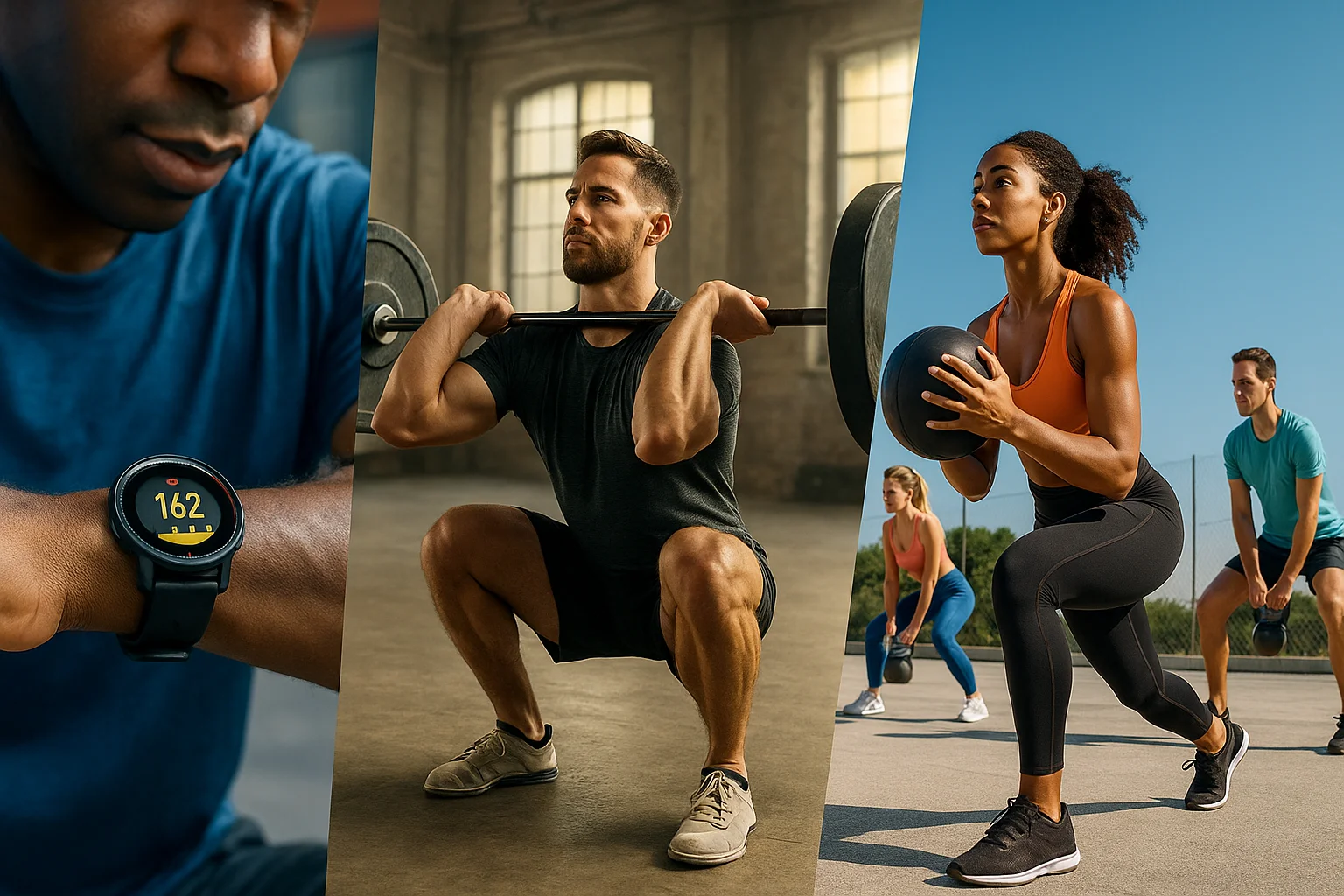
Fitness trends for men are useful only when they improve a real training decision: what to do, how hard to push, how to recover, and what to repeat next week. Wearables, AI fitness apps, active-aging training, hybrid workouts, and recovery tools can help, but only when they support the basics instead of replacing them.
Quick Summary: fitness trends for men.
- ACSM’s 2026 trend list puts wearable technology, older-adult fitness, exercise for weight management, mobile exercise apps, and balance/core work near the top.
- For men, the practical filter is simple: does the trend improve training decisions or only add noise?
- Wearables and apps are useful when they change behavior, not when they create data anxiety.
- Active aging, strength, balance, weight management, and recovery matter more after 40 because the margin for poor sleep and random intensity gets smaller.
- Buy equipment only when it makes a useful behavior easier to repeat.
Use the fitness trend filter before you buy in.
Use this map to separate useful training trends from tools that add noise, cost, or decision fatigue. The goal is simple: keep what improves your system, test what might change behavior, and skip what mainly adds friction.
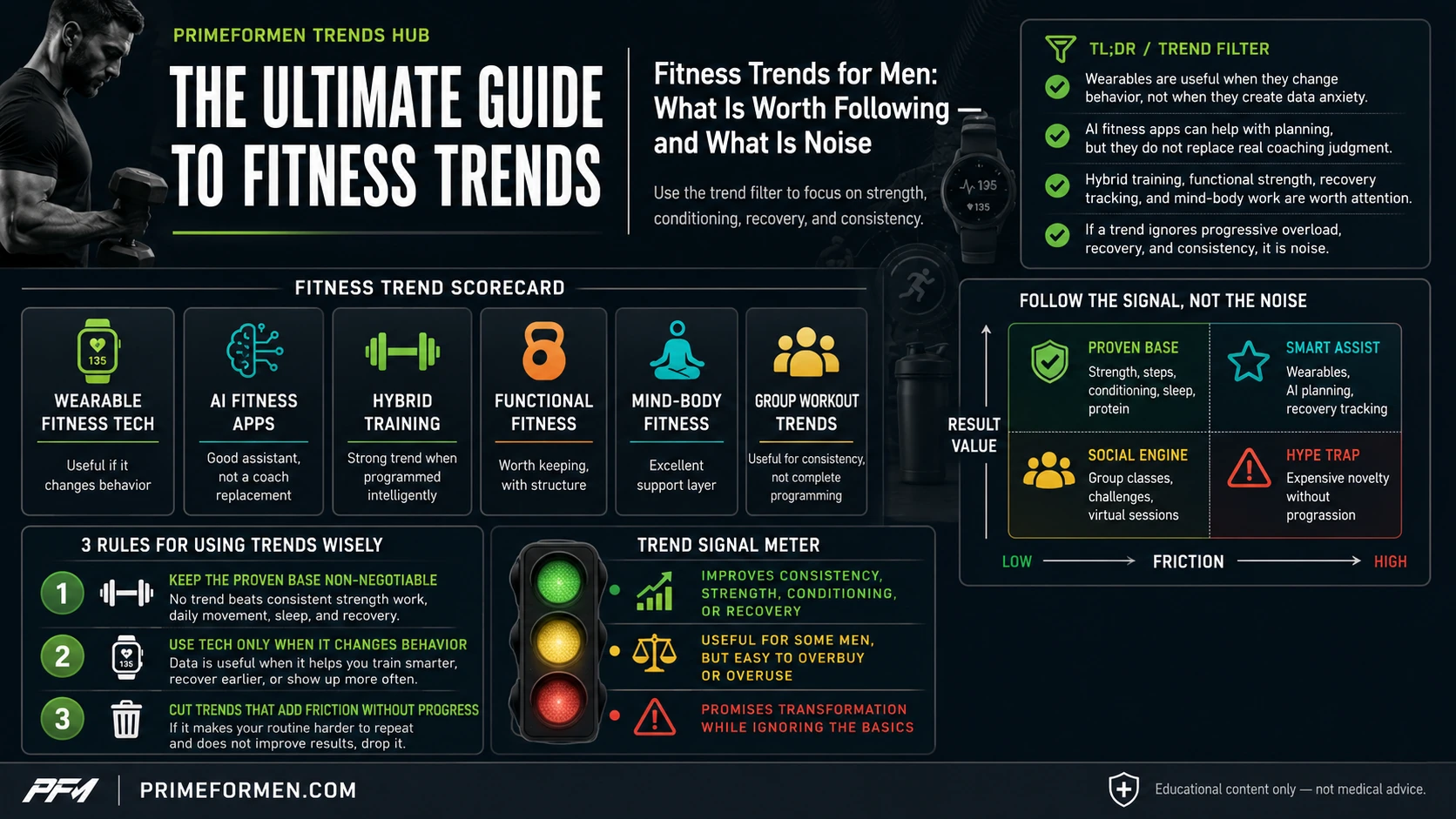
The 2026 fitness trend baseline.
The American College of Sports Medicine is useful as a baseline because it reflects what clinicians, researchers, and exercise professionals are seeing across the industry. PrimeForMen uses that list as a starting point, then filters it through practical value for men who need sustainable training decisions.
| ACSM 2026 trend | Why it matters | PrimeForMen filter |
|---|---|---|
| Wearable technology | Steps, heart rate, sleep, readiness, and training load are easier to see. | Use trends over time; do not let one daily score run your program. |
| Fitness programs for older adults | Strength, balance, mobility, and low-impact conditioning protect long-term capacity. | For men over 40, call this durable training rather than senior fitness. |
| Exercise for weight management | Body composition needs muscle retention, not only scale loss. | Strength, protein, walking, and sleep matter even more in the GLP-1 era. |
| Mobile exercise apps | Apps reduce planning friction and make workouts easier to access. | Good for structure; weak for pain, technique, and judgment. |
| Balance, flow, and core strength | Core control, mobility, balance, and coordination support real movement. | Useful support layer, not a replacement for progressive strength training. |
| Traditional strength training | The old basic still drives muscle, bone, metabolic health, and function. | The boring trend that still wins when repeated well. |
| Data-driven technology | Training load, sleep, HRV, and recovery tools can guide decisions. | Track only what changes your next useful action. |
| Adult recreation and sport clubs | Sport, groups, and leagues add accountability and enjoyment. | Social fitness works when it does not turn every session into max intensity. |
| Functional fitness training | Carries, hinges, squats, pushes, pulls, and rotation transfer well. | Best when structured with progression, not random circuits. |
The PrimeForMen trend scorecard.
A trend earns attention only when it improves the system. The scorecard below keeps novelty from outranking basics.
Result value
Does it improve strength, conditioning, recovery, mobility, body composition, or health behavior?
Consistency value
Does it help you repeat the right behavior more often?
Evidence and plausibility
Is the claim supported by guidelines, physiology, or real training logic?
Friction cost
Does it simplify the week, or does it create more decisions?
Safety
Does it raise risk through poor technique, too much intensity, or false confidence?
Privacy and money
Does the app, device, or program justify its data and cost footprint?
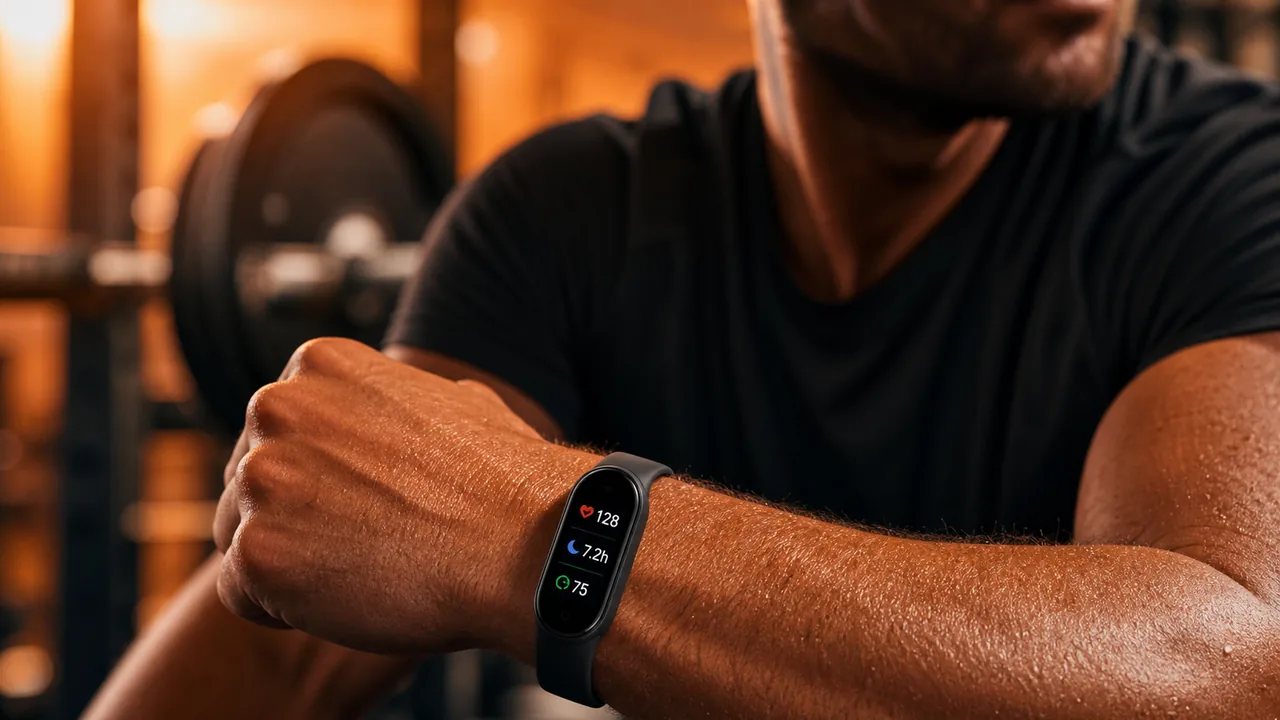
Wearables are feedback, not authority.
Steps, sleep, heart rate, HRV, and readiness can help you spot patterns. They become a problem when one score overrides soreness, pain, common sense, or a planned deload.
Active aging is durable training.
For men over 40, the useful trend is strength plus mobility, balance, walking or conditioning, and recovery. The goal is capacity you can still use in ten years.
Weight management is not just weight loss.
The better goal is fat loss with muscle, function, energy, and consistency protected. That makes strength training, protein, sleep, and steps more important.
Mobile exercise apps and AI fitness coaching are not the same thing.
Mobile apps mainly solve access, logging, reminders, and workout structure. AI tools can reduce planning friction and suggest variations. Neither automatically solves technique, pain, fatigue, or exercise judgment.
The best setup is not the smartest app. It is the tool you can use consistently without outsourcing common sense.
| Tool | Best use | Main risk |
|---|---|---|
| Mobile exercise app | Workout access, scheduling, logging, reminders. | Generic plans and low personalization. |
| AI fitness coach | Plan variations and lower planning friction. | No safe diagnosis of technique, pain, or injury risk. |
| Wearable plus app stack | Data plus habit loop. | False precision and privacy blind spots. |
| Human coach plus app | Feedback plus structure. | Cost and availability. |
Data-driven training works only when the metric changes the decision.
Start with boring metrics before chasing advanced dashboards: sessions completed, strength progression, steps, sleep duration, soreness, and recovery notes. Advanced data is useful only when it improves the next week of training.
Useful metrics
Completed sessions, steps, strength progression, sleep, soreness, resting heart rate trends, and training notes.
Noise metrics
Single-day readiness scores, exact calorie burn, short HRV swings, and social comparison badges.
Privacy check
Before syncing health data, check what the app collects, where it is stored, and whether it can be shared beyond your expected context.
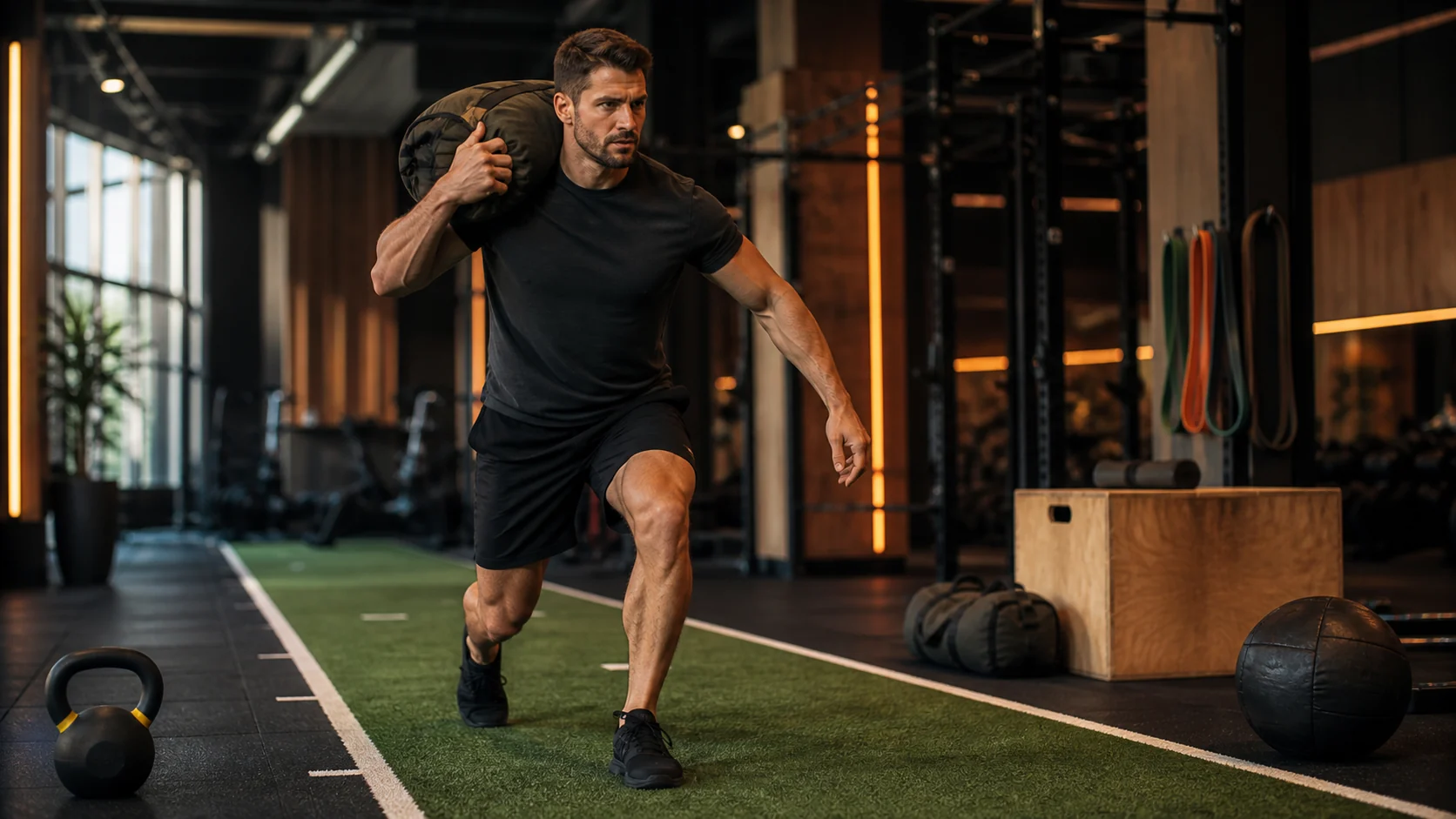
Functional fitness still works when it is structured.
Keep the useful patterns: squat, hinge, push, pull, carry, brace, rotate, and progress.
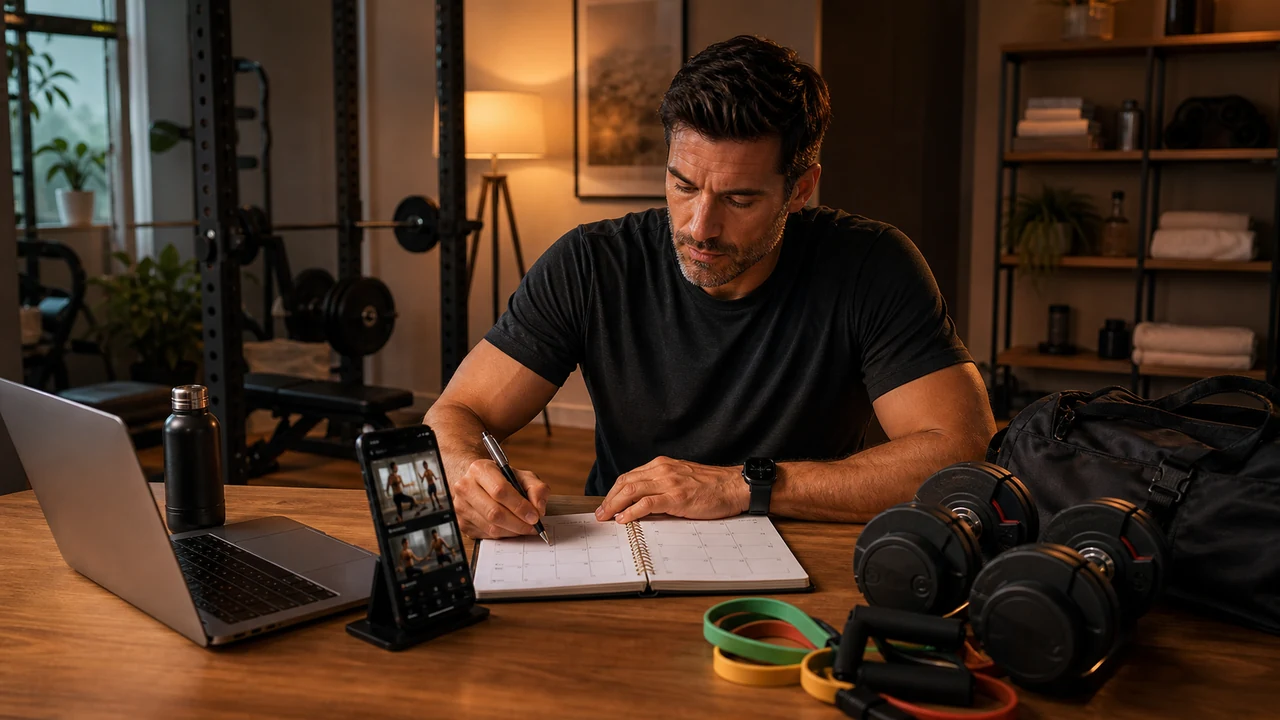
Adult recreation and home training solve consistency.
Social sport, small-group training, and home systems can help men show up more often.
Trend-support tools that actually fit the job.
These tools are useful only when they support a repeatable behavior: tracking, warm-ups, low-equipment strength, or recovery. Prices are not shown because they can change on Amazon.
* Affiliate disclosure: PrimeForMen may earn from qualifying Amazon purchases. Recommendations are educational and should fit your training context.

Fitness tracker
Use when: steps, sleep, heart-rate trends, and consistency tracking would change your behavior.
- Useful for seeing movement patterns you otherwise ignore.
- Works best when you review weekly trends, not single-day scores.
- Skip if it creates anxiety or constant program changes.

Resistance bands
Use when: warm-ups, pulling volume, travel sessions, or joint-friendly accessory work are the bottleneck.
- Good for home and travel training when equipment is limited.
- Useful for warm-ups, rows, pull-aparts, and controlled accessory work.
- Not a full replacement for progressive loaded strength training.
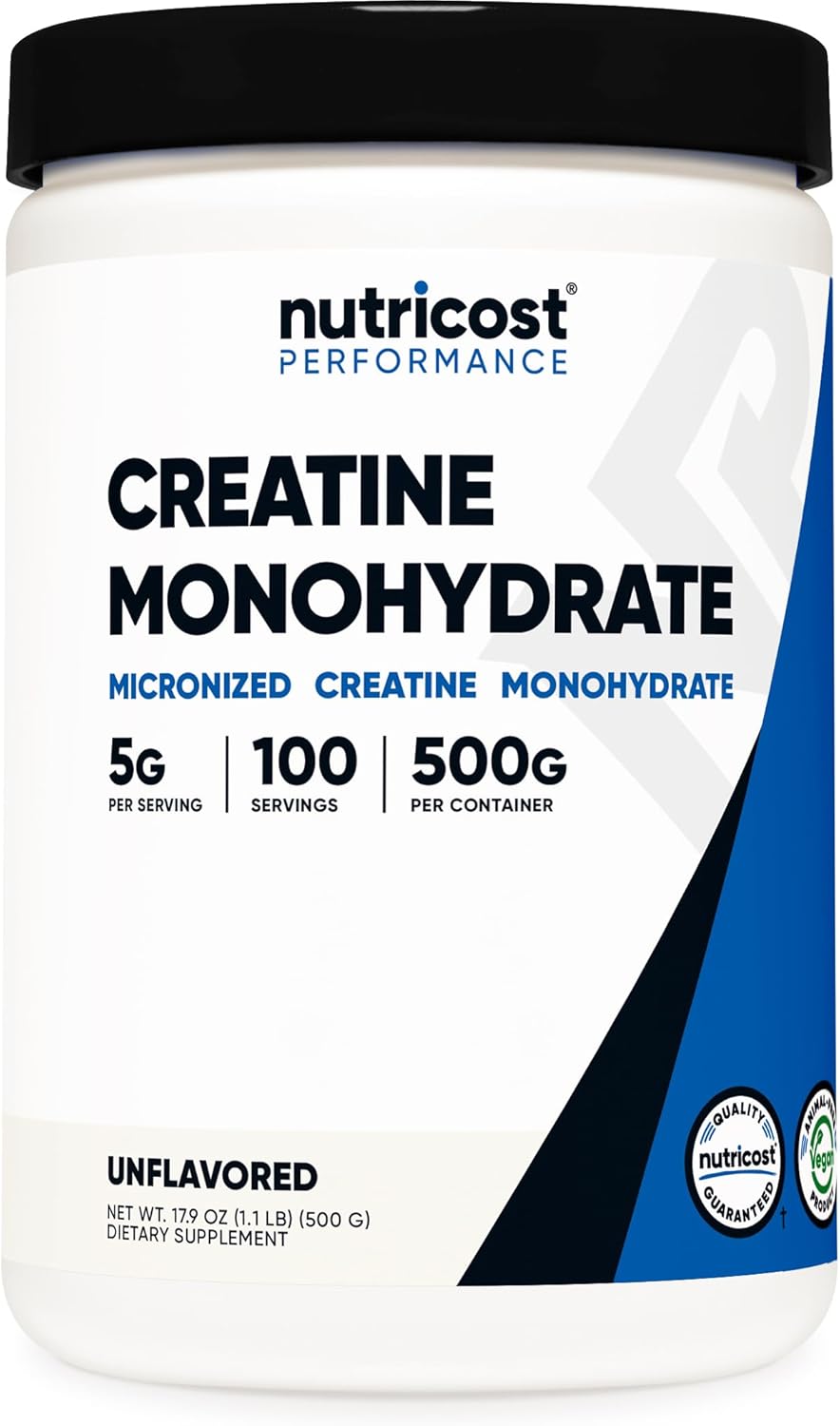
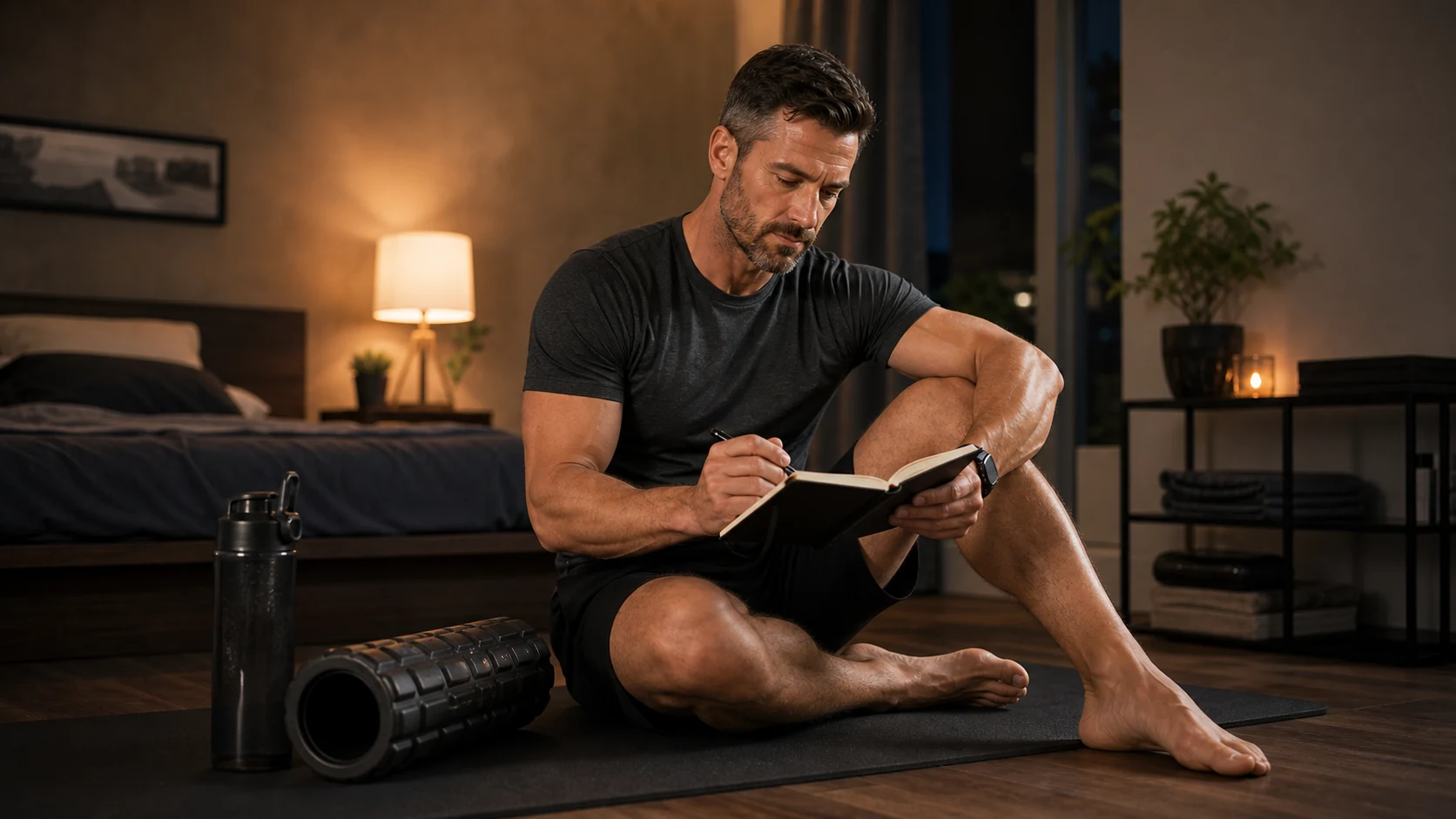
Recovery tool
Use when: a simple post-training routine helps you downshift, move better, or stay consistent.
- Best as a cue for recovery behavior, not a cure-all.
- Pairs well with sleep, load management, walking, and hydration.
- Skip if you are using tools to avoid fixing programming or sleep.
Do not judge a trend by day one excitement.
Judge it after 30 days. Did it make the right behavior easier? Did it improve consistency, recovery, strength, steps, conditioning, or mobility? Did it reduce decision fatigue?
Name the job
Write the exact behavior or decision the trend should improve.
Set two metrics
Pick one training metric and one consistency or recovery metric.
Run it for 30 days
Do not add five new trends at once. Test one change cleanly.
Keep or cut
Keep it only if it improved the system without adding too much cost, friction, or risk.
Fitness trends men should be careful with.
Most bad trends are not obviously bad. They sound advanced, but they distract from the boring work that produces results.
All intensity, no recovery
Hybrid training and group workouts can become too many hard days stacked together.
Data without decisions
If a dashboard creates anxiety but does not improve the next session, it is not helping.
Novelty before basics
A trend is weak if it sells equipment while sleep, protein, walking, and progressive strength are still inconsistent.
FAQ: fitness trends for men.
Short answers for common questions before you buy a device, install an app, or change your training plan.
What are the biggest fitness trends for men in 2026?
Wearables, active-aging training, exercise for weight management, mobile exercise apps, balance and core training, AI tools, data-driven training, adult recreation, and functional fitness are the most useful clusters to watch.
What is the top fitness trend in 2026?
ACSM lists wearable technology at the top of its 2026 trends. For men, the practical question is whether the tracker changes behavior or only adds more numbers.
Are fitness trackers worth it for men?
They can be worth it if they help you move more, sleep more consistently, manage intensity, or spot recovery patterns. They are less useful if they create anxiety or constant program changes.
Can AI fitness apps replace a coach?
No. AI apps can help with structure and planning friction, but they cannot reliably evaluate pain, technique, medical context, or complex fatigue patterns like a qualified human coach or clinician.
What is active-aging fitness?
Active-aging fitness combines strength, balance, mobility, low-impact conditioning, and recovery so men can maintain useful capacity as they get older.
Why is exercise for weight management trending?
The goal is no longer only weight loss. Good programs protect muscle, function, metabolic health, and consistency while body composition changes.
What fitness trends should men avoid?
Avoid trends that promise quick results, ignore recovery, sell novelty before basics, hide risk behind extreme intensity, or collect health data without clear value.
How do I test a fitness trend?
Run one change for 30 days, track two useful metrics, and keep it only if it improves the training system without adding too much cost, friction, or risk.
Medical note: PrimeForMen is educational and does not replace medical advice. If you have pain, symptoms, cardiovascular concerns, medication issues, or a medical condition, speak with a qualified professional before changing training intensity.
References for trend context.
Use these references to separate industry trend data, public-health guidance, privacy boundaries, and schema best practices.