

Learn how to choose a testosterone booster without hype. Compare evidence, dosing, safety, hidden-ingredient risks, lifestyle fit, and when to get labs first.
- Use a testosterone booster only for a clear, trackable bottleneck, not as treatment for low testosterone.
- Check labs, medication context, fertility concerns, and safety red flags before comparing products.
- Reject hidden-dose blends and run one clean 6-8 week trial if the support category still makes sense.
Bottom line Start with the problem, prove the label is transparent, and stop if symptoms point to a medical question.

A testosterone booster is support, not treatment. It may be useful only when it targets a clear bottleneck such as low vitamin D intake, poor sleep, weak nutrition, high stress, or inconsistent training.
If symptoms are persistent, sexual-function-related, fertility-related, mood-related, or unexplained, start with clinician-guided labs instead of shopping for a stronger formula.
Quick Summary: testosterone booster buying guide.
Use this page to decide whether a testosterone-support product is worth comparing at all. The goal is not to find the loudest label; it is to avoid weak signals before money, symptoms, or safety get involved.
- Buy only when the product solves a specific, trackable gap.
- Safety fit matters more than ingredient excitement.
- Transparent dosing beats proprietary blends.
- Third-party testing is a trust signal, not proof of effectiveness.
- Persistent symptoms, fertility concerns, or sexual-function changes deserve labs and clinician input first.
What a testosterone booster can and cannot do.
| Claim | Reality check | Better buyer question |
|---|---|---|
| Boosts testosterone fast | Most supplements do not create drug-like hormone changes in healthy men. | Which nutrient, sleep, stress, or training gap is this supposed to solve? |
| Builds muscle | Muscle gain still depends on progressive training, calories, protein, and recovery. | Is my strength plan already consistent enough for a supplement to matter? |
| Improves libido | Libido can involve sleep, stress, medication, depression, ED, relationship context, or low testosterone. | Are symptoms persistent enough that labs are the smarter first step? |
| Natural means safe | Natural ingredients can still interact with medications, blood pressure, sleep, mood, digestion, or fertility goals. | Does the label show dose, form, warnings, and testing? |
| Supports free testosterone | That phrase is often vague unless the ingredient, dose, population, and study context are clear. | What evidence supports this exact ingredient at this exact dose? |
Bloodwork before boosters: when to pause the purchase.
The Endocrine Society testosterone therapy guideline frames low testosterone as a symptom-plus-lab question, not a label-shopping question. If the issue looks medical, a supplement should not be the diagnostic tool.
Fatigue, libido changes, mood shifts, ED, infertility concerns, or loss of morning erections should not be ignored.
If not, consider clinician-guided morning testosterone testing before buying support products.
Confirmed low values move the decision toward medical evaluation, not a stronger booster.
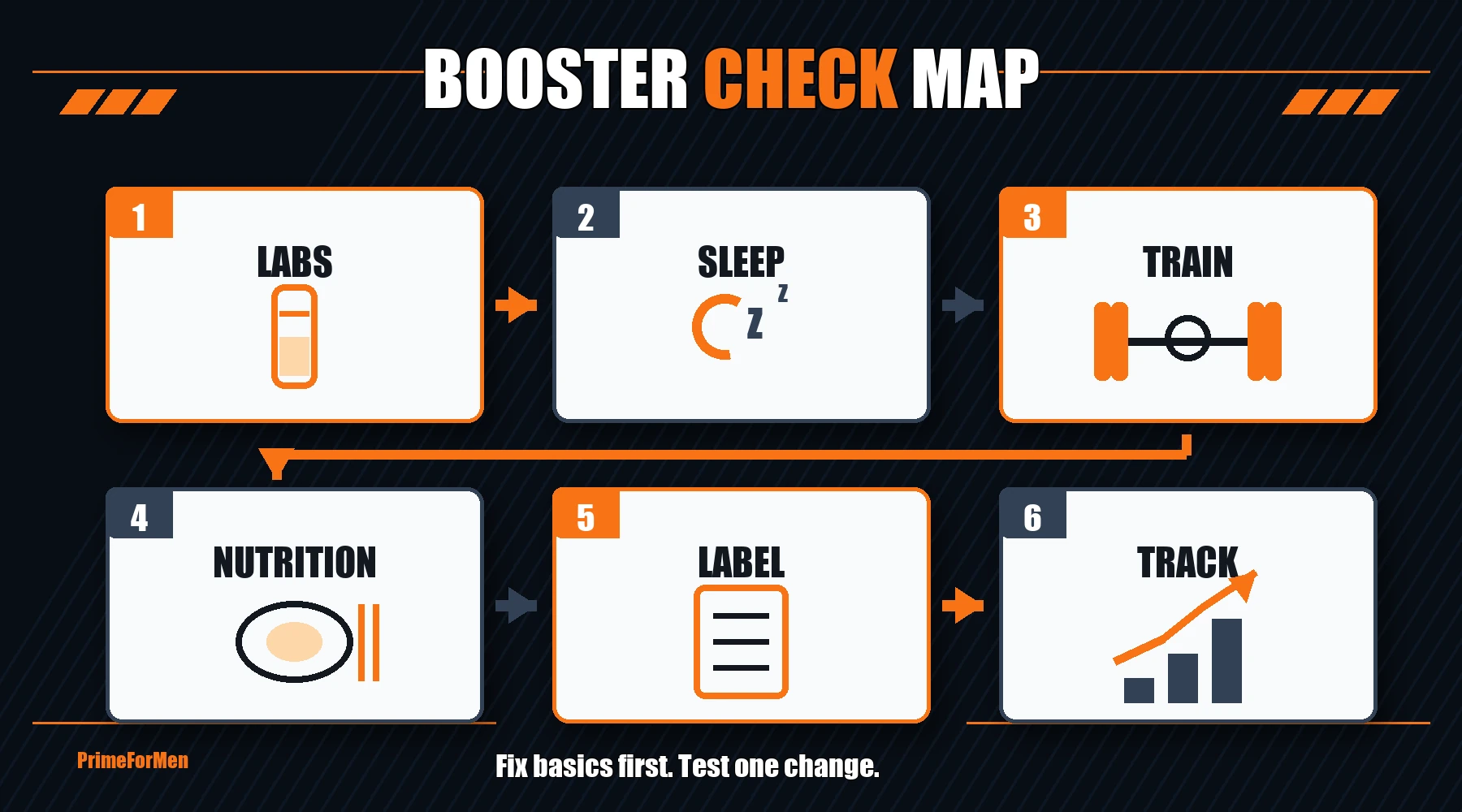
If labs are not the issue, identify sleep, diet, stress, alcohol, training, or nutrient intake.
Test one targeted support product only after the basics are stable enough to measure.
The no-hype buyer score.
A rational testosterone-support product should pass these filters before it earns attention. If it fails the safety filter, the rest does not matter. If it hides the dose, the label is asking for trust it has not earned.
Why male-enhancement claims need extra caution.
The FDA explains that dietary supplements are not preapproved for safety and effectiveness in the same way drugs are. It also maintains warnings for sexual-enhancement and energy products where hidden drug ingredients can appear. Treat aggressive libido, stamina, “alpha,” or hormone-transformation claims as a reason to slow down.
Undeclared drug ingredients
Some sexual-enhancement products have been flagged for hidden sildenafil or tadalafil-like ingredients.
Proprietary blends
If the important dose is hidden, you cannot judge benefit, side-effect risk, or interaction potential.
TRT-like language
A supplement that sounds like prescription therapy should be treated as a stop sign, not a shortcut.
Compare testosterone-support categories before comparing brands.
| Category | Best use | Do not buy when | Label check |
|---|---|---|---|
| Vitamin D support | Low sun exposure, winter, low intake, or bloodwork context. | You plan to dose blindly or stack multiple D products. | D3 form, IU/mcg, testing, and clinician context if levels are abnormal. |
| Zinc and magnesium | Low dietary intake, heavy sweating, restrictive eating, or basic mineral support. | You already stack a multivitamin, ZMA, and booster together. | Elemental magnesium form, zinc dose, copper context, and upper-limit caution. |
| Ashwagandha or stress support | Stress, sleep, and recovery bottlenecks where the use case is specific. | Thyroid, autoimmune, sedative, blood pressure, or diabetes medication questions are unresolved. | Extract type, dose, warnings, and whether the product is stimulant-free. |
| Broad testosterone booster | Only after the label is transparent and the bottleneck is clear. | The product hides doses, makes extreme claims, or promises TRT-like effects. | Full Supplement Facts panel, third-party testing, and no proprietary core blend. |
| Male enhancement blend | Use extra caution; often a higher-risk category. | ED, heart medication, nitrates, blood-pressure issues, or hidden-ingredient concerns apply. | FDA warnings, exact ingredients, medical boundary, and interaction risk. |
Useful Amazon categories after the safety filter.
These are comparison categories, not treatment recommendations. Use them only after the bloodwork and safety questions above are clear.
Transparent testosterone-support formulas
Best for comparing broad support labels after you have ruled out medical red flags.
- Look for exact doses, not proprietary blends.
- Prefer simple formulas with a clear use case.
- Skip aggressive male-enhancement claims.
Vitamin D, zinc, and magnesium support
Best when the likely bottleneck is basic nutrient intake, low sun exposure, or a diet gap.
- Check the dose and ingredient form.
- Avoid stacking multiple high-dose products.
- Use bloodwork context when possible.
Sleep and stress-support tools
Best when late nights, high stress, or poor recovery are the obvious weak links.
- Choose low-risk support over sedative stacks.
- Track sleep timing before judging results.
- Stop if next-day grogginess or side effects appear.
* Affiliate disclosure: PrimeForMen may earn from qualifying Amazon purchases. Prices are not shown here and can change on Amazon.
How to read a testosterone-booster label.
Find the active dose.
If the label hides the important amount inside a blend, you cannot compare it with research or judge the safety margin.
Match the ingredient to the job.
Vitamin D, zinc, magnesium, ashwagandha, and broad herbal blends do not solve the same problem.
Check the claim language.
Be careful with “TRT-like,” “extreme libido,” “steroid-like,” “instant,” or disease-treatment wording.
Look for testing.
NSF Certified for Sport, Informed Sport, USP, or credible third-party testing can reduce label-risk concerns.
Review interactions.
Blood pressure, diabetes, thyroid, sedative, fertility, psychiatric, and hormone-related questions should be handled carefully.
Use one variable.
Do not change five habits and three supplements at once, then pretend you know what worked.
A practical 8-week testosterone-support trial.
A testosterone-support trial should be boring enough to measure. If you change sleep, training, protein, alcohol, caffeine, and three supplements at the same time, you created noise.
Baseline
Record sleep, training, alcohol, body weight, libido or energy notes, and any symptoms that may need labs first.
Stabilize basics
Keep protein, lifting, sleep timing, caffeine cutoff, and alcohol patterns steady before judging a product.
Test one product
Use one support category at the labeled dose. Track mood, digestion, sleep, training, libido, and side effects.
Decide
Continue only if the benefit is clear enough to justify cost and tradeoffs. Do not add another stack to rescue unclear results.
For men over 40, use the age-specific hub.
This page is the generic buyer guide: label logic, category comparison, safety filters, and trial discipline. If fatigue, libido changes, recovery issues, or strength loss are persistent after 40, use the age-specific guide to connect symptoms, labs, sleep, training, medication context, body composition, and medical boundaries.
Frequently asked questions about testosterone boosters.
What is a testosterone booster supposed to do?
A testosterone booster is supposed to support a specific bottleneck, such as low vitamin D intake, mineral intake, sleep, stress, or training consistency. It is not a treatment for clinically low testosterone.
Do testosterone boosters work in healthy men?
Some ingredients may help men with specific deficiencies or stress-related constraints, but most boosters do not produce drug-like testosterone changes in healthy men.
Can a testosterone booster replace TRT?
No. Testosterone replacement therapy is medical treatment for confirmed clinical need under professional supervision. A supplement should not be used as a substitute.
What blood tests should I consider before using a testosterone booster?
Persistent symptoms should be discussed with a clinician. Morning total testosterone is commonly part of the initial evaluation, and low values often require confirmation and broader interpretation.
Are proprietary blends a red flag?
Often, yes. If a product hides the dose of the main active ingredients, you cannot compare the formula with evidence or evaluate the safety margin properly.
What does third-party tested mean?
It usually means an outside program tested the product for certain quality, label, or contamination standards. It improves trust, but it does not prove the product will raise testosterone.
Can testosterone boosters interact with medications?
Yes. Ingredients can interact with medications or conditions involving blood pressure, diabetes, thyroid, mood, sleep, hormones, fertility, and liver health. Ask a clinician when unsure.
Are male-enhancement supplements risky?
They can be. The FDA has warned about hidden ingredients in some sexual-enhancement products. Aggressive libido or stamina claims deserve extra caution.
How long should I test one supplement before deciding?
Six to eight weeks is a practical window if basics are stable. Stop earlier if side effects appear or if symptoms suggest a medical issue.
When should I stop taking a testosterone booster?
Stop if you notice side effects, worsening sleep, mood changes, digestive problems, blood pressure concerns, sexual-function changes, or unclear benefit after a clean trial.
References for safety, claims, and testing context.
Consumer guidance on supplement regulation and safety responsibilities.
FDA product notificationsWarnings related to sexual-enhancement and energy products.
Endocrine SocietyClinical guideline context for testosterone therapy and diagnosis.
FTC health claimsBusiness guidance on substantiation for health-related claims.
This article is educational only and does not diagnose, treat, or replace care from a qualified clinician. Hormone symptoms, sexual-function changes, fertility concerns, mood changes, persistent fatigue, or abnormal lab results should be discussed with a medical professional.
This page includes Amazon affiliate links. If you buy through them, PrimeForMen may earn a commission at no extra cost to you. Recommendations are based on category fit, label transparency, and safety logic, not guaranteed outcomes.