
Choose between easy movement and rest with three short recovery sessions, evidence limits and a free log for tracking your response.
- Use easy movement only when it stays comfortable.
- Choose from short walking, mobility or cycling examples.
- Track later and next-day response, not just immediate relief.
Bottom line Choose the least demanding appropriate option and note how you feel later before repeating it.

Active recovery workouts are deliberately easy movement sessions between more demanding training. They may help you feel less stiff, but feeling better is not proof that muscle repair has accelerated. Choose movement, rest or professional guidance based on what is happening today.
Quick Summary: Active Recovery Workouts
- Use easy movement only when it stays comfortable.
- Choose from short walking, mobility or cycling examples.
- Track later and next-day response, not just immediate relief.
The Prime Perspective
A recovery session does not need to justify itself with calories, pace or a personal record. Sometimes its best replacement is a rest day and a smaller training load next week.
Choose Movement, Rest or Assessment Before Choosing a Routine
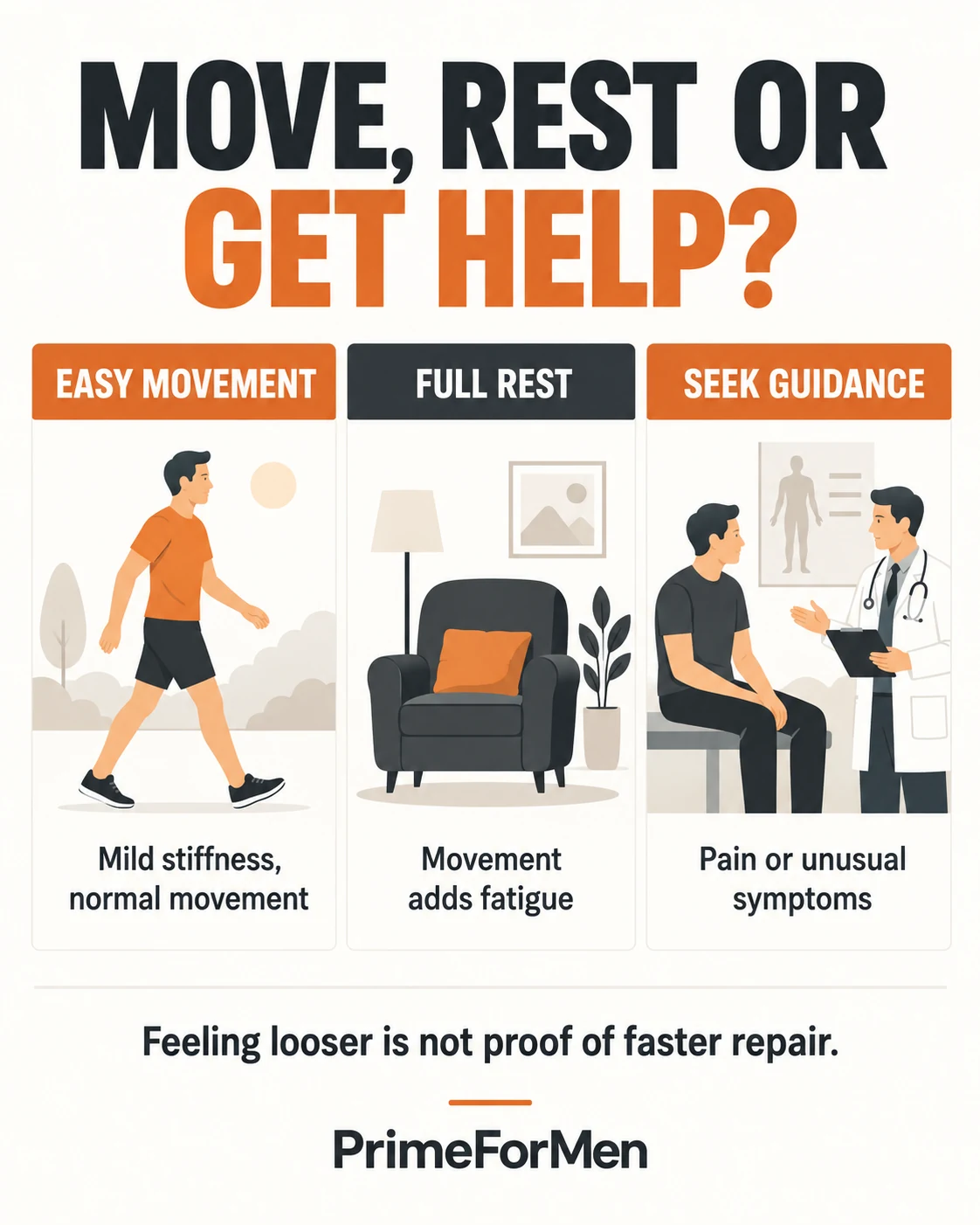
Active recovery is optional low-demand movement. It may feel pleasant or reduce perceived stiffness, but it is not proof that damaged tissue repairs faster or that you are ready for heavy training. Full rest is also a valid choice. The goal is to match the day to your condition, not to keep an unbroken workout streak.
On small screens, swipe the table sideways to see every column.
| What you notice | A reasonable first step | What the observation does not prove |
|---|---|---|
| Mild familiar muscle soreness with normal movement | Try a few minutes of easy walking, then reassess. | That more movement will accelerate recovery. |
| General fatigue and movement feels like another obligation | Rest and review sleep, food and total training. | That you need a specific supplement or recovery gadget. |
| Sharp pain, limping, new swelling or unusual symptoms | Stop the planned session and seek appropriate assessment. | That this is ordinary training soreness. |
Urgent symptoms such as chest pain or severe unexplained breathlessness need prompt medical attention. Do not run a recovery experiment to see whether they disappear. This guide cannot diagnose the cause of soreness, fatigue or pain.
Three Short Sessions With a Defined Stopping Point
Option A: A ten-minute walking check
Walk on a level, familiar route for two minutes at an easy pace. If your stride stays comfortable and symptoms do not worsen, continue for another six minutes. Finish with two relaxed minutes. You should be able to converse comfortably; there is no required speed, heart-rate zone or step total.
If the walk feels helpful and adds little fatigue, you may choose a longer version on another day. Do not extend it automatically while tired just to reach a round number. If your gait changes or discomfort becomes sharper, stop. A flatter route or shorter session may be more appropriate than softer but uneven ground.
Option B: A ten-minute gentle movement sequence
Use two minutes of easy walking or seated movement. Then spend about one minute at each of four stations: comfortable ankle movement, supported shallow hip hinges, gentle shoulder circles and a comfortable standing upper-back rotation. Include pauses within each minute rather than forcing continuous repetitions. Finish with four minutes of easy movement or relaxed rest.
This is a flexible comfort sequence, not a corrective exercise diagnosis. Keep range comfortable and avoid forceful stretching. Choose seated versions if standing balance is difficult, and skip any movement that causes symptoms. You do not need to reach a deeper position by the end of the session.
Option C: A fifteen-minute easy bike session
Use three minutes of very light pedaling, nine minutes at a comfortable conversational effort and three easy finishing minutes. Keep resistance low enough that the legs do not feel as though they are completing another strength session. Adjust saddle and machine setup to your needs before starting.
This is not a zone-two fitness test. Heart-rate zones vary with the method used and can be affected by medication and other factors. Use easy effort and your response as practical checks rather than forcing a particular reading. Choose walking or rest if the bike position is uncomfortable.
What Does the Evidence Allow Us to Say?
A 2018 systematic review of recovery techniques examined outcomes such as soreness, perceived fatigue and markers of muscle damage across different interventions. Those endpoints are not interchangeable with restored performance or faster tissue repair. A short-term change in how sore you feel should not be sold as permission to resume maximal training.
A review of post-exercise stretching trials does not establish stretching as a reliable way to improve recovery compared with passive recovery. Gentle mobility may still be a comfortable activity, but it should not be presented as a required cure for delayed soreness. Individual study protocols and populations also limit what can be inferred about your own routine.
A Worked Example After a Hard Lower-Body Day
Suppose you trained legs on Monday and feel mild familiar soreness Tuesday. Normal walking is comfortable, so you try the ten-minute walking check. If you finish feeling similar or a little looser without added fatigue, note that response. Do not interpret it as a measurable acceleration of muscle repair.
On Wednesday, assess the planned workout during its normal warm-up. If movement and effort feel as expected, continue appropriately. If a familiar light load feels unusually difficult, simplify or reduce the session rather than assuming Tuesday’s walk guaranteed readiness. Persistent deterioration or concerning symptoms needs more than a change of recovery routine.
Alternatively, if Tuesday’s walk makes you feel more exhausted, choose rest next time. This does not mean you failed active recovery. It means the intervention did not fit that day. The progression guide explains why repeating or reducing work can be a sensible training decision.
Use a Before-and-After Log Without Turning It Into a Diagnosis
Record the previous hard session, your chosen option, minutes completed and a short description of movement before and afterward. Add a note at the next planned workout. Compare a few similar occasions instead of declaring a tool effective after one good day. Sleep, nutrition, workload and time all change recovery independently.
A useful entry is “Ten-minute flat walk; gait normal; stiffness felt slightly lower afterward; no extra fatigue; next session unchanged.” A less useful entry is “Recovery score 100%, ready for anything.” The worksheet provides observation fields, not an algorithm that clears you to train.
Do Not Confuse a Recovery Session With Extra Training
The same walk or bike ride can serve different purposes depending on its length, intensity and placement. For this article, the session should remain deliberately undemanding. If it becomes a long endurance workout, assess it as training load rather than calling it recovery.
On small screens, swipe the table sideways to see every column.
| Temptation | More useful decision | Why it matters |
|---|---|---|
| Hit a calorie target | Use comfort and the planned short duration as the limit. | A calorie target can encourage more work than intended. |
| Force a stretch until stiffness disappears | Stay in a comfortable range and accept that stiffness may remain. | Temporary sensation is not proof of tissue recovery. |
| Add several recovery tools | Try one simple option and record the response. | It is easier to judge usefulness without changing everything. |
| Train hard after feeling briefly better | Consider the broader pattern and the next planned session. | Immediate relief does not establish readiness. |
Review the Main Program Before Buying Recovery Equipment
If fatigue repeatedly disrupts training, examine the work that caused it. The progression guide shows how to repeat or reduce a demand instead of increasing every variable. Someone running the dumbbell plan should count additional classes and sport sessions as part of the same week.
For athletes, the SBD example places practice and competition before optional lifting work. A recovery routine cannot compensate for repeatedly ignoring those constraints. Rest, sleep opportunity and a manageable schedule remain relevant even when a tool provides short-term comfort.
Where a foam roller fits
A roller is optional self-massage equipment, not an essential part of the walking or cycling examples above. If you use one, keep pressure tolerable and avoid assuming more discomfort means a better result. The foam roller guide covers selection and practical use. Persistent or unexplained pain should not be repeatedly worked over in an attempt to diagnose it yourself.
For limited indoor space, choose a gentle option from the apartment guide without turning its full strength circuit into a recovery session. If you are new to exercise, follow the beginner starting dose rather than assuming you need a recovery protocol after every small amount of movement.
What a Useful Recovery Note Looks Like
Write something concrete: “Ten-minute flat walk, easy conversation, no change in gait, stiffness similar later, normal comfort the next morning.” That is more useful than a recovery score with no explanation. It still does not identify what caused the stiffness or prove the walk accelerated repair.
If the next-day response is worse, reconsider the session and the preceding training. If easy movement is pleasant but changes nothing else, you may still value it as a gentle break. Keep that benefit separate from a medical or performance claim. The simplest option that fits your situation is a reasonable place to start.
Download the Practical Worksheet
Use the one-page reference and three fillable fields to record your setup, what you completed and the next decision. Print it or save a filled copy using a PDF reader that supports forms. Read the full instructions and adaptations above before using the summary.
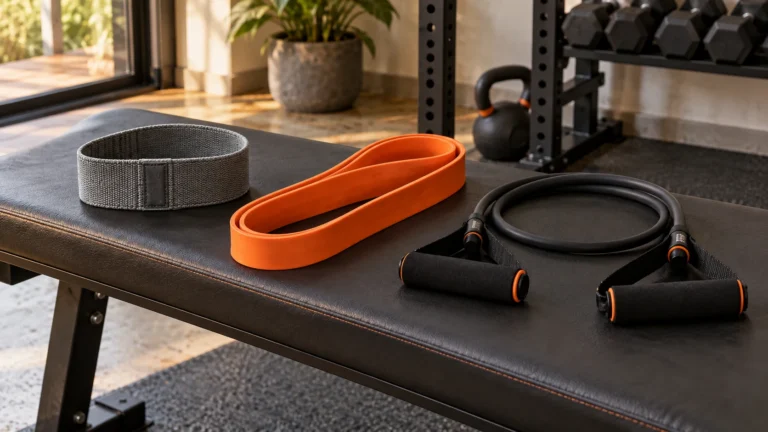
Optional Equipment: Buy for a Specific Job
The links below open Amazon category searches, not tested product recommendations. Compare the actual product instructions, dimensions and compatibility. Use equipment you already own when it fits the task.
As an Amazon Associate, PrimeForMen earns from qualifying purchases.
Conclusion: Make the Next Session Clear
Choose the least demanding appropriate option and note how you feel later before repeating it. Use the worksheet to make that decision visible. Repeating a manageable session is a valid choice; the calendar alone does not require a harder workout.
Frequently Asked Questions
Is active recovery better than a full rest day?
Not always. Easy movement can be pleasant or help perceived stiffness, but rest may better fit fatigue, symptoms or a demanding schedule. There is no requirement to exercise on a day labeled recovery.
Do I need to stay in zone two?
No. These short examples use easy conversation and comfort rather than a required heart-rate zone. A longer endurance session should be counted as training, even if you call it recovery.
Does stretching speed recovery?
The cited review did not establish better strength or soreness recovery than passive rest, and the evidence had important limitations. Comfortable mobility can still be a personal preference, but do not promise faster repair from it.
Should I complete walking, cycling and mobility together?
No. Choose one appropriate option. Stacking every example can turn a deliberately small session into more work than intended. Shortening or skipping the session is also valid.
Can feeling better mean I am ready for hard training?
Immediate relief alone cannot establish that. Consider the later response, next-day function and the broader training pattern. New, severe or persistent symptoms call for appropriate assessment rather than another workout test.
Medical Disclaimer
This is general fitness education, not diagnosis, rehabilitation or an individualized exercise prescription. Choose movements appropriate to your situation. Stop for pain, dizziness or unusual symptoms and seek appropriate guidance. New or severe concerning symptoms warrant prompt medical assessment.
Our editorial policy explains our approach to sources and commercial independence. Exercise examples and illustrations do not represent individual coaching or product testing.
Affiliate Disclosure
Some links are affiliate links. We may receive a commission from qualifying purchases at no additional cost to you. Optional equipment is not a condition of benefiting from the guidance above.