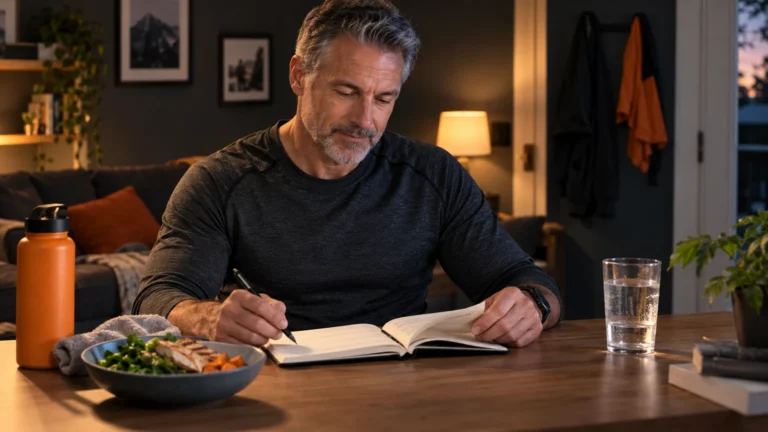
Compare muscle recovery techniques by comfort, function and evidence. Review workload, sleep and food, and record changes without a recovery score.
- Comfort and recovered function are different outcomes.
- Review workload, sleep and meals before adding a technique.
- Severe or persistent symptoms need appropriate care.
Bottom line Record the actual week and choose one question to review; a device cannot determine whether you are ready to train.

Muscle recovery techniques should fit the outcome you want to review: feeling less sore, recovering function or preparing for the next session. Begin with the training you actually did, your sleep and meals, and how your symptoms change. Massage or foam rolling may help with comfort, but a better feeling does not prove an injury has healed or that you are ready for another hard workout.
Quick Summary: Muscle Recovery Techniques
- Record workload, sleep, food and your response before buying another recovery device.
- Comfort, strength recovery and long-term adaptation are different outcomes.
- Post-exercise stretching has not shown a recovery advantage over rest in the reviewed trials.
- Use optional techniques for a defined purpose; more pressure or more discomfort is not a useful goal.
- Unexpectedly severe symptoms need care, not another technique.
The Prime Perspective
A recovery routine should help you understand the week. If Monday’s familiar workout suddenly becomes twice as long, a short night and a missed lunch belong in the same record as Tuesday’s soreness. Adding a roller, a massage and a new supplement at once makes that record harder to interpret.
For men returning to training after 50, the useful starting point is a routine that fits the current schedule and health situation. Our fitness guide for men over 50 provides that broader training context. This article does not set a medical recovery plan.
Which recovery outcome are you trying to improve?
“Recovery” may refer to less soreness, normal function or readiness for the next session. A runner might want the legs to feel more comfortable on stairs. A lifter might want normal strength back. Someone with an injury needs an assessment and an appropriate rehabilitation plan. A study about soreness cannot answer all of those questions.
| Outcome | A useful observation | What it cannot establish |
|---|---|---|
| Comfort | How soreness feels during familiar daily activities. | Tissue healing or permission to train through pain. |
| Function | Whether ordinary movement or a familiar task feels different. | A diagnosis or a safe training load. |
| Next-session demands | What the next planned session requires and what has changed. | An automatic green light because one symptom improved. |
| Response across the week | Repeated patterns in workload, sleep, meals and symptoms. | A recovery score or proof that one technique caused the change. |
Pick an observation you can describe consistently. “Stairs felt easier this morning” gives a specific observation to review. An invented recovery percentage does not. Do not repeatedly test a painful movement to create a comparison. Persistent, worsening or unexplained symptoms should be assessed individually.
Two optional tools for a clear purpose
A paper log keeps the actual session beside the following day’s observations. A foam roller provides a self-massage option if pressure suits you. Neither is essential: the free record below or an existing notebook may be enough. We have not tested these products firsthand and do not recommend them as injury treatments.
Choose a paper record or an optional roller
An existing notebook, app or the free worksheet may handle the record. A roller is optional when pressure suits you. We have not independently tested these products; neither is an injury treatment.
* As an Amazon Associate, PrimeForMen earns from qualifying purchases. Check the exact selected product, current label and suitability before ordering.
Best for: For keeping actual sessions and a weekly review in a paper training record. Skip if an existing notebook, app or the free PDF already works for you. Current Amazon listing: Ultimate Workout Journal - Fitness Training Planner for Men and Women Best for: For an optional self-massage tool when pressure is suitable and comfortable. Skip if you already own a suitable roller, dislike pressure, or need advice about symptoms or an injury first. Current Amazon listing: Amazon Basics High-Density Foam Roller for Exercise and Recovery, 18 Inches, Black * As an Amazon Associate, PrimeForMen earns from qualifying purchases.Recommended Products

Ultimate Workout Journal
View on Amazon
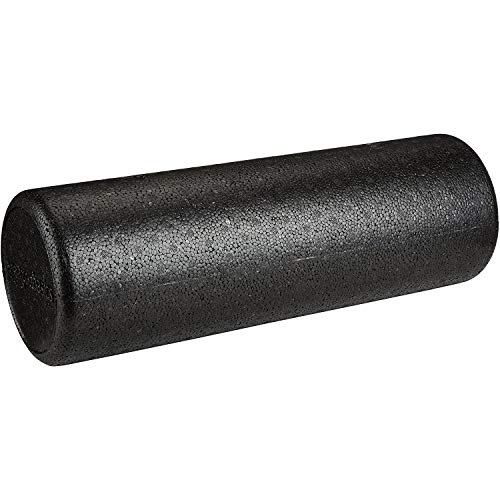
Amazon Basics high-density foam roller, 18 inches
View on Amazon
Review the workload before adding a technique
Record more than the name of the workout. Include the exercises, sets and repetitions you actually completed, the load you used, and unfamiliar demands such as a new movement, a longer run or extra gardening. “Leg day” hides the difference between repeating a familiar session and adding several new exercises.
Compare the session with your recent routine. Did you change volume, effort, frequency or exercise choice? Did a busy week compress sessions that were usually separated? These are questions to review with your coach or clinician where appropriate. They are not a formula for deciding that a particular amount of soreness is acceptable.
Record the planned session
Note what you intended to do and why. Keep that entry separate from the work completed.
Record what changed
Include extra repetitions, unfamiliar movements and additional physical work outside the gym.
Record the response
Describe what you noticed during ordinary activities and whether the pattern improved, stayed similar or worsened.
Review a familiar plan too if your response has changed. Age alone does not explain a new limitation. For general scheduling context, our guide to the importance of rest and recovery connects training demands with time away from hard sessions.
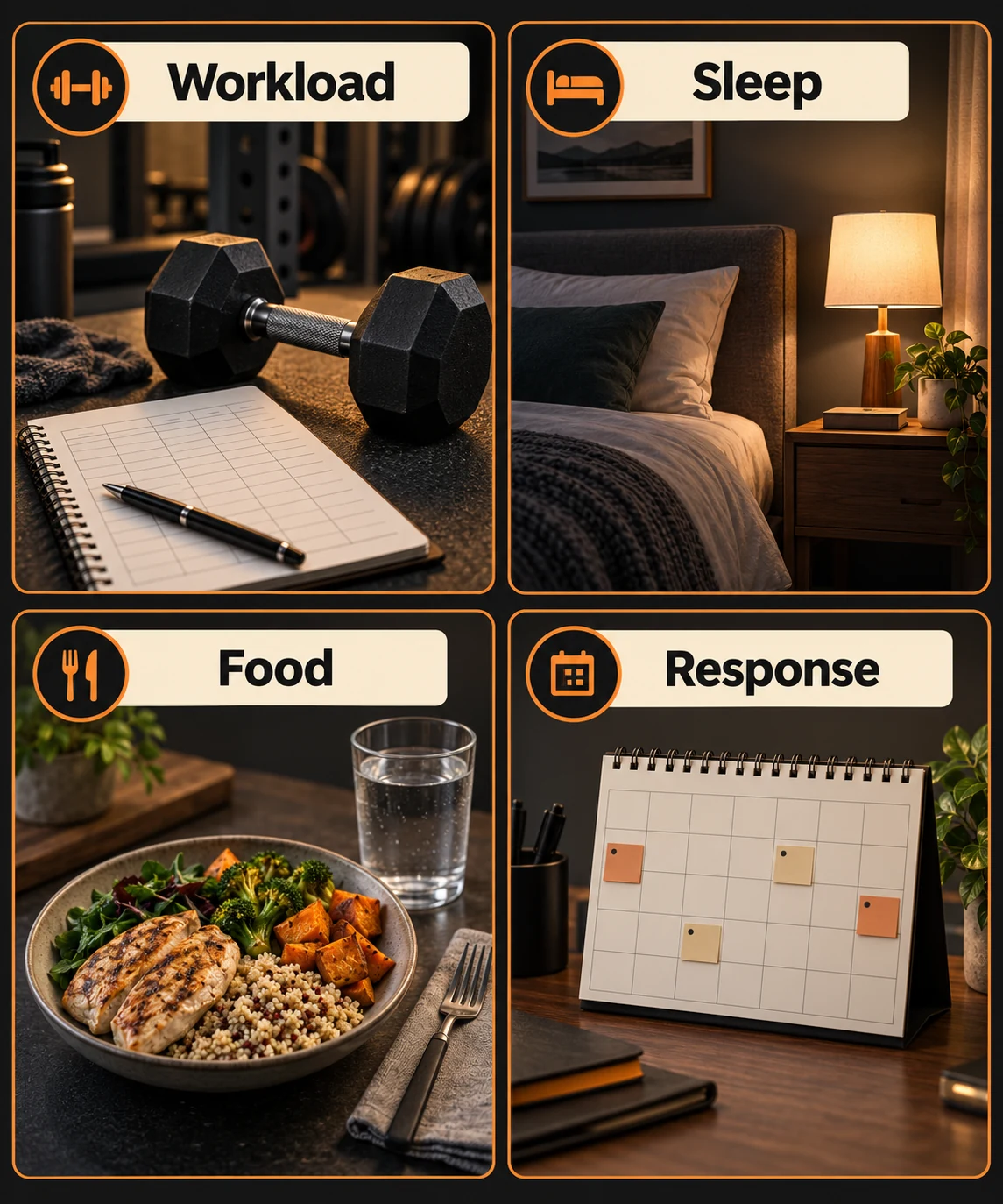
Keep sleep and food in the same record
Write down approximate sleep timing and interruptions rather than relying only on a wearable’s score. Note whether a late session displaced bedtime, an early start shortened the night or unusual tiredness continued into the following day. If sleep problems persist, discuss them with a qualified professional instead of assuming a recovery gadget will solve them.
For food, record what you ate and any meals that were delayed or skipped. Include drinks, appetite and whether the training session changed your normal routine. This simple account cannot diagnose under-fueling or calculate a replacement meal, but it can make an assessment more useful than a list of supplements.
Protein is a separate nutrition question. Use our post-workout supplement guide to review when a product might fill a specific food or convenience gap. Do not assume a shake corrects a week of missed meals, poor sleep or excessive training demands.
Review the week before adding another technique
Use a log to review workload, sleep, food and your response over several days. The markers are recorded observations, not a recovery score, a soreness-to-damage scale or a prediction that a technique will work.
Silent, 8.5 seconds. Open the animation directly. Playback pauses offscreen; reduced-motion preferences keep playback manual. Essential explanations remain in readable text.
What the technique studies do and do not show
A 2018 recovery meta-analysis by Dupuy and colleagues included 99 studies of healthy adults. It evaluated delayed-onset muscle soreness, perceived fatigue and selected blood markers after exercise. Massage had favorable pooled results for soreness and perceived fatigue; some other methods also reduced those outcomes.
The review examined a single recovery intervention after a session, and protocols differed. It did not establish injury healing, a universal best routine, or what happens when a technique is used repeatedly throughout a training program. Laboratory markers, a subjective comfort rating and future performance should remain separate in the explanation.
| Option | Evidence or purpose | Practical limit |
|---|---|---|
| Massage | Favorable pooled soreness and fatigue results in the 2018 review. | Less soreness does not prove an injury has healed. |
| Foam rolling | Research includes pain perception and some performance measures. | Effects are generally small or variable; more pressure is not a success measure. |
| Post-exercise stretching | No recovery advantage over passive rest in the 2021 reviewed trials. | That finding concerns recovery outcomes, not every flexibility goal. |
| Easy movement | A possible comfort option discussed in Mayo Clinic’s general soreness clip. | Movement that worsens symptoms needs reconsideration, not a harder target. |
Foam rolling: keep the aim modest
A 2019 foam-rolling meta-analysis included 21 studies, with seven examining rolling after exercise. Overall effects on performance and recovery were minor, and some outcomes were negligible. Post-rolling reduced muscle-pain perception in the pooled results, but the findings do not establish tissue healing or an injury-prevention effect.
If you already use a roller comfortably, record the area and the response rather than chasing a painful sensation. Stop if pressure produces sharp, radiating or worsening symptoms. Unexplained pain, an injury, recent surgery or uncertainty about whether pressure is suitable needs individual advice. The foam-roller guide explains the separate equipment-selection question.
Stretching: distinguish flexibility from recovery
The 2021 Afonso review of randomized trials found no advantage for post-exercise stretching over passive recovery for the assessed strength and soreness outcomes. Included participants were 17 to 38 years old, mostly men, and the evidence had important limitations. It is not a trial of men over 50 and cannot supply a universal instruction for that group.
You may have a specific flexibility goal or a professional rehabilitation plan. Those are different purposes. Do not add painful stretching because you believe it must accelerate recovery. Keep any existing professional instructions separate from a general soreness article.
Watch Mayo Clinic explain ordinary muscle soreness
Mayo Clinic physical therapist Maggie Bryant discusses returning to activity and ordinary soreness in this 2018 clip. It mentions walking and light stretching; the later randomized-trial review discussed above found no recovery advantage for post-exercise stretching over rest. Its heat and ice comments are general context, not an injury-treatment instruction or exercise clearance.
Watch the original video on YouTube if the embed does not play.
Three ordinary-week examples
The following fictional situations show what to include in a record. They do not prescribe training or predict improvement.
A new exercise added to a familiar week
Alex adds an unfamiliar split-squat variation after his usual session. The next day he notices a different pattern of soreness. His entry should name the added exercise and the work completed, so a coach can distinguish that change from the rest of the routine. Buying three recovery products would introduce three more variables.
Several demands arrive together
Ben repeats his normal lifting session after a disrupted night, then spends the afternoon carrying boxes. His weekly record includes the physical work and sleep disruption. A note saying “same gym workout” would miss both. The record helps organize the discussion; it cannot determine which factor caused the response.
The pattern no longer feels familiar
Chris finds that ordinary tasks remain limited and symptoms are not settling as expected. He chooses the individual-assessment branch and brings a concise timeline. The next step is an appropriate review rather than increasing roller pressure or testing the same painful task again.
Organize the next question
Use the helper to keep your goal separate from symptom escalation. “No unresolved concern identified” is only your selected description; the page does not verify that exercise is safe. Its result organizes a question for review, without calculating exercise intensity, a supplement dose or a readiness score.
Choose the question for your recovery review
Describe the recent workload, your goal and any unresolved symptom concern. The result organizes a next question; it does not diagnose symptoms, predict recovery or clear a workout.
Keep the actual workload beside sleep, food and everyday observations. Separate comfort from recovered function. Persistent or unexplained symptoms need an individual assessment. If the urgent warning signs described above occur, seek medical care immediately rather than using a recovery technique.
Keep your review with you
Fill the eight-field weekly record with the actual sessions, sleep, meals and everyday observations. Save the completed PDF or print it for handwritten notes. Bring it to an appropriate review when needed; it does not prescribe treatment or decide a training load.
Download my weekly recovery review (fillable PDF). The helper print button creates a separate record with your current choices, notes and checkmarks.
What to do with the record this week
- Copy the actual recent sessions and additional physical demands into one place.
- Note the sleep and meal routine around them, including any clear departures from normal.
- Choose one observation you can describe during ordinary daily activities.
- If using an optional comfort technique, record it separately and avoid adding several changes at once.
- Bring persistent or unexplained changes to an appropriately qualified professional. Use the urgent-care guidance above whenever warning signs occur.
Review the notes without forcing a cause. Symptoms may change even when several circumstances change together. If a roller feels pleasant, that is a comfort observation; it does not show what happened to the muscle tissue. If you are planning easy activity, the active recovery guide provides context, while individual limitations still take priority.
Frequently asked questions
What is the best muscle recovery technique?
It depends on the outcome and the situation. Massage and rolling have research on soreness or perceived fatigue, but those findings do not identify a universal winner for function, tissue healing and future performance. Start by recording the workload and the problem you want to review.
Should I stretch after every workout to recover faster?
The 2021 randomized-trial review did not show a recovery advantage over passive rest under its studied protocols. Stretching for a flexibility goal or as part of an individual professional plan is a different question. Do not use pain as a target.
Does feeling less sore mean I am ready for hard training?
A comfort change cannot establish readiness or injury healing. Consider the planned session and any altered function or unresolved symptoms with appropriate guidance. The helper provides a question to review, not exercise clearance.
Do I need a foam roller or recovery device?
No device is required to keep a useful record. An existing notebook or the free PDF may be enough. A roller is an optional self-massage tool when pressure is suitable; buying one does not establish a recovery benefit for your situation.
When should soreness lead to medical care?
Seek immediate care for unexpectedly severe muscle pain, tea- or cola-colored urine, or unusual weakness limiting familiar tasks. Persistent, worsening or unexplained symptoms also need an individual assessment. Do not use the absence of one warning sign to rule out a problem.
Conclusion
Choose muscle recovery techniques around a defined question and a record of the week. Keep comfort, function and long-term training outcomes separate, and let unresolved symptoms determine when professional input is needed. For ongoing training context, explore our health and fitness guides. A simple record can make the next conversation clearer without promising that a particular routine will work.
Medical disclaimer: This article provides general education and has not received an independent clinical review. It does not diagnose symptoms, treat an injury, prescribe rehabilitation or clear exercise. Follow individual professional advice. Seek immediate care for the warning signs described above. Generated visuals illustrate the process and do not show a measured health result.
Affiliate disclosure: PrimeForMen may earn a commission from qualifying Amazon purchases at no extra cost to you. Product inclusion does not establish a medical benefit. An existing tool or the free record may meet your needs.