

Compare the best creatine supplements for men by form, dose, cost per 5 g, testing, label transparency and red flags before buying.
- Creatine monohydrate powder is the default buy for most men: effective, studied, simple, and usually cheap.
- Micronized monohydrate can be worth it if you want better mixing without changing the evidence base.
- Creatine gummies, capsules, and pre-workout blends are convenience products; check whether they deliver a real 3-5 gram daily dose.
Bottom line Start boring. Verify the label. Take it daily. Then let training, nutrition, sleep, and recovery decide how much value you actually get from the scoop.
PrimeForMen Buyer Guide
The best creatine supplements for men are usually the least dramatic ones.
Best creatine supplements for men should be judged by form, dose transparency, third-party testing, and cost per real serving, not by neon labels, proprietary blends, or claims that sound like a shortcut around training.
Quick Summary: Best creatine supplements for men
- Creatine monohydrate powder is the default buy for most men: effective, studied, simple, and usually cheap.
- Micronized monohydrate can be worth it if you want better mixing without changing the evidence base.
- Creatine gummies, capsules, and pre-workout blends are convenience products; check whether they deliver a real 3-5 gram daily dose.
- Third-party testing and a clear Supplement Facts panel matter more than flavor rankings.
- Avoid products that use creatine as bait for testosterone, fat-loss, or medical-style claims.
The Prime Perspective
I would rather see a man buy a plain, boring tub of creatine monohydrate and take it consistently than buy a premium blend he half-understands and forgets after nine days. Creatine is a good supplement. It is not a lifestyle identity.
The buyer mistake is paying for drama: buffered claims, under-dosed gummies, pre-workout labels that hide the actual creatine dose, and celebrity tubs that cost more because the label looks aggressive. The right creatine should make your routine easier, not more theatrical.
How We Evaluate Creatine Supplements
PrimeForMen evaluates creatine supplements by practical value, not label noise. A strong pick uses a sensible creatine form, shows a real daily dose, makes the cost per 5 g easy to estimate, gives a credible quality signal, and avoids hormone, fat-loss, disease, or transformation claims.
How This Buyer Guide Stays Separate From the Creatine Guide
This page is for buying decisions: which form to choose, which product category fits your use case, and what label signals should make you walk away. For the science, dose basics, timing, safety, and common myths, use the full creatine guide for men.
If you are building the broader stack around creatine, compare it with best protein powders, pre-workout supplements, and post-workout supplements before buying three new products at once.
Amazon.com Buying Shortlist
Three Creatine Picks Worth Comparing
Use these as buying starting points, not medical advice or fixed rankings. Prices change, so compare dose, serving count, testing signal, and cost per 5 g before buying.
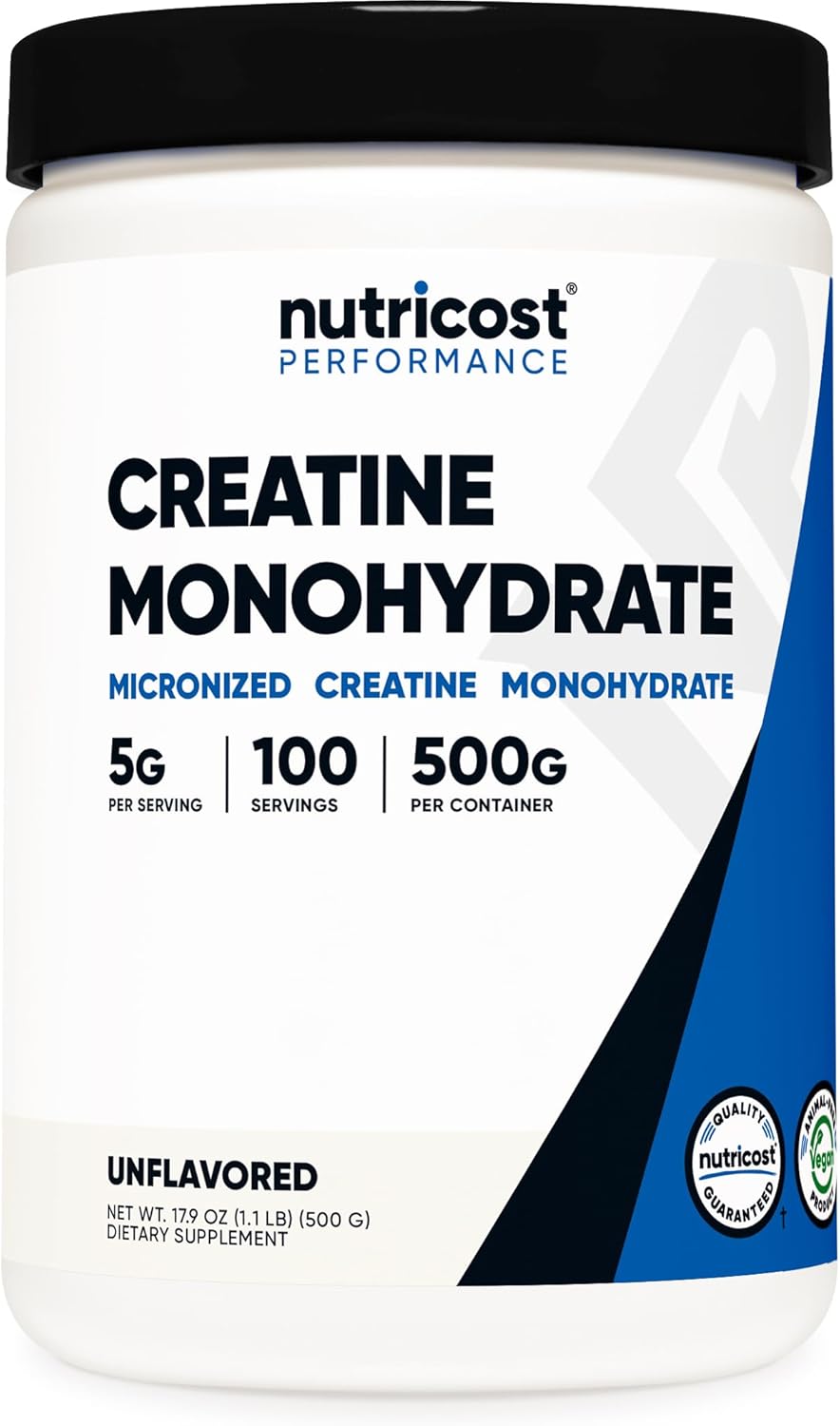
Nutricost Creatine Monohydrate
Best for men who want the simple default: plain monohydrate powder, easy daily dosing, and a value-first tub.
- Use when cost per 5 g is your main buying metric
- Choose unflavored if you want fewer flavor-system variables
- Check serving count and grams per scoop before reordering

Optimum Nutrition Micronized Creatine
Best for men who already know monohydrate works for them but want a smoother-mixing powder from a mainstream sports-nutrition brand.
- Use when gritty texture makes you skip regular powder
- Still compare it as monohydrate, not a new performance category
- Do not overpay if mixability does not improve adherence

Thorne Creatine
Best for men who care more about testing signals and label discipline than the cheapest possible scoop.
- Use when a cleaner premium label matters to you
- Better fit for tested-sport or contamination-sensitive buyers
- Still compare daily dose and cost per 5 g before buying
* As an Amazon Associate, we earn from qualifying purchases.
Creatine Forms Table: What to Buy, What to Question
| Creatine Form | Best Buyer Fit | Evidence Signal | Label Risk | PrimeForMen Verdict |
|---|---|---|---|---|
| Creatine monohydrate powder | Most men, most goals, most budgets | Strongest practical evidence base | Mostly brand quality and dose clarity | Buy first unless you have a specific reason not to |
| Micronized monohydrate | Men who dislike gritty texture | Same core form, better mixability | Overpaying for a small convenience upgrade | Good if it improves adherence |
| Creatine HCL | Men who cannot tolerate regular powder | Weaker buyer case than marketing suggests | Smaller serving claims can confuse value | Optional fallback, not the default |
| Creatine capsules | Travel, work bags, no-mess routines | Depends on total daily grams | Many capsules needed to reach 3-5 g | Convenient but often expensive |
| Creatine gummies | Men who will not use powder at all | Only useful if dose is real | Underdosing, sugar, high cost per dose | Treat as adherence tool, not superior creatine |
| Pre-workout creatine blend | Men already using a pre-workout | Can work if fully dosed | Proprietary blends and stimulant distraction | Do not make it your main creatine source |
Cost per 5 g: The Buying Metric Most Men Miss
The price per container is not the real price. The real price is what you pay for a practical 5 g day. Powder usually wins because one scoop can deliver the full dose. Capsules and gummies often look convenient until you calculate how many servings you need every day.
| Format | Typical dose math | Buying mistake | Better check |
|---|---|---|---|
| Powder | Often one 5 g scoop | Comparing only tub size | Cost per real 5 g serving |
| Micronized powder | Usually one 5 g scoop | Paying extra when mixability does not matter | Only upgrade if texture improves consistency |
| Capsules | Can require several capsules for 5 g | Ignoring capsule count per day | Total capsules needed for 3-5 g |
| Gummies | Often lower creatine per serving | Treating one gummy serving as a full dose | Creatine grams, sugar, and daily cost |
| Pre-workout blends | Sometimes unclear | Assuming the blend is fully dosed | Disclosed grams of creatine monohydrate |
Product-Category Decision Matrix
Use the matrix before you compare flavors. The right category is the one you will take daily at a real dose without wasting money.
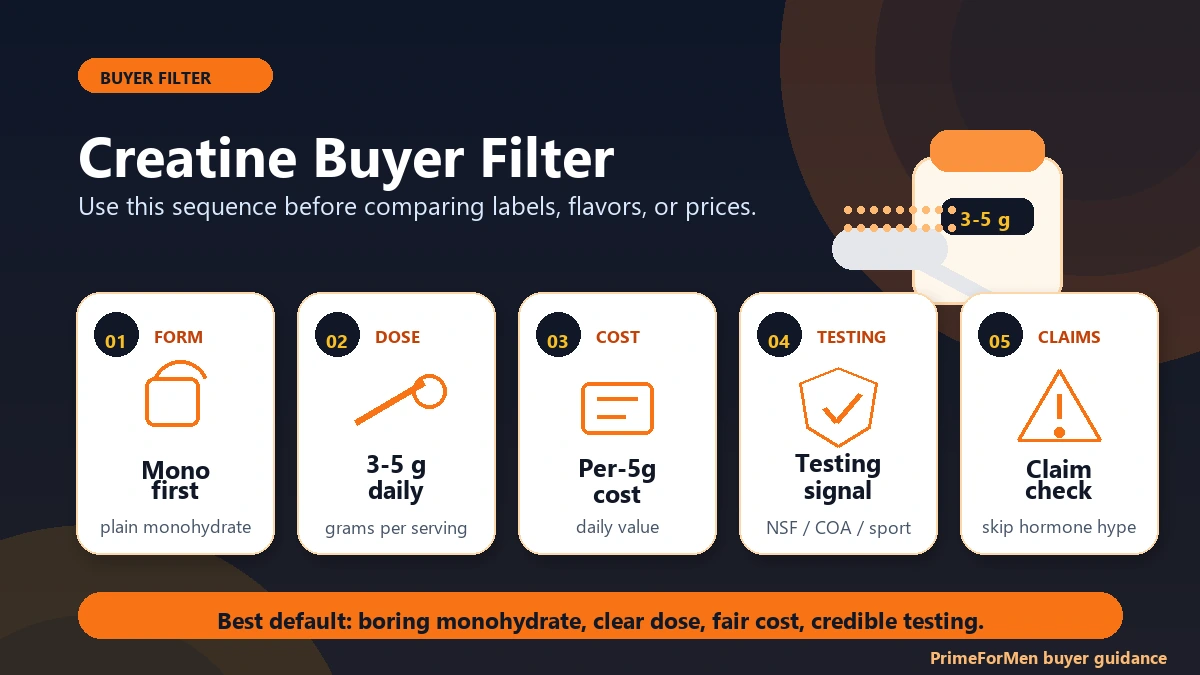
Creatine HCL, Buffered Creatine, Capsules and Gummies: When They Make Sense
Most men should not start with specialty formats. They can make sense when they solve a real adherence problem, but they should not be treated as automatically stronger than monohydrate.
What the Evidence Says Before You Buy
The International Society of Sports Nutrition position stand identifies creatine monohydrate as the most effective creatine form for increasing high-intensity exercise capacity and lean mass during training. That is why this buyer guide starts with monohydrate instead of pretending every new format deserves equal status.
OPSS also frames creatine monohydrate as a practical performance supplement where more is not automatically better. Its creatine monohydrate overview is useful for dose context: loading can saturate faster, but steady daily use is the simpler buyer rule for many men.
For supplement safety, NCCIH’s guidance on using dietary supplements wisely is a useful reminder that supplement decisions should account for medications, surgery, medical conditions, and hidden risk in multi-ingredient products.
Animated Buyer Signal Meter: Cheap, Tested, Boring Wins
The signal gets stronger when a product is plain monohydrate, clearly dosed, reasonably priced, and third-party tested. The signal drops when the label hides behind blends, hormone language, or convenience formats that cost five times more per real serving.
The Knowledge Gap Most Buyer Guides Leave Open
Most lists rank products as if taste and container design are the main issue. They are not. The real buying question is whether the product gives you enough creatine, at a fair daily cost, with a label you can verify. A delicious two-gram gummy is still a poor buy if you need multiple servings every day to reach a normal creatine dose.
Third-Party Testing: The Label Signal That Matters
Third-party testing is a quality-control signal, not a guarantee that creatine will work better. It can help confirm label accuracy, contamination controls, or banned-substance screening depending on the program. It does not prove you need creatine, and it does not replace medical context.
| Signal | What it helps verify | What it does not prove |
|---|---|---|
| NSF Certified for Sport | Banned-substance and label/manufacturing screening | That the supplement is necessary for you |
| Informed Sport | Sport-focused batch-testing context | That the product works better than monohydrate |
| USP-style verification | Ingredient identity, potency, and contaminant controls | That it is the best performance option |
| BSCG Certified Drug Free | Drug-free and banned-substance risk reduction | That it removes all personal or medical risk |
| Lot-specific COA | Batch-level proof trail for a specific product lot | That a vague old lab badge applies to your container |
| “Lab tested” without details | Very little unless the test, lot, and lab are clear | That the claim is meaningful |
OPSS explains why third-party certification matters for dietary supplements, especially where contamination consequences are real.
NSF Sport provides a searchable reference point for sport-certified products and banned-substance screening context.
Which Creatine Should Different Men Buy?
Budget-Focused Lifters
Buy plain monohydrate powder. Spend the saved money on food quality, a better training plan, or a protein product that actually fills a gap.
Men Over 40
Buy the same evidence-first form, but be stricter about medical context, hydration, bloodwork discussions, and avoiding miracle recovery claims.
Busy Professionals
Use micronized powder or capsules if convenience determines adherence. A slightly more expensive product can be rational if it prevents skipped weeks.
Tested Athletes
Prioritize banned-substance certification over flavor. Do not trust a marketplace listing when your sport, scholarship, or job depends on clean products.
Creatine Buyer Safety Checklist
Creatine is simple, but supplement buying is not risk-free. Before you make a product daily, check medical context, hidden blends, stimulant overlap, dose math, and whether the label is making drug-like promises.
The NCCIH supplement-safety overview is useful background here: supplements can still create risks through interactions, medical context, or poor label transparency. That makes label discipline and claim discipline part of the buying decision.
Best Creatine for Men Over 40
Men over 40 do not need a special age-branded creatine. They need a cleaner buying process. Choose plain monohydrate, avoid hormone promises, check medical context, keep hydration and training consistent, and do not use creatine to cover poor sleep, low protein, or a weak strength plan.
| Priority | Better rule | What to skip |
|---|---|---|
| Form | Plain creatine monohydrate unless texture or routine creates a real adherence issue | Age-branded blends with vague recovery language |
| Dose | Most practical daily-use plans sit around 3-5 g/day | Serving labels that make the real daily dose hard to calculate |
| Medical context | Discuss kidney disease, medications, bloodwork concerns, or diagnosed conditions with a clinician | Using supplement reviews as medical clearance |
| Training base | Pair creatine with progressive strength training, protein, sleep, and hydration | Expecting creatine to fix inconsistent training |
| Claims | Look for simple labels and credible testing signals | Testosterone, anti-aging, or miracle recovery framing |
Red Flags on a Creatine Label
- Proprietary blend: if the label hides the creatine dose, skip it.
- Hormone promises: creatine is not a testosterone booster and should not be marketed like one.
- Underdosed convenience: gummies and capsules often need multiple units to reach a practical daily dose.
- Fake urgency: limited drops and transformation language are not quality signals.
- No quality trail: if testing, manufacturing, or ingredient sourcing is impossible to verify, choose a cleaner label.
Your 24-Hour Buying Protocol
How Creatine Fits the Bigger Supplement Stack
Creatine sits next to protein, not above it. If your protein intake is inconsistent, a creatine tub will not fix the recovery bottleneck. If your training sessions are flat because sleep and calories are poor, a pre-workout may hide the problem for a week and make it worse later.
The clean stack for most men is simple: train progressively, eat enough protein, use creatine consistently, hydrate well, and keep stimulants optional. When you want the full map, use the PrimeForMen nutrition supplements pillar to put creatine in context instead of building a cabinet full of disconnected products.
Conclusion: Buy the Creatine You Will Actually Use
The best creatine supplements for men are not complicated. Plain creatine monohydrate powder wins most of the time because it gives you the strongest combination of evidence, dose control, and value. Micronized powder is a reasonable upgrade for mixability. Capsules or gummies are adherence tools, not superior science.
Start boring. Verify the label. Take it daily. Then let training, nutrition, sleep, and recovery decide how much value you actually get from the scoop.
Next Step: Build the Whole Supplement System
If creatine is only one piece of your stack, the logical next step is the nutrition and supplements pillar. It helps separate foundation supplements from hype buys so creatine, protein, pre-workout, and recovery products do not compete with each other.
Frequently Asked Questions About Best Creatine Supplements for Men
What is the best creatine supplement for men?
For most men, plain creatine monohydrate powder is the best starting point because it is well studied, easy to dose, and usually the best value. Choose micronized monohydrate if mixability is the main barrier.
Is creatine monohydrate still the best form?
Yes for most buyers. Monohydrate has the strongest practical evidence base, straightforward dosing, and usually the best cost per real daily serving.
Is micronized creatine better than regular monohydrate?
Micronized creatine is usually about texture and mixability, not a new performance category. It can be worth it if smoother mixing makes you more consistent.
Is creatine HCL worth the extra money?
Creatine HCL can be a fallback if regular monohydrate does not fit your routine, but it should not be the default buy. Compare dose clarity and cost before paying more.
Are creatine gummies as good as powder?
Only if they provide a real daily dose and you can justify the cost. Many gummies are more expensive per gram and may require multiple servings to match a simple scoop of powder.
Should men buy creatine capsules?
Capsules can make sense for travel or office routines, but check how many capsules equal 3-5 grams. Powder is usually cheaper and easier to dose.
How many creatine capsules equal 5 grams?
It depends on the capsule size. A 750 mg capsule would require about seven capsules to reach roughly 5 g, which is why serving math matters before buying capsules.
How do I calculate cost per 5 g of creatine?
Multiply creatine grams per serving by total servings to estimate total grams, divide by 5 to estimate 5 g doses, then divide product price by those doses.
What does third-party tested creatine mean?
It means an outside program or lab has checked some part of quality control, such as label accuracy, contaminants, banned substances, or batch documentation. The exact meaning depends on the program.
Should athletes buy NSF Certified for Sport creatine?
Tested athletes should strongly consider sport-certified products because contamination consequences can be serious. Flavor and price should not outrank banned-substance risk.
Is creatine safe for men over 40?
Many men over 40 can use creatine, but age alone is not the safety question. Kidney disease, medications, diagnosed conditions, bloodwork concerns, and training context matter more.
Does creatine increase testosterone?
Creatine should not be bought as a testosterone booster. If a product uses hormone promises to sell creatine, treat that as a label red flag.
Should I buy creatine in a pre-workout blend?
Usually no as your main creatine source. A pre-workout can include creatine, but proprietary blends and stimulant-heavy labels often make the real daily creatine dose harder to verify.
What is a proprietary blend and why is it a problem?
A proprietary blend lists ingredients without clearly showing the dose of each one. For creatine, that makes it harder to know whether you are getting a practical daily amount.
Should I load creatine or just take 3-5 g per day?
Loading can saturate muscles faster, but daily use without loading is simpler for many buyers. Consistency usually matters more than a complicated protocol.
How do I know if a creatine brand is trustworthy?
Look for a clear Supplement Facts panel, a disclosed creatine dose, third-party testing, realistic claims, and no proprietary blend. Tested athletes should prioritize banned-substance certification.
What should I check before buying creatine on Amazon?
Check the form, grams per serving, serving count, cost per 5 g, testing signal, seller credibility, and whether the label avoids hormone, fat-loss, and disease-style claims.