

Choose post-workout supplements by their purpose. Compare meals, protein, creatine and fluid needs, with a practical record and label checks.
- The next meal and daily intake shape the decision.
- A short turnaround needs its own nutrition plan.
- Check exact labels and existing products before buying.
Bottom line Start with the meal you can access. Add a product only when its purpose, label and suitability fit your routine.

Post-workout supplements can make food or an established supplement routine easier to manage. Start with the next meal, the protein already present across the day and the time before another demanding session. A recovery shake is optional; a busy day with poor meal access is a different problem from finishing a normal home workout before dinner.
This guide concerns general nutrition decisions for adults. Kidney disease, fluid or electrolyte restrictions, medication questions and an existing clinical nutrition plan need individual advice before changing supplements. We have not independently tested the products below.
Go to optional protein and creatine choices · Plan your next meal and record
Quick summary: choose a supplement by its job
- Protein powder is one way to supply dietary protein when ordinary food is inconvenient.
- Creatine has a studied role in a continuing training routine; it is not an instant soreness treatment.
- Carbohydrate and fluid planning depend on the activity and turnaround. A demanding second session soon after the first needs different planning from tomorrow’s workout.
- Read the selected flavor, serving size and ingredients. Avoid buying a bundle that duplicates what you already use.
What are you trying to solve after training?
Write the problem in one sentence before comparing tubs. “Dinner is ready when I get home” suggests a different purchase from “I finish training between appointments and have no way to carry a meal.” A third situation, two demanding sessions on the same day, deserves a sports nutrition plan that accounts for both sessions.
| Task | Food or routine option | Where a product could fit | Check before buying |
|---|---|---|---|
| Supply protein | A meal with a suitable protein food | A powder when storage, preparation or appetite makes food difficult | Actual protein per serving, allergies, tolerance and the rest of the day |
| Prepare for another demanding session | Plan meals and carbohydrate around the schedule | A portable food or drink if the agreed plan needs one | Turnaround, session demands and individual nutrition advice |
| Replace fluid | Access to drinks during the usual routine | A suitable carrying or drink option for the activity | Duration, conditions and any fluid or electrolyte restrictions |
| Use creatine | A continuing training and supplement decision | Plain creatine monohydrate with a disclosed label | Purpose, current intake, suitability and duplicate ingredients |
Daily protein comes before an automatic extra shake
The ISSN position stand on protein and exercise discusses an overall daily range of 1.4 to 2.0 g/kg for most exercising individuals. That is research guidance for its population, not a personal target for every man over 50 or someone with a medical restriction. It also discusses protein quality and the importance of accounting for the full day’s intake.
If you already have a target agreed with a dietitian, use that target. Record actual portions from meals and the selected powder label before deciding whether something is missing. If your intake is unknown, a second scoop does not make the uncertainty disappear. Keep a short food record for the nutrition discussion.
Keep protein grams separate from powder weight. A scoop may contain flavoring and other ingredients alongside protein. Likewise, the number on a tub’s front can refer to a serving containing more than one scoop. Use the Nutrition Facts panel and its stated serving, then check what you actually prepare.
For example, imagine a reader who has breakfast, lunch and dinner planned but regularly misses lunch on training days. The practical question is whether he can carry a meal, arrange lunch earlier or use a convenient protein food. The powder is an option for that specific gap. This example assigns no calorie or protein total; the quantities depend on the actual foods and portions.
When the next meal is available
A familiar evening home workout might finish while dinner is being prepared. Put dinner in the record: the protein food, carbohydrate food, vegetables and drinks you intend to have. You can use chicken with rice, tofu with noodles, or beans with a grain as planning examples, adjusted to your dietary requirements. These are serving suggestions, not tested recovery recipes.
When food is available, an extra shake should have an identified purpose, such as a documented intake gap or an individual plan. An ordinary meal also needs to fit digestion, appetite and the rest of the day.
When meal access is difficult
A lunch-break workout followed by a commute may leave no kitchen or refrigerator available. Record when you can next eat and what you can safely carry. A shelf-stable protein option or powder may be convenient, but check how it will be prepared, stored and consumed. A tub left at home is not useful for an appointment across town.
Compare the food-access problem you need to solve. Someone who dislikes shakes could use a suitable ordinary food instead. A milk allergy excludes whey; a plant-based choice still needs its own ingredient and allergen check. Our protein powder guide covers format choices. “Vegan” describes a category and does not prove that every ingredient agrees with your digestion.
Plan beyond the shake
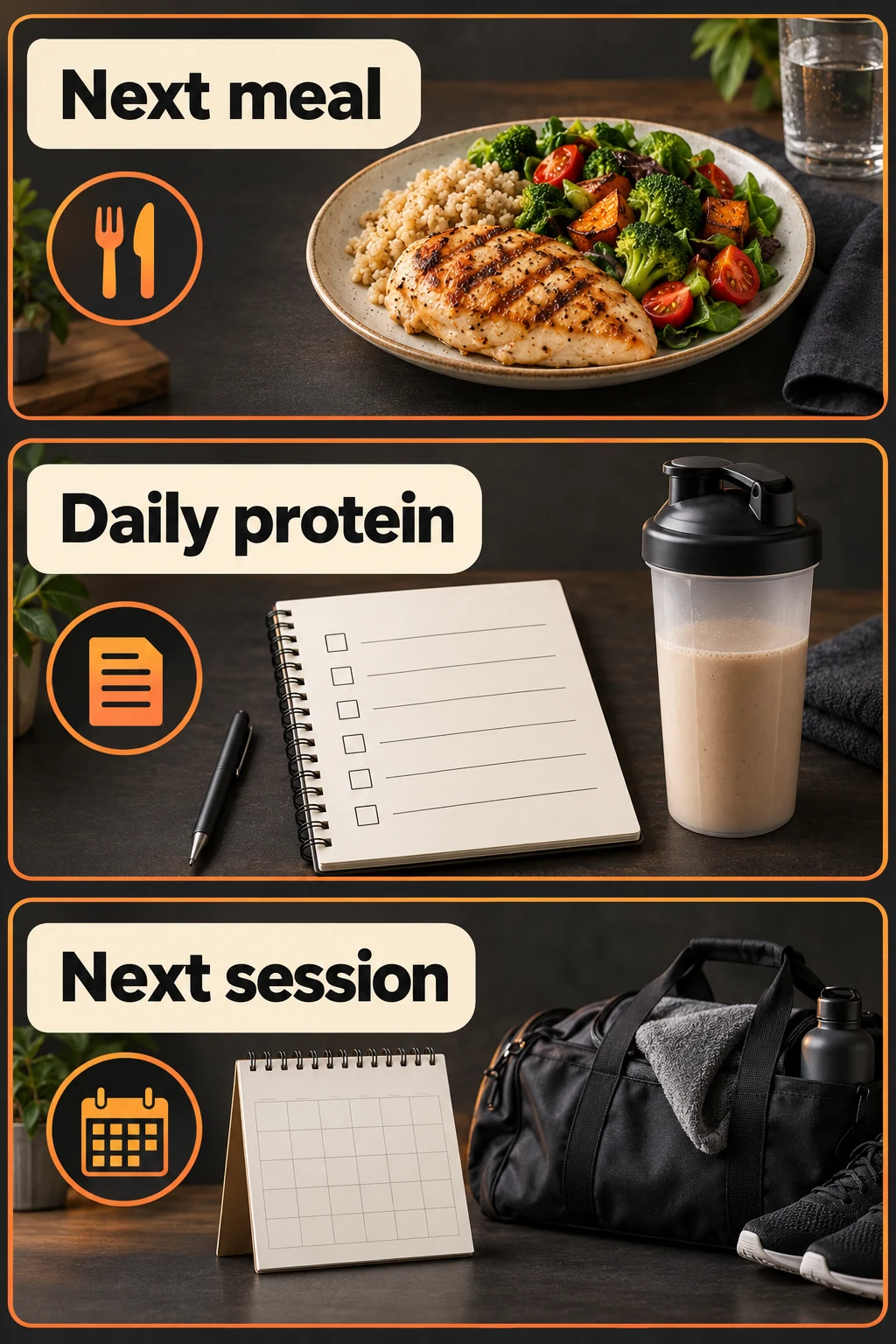
Review the next meal, protein across the day and the demands of the next session. A supplement can fill a specific food or convenience gap; it is not a required meal replacement. This process diagram does not show a recovery effect or a dosing deadline.
Silent, 8.5 seconds. Open the animation directly. Playback pauses offscreen; reduced-motion preferences keep playback manual. Essential explanations remain in readable text.
Timing changes with the session and the next appointment
The 2017 ISSN nutrient-timing position stand emphasizes overall daily protein and explains that the previous meal affects the urgency of post-exercise feeding. Its recommendations concern healthy exercising adults, particularly trained people. They do not establish a universal 30-minute deadline for every workout.
The paper also treats rapid glycogen restoration, when recovery time is under four hours, as a distinct situation. That matters for demanding repeated sessions or competition. It is not a reason to apply an athlete’s rapid-refueling protocol to a short home session with the next workout tomorrow. This guide does not calculate those protocols.
If your schedule genuinely includes another demanding session soon, bring the session duration, intensity, available food and turnaround to a qualified sports dietitian. “Another session” might mean a casual walk or a hard competition; those are different demands. Write the actual plan instead of choosing a carbohydrate powder from a generic recovery list.
Watch Mayo Clinic explain food before a workout
Dietitian Angie Murad discusses food and meal timing before exercise. Use this clip as context for the day around a session. It does not explain a post-workout supplement dose or establish a recovery window.
Watch the original video on YouTube if the embed does not play.
Creatine: a continuing decision with a different purpose
NIH’s exercise-supplement guidance describes creatine evidence chiefly around repeated high-intensity activity and training. Creatine monohydrate is the best studied form. It is not interchangeable with dietary protein, and an increase in water weight can occur. Study findings in healthy participants do not establish suitability for every medical condition.
Check whether you are considering plain creatine or a blend that already includes it. Write down any existing product before adding another. A whey-and-creatine bundle contains two products; buying it for protein alone may add a supplement you did not intend to use. The same duplicate check applies to a “recovery” blend added to a separate routine.
Choose a place in the routine you can actually keep, if creatine is appropriate for you. The decision should survive a rest day; it should not depend on whether today’s muscles feel sore. Read the current manufacturer’s directions and individual advice. Our helper does not choose a loading schedule, daily dose or treatment change.
For the ingredient discussion and food context, see creatine and protein after 50. Keep age-related questions attached to the relevant evidence and medical history, rather than assuming a special “over 50” label has been tested in your circumstances.
Fluid and electrolyte products need an activity context
NIH guidance distinguishes the fluid and fuel demands of prolonged exercise and extreme conditions from a routine session. That distinction helps you ask the right question before buying an electrolyte product. Record where you trained, how long it lasted and whether access to drinks was difficult. A package’s serving size is not a universal fluid requirement.
Read the electrolyte label alongside the ingredients of any other drink powder. Some blends include caffeine or additional supplements. If your clinician has restricted fluid, sodium or potassium, use that plan and ask before substituting a sports drink. This section does not calculate sweat loss or diagnose dehydration from soreness, thirst or a wearable reading.
A label check before the next order
- Confirm the exact product, flavor and package. A listing can offer several variants.
- Read the serving definition and protein or named ingredient amount. Record what you actually use.
- Check allergens and other active ingredients against your existing foods, drinks and supplements.
- Look up any claimed independent certification in the certifier’s directory for the actual product. Keep a dated record.
- Choose the purpose and question that remain after those checks. Leave unknown information marked unknown.
NSF explains its Certified for Sport program as independent verification with banned-substance screening. Certification scope differs between programs. A verified listing does not predict muscle gain or establish your personal medical suitability; a brand logo on its own does not confirm that every flavor or product carries the same certification.
Protein foods and powders supply amino acids, so a BCAA label should not be treated as proof that another tub is needed. Check the existing protein sources and the specific reason for adding a separate amino-acid product. The protein position stand supports keeping protein quality and total intake in view. It does not make every retail recovery stack equivalent.
Plan the next meal and keep a label record
Choose the task and schedule. Keep actual food and product details beside the result. This helper does not calculate a nutrition dose or assess exercise suitability.
Record your next available meal, the full day of food and the next demanding session. Rapid turnaround and medical restrictions need individual planning. Check exact labels and current products before adding a supplement.
Keep your review with you
Save your actual session, meal access and current labels in the eight-field PDF. Fill and save it, or print it for handwritten notes. It does not calculate an intake target.
Download my post-workout meal and label record (fillable PDF). The helper print button creates a separate record with your current choices, notes and checkmarks.
Optional whey and plain creatine formats
The whey powder and plain creatine have different jobs. Choose either only when it fits your food access or established supplement plan. They are not a required recovery stack. We have not independently tested these products.
* As an Amazon Associate, PrimeForMen earns from qualifying purchases. Check the exact selected product, current label and suitability before ordering.
Best for: A milk-based powder format when ordinary protein food is inconvenient. Skip if milk allergy, suitability, tolerance or meal access makes another option preferable. Current Amazon listing: Optimum Nutrition Gold Standard Whey Protein, Double Rich Chocolate, 5 LB Best for: A plain creatine format for an individually suitable continuing routine. Skip if there is no agreed purpose, suitability is unresolved or an existing product already supplies it. Current Amazon listing: Optimum Nutrition Creatine Monohydrate Powder, Unflavored, 120 Servings * As an Amazon Associate, PrimeForMen earns from qualifying purchases.Recommended Products

Optimum Nutrition Gold Standard Whey, Double Rich Chocolate, 5 lb
View on Amazon

Optimum Nutrition Creatine Monohydrate, unflavored, 120 servings
View on Amazon
Questions about post-workout supplements
Do I need a shake after every workout?
No automatic shake rule fits every session. Consider the next meal, overall food intake and practical access to food. A powder can be convenient when it solves a real problem, but training alone does not tell you that dietary protein is missing.
Is there a strict 30-minute recovery window?
The timing position stand accounts for the previous meal, daily intake and the time before the next demanding session. Those conditions differ. Rapid turnaround can need special planning; a fixed deadline for every home workout is an oversimplification.
Are creatine and whey the same kind of recovery supplement?
No. Whey supplies dietary protein; creatine has a separate studied role in high-intensity activity and training. Decide whether either fits before buying a bundle. Check for creatine already present in a blend.
Does a dairy-free powder remove all suitability concerns?
No. Read the actual plant protein, flavoring, sweeteners, allergens and preparation instructions. Dietary preference does not establish tolerance, independent product testing or compatibility with a clinical nutrition plan.
Can the helper set my protein or electrolyte dose?
It organizes a question and a record. It does not estimate food requirements, sweat loss, kidney function or a safe dose. Bring the actual label and activity details to a clinician or dietitian when individual guidance is needed.
Put the next meal in the plan
Record the food you can access after the session and the next demanding activity. If a product solves a specific convenience or established supplement need, compare its exact label and alternatives. Keep questions about medical restrictions and persistent difficulty for an individual review.
Continue with muscle recovery techniques for the training-week record, or explore our nutrition guides.
Medical disclaimer: this article provides general education. It does not diagnose a condition, provide medical clearance or prescribe a supplement dose. Individual needs, restrictions and treatment decisions belong with a qualified professional.