
Choose the best protein powder for men by goal, digestion, testing, leucine-rich protein quality, and product fit.
- Use whey isolate as the default when calories, lactose, and protein density matter.
- Check third-party testing, protein per scoop, sugar, allergens, and digestive fit before buying.
- Match the protein type to the job: isolate, hydrolyzed whey, casein, or plant blend.
Bottom line Buy the format that solves your constraint, then use it consistently to cover a real daily protein gap.
Best protein powders for men are not defined by the loudest flavor, the biggest tub, or the highest-protein claim on the front label. The right choice depends on your goal, digestion, calorie budget, training age, and whether the brand makes testing and ingredient quality easy to verify.
Quick Summary: Best Protein Powders for Men
- Whey isolate is the best default for most men who want high protein, lower lactose, and fewer calories per serving.
- Hydrolyzed whey can be useful when regular whey feels heavy or causes digestive discomfort.
- Micellar casein is better before bed, during a cut, or when long gaps between meals make hunger harder to manage.
- Look for protein per scoop, leucine-rich complete protein, low sugar, clear allergens, and third-party testing signals.
- Protein powder only covers a protein gap. It does not replace training, food quality, sleep, or progressive overload.
The Prime Perspective
Protein powder is not a magic muscle product. It is a convenience tool. Its job is to help you hit a daily protein target when normal food is inconvenient, appetite is low, calories are tight, or training recovery needs a simple repeatable habit.
For men over 40, the buying decision should be stricter. Digestion matters more. Calories matter more. Consistency matters more. And because muscle protein synthesis becomes less forgiving with age, the serving needs enough high-quality essential amino acids to be worth the shake.
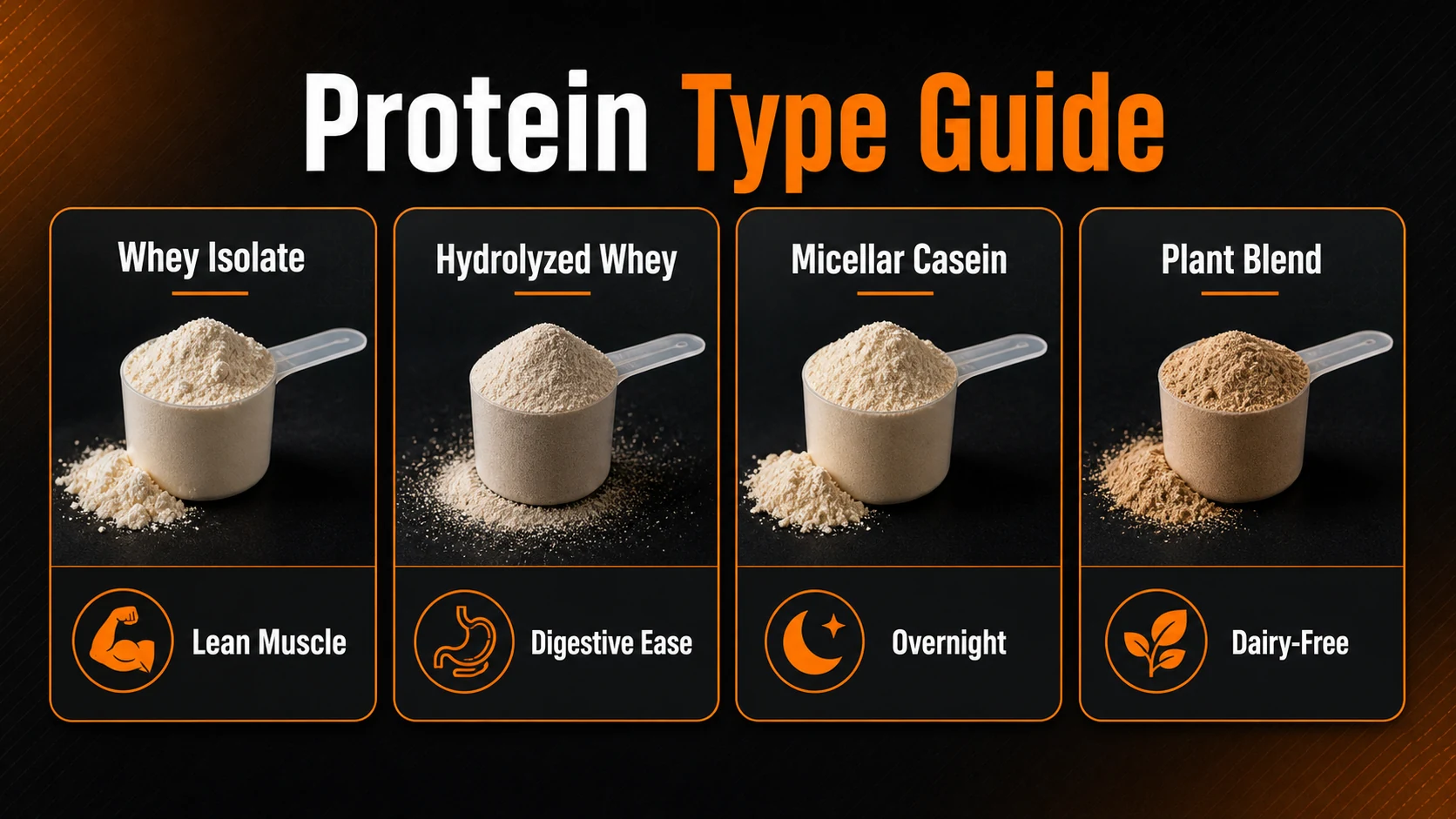
Best Protein Powder by Goal and Constraint
The best protein powder for men is the one that solves the real constraint. A man cutting from 24% body fat needs a different tool than a man who cannot tolerate lactose or a man who needs a slow protein before bed.
| Goal or constraint | Best protein type | Why it fits | What to watch |
|---|---|---|---|
| Lean muscle with tight calories | Whey protein isolate | High protein density, lower lactose, lower sugar, easier to fit into a cut. | Some isolates still use heavy sweeteners or gums. |
| Digestive sensitivity | Hydrolyzed whey isolate | Pre-broken peptides can feel lighter than standard concentrate blends. | Often more expensive and not necessary for everyone. |
| Nighttime protein or satiety | Micellar casein | Slower digestion can help during long gaps between meals or before bed. | Still dairy-based; not ideal if dairy bothers you. |
| Dairy-free diet | Plant blend | Pea plus rice or multi-source blends cover amino acid gaps better than single-source plant powders. | Check texture, sodium, sweeteners, and heavy-metal testing. |
| Budget first | Whey blend | Can work if digestion is fine and the label is clean enough. | Lower protein density, more lactose, more filler risk. |
Amazon.com Picks: High-Quality Protein Options
These are direct product CTAs, not generic category links. Pick by use case: premium daily whey, digestive-ease isolate, or slow casein for satiety and nighttime coverage.

Momentous Essential Grass-Fed Whey Protein
Best for: A premium daily whey option with a cleaner positioning than most mass-market tubs.
Current Amazon listing: Momentous Grass-Fed Whey Protein Isolate Powder, 20g, Vanilla
- Good first pick when you want a simple whey base instead of a dessert-style blend.
- Useful for men who want protein convenience without turning the shake into a high-calorie meal.
- Check the current flavor, serving size, and testing notes before choosing a tub.

Dymatize ISO100 Hydrolyzed Whey Isolate
Best for: Digestive ease and a lean post-workout protein profile matter more than lowest price.
Current Amazon listing: Dymatize ISO100 Protein Powder, 100% Whey Isolate, Gourmet Chocolate
- Hydrolyzed isolate format is a strong option for men who dislike heavy whey concentrates.
- Works well when you want high protein with low sugar and low fat.
- Best used as a practical post-workout or low-appetite protein tool, not a full meal.

Legion Casein+ Micellar Casein
Best for: Slower protein before bed, during a cut, or between long gaps in meals.
Current Amazon listing: Legion Casein+ Micellar Casein Protein Powder, Dutch Chocolate, Grass-Fed
- Micellar casein is slower than whey and can help with nighttime or long-gap protein coverage.
- Useful when satiety matters as much as fast amino acid delivery.
- Skip it if dairy proteins consistently bother your stomach.
* As an Amazon Associate, PrimeForMen earns from qualifying purchases.
Whey Isolate vs. Concentrate: The Practical Difference
Whey concentrate is cheaper because it keeps more lactose, fat, and carbohydrate. That is not automatically bad, but it can be a problem if your stomach reacts poorly or if you are trying to keep calories tight.
Whey isolate usually gives more protein per calorie and less lactose. If the label mentions microfiltration or cross-flow microfiltration, that is a useful manufacturing signal, but it is not enough by itself. The final label still matters: grams of protein, serving size, added sugar, sweeteners, gums, and testing.
Whey isolate
Use it when you want lean protein with fewer digestion and calorie tradeoffs.
Hydrolyzed whey
Use it if regular whey feels heavy or you want an easy post-workout shake.
Micellar casein
Use it before bed or when a thicker shake helps you stay full.
The Leucine Trigger and Why Serving Size Matters
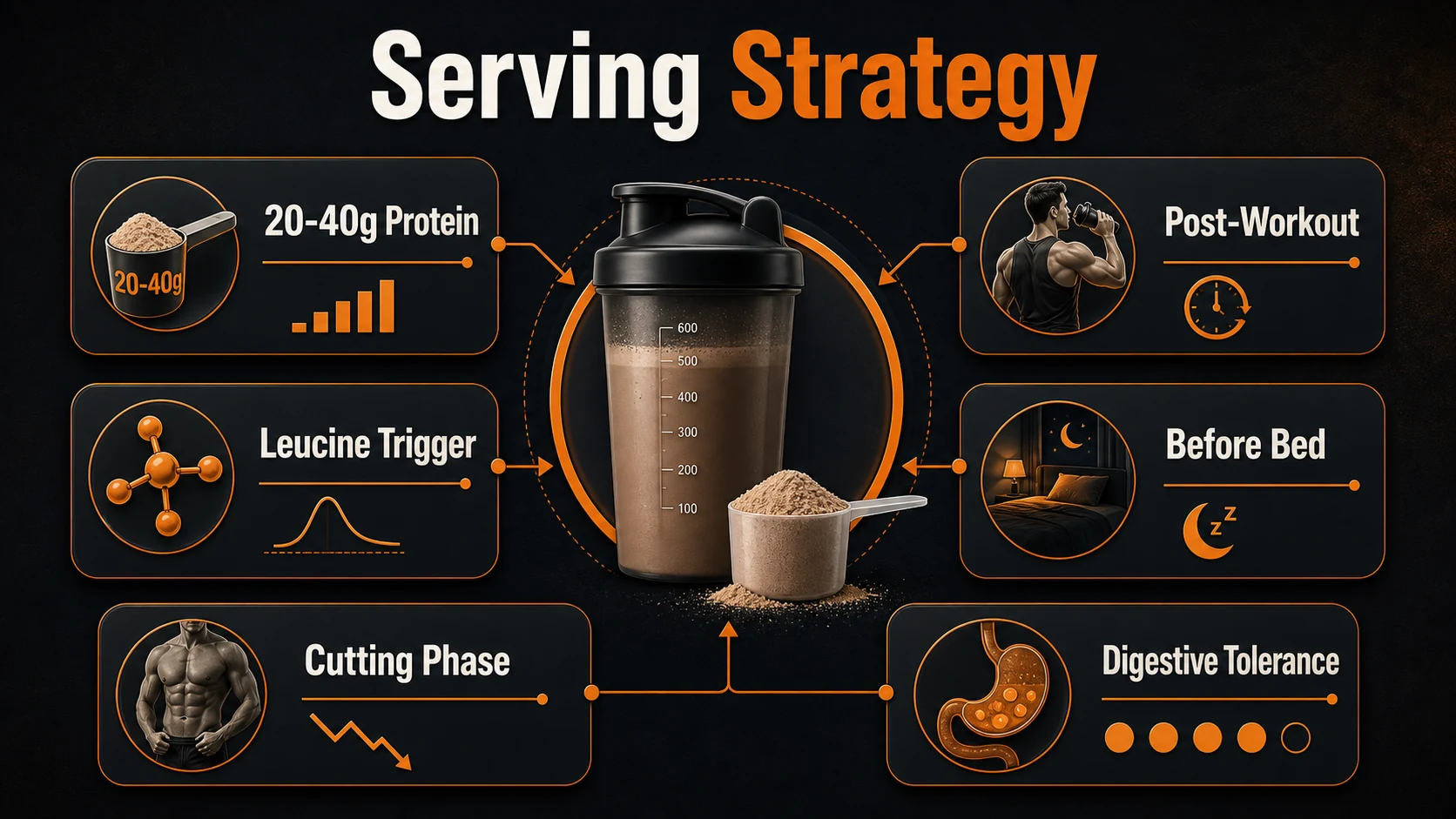
The International Society of Sports Nutrition notes that protein quality, essential amino acids, and total daily intake matter for active people. In practice, this means a serving should deliver enough complete protein to be useful, not just a scoop that looks impressive on the front label.
Many men do well with roughly 20-40 grams of high-quality protein in a feeding, depending on body size, meal context, training, and the rest of the day. The exact number is individual, but under-dosed “protein snacks” often fail because they do not move the daily total meaningfully.
For a deeper nutrition timing context, read protein timing for muscle gain after 40. For training context, pair protein with progressive overload and strength training basics.
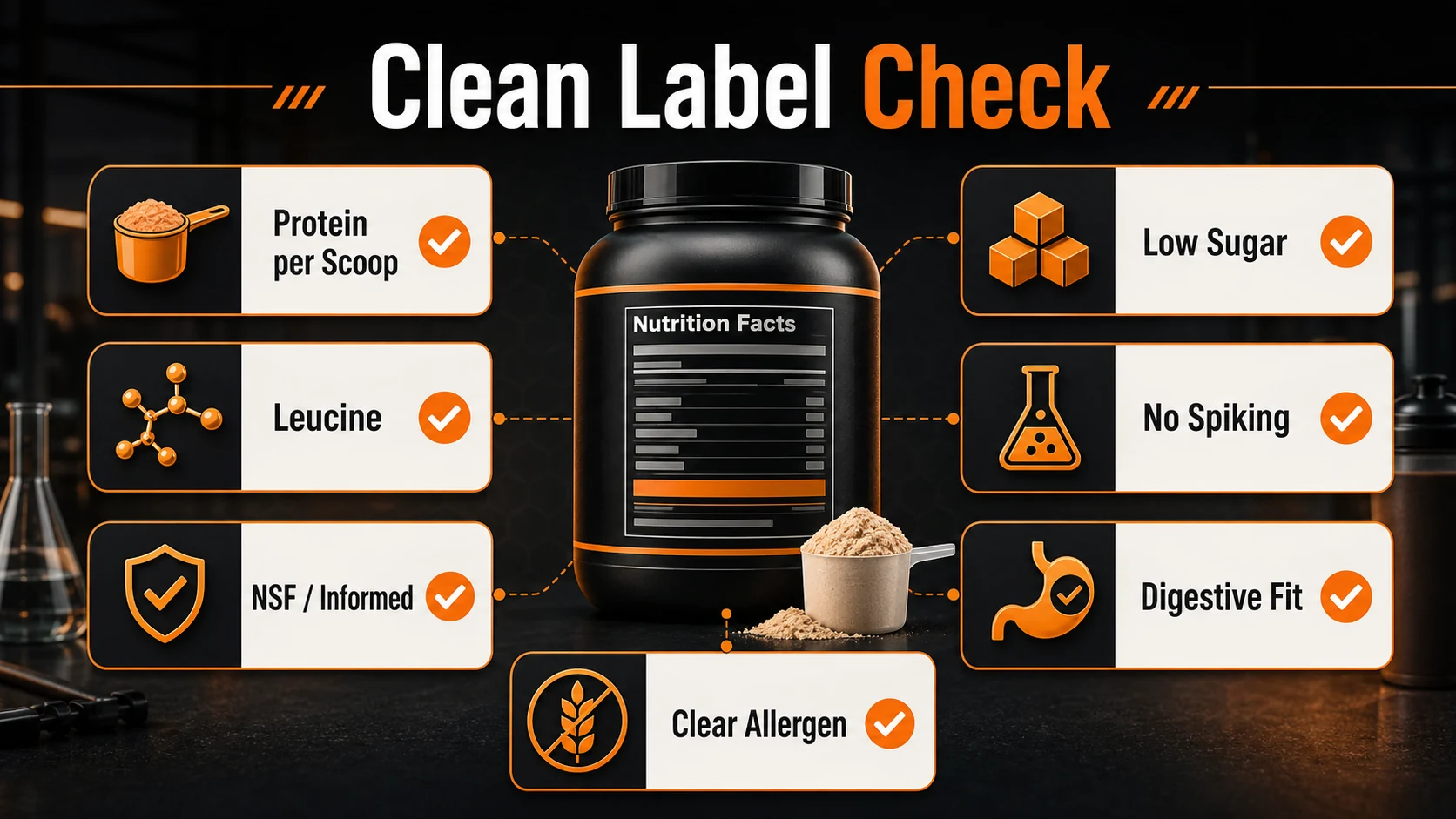
The Clean Label Check Before You Buy
A good protein powder label should be boring in the right way. You should not need a chemistry degree to understand the protein source, calories, allergens, and sweeteners. You also should not assume “natural” means tested.
| Label checkpoint | Good sign | Red flag |
|---|---|---|
| Protein per scoop | High percentage of the scoop is actual protein. | Huge scoop with modest protein and lots of extras. |
| Testing signal | NSF Certified for Sport, Informed Choice, or clear third-party testing documentation. | No testing detail on a product used daily. |
| Amino acid profile | Complete protein with naturally strong essential amino acids. | Amino spiking or added free amino acids used to inflate protein claims. |
| Sugar and calories | Fits your calorie target without becoming dessert. | High sugar, high fat, and “mass gainer” macros sold as lean protein. |
| Digestive fit | Low lactose, simple ingredients, clear allergen labeling. | Repeated bloating, cramps, or intolerance you ignore because the tub was expensive. |
The National Center for Complementary and Integrative Health explains that supplement claims and safety deserve careful review, so label discipline matters. For sport-specific testing, NSF Certified for Sport and Informed Choice are useful third-party testing signals to understand.
Protein Powder Mistakes Men Keep Making
Buying calories, not protein
Some tubs are closer to a sweet shake than a lean protein tool. Check calories and scoop size.
Ignoring digestion
A powder you cannot tolerate will not stay consistent. Switch format before blaming protein itself.
Using powder to fix bad meals
Protein powder helps a gap. It does not replace food quality, fiber, micronutrients, or meal planning.
If your broader supplement stack is messy, start with supplement recommendations and keep the stack simple. Creatine has stronger performance logic than many add-ons; see the creatine guide and best creatine supplements.
When to Skip Protein Powder
If you are over 50, first decide whether the gap is total protein, convenience, or training support. Our guide to creatine and protein after 50 separates those jobs before you choose a tub.
Knowledge gap: Many protein-powder reviews assume everyone should buy a tub. That is not true.
Skip protein powder if normal food already covers your target, if a dairy product repeatedly causes symptoms, if you have kidney disease or medical nutrition restrictions, or if the supplement makes your diet less consistent. Also skip any product that refuses to make basic label, allergen, or testing information clear.
Conclusion: Buy the Format That Solves the Constraint
The best protein powders for men are practical, clean, and goal-specific. Use whey isolate when you want the strongest default. Use hydrolyzed isolate when digestion is the priority. Use micellar casein when slow protein and satiety matter. Use plant blends when dairy is off the table.
Then stop overthinking the tub. Hit the daily target, train hard enough to need the protein, sleep, and review progress over weeks instead of judging one shake.
Sources and Testing Standards Used
Frequently Asked Questions About Protein Powders for Men
What is the best protein powder for men?
The best protein powder for men depends on goal and digestion. Whey isolate is the best default for lean muscle and low lactose, hydrolyzed whey can help sensitive digestion, casein is useful before bed, and plant blends fit dairy-free diets.
Is whey isolate better than whey concentrate?
Usually, yes, if you want higher protein density, lower lactose, fewer calories, and easier digestion. Whey concentrate can still work if your stomach tolerates it and the calories fit your plan.
Why does protein powder make some men bloated?
Common reasons include lactose, large serving size, sugar alcohols, gums, thickeners, fast drinking, or using a powder that does not match your digestion. Try smaller servings or a low-lactose isolate before quitting protein entirely.
How much protein powder should men take?
Use only enough powder to cover the gap between food intake and your daily protein target. Many men use one serving with 20-40 grams of protein, but body size, training, meals, and tolerance matter.
Is casein better before bed?
Casein is slower digesting than whey, so it can be useful before bed or during long gaps without food. It is not mandatory if your daily protein intake is already consistent.
Should men over 40 use protein powder?
Men over 40 do not need protein powder specifically, but they do need enough high-quality protein and resistance training to support muscle. Powder is useful when appetite, schedule, or calories make food-only intake harder.
Are plant protein powders good enough?
They can be, especially multi-source blends such as pea plus rice. Single-source plant proteins may be less complete, so check protein dose, amino acid quality, taste, digestion, and testing.
What testing should I look for?
Look for clear third-party testing, NSF Certified for Sport, Informed Choice, or transparent batch testing. This matters more when a product is used daily.
Medical disclaimer: This article is editorial guidance for supplement selection and training nutrition. It is not medical advice. If you have kidney disease, food allergies, digestive disease, a diagnosed condition, or medication questions, speak with a qualified clinician before changing protein or supplement intake.
Affiliate disclosure: Some product links may be affiliate links. PrimeForMen may earn from qualifying purchases, but recommendations are based on topic fit and practical reader value.