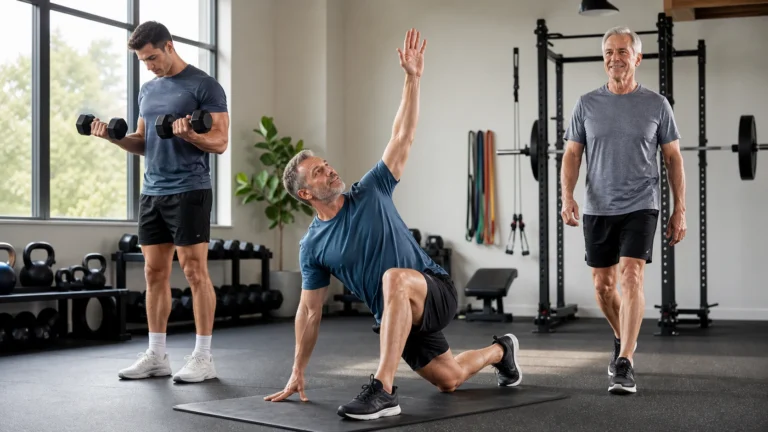

Fitness motivation is unreliable when it depends on feeling inspired before every workout. The better system is to make action easier than avoidance: clear cue, tiny start, visible tracking, and enough repetition to make training normal.
You do not need a new personality to stay consistent. You need fewer decisions, smaller start lines, better feedback, and a plan that still works on low-energy days.
TL;DR
- Motivation follows action more often than it comes before action.
- Use a fixed cue, a small first step, and a simple tracking method.
- Make the easiest workout so easy that skipping feels less logical.
- Plan for low-energy days instead of pretending they will not happen.
- Build identity through repeated proof: I train even when the session is small.
The Prime Perspective
Most motivation advice tells men to want it more. That is weak engineering. Desire changes with sleep, stress, work, and mood.
A better plan lowers the activation cost. When the first two minutes are clear, you stop debating the whole workout and start doing the next action.
The Motivation Loop
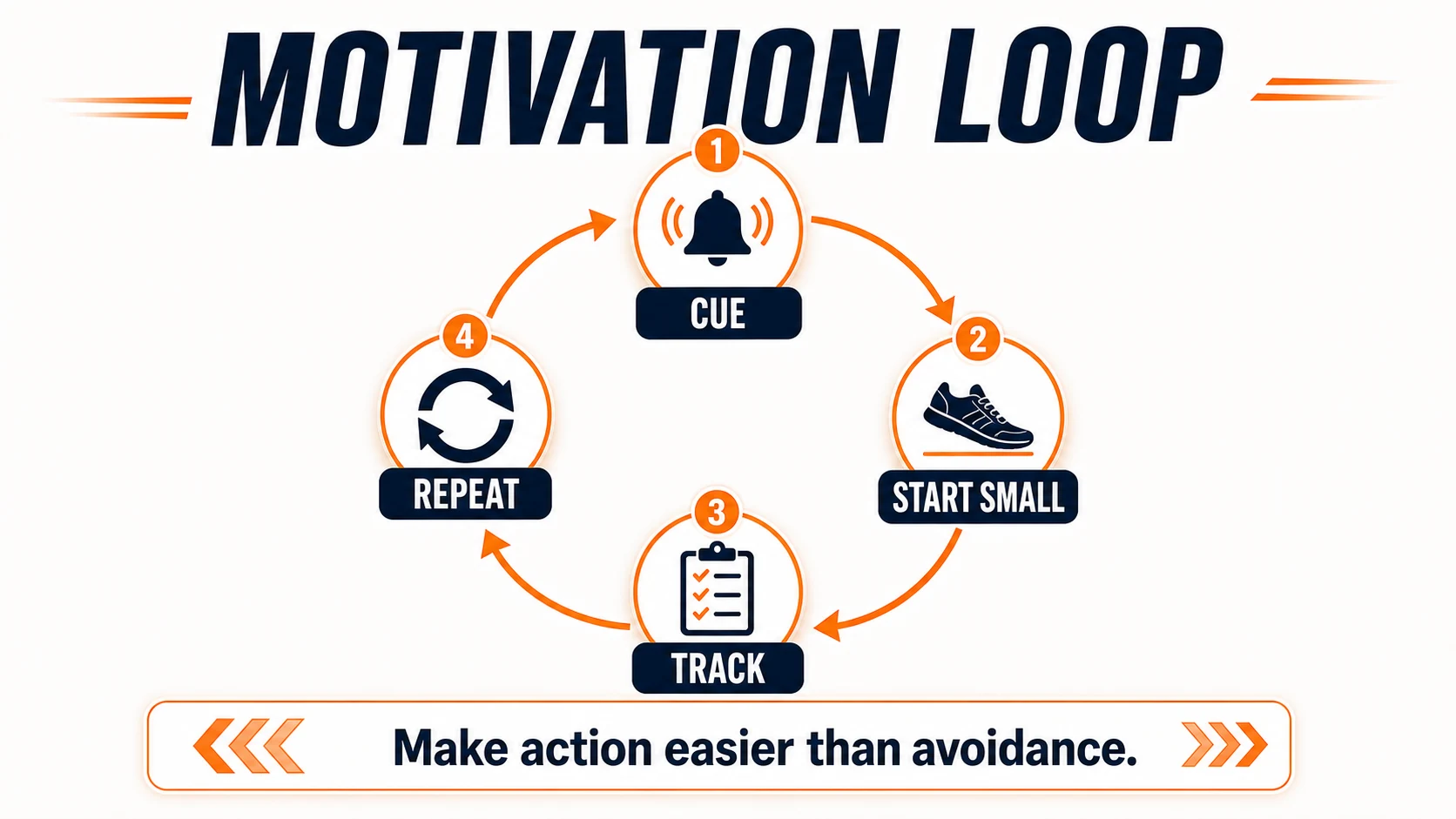
Motivation becomes more dependable when you turn it into a loop. A cue starts the behavior. A tiny action breaks resistance. Tracking creates proof. Repetition makes the next start easier.
Amazon.com Picks: Low-Friction Training Kit
These categories help when the main problem is getting started. The point is not buying motivation; it is making the first action easier.
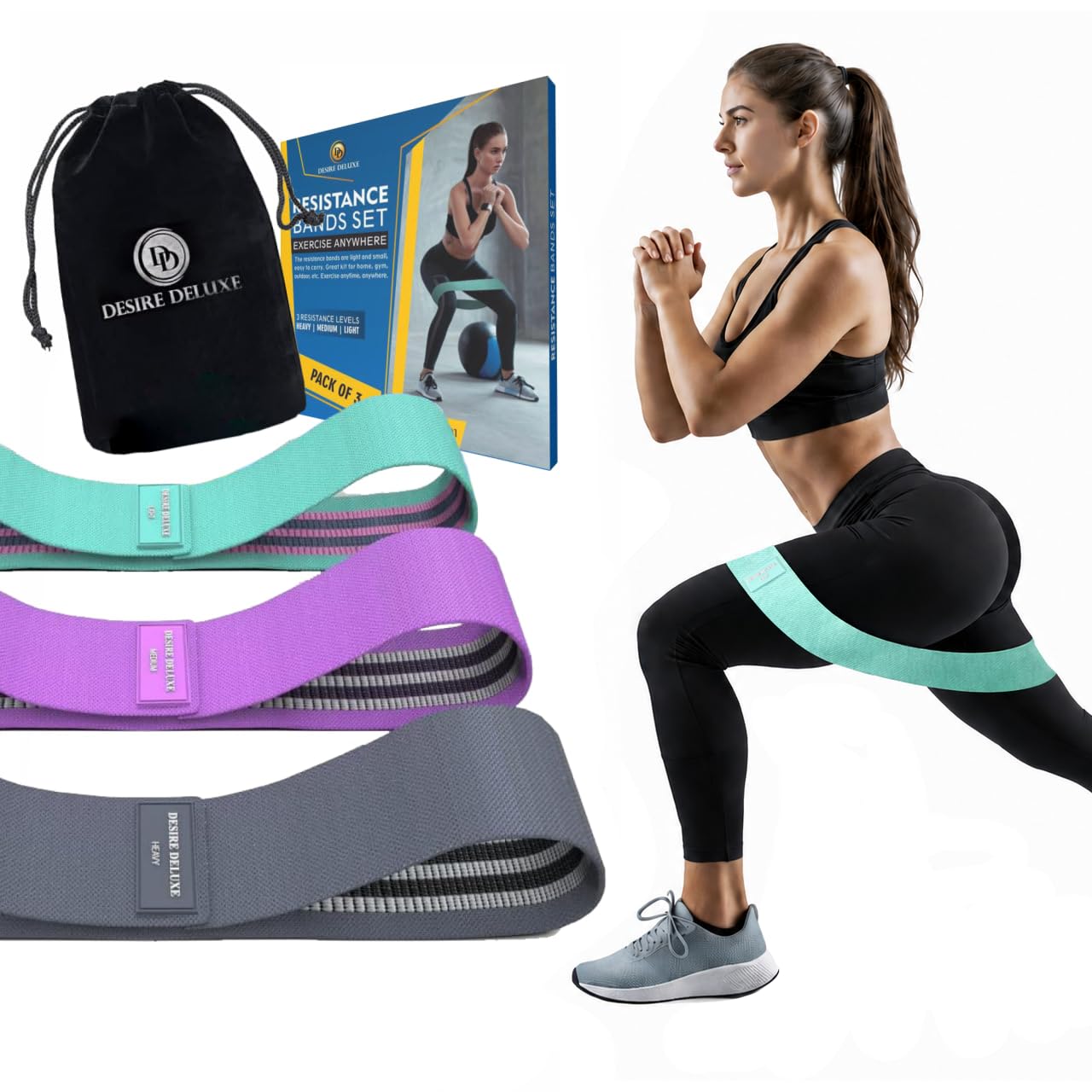
Resistance Bands
Best for quick strength sessions when you need a setup that starts in seconds.
- Easy to keep visible near a desk, mat, or doorway
- Works for rows, presses, warm-ups, hips, and shoulders
- Useful for short fallback workouts on low-energy days
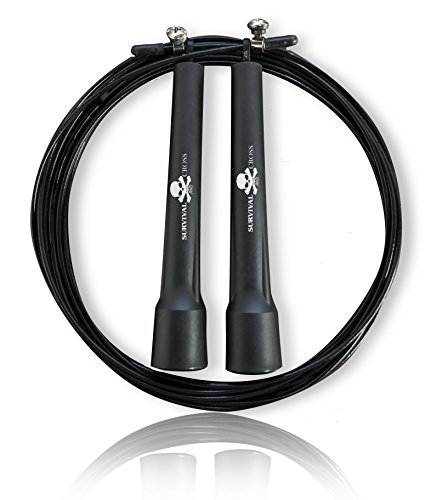
Jump Rope
Best for short, measurable conditioning when you need a clear start and finish.
- Turns cardio into simple rounds instead of vague effort
- Works as a 5-minute warm-up or finisher
- Compact enough to remove most setup excuses
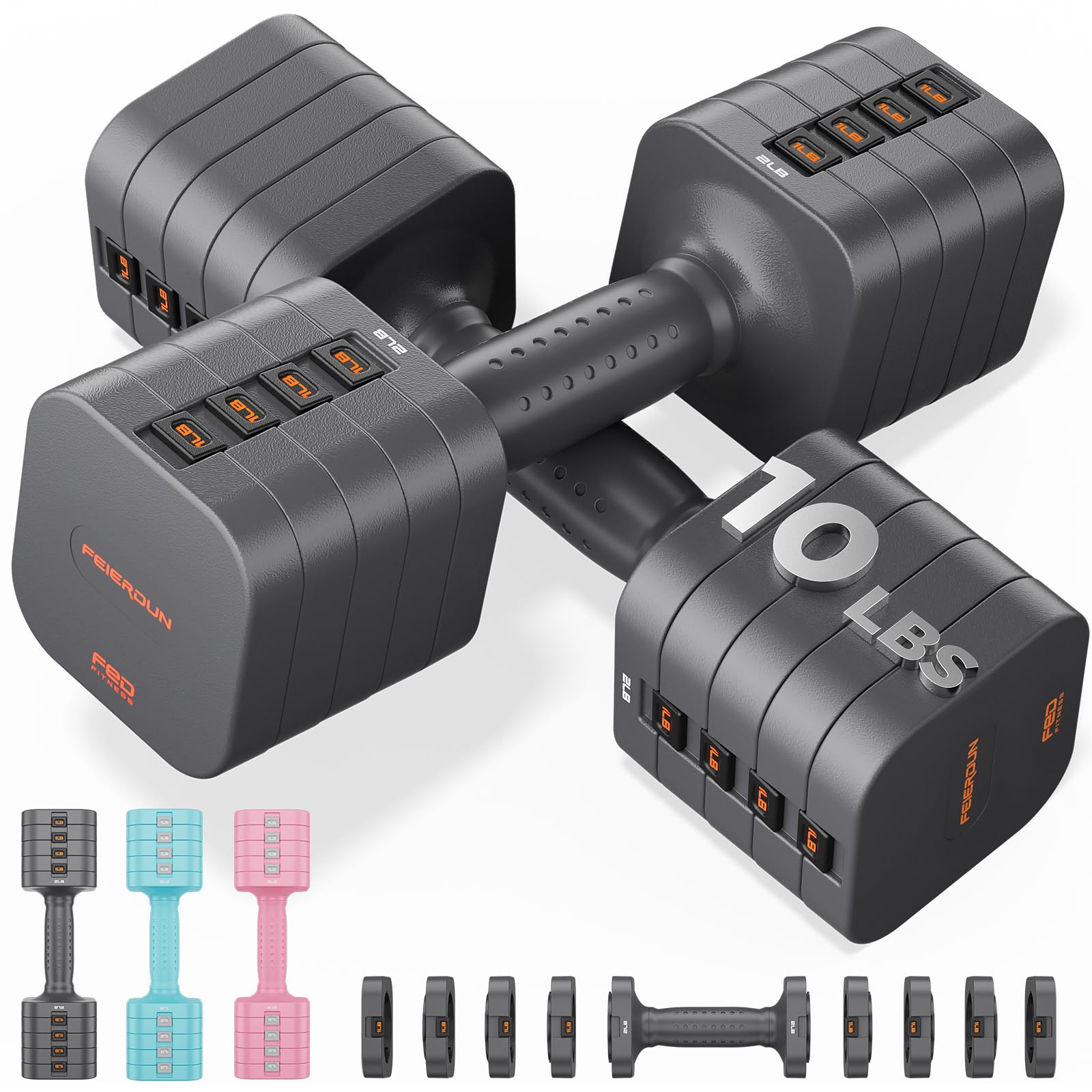
Adjustable Dumbbells
Best for making progress visible when motivation improves from measurable strength gains.
- Supports clear weekly progress in reps, load, and control
- Useful for full-body home workouts without a full gym
- Lets you scale effort up or down while keeping the habit
*As an Amazon Associate, we earn from qualifying purchases. Product categories are chosen for training fit, not as a substitute for coaching or medical advice.
Why Motivation Fades
Motivation fades when the workout is too vague, too hard to start, or too dependent on a perfect day. If the plan only works when sleep, stress, time, and mood are all good, the plan is fragile.
MedlinePlus notes that regular exercise can start slowly, be broken into chunks, and become easier through habit, realistic goals, accountability, and tracking. That is the practical core of exercise and physical fitness guidance: consistency is built, not wished into place.
| Problem | Better move | Example |
|---|---|---|
| No energy | Use a minimum workout | One set each: squat, push-up, row, plank. |
| No time | Use a time box | Set a 10-minute timer and stop when it ends. |
| No plan | Repeat one template | Use the same full-body session for four weeks. |
| No proof | Track one metric | Log reps, walks, or completed sessions. |
The gap most motivation advice leaves open
It tells you to be disciplined, but not what to do at 7:12 p.m. when you are tired and the workout feels too big. The answer is a pre-decided fallback: shoes on, timer set, first set done. Once you start, you can choose whether to continue.
The 2-Minute Start Rule
The first goal is not to finish the workout. It is to start so clearly that your brain stops negotiating. Tie your cue to something stable: after coffee, after work, after brushing teeth, or before the shower.
If you need a low-pressure starting point, use a no-equipment workout or quick workouts before trying to rebuild your entire routine.
Make the Plan Harder to Skip
When you are ready for structure, connect the habit loop to effective home workout routines, strength training basics, and active recovery workouts.
When Motivation Is Not the Real Problem
Sometimes the issue is not laziness. It is poor sleep, pain, anxiety, overload, unrealistic programming, or a plan that punishes you every time you return. If training consistently makes symptoms worse, reassess the plan and get professional help when needed.
Motivation improves when the plan respects your current capacity and still moves you forward.
The 7-Day Motivation Reset
Do this this week
Choose one cue. Set a 10-minute minimum workout. Track completions only. Do not change the plan for seven days. If you do more, fine. If you do the minimum, it still counts.
Conclusion
Fitness motivation is strongest when it is no longer required for every decision. Build a loop: cue, start small, track, repeat. Make action easier than avoidance and let confidence come from proof.
The next workout does not need to be heroic. It needs to begin.
Next Step: Quick Workouts
If motivation fails because your sessions feel too large, use quick workouts to build consistency with short, repeatable sessions that still count.
Medical Disclaimer
This article is for general fitness education only and does not replace medical advice, diagnosis, therapy, or individualized coaching. If you have chest pain, dizziness, severe shortness of breath, a recent injury, or symptoms that worsen with exercise, speak with a qualified healthcare professional.
Affiliate Disclosure
PrimeForMen may earn a commission from qualifying purchases through affiliate links. Recommendations are based on practical training fit for the article topic, and affiliate relationships do not change the editorial standard.
Frequently Asked Questions About Fitness Motivation
How do I stay motivated to work out?
Stop relying on motivation alone. Use a fixed cue, a tiny start, and a simple tracker so the workout begins before you overthink it.
What should I do when I do not feel like exercising?
Do the minimum session: one set, one walk, or 10 minutes. The goal is to preserve the habit without turning every day into a battle.
Is discipline more important than motivation?
Discipline helps, but systems are stronger. A good system reduces decisions, lowers setup friction, and makes progress visible.
How do I restart after missing workouts?
Restart with a smaller plan than you think you need. Complete a short session today, track it, and repeat tomorrow.
Can tracking improve workout motivation?
Yes. Tracking gives visible proof that you are becoming consistent, especially when progress is too slow to feel obvious day to day.