Use swimming training plans for endurance, speed, technique, recovery, and safer weekly progression in the pool.
- Start with your current swim level, not your ambition. The right plan should feel repeatable by week two.
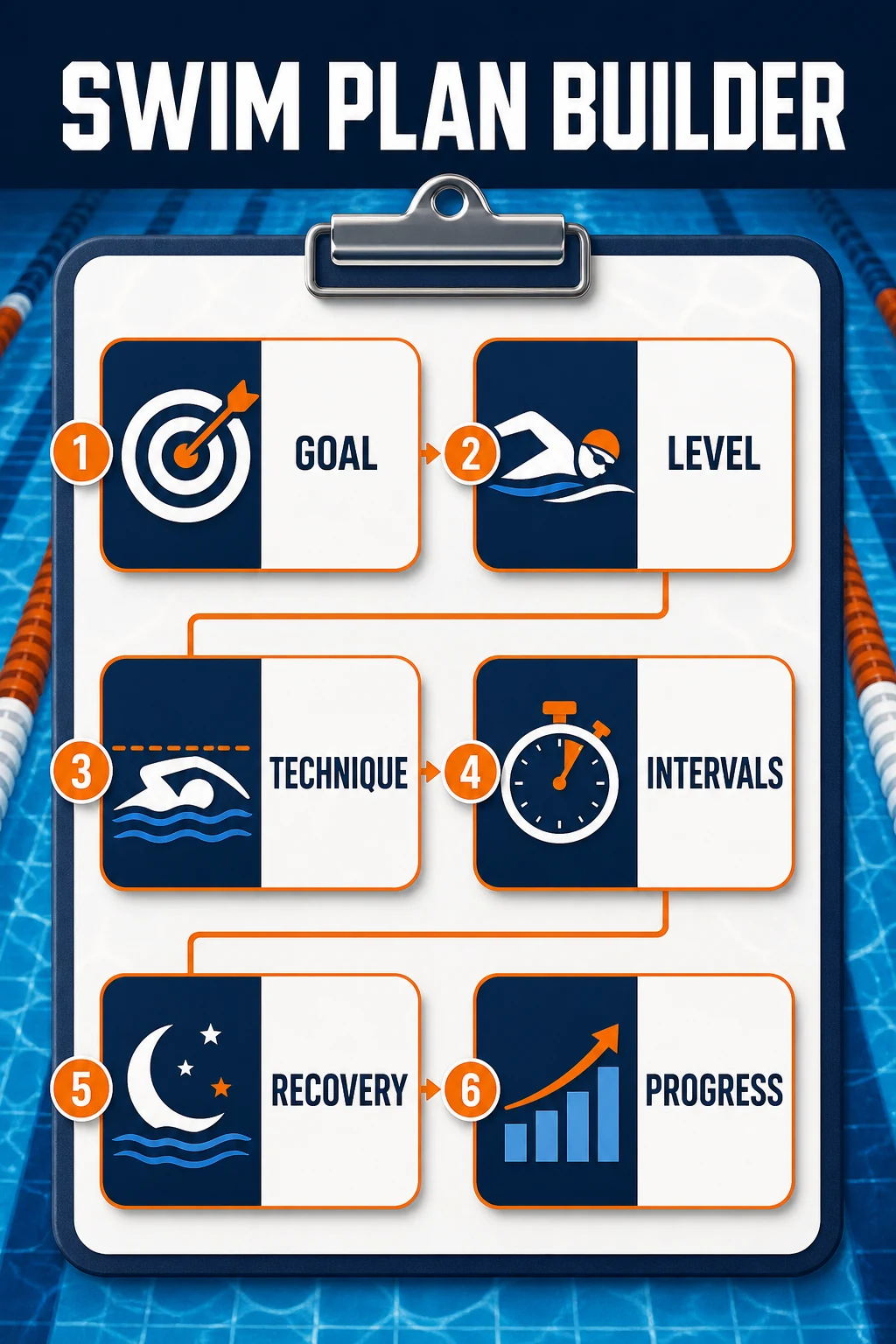
- Every session needs a warm-up, a technique block, a main set, and an easy cool-down.
- Progress one variable at a time: distance, interval speed, rest time, or weekly frequency.
Bottom line The best swimming training plans make each session easier to execute and easier to evaluate.
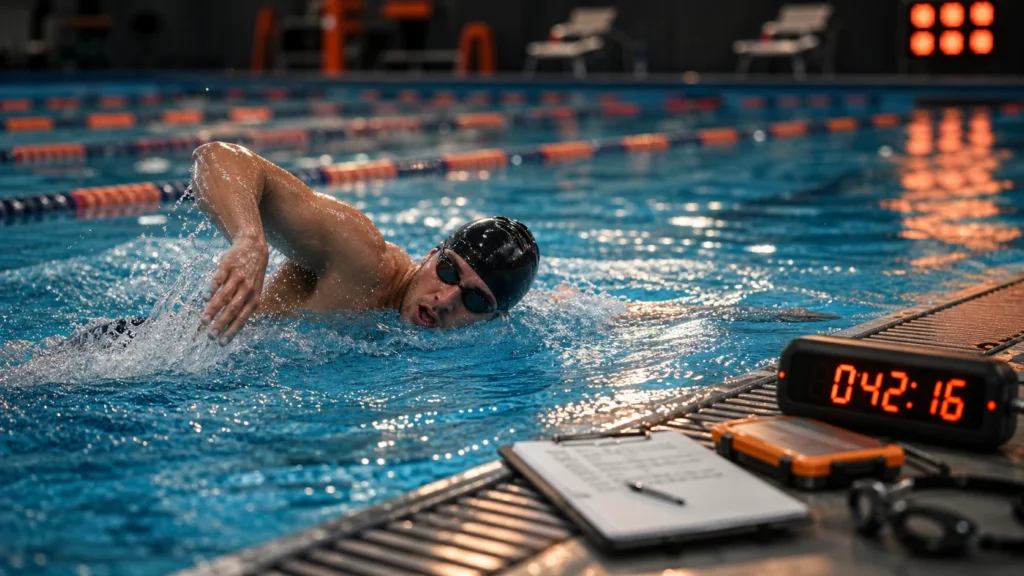
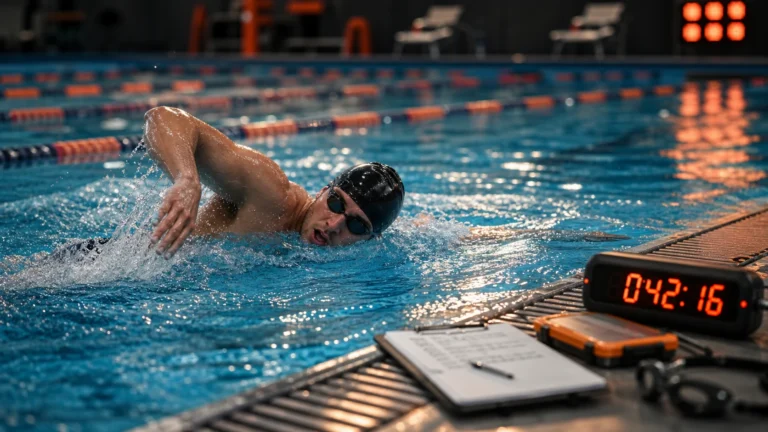
Swimming training plans work best when they tell you exactly what to do in the pool, how hard to do it, and when to back off. A good plan is not just more laps. It is a weekly structure that balances technique, endurance, speed, recovery, and safety.
Quick Summary: Swimming training plans
- Start with your current swim level, not your ambition. The right plan should feel repeatable by week two.
- Every session needs a warm-up, a technique block, a main set, and an easy cool-down.
- Progress one variable at a time: distance, interval speed, rest time, or weekly frequency.
- Shoulders usually fail before conditioning does. Build volume gradually and keep technique work in the plan.
- Use a simple log: total yards, main-set pace, perceived effort, and any shoulder warning signs.
Build the Plan Around the Outcome
The fastest way to ruin swim progress is to turn every workout into the same moderate grind. A useful plan separates the goal of each day so technique, aerobic base, speed, and recovery can all improve without competing for the same energy.
The Prime Perspective
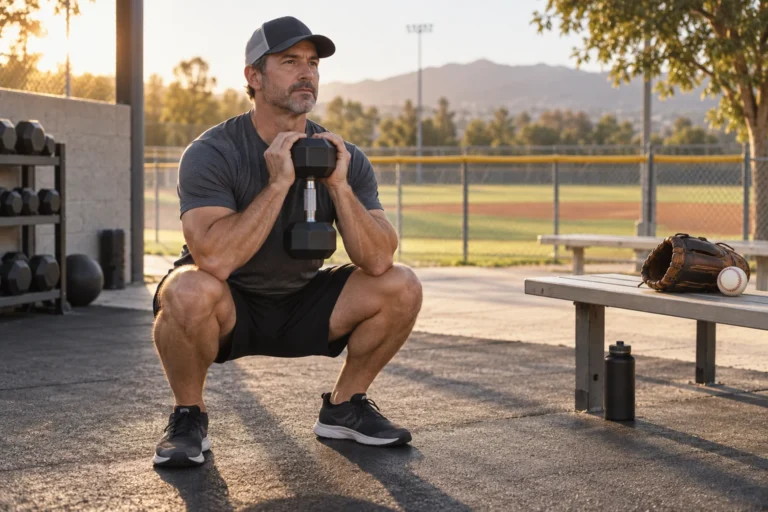
For most men, the winning swim plan is not the most advanced one. It is the one you can repeat for eight weeks while leaving the pool with cleaner technique than when you entered. That means short technique doses, clear intervals, conservative progression, and enough dryland work to keep the shoulders and trunk stable.
If you also lift, run, or play a sport, treat swimming as a training stress, not a recovery loophole. Pair harder pool days with your broader cardio workouts and keep easy swims easy.
Choose the Right Swimming Training Plan
Before picking workouts, choose the lane you are actually in. The plan below gives you a practical starting point for three common levels. Use yards or meters depending on your pool; the structure matters more than the unit.
| Level | Best For | Weekly Frequency | Session Distance | Main Focus |
|---|---|---|---|---|
| Beginner | Can swim 25-50 continuously but fades fast | 2-3 swims | 600-1,200 | Comfort, breathing, body position, easy volume |
| Intermediate | Can swim 500 continuously and hold basic pacing | 3 swims | 1,400-2,400 | Technique under fatigue, aerobic sets, short speed |
| Advanced | Can handle structured intervals and multiple strokes | 4-5 swims | 2,500-4,500+ | Threshold pace, race-specific work, planned recovery |
If you are new to structured training overall, start with the same mindset as a beginner fitness plan: repeatable sessions first, intensity second.
The Four Parts Every Swim Workout Needs
1. Warm-Up
Start with easy swimming, not sprints. Aim for 200-600 relaxed yards with a few short builds once the stroke feels smooth.
2. Technique
Use drills early while your attention is fresh: catch-up, fingertip drag, six-kick switch, sculling, or kick-on-side.
3. Main Set
This is the training target: endurance, threshold, sprint speed, or mixed pacing. Keep the goal narrow.
4. Cool-Down
Finish with easy swimming until breathing and shoulders settle. Skipping this is a common reason the next session feels worse.
5. Log
Write down distance, main set, rest periods, effort, and one technique note. Progress becomes obvious when it is visible.
6. Recovery
Use rest days and easy swims deliberately. Pool work still loads shoulders, lats, hips, and trunk rotation.
U.S. Masters Swimming breaks swim workouts into planned parts such as warm-up, drills, main set, and cool-down; that structure is a useful baseline for recreational and performance swimmers alike. See their guide to writing a swimming workout for a practical coaching reference.
Sample Weekly Swimming Plans
| Goal | Day 1 | Day 2 | Day 3 | Optional Day 4 |
|---|---|---|---|---|
| Beginner Base | Easy technique swim: 8 x 50 with generous rest | Kick + pull balance: 6 x 75 relaxed | Continuous confidence: 3 x 200 easy | Mobility or easy walk |
| Fitness Endurance | 10 x 100 moderate, 20-30 sec rest | Technique + easy aerobic 1,600 total | 3 x 400 steady, negative split each | Easy recovery swim 800-1,200 |
| Speed and Pace | 16 x 50 fast but clean, full control | Drills + 8 x 100 threshold | Mixed set: 4 rounds of 100 steady + 4 x 25 fast | Dryland trunk and shoulder stability |
Three Pool Workouts You Can Use This Week
Workout 1: Technique Reset
- Warm-up: 300 easy swim
- Drills: 8 x 25 catch-up or fingertip drag, easy rest
- Main set: 8 x 50 smooth freestyle, count strokes per length
- Cool-down: 200 easy backstroke or freestyle
Workout 2: Endurance Builder
- Warm-up: 400 easy with 4 x 25 build
- Main set: 3 x 400 at steady aerobic pace, 45-60 sec rest
- Support set: 6 x 50 relaxed kick or pull
- Cool-down: 200 easy
Workout 3: Speed Without Sloppy Form
- Warm-up: 300 easy + 4 x 25 drills
- Main set: 12 x 50 fast but repeatable, 30-45 sec rest
- Control set: 4 x 100 moderate, hold clean breathing
- Cool-down: 300 easy
How to Progress Without Overloading Your Shoulders
The shoulder is the limiter in many swimming plans. You can feel aerobically fresh while the shoulder complex is quietly accumulating too much volume. Use the 10-15 percent rule as a rough ceiling for weekly distance increases, and do not add volume and speed in the same week unless you are already conditioned for it.
The Gap Most Swim Plans Miss
Most generic plans talk about more yards. Better plans tell you when not to add yards. If your stroke count rises sharply, your shoulder feels pinchy, or your pace drops while effort climbs, the plan is giving you fatigue instead of adaptation.
- Add distance only when technique stays stable.
- Keep one truly easy swim or rest day after your hardest interval day.
- Use dryland stability work for the trunk, scapula, and rotator cuff.
- Stop hard sets if pain changes your stroke mechanics.
For dryland support, start with core workouts for swimmers and add light pulling, rows, external rotations, and controlled overhead mobility. If recovery is your weak point, build the week around proven muscle recovery techniques instead of adding another hard session.
Gear That Makes a Plan Easier to Follow
Swim Gear Picks
The right gear should help you train with cleaner feedback, not distract you from the workout. These categories fit a structured pool plan.
Swim Goggles
A good pair keeps vision stable so breathing, sightline, and lane awareness do not break down mid-set.
- Look for anti-fog lenses and a secure nose bridge.
- Use tinted lenses only if your pool lighting supports it.
- Keep a backup pair in your swim bag for consistency.
Pull Buoy or Training Fins
Use these for focused technique blocks, not as a way to escape proper body position.
- A pull buoy isolates the upper body and body line.
- Short fins can improve kick rhythm without changing the whole workout.
- Use tools in short sets so they support skill transfer.
Waterproof Swim Watch
A watch or lap tracker helps you keep the plan honest when pace, rest, and total distance matter.
- Prioritize lap counting, interval timing, and simple readability.
- Use data to confirm patterns, not chase every metric.
- Pair it with a written note on effort and technique.
*PrimeForMen may earn a commission from qualifying purchases. Product categories are chosen for fit with structured swim training, not for hype.
Track the Metrics That Actually Change Training
Do not drown the plan in data. Track four things: total distance, main-set pace, rest interval, and perceived effort. If you use fitness trackers, compare trends across weeks rather than reacting to one workout.
| Metric | What It Tells You | When to Adjust |
|---|---|---|
| Stroke count | Efficiency and body position | If it rises at the same pace, technique is fading |
| Repeat pace | Whether the set is truly repeatable | If final reps collapse, reduce speed or add rest |
| Rest interval | Training density | Shorten rest only when technique stays clean |
| Shoulder feel | Overuse risk signal | If pain changes your stroke, stop hard work |
Water Safety and Recovery Boundaries
Swimming is low impact, but it is not risk-free. Train in safe environments, avoid hard sessions when you are exhausted, and do not swim alone in open water. The CDC’s healthy swimming guidance is a useful starting point for pool and water safety.
For recovery days, easy pool work can help maintain rhythm, but it should feel easy enough that you leave better than you arrived. If you need a structured off-day option, use active recovery workouts outside the pool.
What to Do This Week
- Pick one level from the table, even if your ego wants the next one.
- Do three swims this week: technique, endurance, and controlled speed.
- Record main-set pace, rest, total distance, and one technique note after each swim.
- Increase next week only if shoulder comfort and stroke quality stayed stable.
- Use the broader sport-specific training guide if swimming is part of a larger athletic plan.
Conclusion
The best swimming training plans make each session easier to execute and easier to evaluate. Start with your level, choose one purpose per workout, keep technique inside every week, and progress only when your pace and stroke quality support it. That is how swimming becomes a plan instead of a pile of laps.
Frequently Asked Questions About Swimming Training Plans
How many days per week should I swim?
Most recreational swimmers do well with two to three sessions per week. Intermediate swimmers can use three sessions, while advanced swimmers may use four or more if recovery stays strong.
Should beginners swim for time or distance?
Beginners should usually track both, but distance is simpler at first. Keep the pace easy enough that technique and breathing stay controlled.
What is the best swim workout for endurance?
A simple endurance set is 3 x 400 at steady effort with 45-60 seconds rest. Scale it down to 3 x 200 if you are newer.
How fast should I progress swimming volume?
Increase weekly distance gradually, often around 10-15 percent at most, and only when shoulder comfort, stroke quality, and repeat pace stay stable.
Do I need dryland training for swimming?
You do not need a complicated gym plan, but core strength, pulling strength, shoulder control, and hip mobility can help your stroke stay stable under fatigue.