
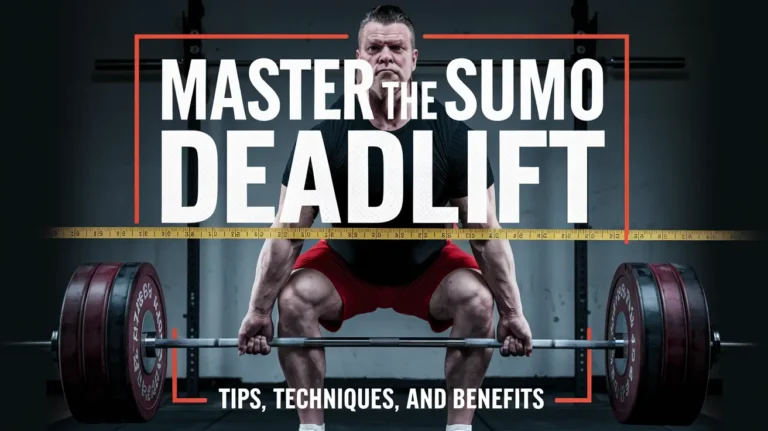
Want to lift heavier and build stronger glutes and quads?
You’re in the right place. Let’s talk about sumo deadlift form, a variation of the traditional deadlift that can help you achieve just that. It’s a powerful exercise, but like any lift, doing it right is key to maximizing results and avoiding injury.
I’ve been coaching lifters for years, and I’ve seen firsthand how proper sumo deadlift technique can transform your strength and physique.
Key Takeaways for the Sumo Deadlift
- Wider Stance: Unlike conventional deadlifts, the sumo deadlift uses a wider stance with toes pointed outwards.
- Grip: Hands are placed inside the legs, generally shoulder-width apart.
- Upright Torso: Maintain a more vertical torso throughout the lift.
- Glute and Quad Focus: Sumo deadlifts emphasize glutes, quads, and hips more than conventional deadlifts.
- Reduced Back Stress: This variation can be easier on the lower back for some lifters.
Sumo Deadlift: Key Benefits & Tips
Understanding the Sumo Deadlift
The sumo deadlift is a variation of the conventional deadlift where you take a wider stance and grip the bar inside your legs.
This sumo deadlift setup shifts the emphasis to your glutes, quads, and hips, making it a great exercise for building lower body strength and power.
It also often reduces stress on the lower back compared to conventional deadlifts, which is a big plus for many people. It’s a staple in powerlifting and a fantastic addition to any strength training program.
The Importance of Proper Sumo Deadlift Form
Why is proper sumo deadlift form so important?
Two words: safety and results. Good form ensures you’re targeting the right muscles effectively while minimizing your risk of injury.
Trust me, I’ve seen lifters pull their backs trying to lift too heavy with sloppy form. It’s not pretty. Mastering the correct technique is the foundation for long-term progress and a healthy lifting journey.
Step-by-Step Sumo Deadlift Technique
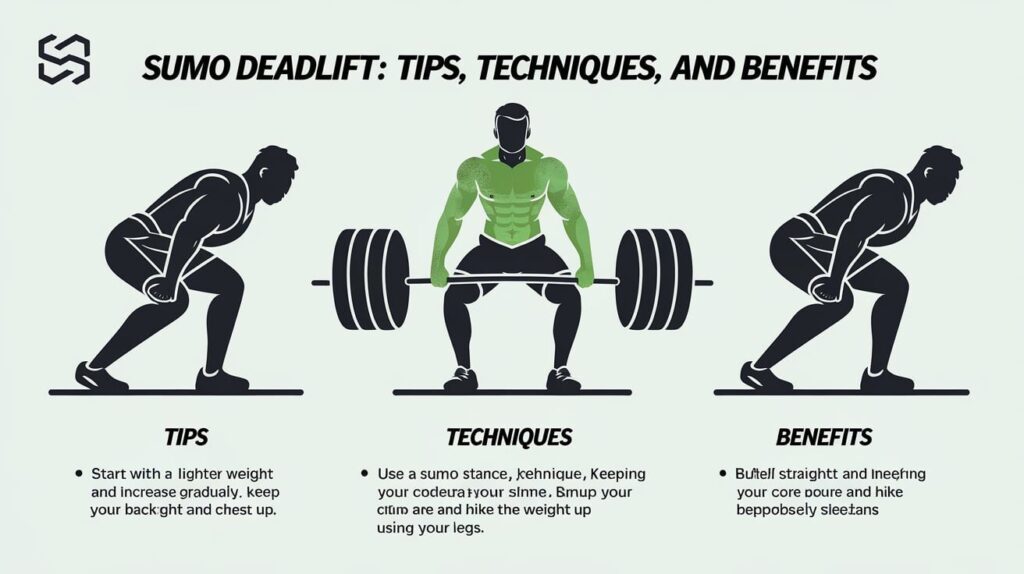
Let’s break down the sumo deadlift technique step by step:
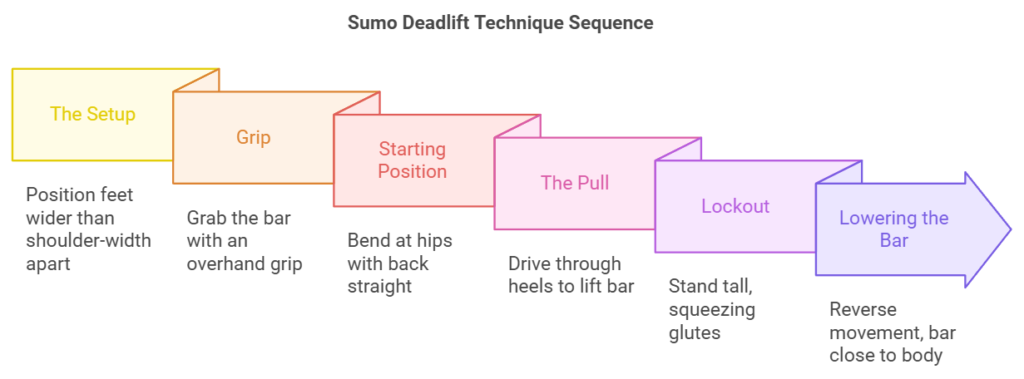
- The Setup: Stand with your feet wider than shoulder-width apart, toes pointed outwards at roughly a 45-degree angle. The bar should be close to your shins, about half an inch away.
- Grip: Grab the bar with an overhand grip, slightly wider than shoulder-width apart. Your hands should be inside your legs.
- Starting Position: Bend at your hips, keeping your back straight and your chest up. Your shins should be perpendicular to the floor. Engage your core and create tension in your back and hamstrings.
- The Pull: Drive through your heels and pull the bar up, keeping it close to your body. Think about pushing the floor away from you.
- Lockout: Stand tall, squeezing your glutes at the top of the movement. Avoid leaning back excessively.
- Lowering the Bar: Reverse the movement, keeping your back straight and the bar close to your body as you lower it back to the ground.
Sumo Deadlift vs. Conventional Deadlift
How does the sumo deadlift stack up against the conventional deadlift? Here’s a quick comparison:
| Feature | Sumo Deadlift | Conventional Deadlift |
|---|---|---|
| Stance | Wide, toes out | Shoulder-width, toes forward |
| Grip | Inside legs | Outside legs |
| Torso Angle | More upright | More bent over |
| Muscle Emphasis | Glutes, quads, hips | Hamstrings, glutes, lower back |
| Back Stress | Generally less | Generally more |
| Sumo Lift | Yes | No |
Common Sumo Deadlift Mistakes
Even experienced lifters can make mistakes.
Here are a few common errors to avoid:
- Rounding your back: This is a recipe for injury. Keep your back straight throughout the lift.
- Pulling with your arms: The sumo deadlift is a leg and hip exercise, not a bicep curl. Drive through your heels and use your legs to lift the weight.
- Starting too far from the bar: The bar should be close to your shins at the start.
- Not engaging your core: A strong core is essential for stability and power. Brace your core before you lift.
Benefits of the Sumo Deadlift
The sumo deadlift benefits are numerous:
- Increased Glute and Quad Activation: This variation targets the glutes and quads more directly than conventional deadlifts.
- Potential for Reduced Back Stress: The more upright torso can be easier on the lower back.
- Improved Hip Mobility: The wide stance helps improve hip flexibility and range of motion.
- Greater Overall Strength: Sumo deadlifts build serious lower body strength, which can translate to other exercises and activities.
Sumo Deadlift Variations
There are a few sumo deadlift variations you can try:
- Deficit Sumo Deadlift: Stand on a slightly elevated surface to increase the range of motion.
- Banded Sumo Deadlift: Use resistance bands to add extra challenge at the top of the lift.
Programming the Sumo Deadlift
How often should you do sumo deadlifts?
It depends on your training goals and experience level. Beginners might start with 1-2 times per week, while more advanced lifters could do them 2-3 times per week. Remember to listen to your body and adjust your training accordingly.
Sumo Deadlift for Different Body Types
Finding the right sumo deadlift stance is crucial.
Experiment with different stance widths and foot angles to find what feels most comfortable and powerful for your body. There’s no one-size-fits-all approach.
Tips for Maximizing Your Sumo Deadlift
Here are a few expert tips to help you get the most out of your sumo deadlifts:
- Warm up properly: Prepare your body for the lift with dynamic stretches and lighter warm-up sets.
- Focus on your breathing: Take a deep breath before you lift and hold it throughout the movement.
- Use chalk: Chalk can improve your grip and help you hold onto the bar.
- Record your lifts: Watching videos of your form can help you identify areas for improvement.
My Personal Sumo Deadlift Journey

When I first started lifting, I struggled with conventional deadlifts. My lower back always felt strained.
Then I discovered the sumo deadlift, and it was a game-changer. The more upright torso allowed me to lift heavier without pain, and I saw significant gains in my glute and quad strength. It’s now one of my favorite exercises.
Conclusion
The sumo deadlift is a powerful exercise that can help you build a stronger, more powerful lower body. By focusing on proper form and incorporating these tips, you can maximize your results and avoid injury.
Remember, consistency is key. Keep practicing, and you’ll be amazed at what you can achieve. Now go lift some heavy things!
FAQ — Sumo Deadlift
Expert answers to the most common questions.
No, the sumo deadlift is not cheating. It is a legal lift in all major powerlifting federations (IPF, USAPL, USPA). While the range of motion is shorter, it requires significantly more hip mobility and technical precision than the conventional style. If it were truly “easier,” every world record holder would use it, yet many top lifters still pull conventional.
Neither is universally “better.” It depends on your individual anatomy. Lifters with long torsos or shorter arms often find sumo more comfortable, while those with long arms and short torsos typically excel at conventional. The best approach is to train both for 8–12 weeks and see which style allows you to move the most weight safely and pain-free.
Both are full-body movements, but sumo places more emphasis on the quadriceps, glutes, and adductors (inner thighs). The conventional deadlift relies more heavily on the spinal erectors and hamstrings. Because of this, sumo is often a preferred choice for athletes looking to build leg drive while minimizing lower back fatigue.
Your stance depends on your hip anatomy. A common starting point is to place your feet wide enough so that your shins are vertical when the bar is at mid-shin height. If your knees cave in (valgus) during the lift, your stance may be too wide for your current mobility. Experiment by moving your feet 2–5cm to find your strongest “wedge.”
Generally, yes. Because the sumo stance allows for a more upright torso, it reduces the shear force on the lumbar spine compared to the conventional deadlift. This makes it an excellent alternative for lifters with history of lower back issues or those who find it difficult to maintain a neutral spine in the conventional setup.
Check out these external resources for more information: