Choose the right exercise bike for home cardio. Compare upright, indoor cycling, recumbent and folding bikes by fit, resistance, noise, safety and workouts
- Choose the bike by fit, comfort, resistance feel, noise, and repeatability.
- Use upright, indoor cycling, recumbent, folding, and air bikes for different jobs.
- Check seat height, stability, mat fit, metrics, and recalls before buying.
Bottom line Buy the exercise bike that removes your real cardio friction, not the one with the flashiest screen.
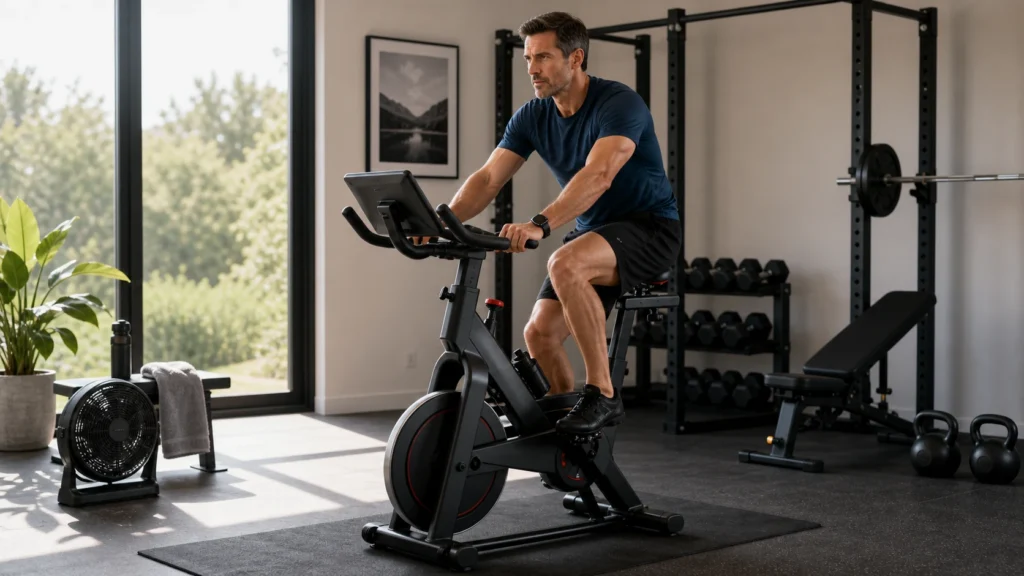
Exercise bikes can be one of the easiest ways to build repeatable home cardio, but only if the bike fits your body, room, noise tolerance, comfort needs, and training style. Do not buy by screen size first. Buy by fit and repeatability first.
Quick Summary: Exercise bikes
- Upright bikes are usually the safest general-fitness default.
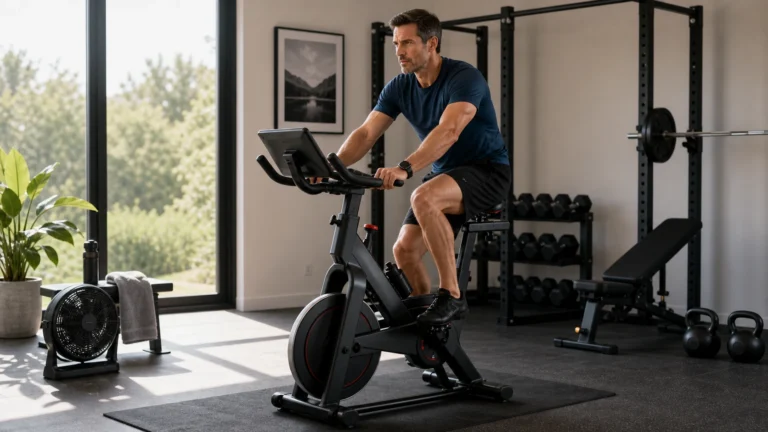
- Indoor cycling bikes fit harder rides, cadence work, and motivated cardio users.
- Recumbent bikes prioritize comfort, back support, and lower-friction consistency.
- Folding bikes solve space only when they stay stable and comfortable enough to use.
- Fit, resistance feel, noise, stability, and safety checks matter more than flashy screens.
An exercise bike is not a motivation machine. It is a friction reducer. The right bike makes low-impact cardio easier to repeat while leaving enough recovery for strength training basics, mobility, and normal life.
The wrong bike usually fails for boring reasons: seat pain, bad reach, wobbly frame, annoying setup, vague metrics, or a riding position you avoid after the first week.
Exercise Bike Buyer Scorecard: What Actually Matters
Score an exercise bike by the ride you will repeat: easy cardio, Zone 2, intervals, comfort-first sessions, app-led classes, or small-space maintenance work. A premium screen does not fix a poor saddle, unstable frame, weak adjustability, or a bike that is too annoying to set up.
| Criterion | Weight | Why it matters |
|---|---|---|
| Use-case fit | 25% | Recovery rides, Zone 2, intervals, and general fitness need different bikes. |
| Bike fit and adjustability | 20% | Seat height, reach, and handlebar fit decide knee, hip, back, and neck comfort. |
| Resistance feel | 15% | Magnetic, friction, belt/flywheel, and air resistance produce different ride demands. |
| Comfort and position | 15% | An uncomfortable bike becomes furniture. |
| Noise and vibration | 10% | Critical for apartments, shared homes, and early or late sessions. |
| Metrics | 5% | Time, cadence, heart rate, resistance, and intervals help only when they guide decisions. |
| Footprint, support, warranty | 10% | Storage, stability, service, parts, and return policy matter with large equipment. |
Upright vs Indoor Cycling vs Recumbent vs Folding Bike
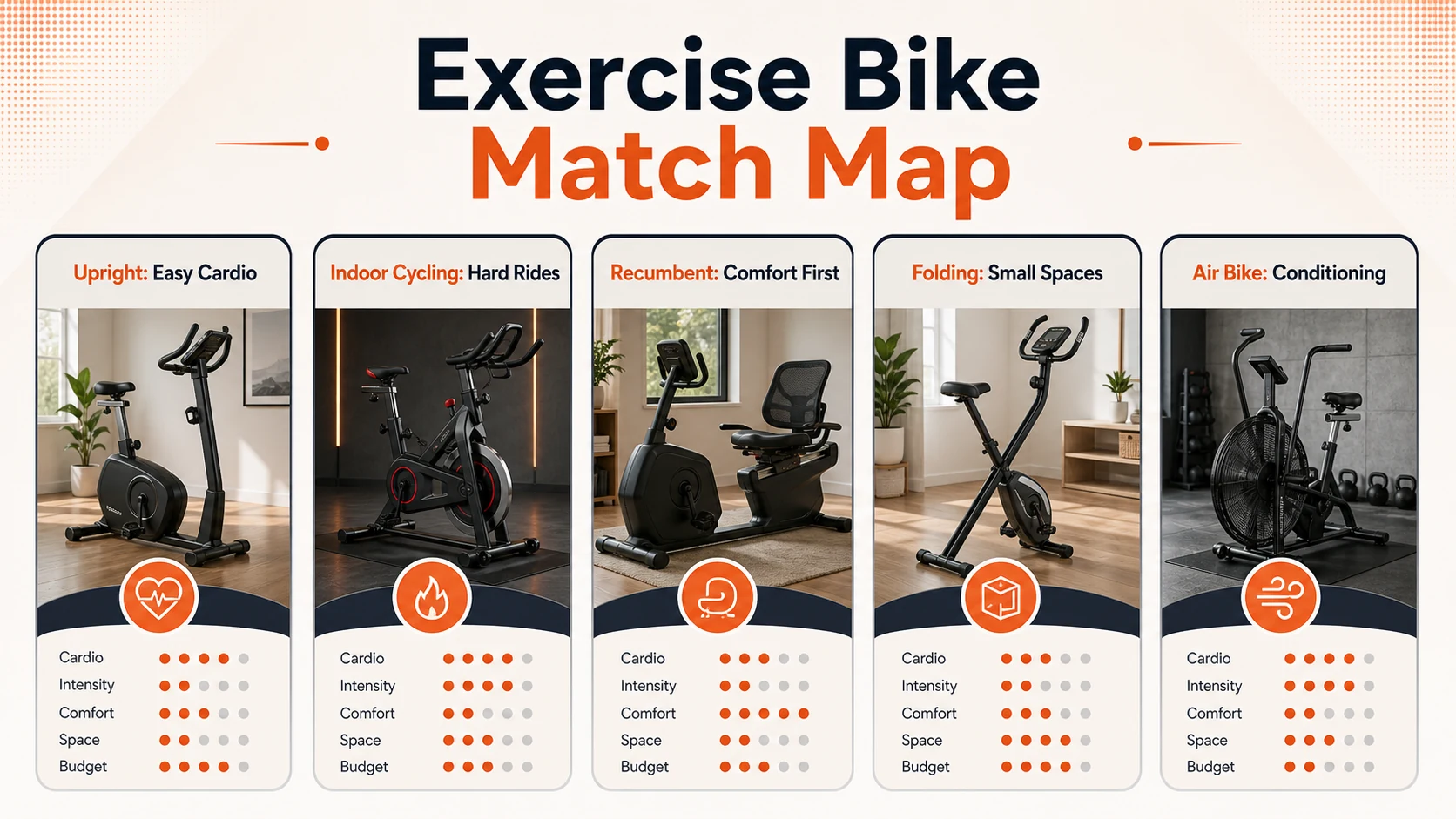
Bike type should solve the week you actually live. Upright bikes suit general home cardio. Indoor cycling bikes suit harder rides and cadence work. Recumbent bikes solve comfort and back support. Folding bikes solve space, but often trade away stability and feel.
| Bike type | Best for | Tradeoff | PrimeForMen verdict |
|---|---|---|---|
| Upright bike | General cardio, compact rooms, moderate sessions | Less aggressive ride feel than indoor cycling bikes | Best general-fitness default |
| Indoor cycling bike | Harder rides, intervals, cadence work | Saddle and position can feel aggressive | Best for motivated cardio users |
| Recumbent bike | Comfort-first cardio, back support, restart phases | Larger footprint and less sport feel | Best for repeatability and comfort |
| Folding bike | Tiny spaces and light occasional use | Wobble, weaker resistance, and saddle issues | Only if space is the hard constraint |
| Air bike | Hard conditioning and full-body intervals | Loud, brutal, and not comfort-first | Buy later, not as the first general bike |
| Smart bike | Classes, coaching, guided structure | Subscription, lock-in, and price | Buy if the app changes behavior |
Premium Exercise Bike Shortlist
These are direct product CTAs, not generic category links. Choose the one that solves the real constraint: guided sessions, hard rides, performance data, comfort, or floor setup. Product details can change; verify the current listing before buying.

Peloton Bike
Best for: Classes, structure, and a connected screen are the reason you will ride more often.
Current Amazon listing: Peloton Exercise Bikes, Indoor Stationary Cross Training Bikes for Home Item
- Strong fit if guided workouts improve adherence more than a basic console would.
- Space-friendly smart-bike setup works well for mixed cardio and strength routines.
- Buy only if the subscription and screen are useful, not just impressive.

Schwinn IC4
Best for: A stable indoor cycling bike without committing everything to one app ecosystem.
Current Amazon listing: Schwinn Fitness IC Indoor Cycling Bike Series
- Good match for cadence work, intervals, and harder home cycling sessions.
- Adjustable position helps more users find a repeatable riding setup.
- Works well when you want metrics without making every ride screen-dependent.

Concept2 BikeErg
Best for: Fan resistance, a serious monitor, and conditioning work that can scale hard.
Current Amazon listing: Concept2 BikeErg 2900 Stationary Exercise Bike | PM5 Monitor, Adjustable Air Resistance for Exercise, Conditioning and Strength Training | Commercial and Home Use
- Strong option for intervals, watt-based pacing, and measurable conditioning.
- Fan resistance feels different from quiet magnetic bikes and can get louder.
- Best for performance-minded users, not comfort-first casual rides.

Schwinn 290 Recumbent Bike
Best for: Back support, easy entry, and longer comfortable rides matter more than spin-bike intensity.
Current Amazon listing: Schwinn Fitness Recumbent Bike Series
- Better fit when comfort and repeatability beat aggressive riding posture.
- Useful for easy cardio, restart phases, or lower-impact conditioning blocks.
- Measure the larger footprint before choosing it for a small room.

SuperMats 36 x 90 Equipment Mat
Best for: The bike sits on hardwood, apartment flooring, carpet, or any shared training space.
Current Amazon listing: SuperMats Heavy Duty Equipment Non-Slip Mat 13GS
- Protects the floor from sweat, vibration, and repeated bike movement.
- Helps keep a permanent setup clean enough to use frequently.
- Check mat length against the full bike footprint, not only the product photo.
* As an Amazon Associate, PrimeForMen earns from qualifying purchases.
How to Choose the Right Starting Point
Start with an upright bike or adjustable indoor bike. It should feel stable, quiet enough, and comfortable for 20 minutes before you care about advanced features.
Use an indoor cycling bike or performance bike and track cadence, resistance, heart rate, or watts. For deeper sport carryover, connect this with cycling-specific training.
Look at recumbent bikes. They are not less serious; they are often the best tool when comfort is the difference between riding and skipping.
Folding bikes can work, but only if they do not wobble, punish your saddle area, or feel too weak to ride. For budget tradeoffs, compare budget cardio before buying machines.
Exercise Bike Fit: Seat Height, Reach, Saddle and Comfort
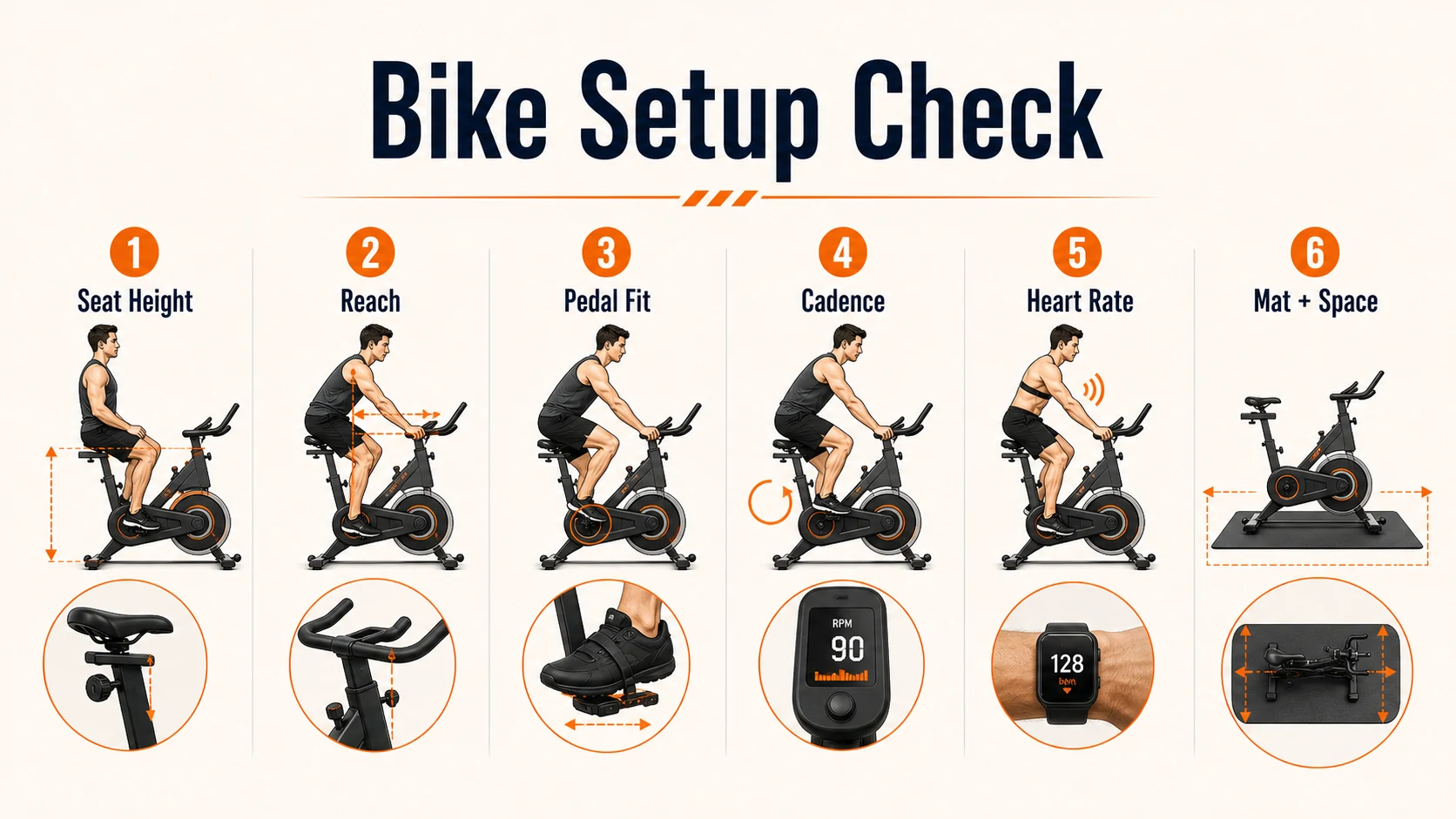
Bad bike fit turns low-impact cardio into avoidable irritation. HSS recommends starting bike setup around hip-bone saddle height and then fine-tuning. In practice, you want a controlled pedal stroke, no hip rocking, and no neck, hand, knee, hip, or low-back tension from reach.
| Fit element | What to check | Warning sign |
|---|---|---|
| Seat height | Leg nearly extended at the bottom without hip rocking | Knees stay too bent or hips sway |
| Seat fore/aft | Pedal stroke feels controlled through knee and hip | Knee pressure or cramped hips |
| Handlebar height | Comfortable posture without shoulder tension | Neck, wrist, or low-back fatigue |
| Reach | You are not hanging forward to hold the bars | Rounded back or numb hands |
| Pedal and strap fit | Foot stays stable through the stroke | Foot slips, cramps, or goes numb |
| Saddle comfort | 10 to 20 minutes is tolerable while you adapt | You avoid sessions because of seat pressure |
Exercise Bikes for Men Over 40
For men over 40, exercise bikes are strongest when they make cardio repeatable without adding unnecessary joint impact. The CDC adult physical activity guidance points adults toward weekly aerobic work plus two strength-training days. A bike can help fill the cardio side, but it should not erase lifting, walking, mobility, or recovery.
Intensity control matters. The American Heart Association target heart-rate guidance and the CDC intensity guide are useful reminders: not every ride should feel like a test.
Use easy rides, Zone 2 blocks, and moderate cadence before more intensity.
Cycling can replace some jumping or running when knees, Achilles, or recovery are limiting factors.
Use short easy rides when stress is high. See how to keep cardio easy when stress is high.
Hard rides should not wreck your lifting week. Pair bike work with recovery from cardio and lifting.
Most exercise-bike guides overrate screens, discounts, and resistance levels. They underrate fit, saddle comfort, reach, frame wobble, floor setup, recall status, cadence usefulness, heart-rate control, and whether the bike fits a real weekly plan.
Exercise Bike Workouts by Goal
The first exercise-bike workout should feel almost too easy. Start with 10 to 20 minutes, clean pacing, and one useful metric. Add time before intensity.
Exercise Bike Metrics: Cadence, Heart Rate, Resistance, Time and Intervals
A cadence sensor or heart-rate strap is useful only if it changes pacing. Start with time and perceived effort. Add cadence when rhythm matters. Add heart rate when Zone 2 or interval control matters. Do not let calorie estimates become the main metric.
| Metric | Good use | Risk |
|---|---|---|
| Time | Best beginner metric | Going too long before the habit is real |
| Cadence / RPM | Rhythm, intervals, and consistency | RPM without resistance says little |
| Resistance level | Progression and intervals | Levels are not comparable across bikes |
| Heart rate | Zone 2, recovery, and interval control | Stress, caffeine, and sensor quality affect numbers |
| Power / watts | Smart bikes and cycling training | Not every bike measures reliably |
| Calories | Loose orientation only | Not exact enough to trade against food |
Apartment and Small-Space Exercise Bike Setup
A bike that technically fits the room can still fail if it is loud, sweaty, awkward to move, or annoying to set up. Measure the footprint, clearance, mat size, airflow, storage path, and power-cord route before comparing apps.
Magnetic resistance, belt drive, a stable mat, and controlled cadence help in apartments.
Use a mat, towel, and cleanup routine. This matters more as sessions become frequent.
Place the bike where setup is not a workout. Permanent access beats folded-but-never-used.
Use home gym equipment and fitness gear and equipment to compare the bike against other cardio tools.
Exercise Bike Safety: Fit, Stability, Seat Post, Recalls and Power
Exercise-bike safety is mechanical as much as medical. Check recall status, seat-post stability, handlebar lock, pedal/crank feel, frame wobble, mat placement, and power cords. The CPSC published a Peloton Bike+ recall for fall and injury hazards, which is exactly why used or discounted smart bikes deserve a model-specific check.
| Safety check | Why it matters |
|---|---|
| Recall status | Especially important for used, marketplace, or smart bikes. |
| Seat post and clamp | The seat should not slip, wobble, or feel unstable under normal riding. |
| Handlebar lock | No movement during standing or hard efforts. |
| Pedals and crank | No unusual play, clicking, slipping, or grinding. |
| Frame stability | Cheap or folding bikes can wobble under load. |
| Medical stop signs | Chest pain, fainting, unusual shortness of breath, numbness, or persistent pain need professional guidance. |
Common Buying Mistakes
A screen helps only if coaching and classes change behavior.
If the seat makes you avoid rides, the bike has already failed.
A folded bike is not useful if setup friction makes you skip it.
Hard intervals are a tool, not the default. Protect sleep, joints, and lifting performance.
Exercise Bike vs Treadmill, Rower or Other Cardio Tools
Compared with treadmills, exercise bikes usually reduce impact but add saddle and fit issues. Compared with rowing machines, bikes are easier technically but involve less upper-body coordination. For the broader decision, compare the best cardio machine for home before buying.
Conclusion: Buy the Bike You Will Actually Repeat
The best exercise bike is not always the one with the biggest screen, heaviest flywheel, or hardest workout library. It is the bike that fits your body, room, comfort needs, training goals, and recovery budget.
Start with the buyer scorecard. Pick the bike type that solves your constraint. Adjust the fit before judging the ride. Then use simple workouts until the bike becomes a reliable part of the week.
FAQ
What is the best exercise bike for home use?
The best exercise bike for home use is the one that fits your body, room, noise tolerance, comfort needs, and weekly training plan. Upright bikes work for general fitness, indoor cycling bikes for harder rides, recumbent bikes for comfort, and folding bikes for tight spaces.
Is an upright bike or recumbent bike better?
An upright bike is usually better for compact general fitness. A recumbent bike is better when back support, easier entry, and comfort-first rides matter more than a sportier position.
Is an indoor cycling bike better than an upright bike?
An indoor cycling bike is better for cadence work, harder rides, and a more athletic cycling feel. An upright bike is often easier for moderate home cardio and a less aggressive riding position.
Are folding exercise bikes worth it?
Folding exercise bikes can be worth it for tiny spaces and occasional easy rides, but they often trade away stability, saddle comfort, and resistance quality. Do not buy one if wobble or discomfort will make you stop using it.
How should I set exercise bike seat height?
Start with a seat height that lets your leg nearly extend at the bottom of the pedal stroke without rocking your hips. Then adjust reach, handlebar height, and pedal straps until knees, hips, back, neck, and hands feel controlled.
Do I need a heart-rate monitor for an exercise bike?
You do not need one for every easy ride, but heart-rate feedback helps if you want Zone 2 rides, recovery control, or intervals that do not accidentally become too hard.
Is an exercise bike good for men over 40?
Yes, an exercise bike can be very useful for men over 40 when it supports repeatable low-impact cardio, strength training, recovery, and joint comfort. It should not turn every session into another high-stress workout.
Do I need a mat under an exercise bike?
A mat is usually smart for sweat, floor protection, vibration, and stability. It is especially useful in apartments, shared rooms, and home gyms with hardwood or carpet.
- CDC physical activity guidance: weekly aerobic and strength baselines and intensity measurement.
- Heart-rate context: American Heart Association target heart-rate guidance.
- Bike setup reference: HSS exercise bike setup guidance.
- Safety reference: CPSC Peloton Bike+ recall notice.