Compare the best fitness trackers for men by heart rate, sleep, recovery, battery, subscription cost, privacy, and real training use.
- Buy by the decision you want to improve, not by the longest feature list.
- Garmin, Fitbit, WHOOP, Oura, and chest straps solve different tracking problems.
- Treat heart rate, sleep, HRV, calories, and readiness as trends, not medical verdicts.
Bottom line A good tracker should change behavior without making every score feel like a diagnosis.
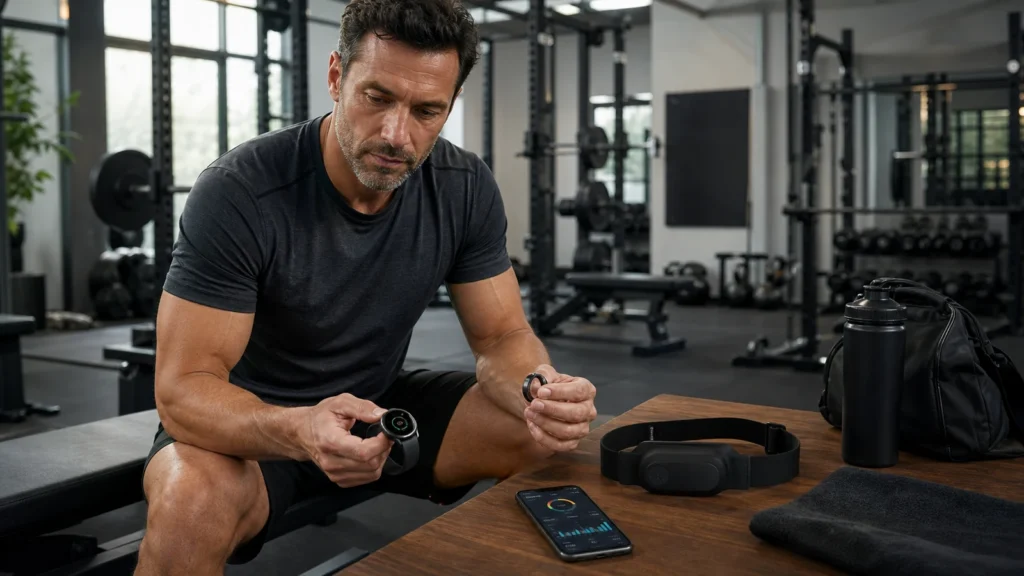
Best fitness trackers for men should help you make better training decisions, not just collect more numbers. The right choice depends on whether you need workout heart-rate accuracy, sleep and HRV trends, recovery coaching, a simple activity habit, or a low-distraction wearable you will actually keep wearing.
Quick Summary: best fitness trackers for men
- Choose a Garmin-style training watch if workouts, GPS, heart-rate zones, and training readiness matter most.
- Choose a Fitbit-style band if you want daily steps, sleep, reminders, and a smaller device without a full watch feel.
- Choose WHOOP if you want a screenless recovery system and accept that membership cost is part of the product.
- Choose an Oura-style smart ring if sleep comfort and passive recovery trends matter more than live workout screens.
- Use a chest strap when hard intervals, cycling, rowing, or Zone 2 testing need better heart-rate accuracy than wrist optical sensors.
The Prime Perspective
A fitness tracker should reduce guesswork. It should tell you when to push, when to back off, when sleep is quietly limiting progress, and when your training plan is becoming noise. It should not turn every morning into a diagnosis.
For PrimeForMen readers, the strongest setup is usually simple: one comfortable daily tracker, one clear reason for wearing it, and a chest strap only if workout heart-rate accuracy changes the plan. More sensors do not help if the numbers never affect your next session.
Fitness Tracker vs Smartwatch vs Smart Ring vs Chest Strap
The biggest mistake is comparing every wearable as if it solves the same problem. A smartwatch is useful because it is interactive. A smart ring is useful because you forget it is there. A chest strap is useful because it is boring and accurate during workouts. A fitness band sits in the middle. For body-weight trends rather than wrist data, compare the best smart scales for men and keep body-fat estimates in perspective.
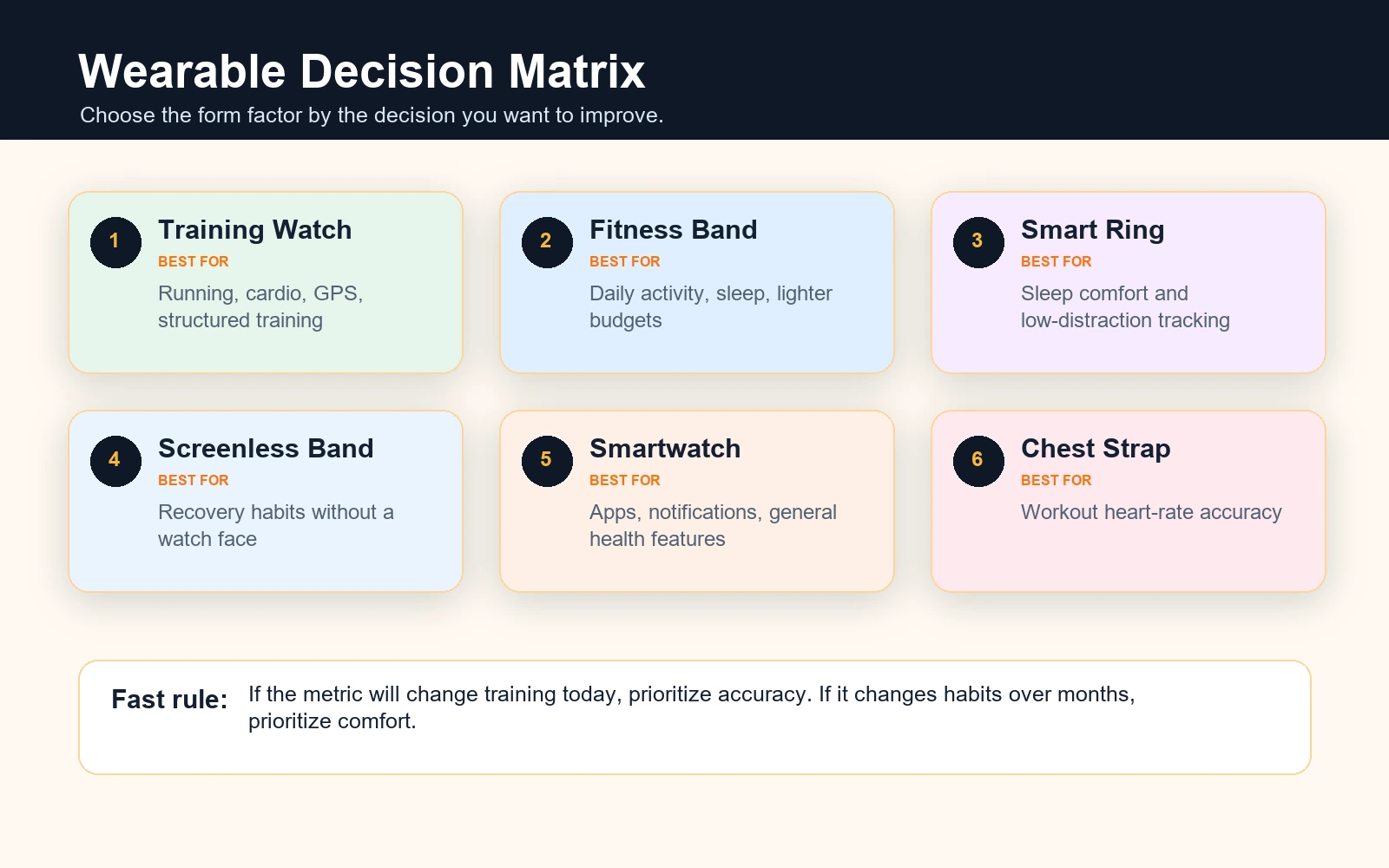
| Device type | Best for | Weak spot | Good PrimeForMen use case |
|---|---|---|---|
| Training watch | GPS, heart-rate zones, structured workouts, recovery status | Bulkier for sleep | Running, Zone 2, gym plus cardio, men over 40 tracking recovery |
| Fitness band | Steps, sleep, basic health, smaller size | Less training depth | Habit building, walking goals, budget-conscious tracking |
| Smart ring | Sleep comfort, resting trends, low-distraction tracking | Poor choice for gripping weights | Recovery and sleep baseline without wearing a watch overnight |
| Screenless band | Recovery coaching without notifications | Subscription dependency | Sleep, strain, and recovery habits for committed users |
| Smartwatch | Apps, calls, alerts, broad health features | Battery life and distraction | Men who want a wearable that also replaces phone checks |
| Chest strap | Workout heart-rate accuracy | Not a daily tracker | Intervals, rowing, cycling, Zone 2 tests, and watch calibration |
Fitness Trackers Worth Comparing
These are direct product CTAs, not random category searches. Check current price, size, color, compatibility, subscription requirements, warranty, and return policy before buying.

Garmin Forerunner 265
Best for: Men who run, lift, do cardio, and want training readiness without relying on a phone-first app.
Current Amazon listing: Garmin Forerunner® 265, Running Smartwatch, 46mm, Black/Powder Gray
- Strong fit for GPS workouts, heart-rate zones, recovery status, and structured training.
- Better training tool than a generic smartwatch when running or cardio data matters.
- Not the smallest sleep tracker; check wrist comfort before making it your only recovery device.

Fitbit Charge 6
Best for: Daily activity, simple health tracking, sleep trends, and men who do not want a full-size watch.
Current Amazon listing: Google Fitbit Charge 6 - Fitness Tracker - Gold/Coral
- Good balance of size, price, activity tracking, sleep data, and basic workout support.
- Check Fitbit Premium needs before assuming every insight is subscription-free.
- Better for habits than serious run training or heavy watch-based coaching.

WHOOP 5.0 / MG
Best for: Men who want strain, recovery, sleep, and habit coaching without another screen on the wrist.
Current Amazon listing: WHOOP Peak - 12 Month Membership -Sleep and 24/7 Fitness Tracker, Personalized Coaching, Menstrual Cycle Insights - 14+ Days Battery Life
- Strong fit for recovery-focused athletes who will actually read the app daily.
- Membership cost is part of the product; compare the full year, not only the device box.
- Skip it if you want a watch face, GPS map on-device, or a one-time hardware purchase.

Oura Ring 4
Best for: Sleep comfort, overnight trends, low-distraction health tracking, and men who dislike sleeping in a watch.
Current Amazon listing: OURA Ring 4 Smart Ring - Silver - Size 9
- Excellent form factor for sleep, resting heart rate, temperature trends, and recovery routines.
- Use a sizing kit or confirmed size before buying; ring fit matters more than photos.
- Not ideal for barbell lifting, grip-heavy sessions, or real-time workout screens.

Polar H10 Chest Strap
Best for: A companion for intervals, Zone 2 testing, rowing, cycling, and workouts where wrist heart rate jumps around.
Current Amazon listing: Polar H10 Heart Rate Monitor Chest Strap - ANT + Bluetooth, Waterproof HR Sensor for Men and Women, Red, M-XXL
- Use it when workout heart-rate accuracy matters more than all-day convenience.
- Pairs well with many watches, phones, bikes, rowers, and training apps.
- It does not replace a daily tracker for sleep, steps, readiness, or passive health trends.
* As an Amazon Associate, PrimeForMen earns from qualifying purchases.
Best Fitness Trackers by Use Case
Use-case fit matters more than the longest feature list. The table below is the fastest way to avoid buying the wrong wearable for the job.
| Use case | Best fit | Why | Watch out for |
|---|---|---|---|
| Training and cardio | Garmin Forerunner 265 | GPS, workout structure, heart-rate zones, training readiness, battery life | Bulkier for sleep than a ring or band |
| Daily activity and budget | Fitbit Charge 6 | Small band, simple health tracking, easy step and sleep habit | Some deeper insights may depend on Premium |
| Recovery coaching | WHOOP 5.0 / MG | Screenless strain, sleep, recovery, habit prompts | Membership is central to the value |
| Sleep comfort | Oura Ring 4 or newer Oura generation | Low-distraction overnight tracking, ring form factor, recovery trends | Ring sizing and lifting comfort |
| Phone ecosystem | Apple Watch or Samsung Galaxy Watch | Apps, messages, payments, smartwatch convenience | Battery life, distractions, and sleep comfort |
| Heart-rate accuracy add-on | Polar H10 | Better fit for intervals and steady heart-rate zone checks | Not a sleep, steps, or readiness tracker |
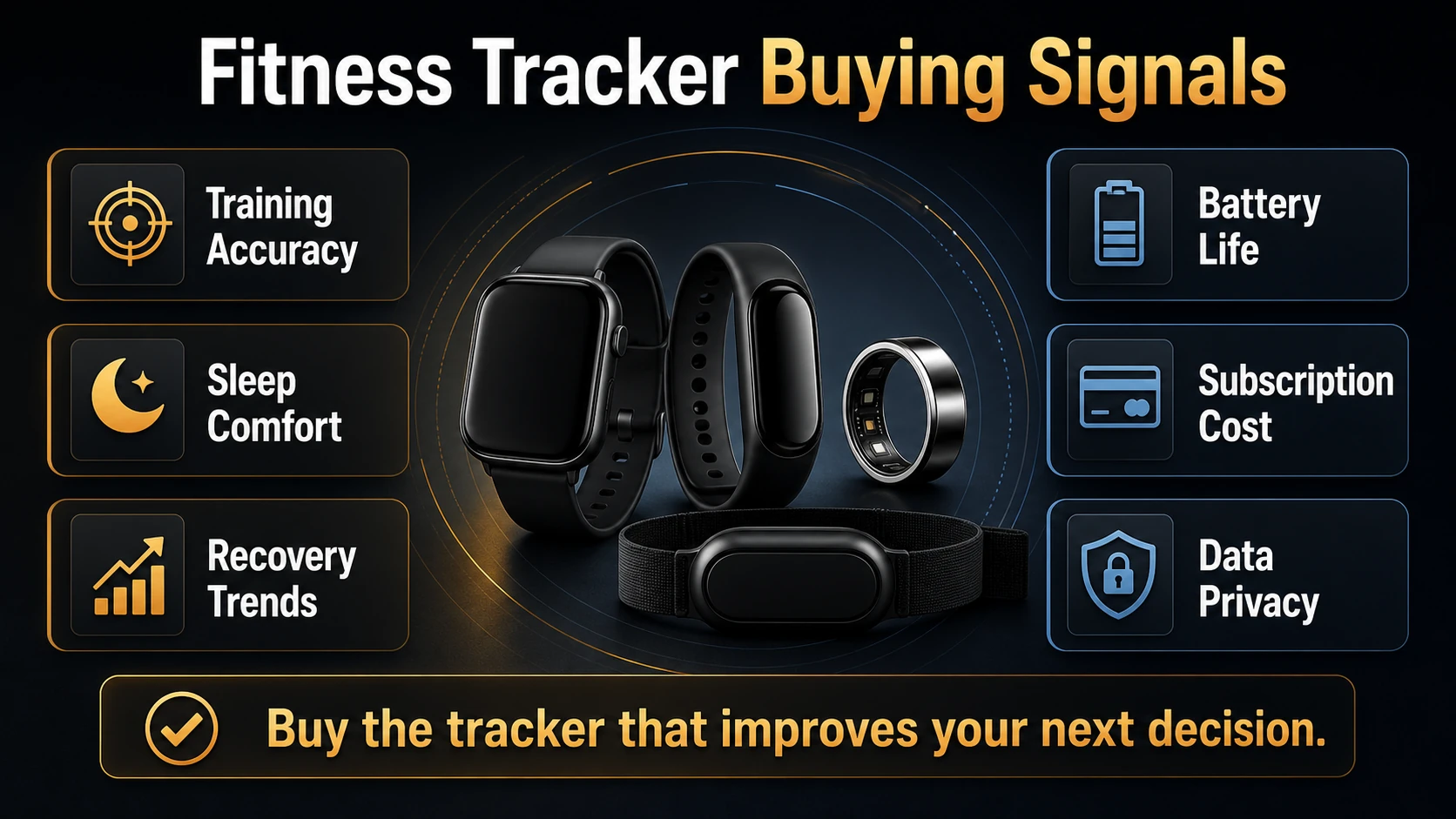
Garmin vs Fitbit vs WHOOP vs Oura
Garmin
Best when training drives the purchase. Garmin is strongest for runs, cardio sessions, battery life, recovery context, and men who want less subscription pressure.
Fitbit
Best when habits drive the purchase. Fitbit is easier for steps, sleep, reminders, and a smaller wrist profile, but check what is included without Premium.
WHOOP
Best when recovery coaching drives the purchase. WHOOP makes sense if you like app-based behavior feedback and accept the membership model.
Oura
Best when overnight comfort drives the purchase. Oura is less of a workout computer and more of a passive sleep, recovery, and health-trend tool.
2026 smart-ring note: Oura Ring 5 is now part of the smart-ring conversation, but many Amazon buyers will still compare Oura Ring 4 pricing, size availability, and subscription terms against newer options. Do not upgrade only because the generation number changed. Upgrade when comfort, battery, sizing, or the metrics you actually use improve your decisions.
PPG vs ECG: Why Workout Accuracy Changes
Most wrist trackers use optical PPG sensors. They shine light into the skin and estimate pulse from blood-flow changes. That can work well during steady efforts, but strength training, cycling grip, rowing, cold hands, tattoos, loose fit, and fast intervals can all make readings jump.
ECG-style chest straps measure electrical heart activity closer to the source. That is why a chest strap is still useful if you care about interval accuracy, Zone 2 testing, or comparing workouts over time. A 2024 American College of Cardiology journal scan also reinforces the broader point: wearable heart-rate accuracy varies by device, person, and activity.
Sleep, HRV and Readiness: Useful Trends, Imperfect Truth
Sleep, HRV, readiness, resting heart rate, and respiratory trends can be useful when they are compared against your own baseline. They are weaker when you treat a single number as a verdict. If your tracker says you are ready but your joints hurt, your sleep was broken, and performance is dropping, trust the whole picture.
Sleep wearables are most useful for timing, consistency, and routine feedback. Sleep stages are harder. A 2024 review in npj Digital Medicine highlights why consumer sleep tracking can be helpful while still needing caution around interpretation.
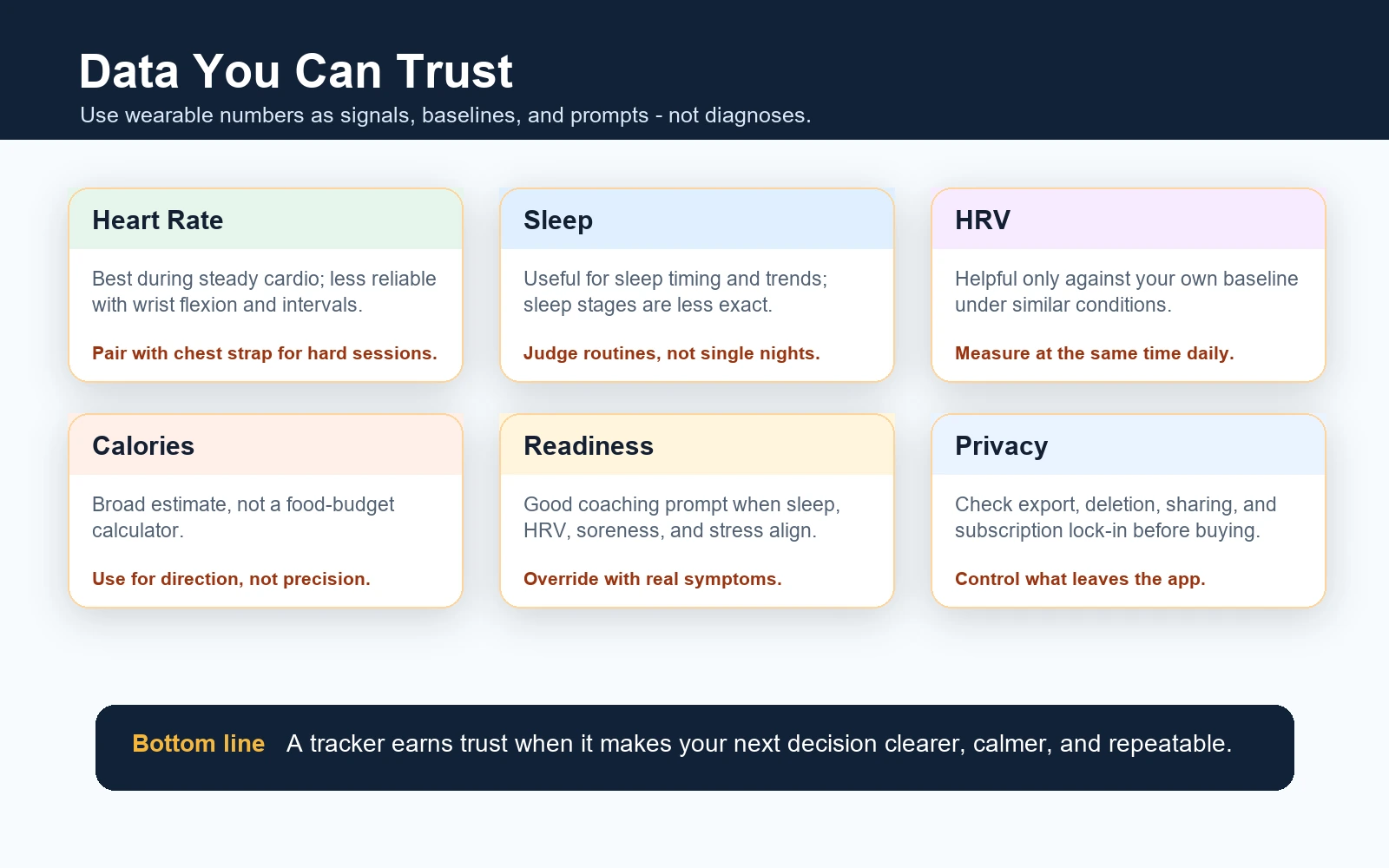
Subscription Costs Before You Buy
A cheap tracker can become expensive when the useful insights live behind a membership. A premium tracker can be worth it if the device replaces guessing and improves training consistency. Compare the first year and the second year before buying.
| Brand type | Common subscription issue | What to check before buying |
|---|---|---|
| Garmin-style watch | Often more data is available without a monthly plan | Whether the model includes training readiness, HRV status, maps, music, or the metrics you expect |
| Fitbit-style band | Some advanced insights may require Premium | Which sleep, readiness, workout, and coaching features remain after any trial ends |
| WHOOP | Membership is core to the product | Annual cost, included hardware, warranty, and cancellation terms |
| Oura-style ring | Full app value may depend on subscription | Ring sizing, included features without membership, and upgrade timing |
| Chest strap | Usually no subscription for the strap itself | App compatibility, battery replacement, strap size, and Bluetooth/ANT+ support |
Privacy and Data Control Checklist
Fitness trackers collect intimate data: sleep patterns, resting heart rate, workouts, stress signals, location, and sometimes health events. Privacy should be part of the buying decision.
How We Researched These Picks
This guide is built as a buying and usage framework, not a lab review. We compared product class fit, publicly available product information, Amazon product listings, platform constraints, likely subscription cost, training usefulness, sleep comfort, heart-rate limitations, privacy questions, and PrimeForMen reader intent.
We did not assign star ratings or claim long-term hands-on testing for every model. Where exact accuracy matters, especially during hard workouts, the practical recommendation is to validate wrist data against a chest strap and your own repeatable sessions.
14-Day Setup Plan
| Days | What to do | Why it matters |
|---|---|---|
| 1-3 | Wear the tracker normally, set privacy controls, and do not chase every score. | The device needs baseline data and you need a clean start. |
| 4-7 | Check resting heart rate, sleep timing, step trend, and workout HR consistency. | These are practical signals that can change behavior. |
| 8-10 | Run or ride one repeatable Zone 2 session and one harder session. | You learn whether wrist HR is stable enough or a chest strap is needed. |
| 11-14 | Compare scores against energy, soreness, motivation, and performance. | The tracker earns trust only if it matches real-world patterns. |
Common Buying Mistakes
- Buying a smartwatch when you wanted a tracker: notifications can become the feature that ruins consistency.
- Buying a ring for lifting: rings are usually better for recovery and sleep than for grip-heavy gym work.
- Ignoring subscription cost: compare the second year, not only the checkout price.
- Trusting calories too much: use body weight and food intake trends before changing nutrition from a watch estimate.
- Skipping fit checks: wrist tightness, ring sizing, skin irritation, and sleep comfort decide whether the tracker gets used.
Next step: if you want the broader category map before buying, read the PrimeForMen guide to wearable fitness tech. If workout heart rate is the main problem, compare dedicated heart rate monitors before spending more on a watch.
Medical disclaimer: fitness trackers, smartwatches, smart rings, and chest straps can support training and wellness decisions, but they do not diagnose, treat, or rule out disease. Speak with a qualified clinician if you have chest pain, fainting, abnormal heart rhythm concerns, unexplained shortness of breath, medication questions, or health conditions that affect exercise.
Affiliate disclosure: some product links are sponsored affiliate links. PrimeForMen may earn from qualifying purchases at no extra cost to you.
FAQs
What is the best fitness tracker for men in 2026?
The best fitness tracker for most men in 2026 is the one that fits the decision they need to improve. Garmin-style training watches are strongest for structured workouts, Fitbit-style bands are simplest for habits, WHOOP is built around recovery coaching, Oura is strongest for sleep comfort, and a chest strap is still the better choice for high-accuracy workout heart rate.
What is the best fitness tracker for men over 40?
Men over 40 should prioritize readable screens, comfortable sleep tracking, recovery trends, heart-rate-zone guidance, battery life, and privacy controls. A Garmin training watch plus a chest strap is strong for training. A Fitbit band or Oura ring may be easier if sleep, consistency, and low-friction health tracking matter more than performance metrics.
Is Garmin better than Fitbit?
Garmin is usually better for training depth, GPS workouts, recovery status, and athletes who want a watch to guide sessions. Fitbit is usually better for a smaller band, simpler activity tracking, and a lower-friction daily health habit. The better choice depends on whether you train from the device or mainly want reminders and trends.
Is WHOOP better than Oura?
WHOOP is better if you want a screenless coaching system for strain, recovery, and sleep habits. Oura is better if sleep comfort, ring form factor, and passive overnight trends matter most. Neither is the best stand-alone device for real-time running or strength training screens.
Is Oura Ring worth it over an older Oura Ring?
Oura can be worth it if your older ring has weak battery life, poor fit, or missing features you would actually use. If your current ring tracks sleep consistently and the subscription still gives you the insights you need, upgrading only for small software differences may not change your training decisions much.
Which fitness tracker works without a subscription?
Garmin watches are usually the strongest choice if you want deep training and health data without building the whole experience around a monthly subscription. Fitbit, WHOOP, and Oura can still be useful, but you should check which insights require a paid plan before buying.
Are fitness tracker calories accurate?
Fitness tracker calorie estimates are broad estimates. They can help compare one week against another, but they are not precise enough to run your whole nutrition plan. Use body weight trend, waist measurement, food intake, and training output alongside wearable calorie numbers.
Can a fitness tracker measure HRV accurately?
A fitness tracker can be useful for HRV trends when you measure under consistent conditions, especially overnight or at the same morning time. Do not compare your HRV number directly with someone else. Your baseline, sleep, alcohol, stress, illness, and training load matter more than a single reading.
Can a fitness tracker detect overtraining?
A tracker cannot diagnose overtraining by itself. It can flag patterns such as higher resting heart rate, lower HRV, poor sleep, rising soreness, and weaker performance. Treat those as prompts to adjust training, not as medical conclusions.
Should I wear a ring while lifting weights?
Many lifters should avoid wearing a smart ring during heavy barbell, dumbbell, kettlebell, or grip-intensive work because of comfort, scratching, and safety concerns. Use a watch, band, or chest strap during lifting, then wear the ring for sleep and recovery if that is its main job.
Do I need a chest strap if I own a fitness tracker?
You do not need a chest strap for casual steps, sleep, or easy walks. It becomes useful when you care about heart-rate accuracy during intervals, cycling, rowing, Zone 2 tests, or workouts with wrist flexion and fast intensity changes.
What is better for sleep: ring, band, or watch?
A ring is often the most comfortable for sleep, a band is a good middle ground, and a watch can feel bulky but may give deeper training context. Sleep-stage labels are less important than consistent sleep timing, total sleep, wake patterns, and how you feel the next day.
What fitness tracker is best for Zone 2 cardio?
For Zone 2 cardio, use a device that shows heart rate clearly and pairs with a chest strap if accuracy matters. Garmin plus a Polar H10 is a strong setup. A Fitbit band can work for easy cardio trends, but may be less useful for structured zone work.
How long should I wear a tracker before trusting the data?
Wear a tracker for at least 14 days before making big decisions from readiness, HRV, sleep, or resting heart rate. The device needs a baseline, and you need time to learn which numbers match your real energy, soreness, and performance.
What privacy settings should I check before buying?
Check whether you can export your data, delete your account, limit third-party sharing, control location history, disable social features, and understand what happens if you stop paying for the subscription. Privacy is part of the purchase, not an afterthought.