Do massages help muscle growth? Learn what massage can do for soreness and recovery, and what actually builds muscle.
- Massage may reduce delayed-onset muscle soreness and improve perceived recovery after hard training.
- It does not directly trigger muscle growth without a real training stimulus and enough nutrition.
- Use massage after training, on rest days, or away from key strength sets, not as a replacement for warm-ups or progressive overload.
Bottom line Muscle growth is driven by repeated mechanical tension, enough total training volume, adequate protein, sufficient energy intake, and recovery time.
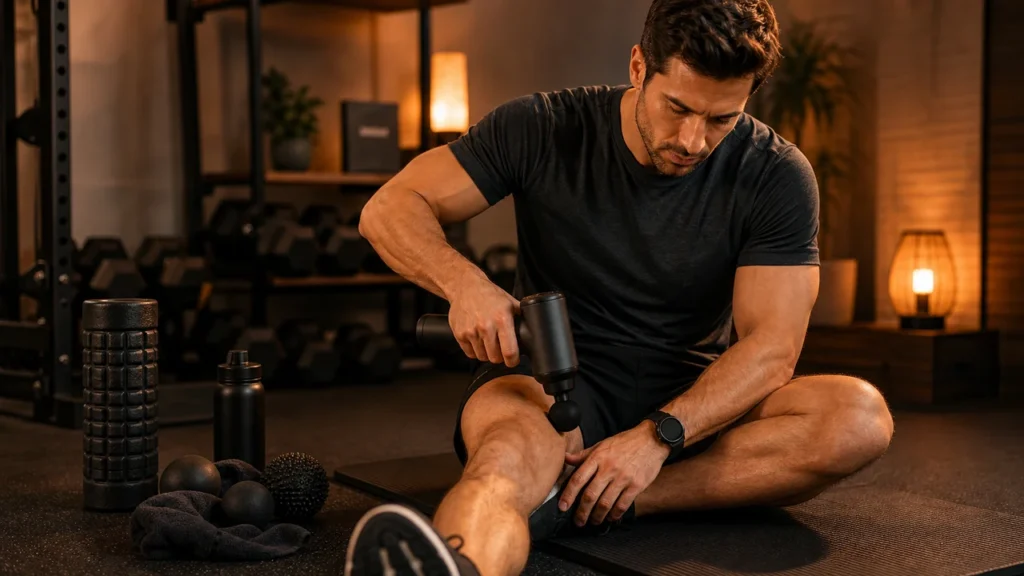
Do massages help muscle growth? They can help you feel less sore and more ready to train again, but massage does not directly build new muscle tissue the way progressive resistance training, calories, protein, sleep, and time do.
The useful frame is recovery support. A good massage, massage gun session, foam rolling pass, or pressure-point release may make the next workout feel more approachable. It should not be sold as a hypertrophy shortcut.
Quick Summary: Do massages help muscle growth?
- Massage may reduce delayed-onset muscle soreness and improve perceived recovery after hard training.
- It does not directly trigger muscle growth without a real training stimulus and enough nutrition.
- Use massage after training, on rest days, or away from key strength sets, not as a replacement for warm-ups or progressive overload.
- Pressure should feel useful, not punishing; bruising-level work can add stress instead of recovery.
- For the broader recovery system, pair this with muscle recovery techniques that actually support repeatable training.
PrimeForMen perspective: massage belongs in the “recover better so you can train better” category. It may help soreness, stiffness, relaxation, and readiness. It does not replace hard sets, smart programming, protein intake, creatine, sleep, or load progression.
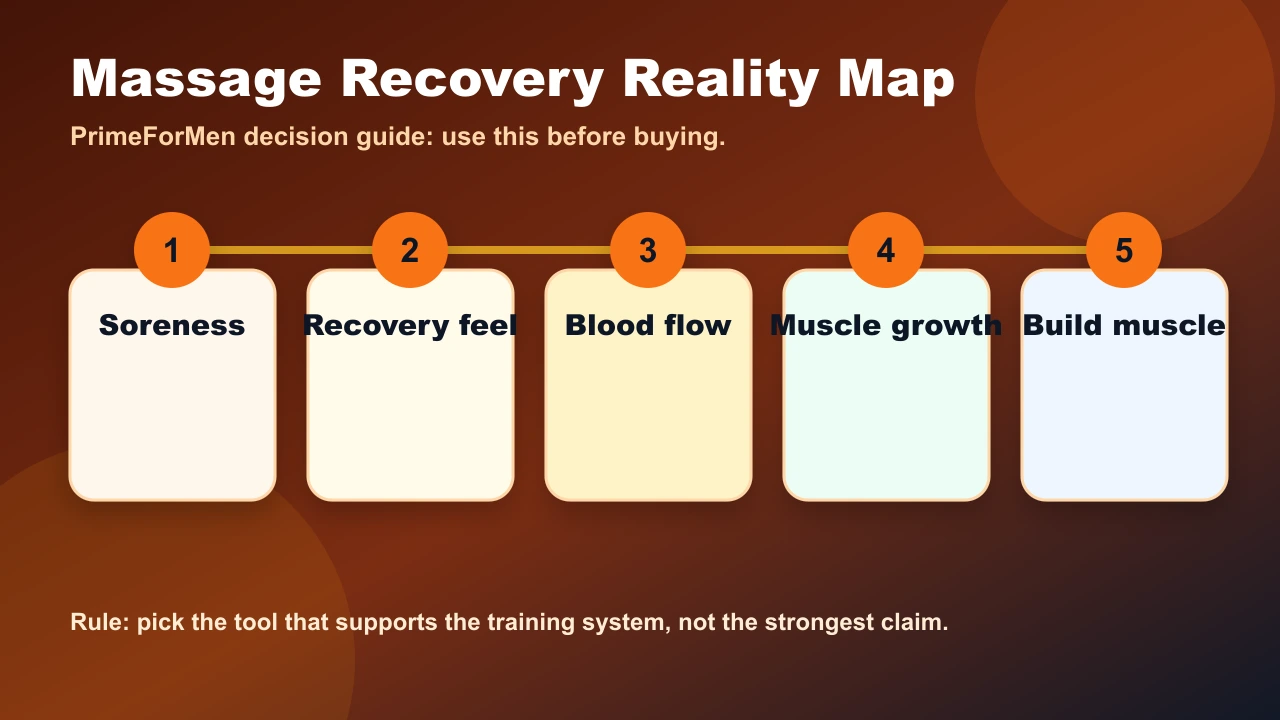
The Honest Answer: Massage Helps Recovery More Than Growth
Muscle growth is driven by repeated mechanical tension, enough total training volume, adequate protein, sufficient energy intake, and recovery time. Massage can support the environment around that process, especially when soreness makes you move worse or avoid the next session.
That distinction matters. If a man feels better after massage and then trains consistently, massage may indirectly support progress. But the growth came from better training consistency, not from massage creating hypertrophy by itself. The same logic applies to protein timing for men over 40: the tool matters most when it helps the larger system work.
Recovery Benefit vs. Muscle Growth Meter
This meter separates what massage is best at from what it is often overcredited for.
High
Useful
Moderate
Low
What the Research Actually Supports
A review in Frontiers in Physiology reported that massage can be useful for delayed-onset muscle soreness and perceived fatigue after exercise. Another classic review in the British Journal of Sports Medicine found that massage may help soreness, while performance and physiological claims are less consistent.
That is the practical bottom line: massage is strongest for how recovery feels. It is weaker as a direct performance enhancer and weakest as a direct muscle-building method.
| Claim | Reality | How to Use It |
|---|---|---|
| Massage builds muscle | Not directly. Hypertrophy needs progressive training and enough nutrition. | Treat massage as recovery support after the growth stimulus is already in place. |
| Massage removes soreness | It may reduce soreness, but it will not erase tissue stress from a hard session. | Use light to moderate pressure and keep training loads sensible. |
| Massage improves circulation | Short-term local effects may happen, but circulation claims are often oversold. | Do not rely on massage to fix poor sleep, low protein, or too much volume. |
| Massage improves range of motion | It can make tight areas feel easier to move, especially temporarily. | Follow it with controlled movement, not just passive pressure. |
Recovery Tools That Fit This Use Case
Why these products here? They help you apply manageable pressure between workouts without pretending recovery tools are muscle-building supplements.
- Use them for soreness management, not for forcing tissue to adapt.
- Keep sessions short enough that they help you relax instead of adding more stress.
- Pair them with training basics, including progressive loading and enough daily protein.
Amazon Product Shortlist
These are practical product starting points, not medical or performance guarantees. Use the images, sizing, labels, reviews, and return policy to compare the real item before buying.

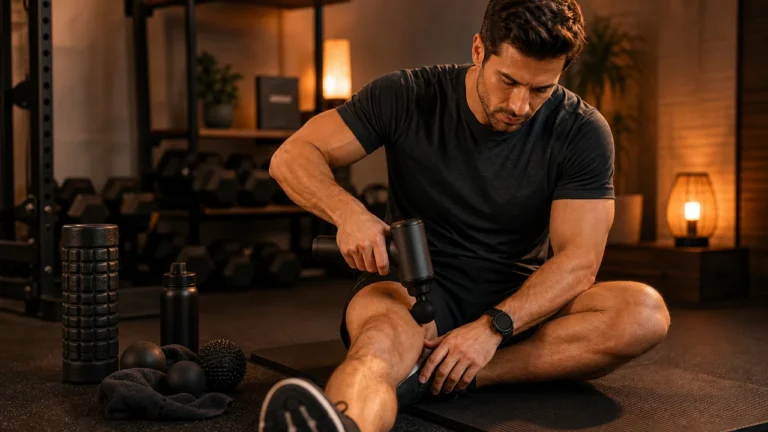
Massage gun
A recovery tool for targeted soreness, not a muscle-growth shortcut.
- Useful for short warm-up or recovery routines.
- Targets specific areas more directly than a full foam roll.
- Best when pressure is controlled and pain-free.

Foam roller
A repeatable recovery tool when soreness and tissue tolerance limit training consistency.
- Easy to use before or after sessions.
- Works well for quads, calves, glutes, and upper back.
- Pairs with mobility work without needing much space.

Massage ball set
A compact option for feet, glutes, pecs, and hard-to-reach tight spots.
- More precise than a roller for small areas.
- Easy to pack for travel or running days.
- Best used gently rather than as a pain test.
*Affiliate disclosure: PrimeForMen may earn from qualifying purchases. Product images are loaded from Amazon media URLs and product availability can change.
*Affiliate disclosure: PrimeForMen may earn a commission from qualifying purchases. This does not change the price you pay or our editorial stance.
The Recovery Gap Most Advice Misses
Massage can make you feel recovered before the training stress has fully resolved. That can be useful if it helps you move well. It can also be misleading if you treat less soreness as proof that you are ready for another maximal session.
The better signal is performance trend: bar speed, joint comfort, sleep quality, appetite, motivation, and whether your warm-up sets feel normal. If those markers are falling, massage is not the missing magic. Your program may need better volume control, more food, or another rest day.
When Massage Is Most Useful for Lifters
Massage fits best when soreness or stiffness is interfering with normal movement, not when the goal is to chase pain. A light session after hard legs, a short massage gun pass before mobility work, or pressure on a tight upper back can help you move with less guarding.
It is especially helpful when paired with active recovery, walking, hydration, and a nutrition plan that already supports training. For example, creatine may support strength and training output over time, while massage is more about comfort and readiness.
Use massage when:
- Soreness is changing your squat, hinge, press, or running mechanics.
- A muscle feels guarded rather than injured.
- You need a downshift before sleep after an intense training day.
- You are returning to training and want a low-risk way to improve movement comfort.
Do not use massage to push through:
- Sharp pain, swelling, numbness, bruising, or sudden strength loss.
- A suspected tear, tendon injury, or joint problem.
- Repeated fatigue from programming that is simply too aggressive.
How to Time Massage Around Strength Training
For muscle growth, keep the main thing the main thing: high-quality lifting. Deep pressure immediately before heavy work can make some lifters feel loose but less explosive. If you are testing strength, keep pre-workout massage short and mild.
After training or on rest days, you have more room. Use massage to calm tone, reduce soreness, and make normal movement easier. If the goal is testosterone or strength progress, the bigger question is still whether your lifting plan is productive; this guide on weight lifting and testosterone gives that context.
Simple 10-minute recovery protocol:
- Minute 1-2: easy walk or light bike to raise temperature.
- Minute 3-6: massage gun or foam roller on the sore area, moderate pressure only.
- Minute 7-9: slow controlled movement through the range you want to restore.
- Minute 10: note whether movement improved. If not, reduce training load instead of adding more pressure.
Pressure Matters: More Pain Is Not Better
The best massage dose is usually the one that leaves you moving better afterward. If pressure creates bruising, nerve-like symptoms, or next-day tenderness that feels worse than the original soreness, the session was too aggressive.
Men who train hard often confuse intensity with effectiveness. Recovery is the opposite. The right dose should lower threat, not prove toughness. That is also why managing conditioning load matters; excessive high-stress cardio can collide with recovery, which is covered in cardio and cortisol.
The Bottom Line
Massage can help muscle growth only indirectly: by reducing soreness, improving perceived recovery, supporting relaxation, and helping you return to productive training. It does not build muscle on its own.
If you want bigger, stronger muscles, prioritize progressive resistance training, enough protein, adequate calories, creatine if appropriate, and sleep. Use massage as a recovery tool that helps you repeat those basics with less friction.
Medical disclaimer: This article is for general fitness education only and does not replace medical care, physical therapy, diagnosis, or treatment. If you have sharp pain, swelling, numbness, bruising, a suspected injury, or symptoms that persist or worsen, speak with a qualified clinician before using massage or continuing hard training.
Frequently Asked Questions About Massage and Muscle Growth
Do massages help muscle growth directly?
No. Massage does not directly create hypertrophy. It may help you feel less sore and more ready to train, which can indirectly support consistency.
Is a massage gun good for building muscle?
A massage gun is a recovery tool, not a muscle-building tool. It can help with soreness and movement comfort, but muscle growth still comes from progressive lifting and nutrition.
Should I get a massage before or after lifting?
Use light massage before lifting if it helps movement, but avoid long deep work before heavy sets. After training or on rest days is usually a better fit for recovery-focused massage.
Can massage reduce delayed-onset muscle soreness?
It may reduce soreness and perceived fatigue for some people. The effect is usually about comfort and readiness rather than faster muscle growth.
How often should lifters use massage?
One to three short sessions per week is enough for many lifters. Use it when soreness limits movement or relaxation, not because every workout requires a recovery gadget.