No smoothie is proven to boost testosterone. Try three balanced recipes with estimated nutrition, practical swaps and clear evidence limits.
- Three recipes with weighed ingredients and clear serving sizes.
- Compare calculated protein, fiber and calories.
- Food benefits do not prove higher testosterone.
Bottom line Choose whether the smoothie is your meal or an extra drink, then weigh one recipe before adding extras.
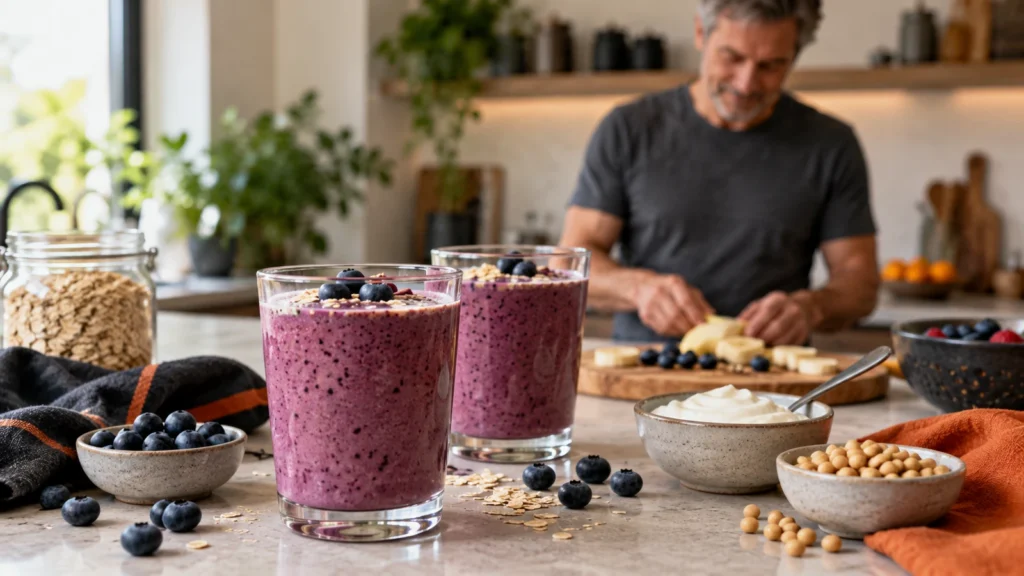
A smoothie for testosterone can help you put protein, fruit, and other useful foods into a convenient meal. It has not been established as a treatment for low testosterone. No combination of banana, berries, seeds, or powders should come with a promised hormone increase.
Start with a protein source and fruit, then add a liquid you tolerate. If you add seeds or nut butter, measure the portion to suit your appetite, training, and overall diet.
The Prime Perspective
A good recipe should tell you what goes into the blender, what portion it makes, and what nutritional tradeoffs you are making. It should not turn a food’s vitamin content into a medical result. That is the distinction behind our editorial policy.
A smoothie can help if you routinely skip breakfast. If you add it on top of your usual meals, count those calories in your daily intake.
Choose a smoothie that fits your meal
Use a recipe as a starting point, then adapt it to foods you tolerate. The nutrition figures are estimates for the stated ingredients and portions. A different yogurt, milk alternative, protein powder, or heaped spoon of seeds changes the result.
Scale your smoothie & build a shopping list
Choose a recipe and how many full recipe portions to prepare. Ingredient weights and estimated nutrition update together. Half a portion means half the recipe, not a separate full meal.
The calculator needs JavaScript. The complete one-portion recipes are immediately below; you can multiply every ingredient by the same amount and print this article.
Shopping checklist
Check ingredients you already have. Weights are edible ingredient amounts in grams, including liquids; use the dry oat weight. Clear checks starts a fresh list.
Estimates are calculated from the same generic USDA FoodData Central profiles as the recipes below, before rounding. Brand changes and substitutions need a new calculation. These values describe food, not testosterone effects. Respect your blender’s fill limit and blend larger quantities in batches. Follow the recipe’s preparation and allergy guidance.
Each recipe makes one complete portion. Weigh the ingredients, including liquids, in grams. The estimates use generic USDA profiles; brands and ingredient swaps change the result. These recipes were developed editorially and have not been kitchen tested. Use oats suitable for uncooked consumption, or prepare and cool them according to the package before blending; the listed oat grams are the dry weight used for the calculation. Add a little water if your blender needs it; water does not add the listed nutrients.
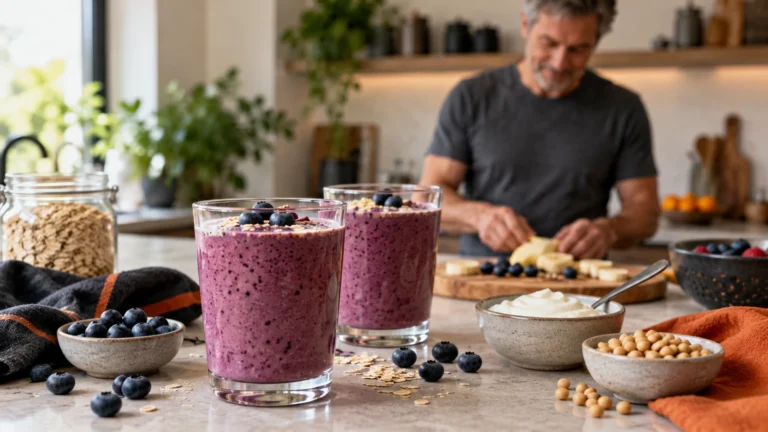
Berry yogurt oat breakfast smoothie
A substantial breakfast option with yogurt protein and oats.
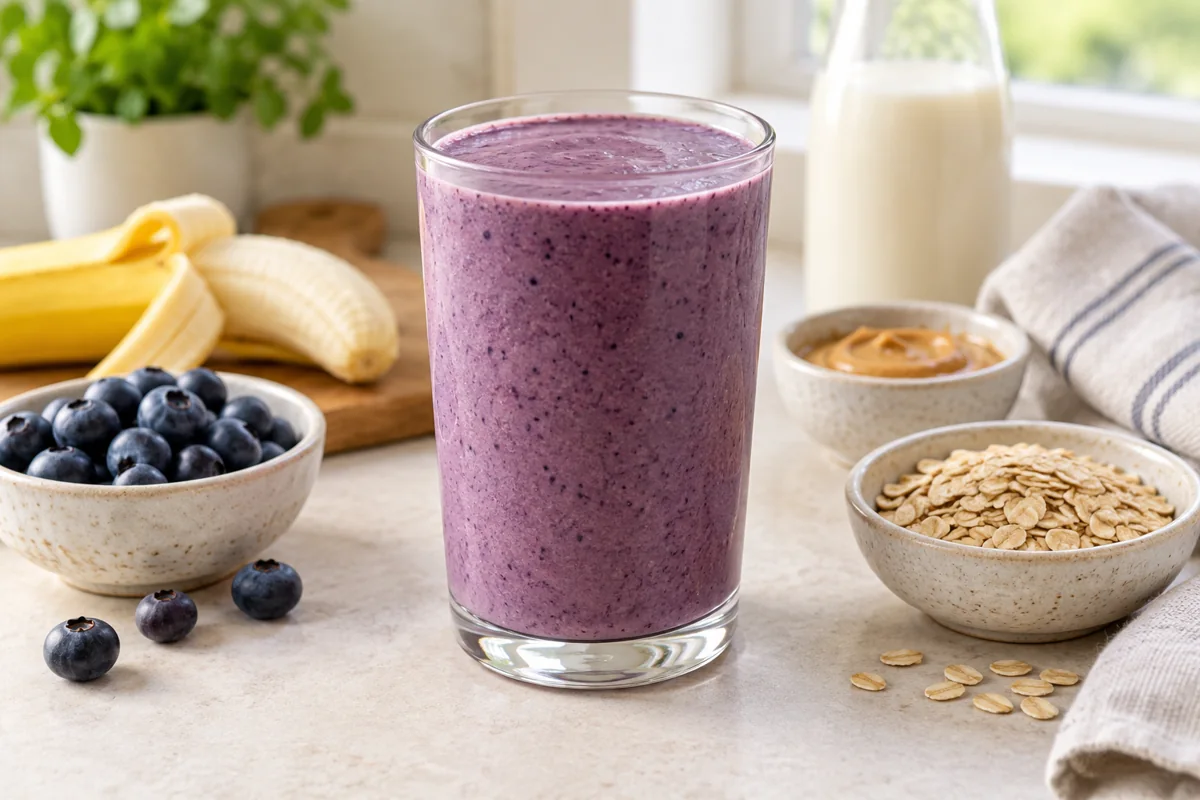
Approx. 447 kcal · 29.5 g protein · 7.9 g fiber
One portion is the whole recipe: 505 g of weighed ingredients before blending. Splitting it into two glasses does not create two full recipe portions.
- 200 g Plain nonfat Greek yogurt
- 100 g Blueberries
- 60 g Peeled banana
- 30 g Dry rolled oats
- 15 g Smooth peanut butter, without salt
- 100 g Unsweetened almond milk
- Wash the blueberries and peel the banana. Weigh every ingredient; banana weight excludes peel.
- Add almond milk and yogurt to the blender, then banana, blueberries, oats and peanut butter.
- Blend until smooth, pause to scrape down the sides, then blend again. Rest for two minutes if you want the oats to soften.
Allergens: milk, peanut, almond.
Use lactose-free plain Greek yogurt if needed; protein and calories depend on its label.
Vegan soy berry smoothie
A dairy-free option using soy milk and soft tofu for protein.
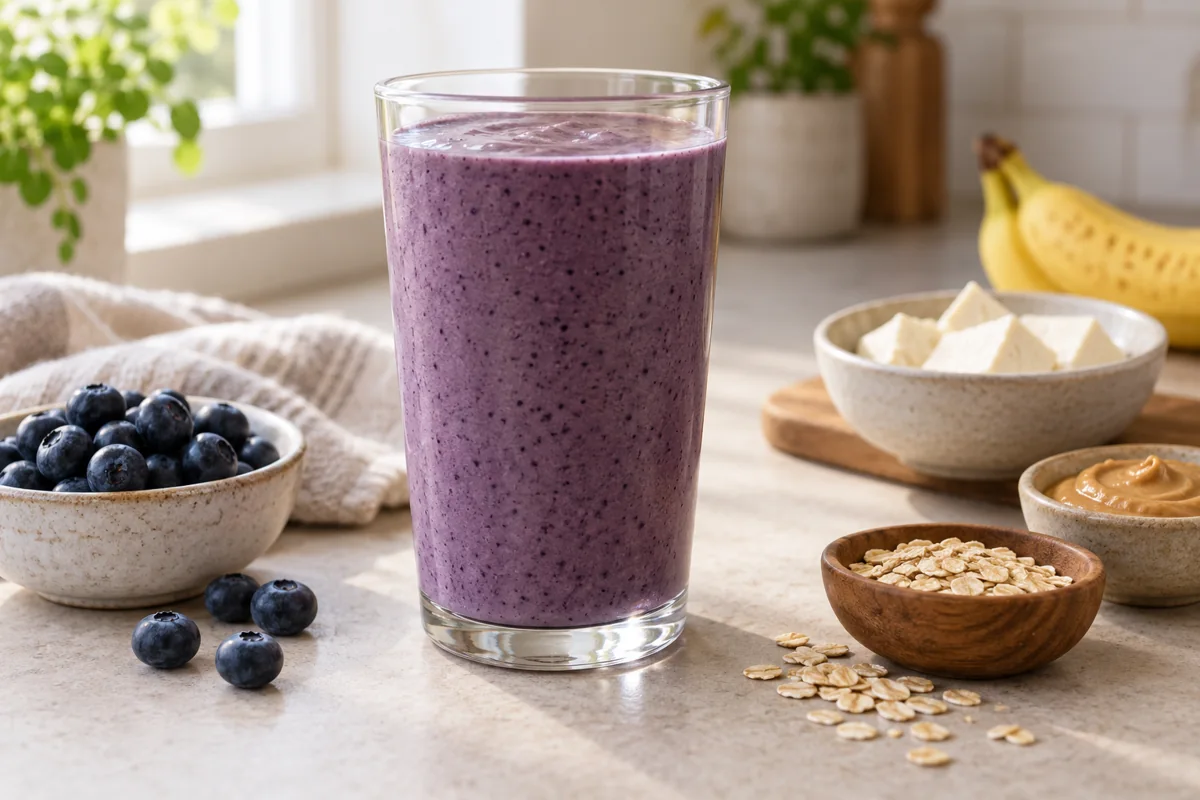
Approx. 446 kcal · 23.9 g protein · 8.4 g fiber
One portion is the whole recipe: 530 g of weighed ingredients before blending. Splitting it into two glasses does not create two full recipe portions.
- 180 g Unsweetened fortified soy milk
- 150 g Soft tofu
- 100 g Blueberries
- 60 g Peeled banana
- 25 g Dry rolled oats
- 15 g Smooth peanut butter, without salt
- Wash the blueberries, peel the banana, and drain away loose packing liquid before weighing the soft tofu.
- Add soy milk and tofu to the blender. Add blueberries, banana, oats and peanut butter.
- Blend until the tofu and oats are fully smooth. Pause and scrape down the sides as needed.
Allergens: soy, peanut.
Use plain soft tofu rather than firm tofu for a smoother result. Tofu brands and coagulants vary in nutrients; recalculate from the product label.
Lighter almond yogurt smoothie
A lower-energy option than the other two recipes; yogurt supplies most of the protein.
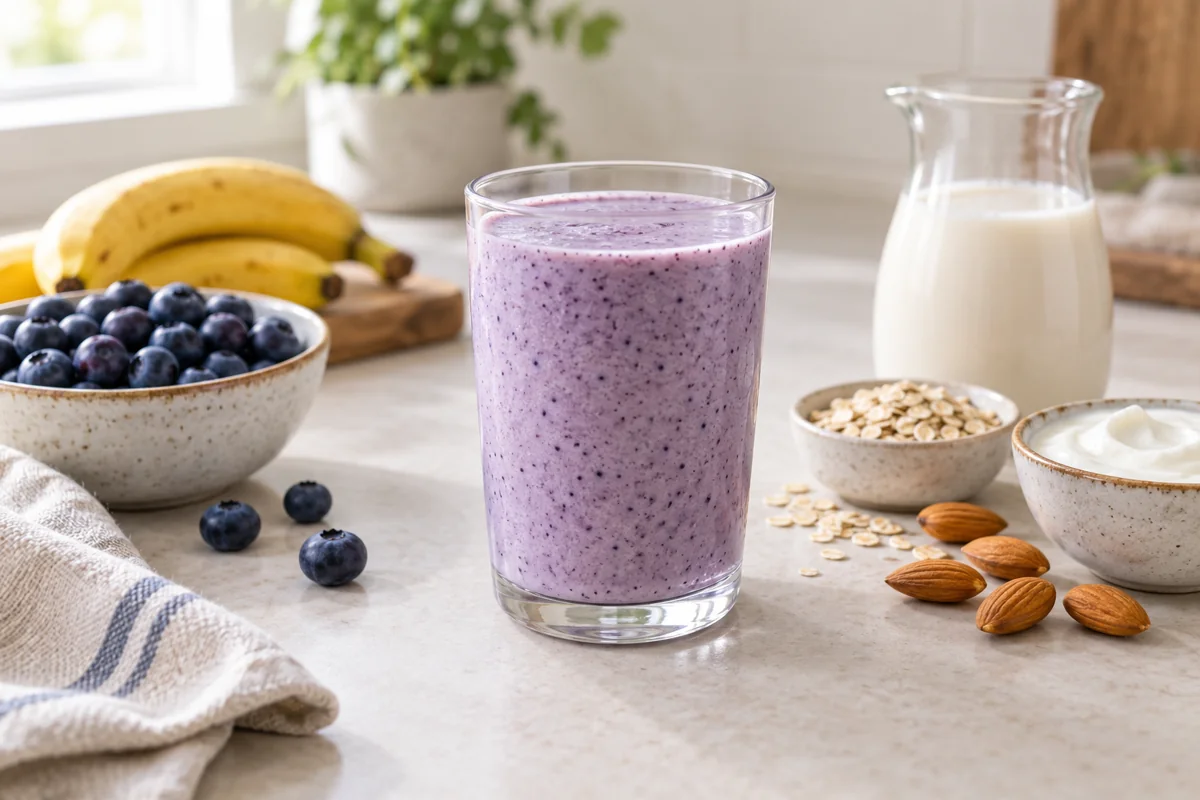
Approx. 289 kcal · 22.4 g protein · 5.4 g fiber
One portion is the whole recipe: 560 g of weighed ingredients before blending. Splitting it into two glasses does not create two full recipe portions.
- 225 g Unsweetened almond milk
- 180 g Plain nonfat Greek yogurt
- 100 g Blueberries
- 40 g Peeled banana
- 15 g Dry rolled oats
- Wash the blueberries and peel the banana. Weigh the edible banana portion.
- Add almond milk and yogurt to the blender, then blueberries, banana and oats.
- Blend until smooth. The smaller banana and oat portions make this less substantial than the breakfast version.
Allergens: milk, almond.
Replace almond milk with unsweetened soy milk if it is suitable for you; recalculate protein and calories.
Compare the recipes by protein, energy, and their fit in your meals. Fruit and yogurt contain naturally occurring sugars; distinguish those from added honey, syrup, or sweetened powders.
Compare the full recipes
A lower calorie number does not make a recipe better for everyone. Use these estimates to fit the drink into your meals; they do not rank testosterone effects.
Estimated protein per full recipe
One complete recipe. Bar scale: 0–35 g.
-
Yogurt oat29.5 g
-
Vegan soy23.9 g
-
Almond yogurt22.4 g
Calculated estimates for the exact quantities above. Source: USDA FoodData Central profiles; one whole recipe, not per 100 g. See the values and ingredient sources below.
Estimated energy per full recipe
One complete recipe. Bar scale: 0–500 kcal.
-
Yogurt oat447 kcal
-
Vegan soy446 kcal
-
Almond yogurt289 kcal
Calculated estimates for the exact quantities above. Source: USDA FoodData Central profiles; one whole recipe, not per 100 g. See the values and ingredient sources below.
On small screens, swipe the table sideways to see every column.
| Recipe | Energy (kcal) | Protein (g) | Fiber (g) |
|---|---|---|---|
| Yogurt oat | 447 | 29.5 | 7.9 |
| Vegan soy | 446 | 23.9 | 8.4 |
| Almond yogurt | 289 | 22.4 | 5.4 |
How these estimates were calculated
For every ingredient, nutrient content per 100 g was multiplied by the weighed amount divided by 100. Contributions were summed before rounding: energy to the nearest kcal; protein and fiber to 0.1 g. The archival generic profiles are reference estimates, not current brand labels or laboratory tests of these recipes. No liquid volume-to-weight conversion was assumed.
- Plain nonfat Greek yogurt: USDA FDC 170894
- Blueberries: USDA FDC 171711
- Peeled banana: USDA FDC 173944
- Dry rolled oats: USDA FDC 173904
- Smooth peanut butter, without salt: USDA FDC 172470
- Unsweetened almond milk: USDA FDC 174832
- Unsweetened fortified soy milk: USDA FDC 175215
- Soft tofu: USDA FDC 172449
Affiliate disclosure: As an Amazon Associate, PrimeForMen earns from qualifying purchases. The links below are affiliate links.
Make these smoothies easier to prepare
Start with what you already own. These three tools support blending, weighing and refrigerated storage; these are kitchen tools, not hormone treatments. Our picks are based on product specifications and recipe fit, not hands-on testing.
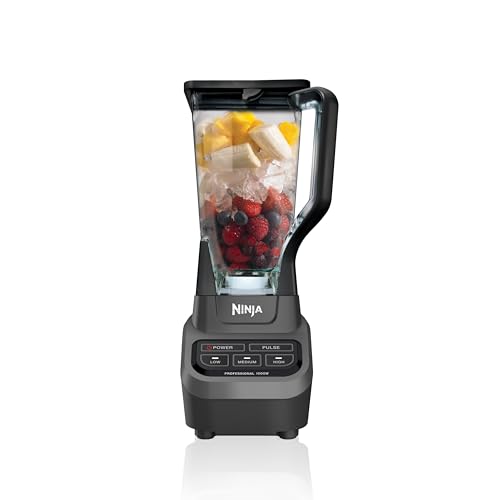
Ninja Professional BL610 Blender
Best for: Making the recipes in a countertop pitcher rather than squeezing them into a small personal cup.
Worth considering if your current blender struggles with frozen fruit or has too little usable capacity. Skip it if your existing blender handles these ingredients comfortably.
Current Amazon listing: Ninja Professional Blender, 1000W, Total Crushing Tech, 72oz Pitcher, BL610
- 72 oz pitcher; the separate maximum liquid fill is 64 oz (1.9 L).
- Use cold ingredients and respect the marked fill line; do not blend hot liquids.
- A larger pitcher takes more counter and cupboard space than a personal blender.
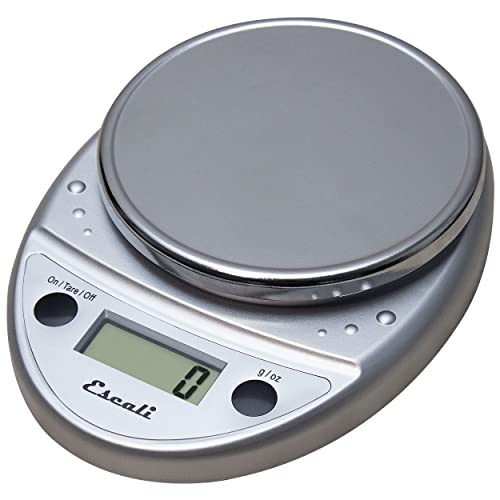
Escali Primo Digital Kitchen Scale
Best for: Following the gram-based recipes and measuring oats, nut butter and liquids by weight.
A scale makes small ingredient changes easier to repeat. Keep your current scale if it already has a gram setting and tare function.
Current Amazon listing: Escali Primo Digital Food Scale Multi-Functional Kitchen Scale and Baking Scale for Precise Weight Measuring and Portion Control, 8.5 x 6 x 1.5 inches, Chrome
- Reads in 1 g increments with a maximum capacity of 5 kg.
- Tare the empty container, then reset between ingredients to weigh each addition.
- The container counts toward the load limit; keep the scale dry because it is not waterproof.

Ball 32 oz Wide-Mouth Jars · 12 Pack
Best for: Households that will reuse several jars for chilled smoothies and other kitchen storage.
The wide opening makes filling and spoon access easier. This listing is a 12-pack: skip it if you only need one container, or already have a suitable lidded jar.
Current Amazon listing: Ball - 32oz Wide Mouth Jars with Lids & Bands 12 Pack Jars, Large Glass Mason Jar for Food Storage with airtight Lid, 0.25 Gallon Glass Jar with Lid and Bands, Set of 12
- Each quart-size jar holds 32 US fl oz; this is container capacity, not a measured recipe yield.
- The listing includes 12 glass jars with lids and bands; check the selected size and pack before buying.
- Keep prepared smoothies refrigerated; a screw-on lid does not make the recipe shelf-stable.
* As an Amazon Associate, PrimeForMen earns from qualifying purchases.
Before you buy: Compare usable capacity, storage space and pack size. For carrying a smoothie in a bag, choose a container specifically intended for transport and test the closure first. Prices, sellers and availability can change.
Product specifications behind these picks
- Ninja BL610 series owner’s guide (PDF): pitcher capacity, liquid fill limit and operating precautions.
- Escali Primo instructions (PDF): gram increments, tare, load limit and care.
- Ball wide-mouth jar range: pint and quart options. The linked Amazon listing is specifically the 32 oz, 12-pack option.
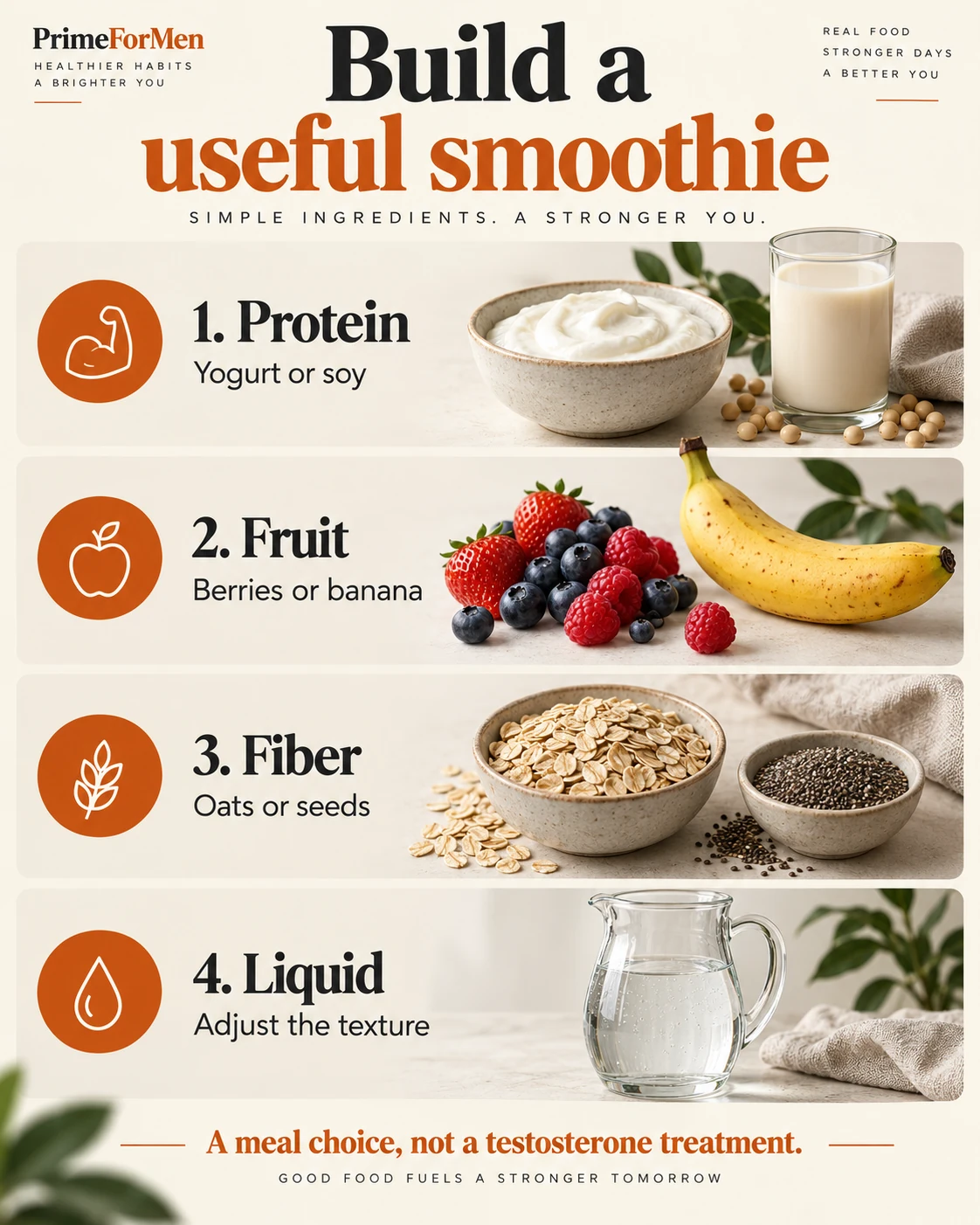
What smoothie ingredients can, and cannot, do
On small screens, swipe the table sideways to see every column.
| Ingredient or nutrient | Useful reason to include it | Limit of the claim |
|---|---|---|
| Yogurt, milk, soy, or a suitable protein powder | Contributes protein to a meal | Protein grams do not predict a testosterone increase |
| Seeds and nuts | Add fats, minerals, and energy | A handful is not a treatment for a diagnosed deficiency |
| Fruit and leafy vegetables | Add variety and nutrients | Antioxidant content does not prove higher testosterone in humans |
| Fortified milk alternatives | Can contribute calcium and vitamin D | Fortification is not a demonstrated hormone intervention |
| Maca or “testosterone” blends | Optional products with separate evidence and safety questions | A supplement study cannot validate a mixed-food recipe |
A mechanism explains why researchers might investigate an ingredient. A human trial tells us what happened when people consumed a defined amount. Even a positive supplement trial would not establish that a smaller culinary portion, blended with other foods, produces the same result.
Zinc and magnesium: aim for adequacy
The NIH Office of Dietary Supplements zinc fact sheet gives an adult male recommended intake of 11 mg per day. That is a daily nutritional target, not a recommended amount to add to one smoothie. Food, fortified products, and supplements can all contribute to your total.
A small 1996 study of zinc status and testosterone reported lower testosterone after dietary zinc restriction in four young men and higher testosterone after supplementation in nine marginally zinc-deficient older men. These were tiny before-and-after intervention groups without placebo controls. The findings do not establish that seeds or a smoothie boost testosterone in men who already get enough zinc.
Seeds, nuts, and leafy greens can also contribute magnesium. The NIH magnesium fact sheet describes its roles in muscle and nerve function and protein synthesis. Those are sound reasons to include magnesium-containing foods in a varied diet. They do not establish a hormone benefit from adding a spoonful of seeds.
Do not grind supplement tablets into the blender to “complete” the recipe. High zinc intake can interfere with copper absorption, and magnesium supplements can cause gastrointestinal effects. If you suspect a deficiency or take a prescribed supplement, discuss your intake with a clinician or pharmacist rather than guessing from symptoms.
Vitamin D, maca, and other popular add-ins
Fortified dairy or plant-based drinks may contribute vitamin D. Check the carton because products differ. The NIH vitamin D fact sheet explains that vitamin D helps calcium absorption and has other normal bodily functions. A food label does not show whether you are deficient, or how testosterone will respond.
Maca is often marketed through libido claims. That is not the same outcome as testosterone. In a 12-week placebo-controlled trial in adult men, reported sexual desire improved with maca without a corresponding change in serum testosterone. It does not justify calling a maca smoothie a testosterone booster.
The same evidence check applies to cocoa, ginger, pomegranate, and greens powders. A food can be enjoyable and nutritionally useful without increasing testosterone. Animal findings, concentrated extracts, and social-media anecdotes do not establish the effect of a breakfast recipe.
Choose add-ins for taste, texture, nutrition, or convenience. An unproven hormone promise is a poor reason to add another powder.
Pick the protein source before the milk alternative
Milk, Greek yogurt, soy foods, and suitable protein powders can help build a protein-containing smoothie. Their amounts differ, so read the labels rather than assuming every white liquid or yogurt alternative supplies the same nutrition.
Standard almond milk commonly contributes little protein. That can be fine as the liquid in a smoothie if another ingredient supplies the protein. Our guide to almond milk and testosterone explains the distinction between fortification, protein, and hormone claims.
Soy does not need to be avoided for a presumed testosterone penalty. A meta-analysis of clinical studies in men found no significant effects of soy protein or isoflavones on measured reproductive hormones, including total and free testosterone. Choose according to nutrition, taste, and allergies.
Protein powder is optional. If food already provides the protein you want, adding a scoop simply adds more. If you need convenience, select a product with a clear ingredient list and serving size. Our protein powder guide can help compare products by use case rather than hormone marketing.
The NIH sports-supplement guidance explains that independent certification can provide extra assurance about a supplement’s identity and contents. It does not certify that a product raises testosterone. Avoid turning a plain protein smoothie into a multi-ingredient “booster” stack.
Watch: make it a meal or a drink
Mayo Clinic dietitian Kate Zeratsky explains smoothie ingredients and why the drink’s role in your meal matters. The video is general nutrition guidance; it does not promise a testosterone increase or validate these recipes.
Adapt the portions to your goal
On small screens, swipe the table sideways to see every column.
| Your goal or restriction | Useful adjustment | What to check |
|---|---|---|
| A smaller snack | Reduce the full recipe portion or use less of an energy-dense add-in | Do not remove the protein source while keeping every sweet ingredient |
| A more substantial breakfast | Keep a protein source and use enough ingredients to make a satisfying meal | Your appetite and the rest of your day’s meals |
| Dairy-free | Use a suitable soy or other plant option and check its protein content | Milk ingredients in the powder and the allergen statement |
| Lactose intolerance | Consider lactose-free dairy if it suits you, or a plant alternative | Lactose-free does not mean safe for a milk allergy |
| Nut or seed allergy | Remove the trigger and select a safe alternative | Cross-contact and the full ingredient list |
If weight management is your aim, decide what the smoothie replaces before adding it every day. Nut butter, seeds, oats, and fruit juice can add more energy than the drink’s size suggests, so measure their portions.
If you train hard, making every recipe as low in calories as possible may work against adequate fueling. The 2023 IOC consensus on relative energy deficiency in sport describes health and performance consequences of problematic low energy availability in athletes. It does not diagnose you from a meal or supply a universal calorie threshold.
For readers over 50, our calorie and TDEE calculator and protein calculator can give starting estimates for planning. Individual medical restrictions and changing training loads may require different advice.
Food safety matters more than raw-food claims
Use pasteurized milk and dairy products. Do not add ordinary raw eggs because a recipe labels them “natural” or “testosterone friendly.” The FDA’s egg safety guidance recommends pasteurized eggs or egg products for recipes served with raw or undercooked eggs. You can get protein without using eggs in a smoothie at all.
Do not add raw flour, cake mix, or cookie dough. The FDA warns that flour is a raw food and should not be used in ready-to-eat shakes. Follow the package directions for oats and other ingredients; use an option intended for uncooked consumption or prepare it as instructed.
Wash fresh produce under running water, use clean equipment, and follow preparation instructions on frozen fruit or vegetable packaging. Frozen does not mean sterile. Foods marked for cooking should be cooked and cooled appropriately before use in a cold drink.
Drink the smoothie promptly or refrigerate it in a clean sealed container. The FDA’s storage guidance advises keeping refrigerated foods at 40°F (4°C) or below and limiting time at room temperature to two hours, or one hour above 90°F (32°C). An insulated container needs enough cooling to maintain a safe temperature.
When a recipe is not the next step
Persistent low libido, fewer spontaneous erections, erectile problems, or unexplained fatigue deserve medical assessment. They can have causes other than low testosterone. Feeling better after breakfast does not confirm a hormone change.
The Endocrine Society’s clinical guidance requires compatible signs or symptoms and consistently low testosterone, confirmed with a repeat morning fasting blood test. A smoothie cannot establish or replace that assessment.
If you have kidney disease, diabetes, a prescribed fluid restriction, or medication-related dietary instructions, have the recipe checked against your care plan. A general recipe may not fit individual limits for carbohydrate, potassium, phosphorus, protein, or fluids.
Put the recipe into a workable routine
- Choose which meal or snack the smoothie will replace.
- Check your protein source and weigh or measure the ingredients the first time.
- Adjust taste and texture with water or ice before adding sweeteners or more nut butter.
- Prepare ingredients safely and keep the finished drink chilled.
- Judge the recipe by convenience, tolerance, appetite, and nutritional fit. Do not use energy or libido changes as a home testosterone test.
Choose a breakfast you can repeat, then pair it with ordinary meals and a training routine you can sustain. Our rest and recovery guide covers another part of that routine.
Keep the recipes in your kitchen
Download all three weighed recipes, estimated nutrition, allergen notes and preparation steps. Each printable page has a fillable space for your ingredient swaps.
Conclusion
Choose a smoothie with enough protein for its role, a portion that fits your day, and foods you tolerate. Seeds, fruit, yogurt, and fortified drinks can contribute nutrition. None of the recipes here is an established treatment for low testosterone.
Pick a recipe you enjoy and adapt it to your day. If you suspect low testosterone, arrange a proper assessment rather than adding more powders to the blender.
Frequently asked questions
Can a smoothie increase testosterone?
No smoothie recipe here has been established to raise testosterone. A drink can help you eat adequately, but its nutrients do not prove a hormone increase.
What should I put in a smoothie for men’s health?
Start with a protein source, fruit, and a liquid you tolerate. Add measured seeds or nut butter if they fit your portion and allergies. You do not need a special testosterone ingredient.
Should I add maca, zinc, or a testosterone supplement?
These are separate supplement decisions, not required recipe ingredients. A nutrient deficiency needs appropriate assessment; more zinc or a blend of powders does not guarantee a benefit and can introduce safety concerns.
Can I drink it every day?
Yes, if its ingredients, portion, and nutritional role suit your diet and any medical restrictions. Keep variety in your other meals and account for what the smoothie replaces or adds.
Is morning or post-workout the best time?
Choose the time that helps you eat consistently and fits your digestion. Neither timing has been established to make this recipe raise testosterone. A protein-containing smoothie can be convenient after training or for breakfast.