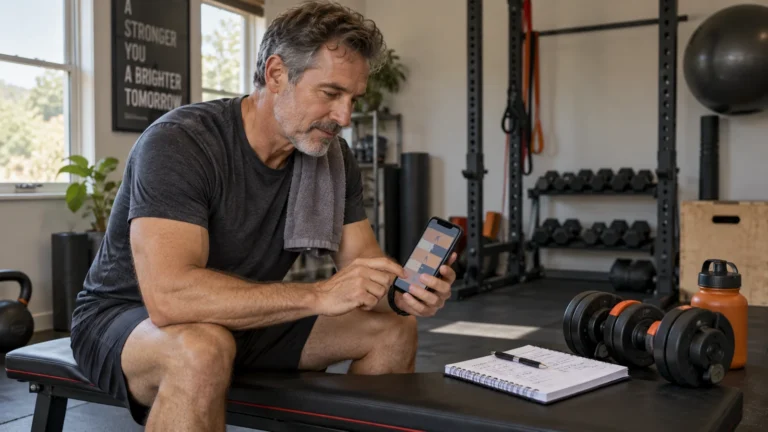
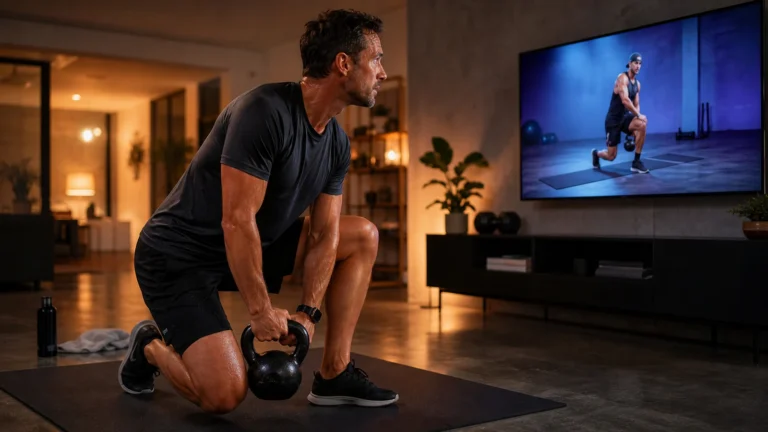
Fitness streaming platforms compared by adherence, coaching style, equipment, progression, and schedule fit.
- Choose by adherence first: schedule fit, coaching tone, equipment needs, and progression.
- A large class library is only useful if the platform makes your next workout obvious.
- Match coaching style to your personality: calm instruction, high-energy motivation, or skill-focused cueing.
Bottom line Use fitness streaming platforms as a fit test, not a buying impulse: choose what supports the training you will actually repeat.
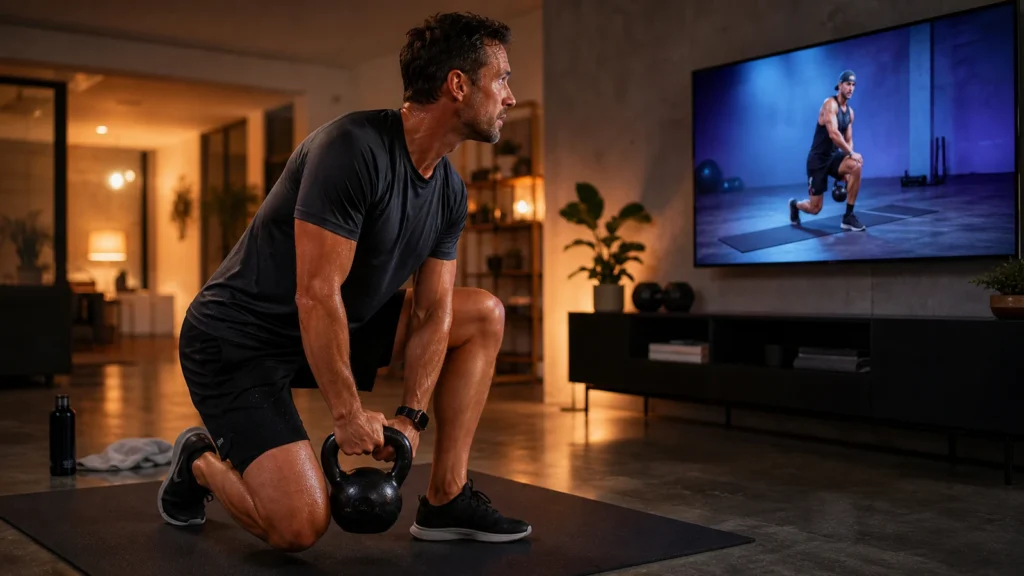
Fitness streaming platforms are easiest to choose when you stop asking which app has the most classes and start asking which one you will repeat on tired Tuesdays, busy weekends, and weeks when motivation is average.
Quick Summary: Fitness Streaming Platforms
- Choose by adherence first: schedule fit, coaching tone, equipment needs, and progression.
- A large class library is only useful if the platform makes your next workout obvious.
- Match coaching style to your personality: calm instruction, high-energy motivation, or skill-focused cueing.
- Check whether the program progresses over weeks, not only whether single workouts look exciting.
- Use a short trial period to test real-life friction before paying annually.
PrimeForMen perspective
The best streaming workout platform is not the one with the loudest marketing. It is the one that makes the right workout easy to start, easy to scale, and easy to repeat. That matters because adult activity guidelines from the CDC physical activity guidance focus on consistent weekly movement, not occasional heroic sessions.
Start with your adherence profile, not the app store rating
Most men compare fitness streaming platforms backward. They look at celebrity trainers, production value, class count, music, or whether the interface feels premium. Those details matter only after the platform passes a simpler test: can you see yourself using it three or four times per week without negotiating with your own schedule every time?
If you are still building the basics, pair this decision with a realistic foundation from beginner home workouts. A streaming platform should make that foundation easier, not turn training into another complicated subscription to manage.
Does the platform have enough 15- to 35-minute sessions for normal workdays?
Do you respond better to calm cueing, competitive intensity, or detailed technique coaching?
Can you train well with what you already own, or will the platform constantly push you beyond your setup?
Does it guide you from week to week, or does every class feel disconnected from the last one?
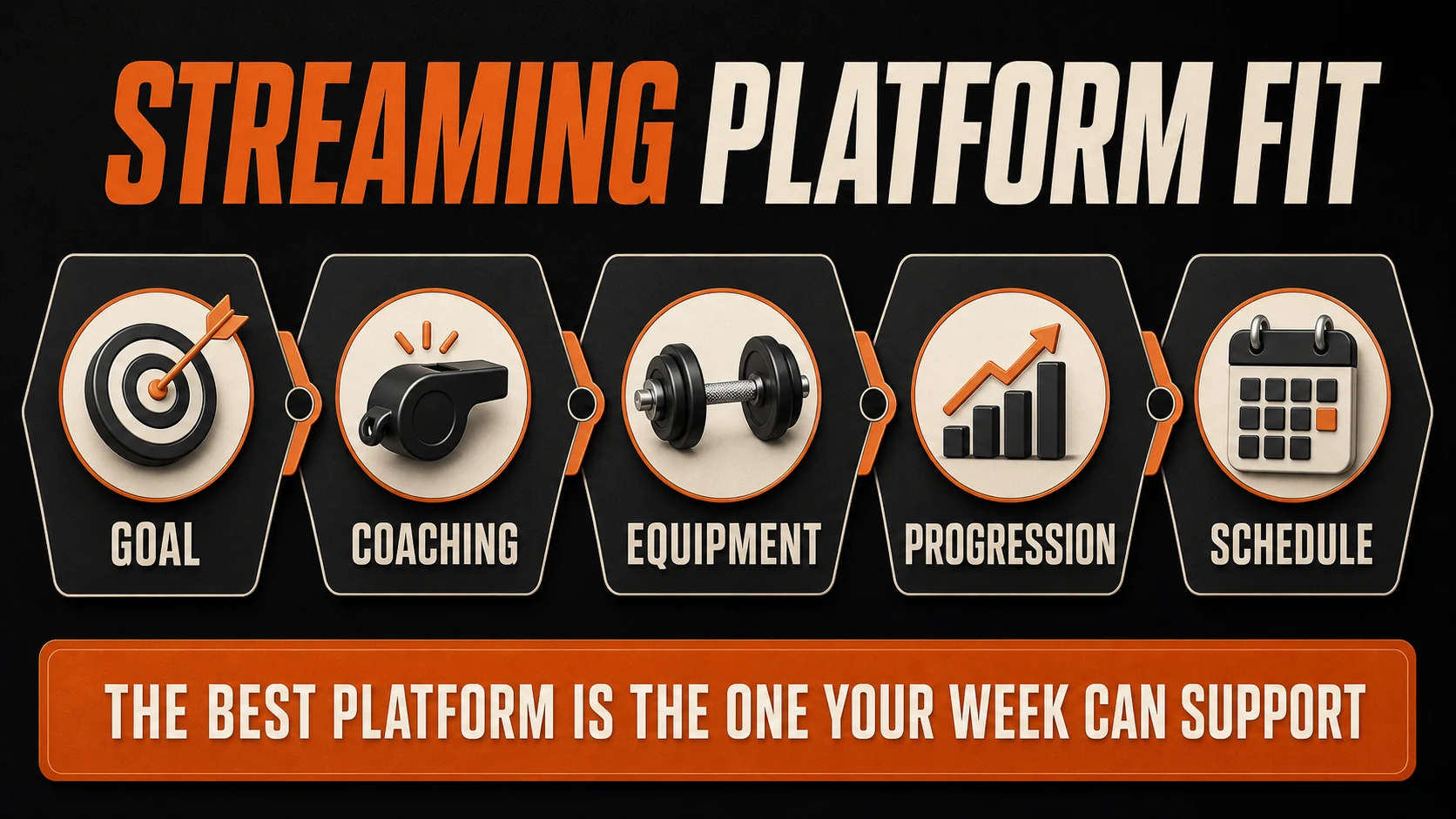
Adherence-Fit Score: the 5-minute test before you subscribe
Give a platform one point each for schedule fit, coaching fit, equipment fit, progression, and recovery options. A score of 4 or 5 is worth a trial. A score of 2 or 3 needs caution. A score of 0 or 1 is usually app hype, not a training plan.
Trial-worthy fit
Strong long-term fit
Compare platforms by the training problem they solve
A platform built around live studio energy solves a different problem than one built around progressive strength plans. Neither is automatically better. The right choice depends on the reason your training usually breaks down.
| Primary need | Look for this | Avoid this |
|---|---|---|
| Consistency | Repeatable programs, saved schedules, short sessions, visible next workout | Huge libraries with no clear path |
| Strength progress | Structured blocks, form cues, rest guidance, tracking prompts | Random high-sweat sessions with no load progression |
| Low-equipment training | Bodyweight, bands, mat-based strength, clear substitutions | Frequent dumbbell, bench, bike, or machine assumptions |
| Motivation | Live classes, streaks, trainer personality, community features | Quiet libraries if you know you need external push |
Useful setup if you stream workouts at home
Why these products here? They reduce setup friction: a reliable screen, scalable resistance, and a floor surface that makes repeat sessions more comfortable.
- Keep the workout visible without balancing a phone across the room.
- Add resistance without needing a full rack of weights.
- Make floor work, mobility, and core sessions easier to repeat.
Amazon Product Shortlist
These three additions solve different home-streaming constraints: reliable heart-rate feedback, floor comfort, and adjustable resistance. Choose only the gap your current sessions actually expose.
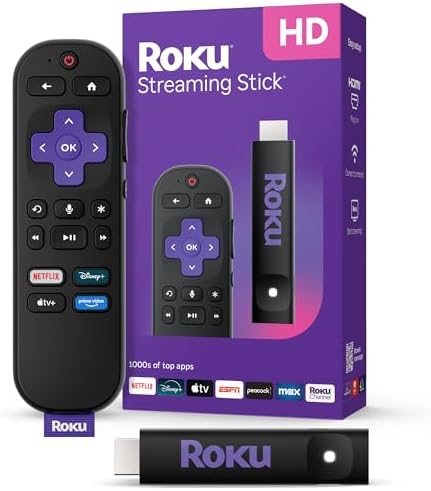
Streaming device
A practical buying option for the streaming device use case in this article.
- Matches the article's specific streaming device recommendation.
- Gives readers a concrete product page and image to compare.
- Worth checking for size, dose, fit, reviews, and return policy before buying.

Resistance bands
The easiest low-friction tool for warm-ups, anti-rotation work, and travel training.
- Scales from rehab-style activation to hard accessory sets.
- Supports push, pull, and core patterns without much space.
- Useful when cables or machines are not available.

Workout mat
A practical base layer when floor comfort decides whether the session actually happens.
- Adds cushioning for planks, mobility, and bodyweight work.
- Makes home sessions repeatable on hard floors.
- Easy to store next to bands, sliders, or an ab wheel.
*Affiliate disclosure: PrimeForMen may earn from qualifying purchases. Verify current compatibility with your chosen platform before buying connected equipment.
*Affiliate disclosure: PrimeForMen may earn a commission if you buy through these links, at no extra cost to you.
Coaching style is a bigger variable than most reviews admit
One man needs a trainer who talks less and cues movement clearly. Another needs energy, countdowns, and a leaderboard. A third wants a plan that feels close to personal coaching. Reviews often blur those differences into generic praise.
During a trial, take three classes from the same coach. If the tone makes you avoid the fourth class, the platform is not a fit no matter how polished it looks. If the coach helps you move better, the platform may be worth keeping even if the interface is less flashy.
The gap most platform reviews leave open
Most reviews ask, “How many workouts are included?” A better question is, “What does the platform do after week two, when novelty is gone?” The adherence gap is usually not access. It is decision fatigue.
- Does the platform tell you what to do next?
- Does it scale exercises when you are sore, busy, or under-equipped?
- Does it make progress visible beyond calories burned?
- Does it fit the type of training you can sustain for the next 90 days?
Equipment match: choose the platform your room can support
A platform can be excellent and still wrong for your home. Before subscribing, list what you actually have: space, screen, speakers, mat, bands, dumbbells, bench, bike, treadmill, or nothing. If your setup is minimal, start with essential fitness gear and avoid platforms that make every week feel like a shopping list.
If you already have a dedicated space, compare the platform against your current home gym equipment. The best match uses what you own often enough to justify both the gear and the subscription.
Look for bodyweight strength, mobility, walking plans, and beginner progressions.
Look for resistance-band strength, low-impact conditioning, and mobility programming.
Look for progressive strength blocks, load tracking, rest periods, and exercise substitutions.
Progression separates a workout library from a training plan
A library gives you options. A plan gives you direction. If your goal is strength, body composition, or a measurable fitness comeback, look for multi-week programming, form reminders, progression notes, and clear rest guidance. Research on digital exercise interventions, including a review indexed at PubMed, supports the broader point that digital fitness tools work best when engagement and behavior support are part of the design.
For strength-focused users, a platform should connect naturally with the principles in strength training at home: repeat movements, progress gradually, recover enough, and track what changes.
Schedule fit: the platform should protect your week
A good app does not require a perfect week. It gives you options for short days, normal days, and high-energy days. Before buying, check whether you can build a default week in under ten minutes.
- Two strength sessions you can repeat.
- One conditioning session that does not wreck recovery.
- One mobility or low-impact session for busy or sore days.
- A fallback workout under 20 minutes.
If you prefer broader comparison shopping, use fitness apps as a wider category scan, then come back to platform fit once you know whether you want coaching, tracking, live classes, or structured programs.
Paying more can make sense when the platform removes decisions, improves technique, fits your equipment, and keeps you returning. It is harder to justify when the app mainly sells excitement but leaves you to assemble your own plan. If your bigger bottleneck is choosing tools rather than classes, review fitness gear and equipment before locking into a platform ecosystem.
Medical disclaimer
This article is for general fitness education only and is not medical advice. If you have chest pain, dizziness, injury, a medical condition, or concerns about starting exercise, speak with a qualified healthcare professional before beginning a new program.
Affiliate disclosure
Some product links may be affiliate links. PrimeForMen may earn a commission from qualifying purchases, but recommendations are based on practical fit for the article topic.
Frequently Asked Questions About Fitness Streaming Platforms
Are fitness streaming platforms worth it?
They are worth it when they make workouts easier to start and repeat. If you still have to build every week from scratch, a cheaper app or written plan may be enough.
What should I check during a free trial?
Check schedule fit, coach tone, equipment requirements, program progression, and whether the platform clearly suggests your next workout.
Do I need equipment for streaming workouts?
Not always. Many platforms offer bodyweight training, but a mat and resistance bands can expand your options without turning your home into a full gym.
Is live coaching better than on-demand classes?
Live coaching can help if accountability drives you. On-demand classes are often better if your schedule changes and you need flexible training windows.
How do I avoid paying for a platform I stop using?
Do a seven-day friction test before choosing an annual plan. If you do not complete at least three sessions during the trial, the platform probably is not your current fit.