
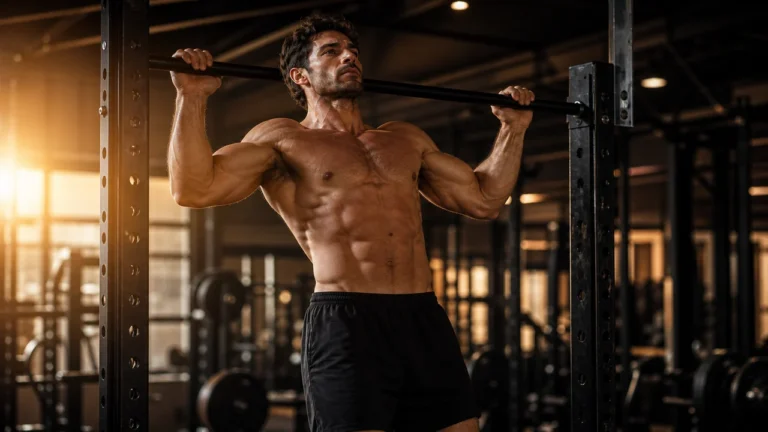
Does calisthenics increase testosterone? Learn when bodyweight training may cause short-term changes and what actually supports healthy levels.
- Hard calisthenics can act like resistance training, especially with pull-ups, dips, ring rows, push-up progressions, and squat/lunge variations.
- The testosterone bump after training is usually temporary and should not be confused with a long-term baseline increase.
- Progressive overload matters more than the exercise label: make the movement harder over time.
Bottom line The useful question is not whether a pull-up magically boosts testosterone.
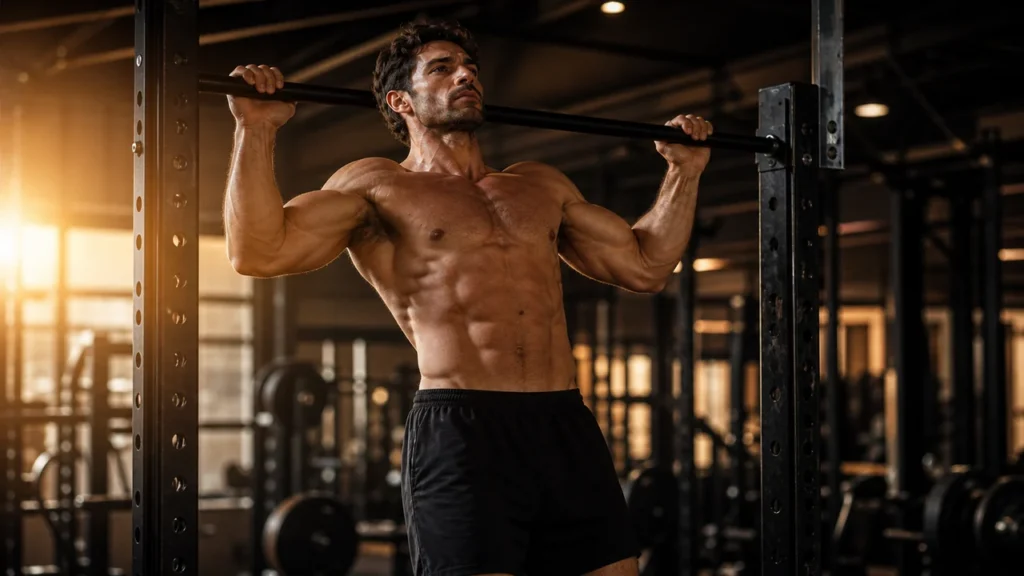
Does calisthenics increase testosterone? Calisthenics can create a short-term testosterone response when the work is hard, progressive, and close enough to muscular fatigue. But it is not a reliable standalone way to raise your resting testosterone level. Think of bodyweight training as a strength and body-composition tool first, with hormone support coming mostly from consistent training, recovery, sleep, nutrition, and healthy body fat.
Quick Summary: Does calisthenics increase testosterone?
- Hard calisthenics can act like resistance training, especially with pull-ups, dips, ring rows, push-up progressions, and squat/lunge variations.
- The testosterone bump after training is usually temporary and should not be confused with a long-term baseline increase.
- Progressive overload matters more than the exercise label: make the movement harder over time.
- Too much volume, poor sleep, and low calorie intake can work against hormone health.
- If you suspect clinically low testosterone, training is not a substitute for lab work and medical guidance.
Prime Perspective
The useful question is not whether a pull-up magically boosts testosterone. It is whether your calisthenics plan gives your body a strong enough resistance-training signal while leaving enough room to recover. If it does, it can support muscle, strength, confidence, and body composition. Those outcomes matter more than chasing a short-lived hormone spike.
The Clear Verdict: Calisthenics Can Help, But It Is Not Hormone Therapy
Calisthenics is resistance training when your bodyweight is challenging enough. A set of easy push-ups that stops far from fatigue is not the same stimulus as heavy weighted dips, strict pull-ups, slow ring rows, pistol-squat progressions, or high-effort split squats.
Research on resistance exercise shows that hard sessions can produce acute hormonal responses, including testosterone changes, depending on program variables such as volume, intensity, muscle mass used, age, and training status. One review on testosterone physiology in resistance exercise frames the response as variable and context-dependent, not automatic.
What calisthenics can do
- Build strength and muscle when progressed.
- Improve body composition.
- Increase training confidence and consistency.
- Create a demanding full-body resistance stimulus.
What it cannot promise
- It cannot guarantee higher resting testosterone.
- It cannot treat low testosterone by itself.
- It cannot override poor sleep, under-eating, or chronic stress.
- It cannot replace blood testing when symptoms are persistent.
Amazon.com Picks
Calisthenics Gear That Makes Progression Easier
These are not testosterone boosters. They help you make bodyweight training harder, measurable, and easier to repeat.
Pull-Up Bar
Useful for pull-ups, chin-ups, hanging knee raises, and progressive upper-body pulling work at home.
See CategoryResistance Bands
Helpful for assisted pull-ups, warm-ups, harder push-up variations, and scalable accessory work.
See CategoryGymnastic Rings
Excellent for ring rows, ring push-ups, dips, and instability-based progressions once basics are solid.
See Category* As an Amazon Associate, we earn from qualifying purchases.
Acute Testosterone vs. Resting Testosterone
This distinction prevents most confusion. A tough workout can change hormones for a short period. That does not mean your baseline testosterone will be meaningfully higher weeks or months later.
- Acute response: the short-term shift after a hard training session.
- Resting baseline: your typical testosterone level when measured under normal conditions.
- Practical outcome: muscle, strength, energy, libido, recovery, and body composition over time.
A systematic review and meta-analysis on exercise training and resting testosterone in insufficiently active men found that training did not produce a large reliable increase in resting total testosterone overall. That does not make training useless. It means the main benefit is the whole system: strength, fat loss support, insulin sensitivity, sleep quality, mood, and long-term physical capacity.
What Makes Calisthenics Testosterone-Relevant?
The best calisthenics program for hormone support looks a lot like good strength training basics: hard sets, enough muscle mass involved, progressive overload, and recovery.
Use these rules before worrying about hormones
- Train close to fatigue: most working sets should end with about 1-3 good reps in reserve.
- Progress the movement: move from incline push-ups to push-ups, decline push-ups, ring push-ups, or weighted versions.
- Use large patterns: pull, push, squat, hinge, carry, and core bracing.
- Track output: reps, tempo, range of motion, rest times, and added load.
- Recover hard: the adaptation happens after training, not during the hardest set.
Scorecard: Which Training Style Matters Most?
| Training approach | Testosterone relevance | Best use | Main caution |
|---|---|---|---|
| Progressive calisthenics | Moderate to high when sets are hard and full-body. | Building strength with minimal equipment. | Easy to plateau if you only add reps forever. |
| Weight lifting | High for measurable progressive overload. | Heavy loading, lower-body strength, hypertrophy phases. | Bad programming can create fatigue without progress. |
| HIIT | Moderate; useful but not a replacement for strength work. | Conditioning and time-efficient fitness. | Too much HIIT can compete with recovery. |
| Recovery work | Indirect but essential. | Sleep, walking, mobility, deloads, stress control. | Skipping recovery can erase the benefit of hard training. |
For a broader comparison, see our guide on weight lifting and testosterone.
The Knowledge Gap Most Articles Miss
Many articles treat testosterone like a scoreboard that rises every time you train hard. The better model is capacity. Calisthenics can improve the physical capacity that supports healthy hormone function, but the resting number depends on sleep, energy availability, body fat, alcohol intake, medication context, stress load, age, and underlying health.
- A good workout can be a signal.
- Good recovery decides whether that signal becomes adaptation.
- Symptoms plus low lab values need medical interpretation, not internet guesswork.
The Best Calisthenics Moves for a Strong Training Signal
Choose movements that use large muscle groups and allow clear progression. If you are new, start with a beginner fitness plan before jumping into advanced ring or weighted variations.
Pulling
- Inverted rows
- Chin-ups
- Pull-ups
- Ring rows
Pushing
- Push-ups
- Decline push-ups
- Dips
- Ring push-ups
Lower body
- Split squats
- Walking lunges
- Step-ups
- Pistol-squat progressions
Core and bracing
- Hollow holds
- Hanging knee raises
- Side planks
- Loaded carries if equipment is available
A Simple Weekly Structure
You do not need a complicated hormone-optimization plan. You need a repeatable training week that gives enough stimulus without burying recovery.
- Train full-body 3 days per week: pull, push, legs, and core each session.
- Use 3-5 hard sets per major pattern: stop with clean form, not collapsed reps.
- Add one progression at a time: more range, slower tempo, harder angle, added load, or more total sets.
- Keep conditioning sensible: add walking or short intervals without turning every day into a max effort.
- Schedule recovery: protect sleep and use deload weeks when performance drops.
If recovery is your weak point, start with rest and recovery before adding more training volume. If you want a broader training menu, review our guide to exercises that may support testosterone.
When Calisthenics Might Work Against You
More is not always better. Hormone support depends on the dose. Too much hard training with too little food or sleep can push you toward worse recovery, lower motivation, and stalled performance.
- Too many failure sets: useful occasionally, costly when every set becomes a grind.
- No lower-body work: push-ups and curls are not a full-body program.
- Low calorie intake: aggressive dieting can conflict with training adaptation.
- Poor sleep: consistent short sleep is a major recovery problem.
- Ignoring symptoms: persistent low libido, fatigue, mood changes, or loss of morning erections should be discussed with a clinician.
Bottom Line
Calisthenics can support a healthy testosterone environment when it is challenging, progressive, and paired with recovery. It may create short-term hormonal changes after hard sessions, but the stronger reason to train is that it builds the body and habits that make healthy hormone function more likely.
Use calisthenics for strength, muscle, conditioning, and consistency. Use medical testing for medical questions. That combination is more honest and more useful than treating every pull-up as a testosterone hack.
Medical Disclaimer
This article is for general editorial education only and does not replace medical advice, diagnosis, or treatment. If you have symptoms of low testosterone or a known hormonal condition, speak with a qualified healthcare professional and use lab testing rather than self-diagnosis.
Affiliate Disclosure
Some product links may be affiliate links. If you buy through them, PrimeForMen may earn a commission at no extra cost to you. We recommend equipment categories because they can support training progression, not because they treat or raise testosterone.
Frequently Asked Questions About Calisthenics and Testosterone
Does calisthenics increase testosterone more than weight lifting?
Not automatically. Weight lifting is easier to load precisely, while calisthenics can be very demanding when progressed well. The stronger program is the one that creates consistent overload and recovery.
Do pull-ups increase testosterone?
Pull-ups can contribute to a strong resistance-training stimulus, especially when sets are hard. A single exercise should not be expected to meaningfully raise resting testosterone by itself.
How often should I do calisthenics for hormone support?
Most men do well with 3-4 structured sessions per week, depending on training age, sleep, nutrition, and recovery. Daily max-effort work is usually unnecessary.
Can calisthenics help if I have low testosterone?
It may support fitness, body composition, and energy, but it is not a treatment for clinically low testosterone. Persistent symptoms should be evaluated with a healthcare professional.
What matters more for testosterone: exercise or sleep?
Both matter, but poor sleep can undermine the benefits of training quickly. For most men, the strongest base is progressive resistance training, enough food, healthy body fat, and consistent sleep.