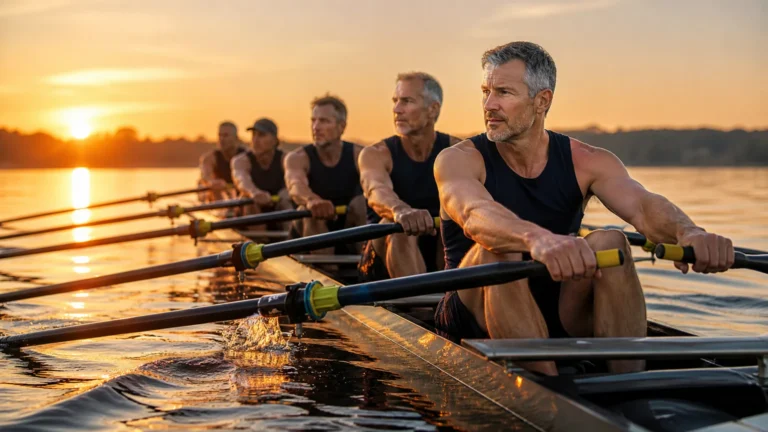
Rowing-specific training guide: build technique, aerobic base, threshold, 2K pace, strength, power, and back-friendly weekly progression.
- Rowing performance depends on physiology, neuromuscular strength, technique, and pacing together.
- The ergometer is useful but prolonged exposure and fatigue can change spinal mechanics.
- A 2K test should guide training rather than appear every week.
Bottom line Build efficient volume, train the specific pace you need, preserve maximal and explosive strength, and stop fatigue from rewriting the stroke.
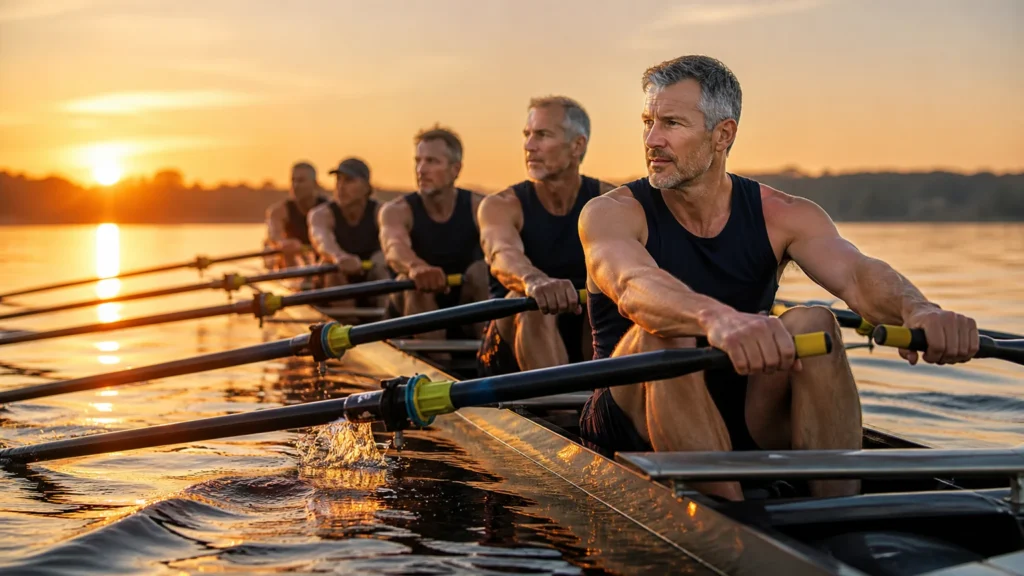
Rowing-Specific Training works best when the plan matches the real question, the current training load, and the reader's recovery capacity. The goal is a clear decision and a repeatable next step—not another list of disconnected tips.
Quick Summary: Rowing-Specific Training
- Rowing-specific training combines technique, easy volume, threshold work, race pace, sprint power, and supporting strength.
- Maximal squat or leg-press strength and bench-pull strength correlate strongly with ergometer performance, but correlation does not prove one program is best.
- The drive should connect legs, trunk, and arms rather than become an early back-and-arm pull.
- Prolonged ergometer use and previous low-back pain are relevant risk factors in rowing research.
- Sharp back pain, leg symptoms, chest pressure, faintness, or sudden performance loss require appropriate assessment.
The Prime Perspective
A faster split only counts when you can reproduce it with the same sequence. Technique is not decoration on top of fitness; it is how fitness reaches the handle.
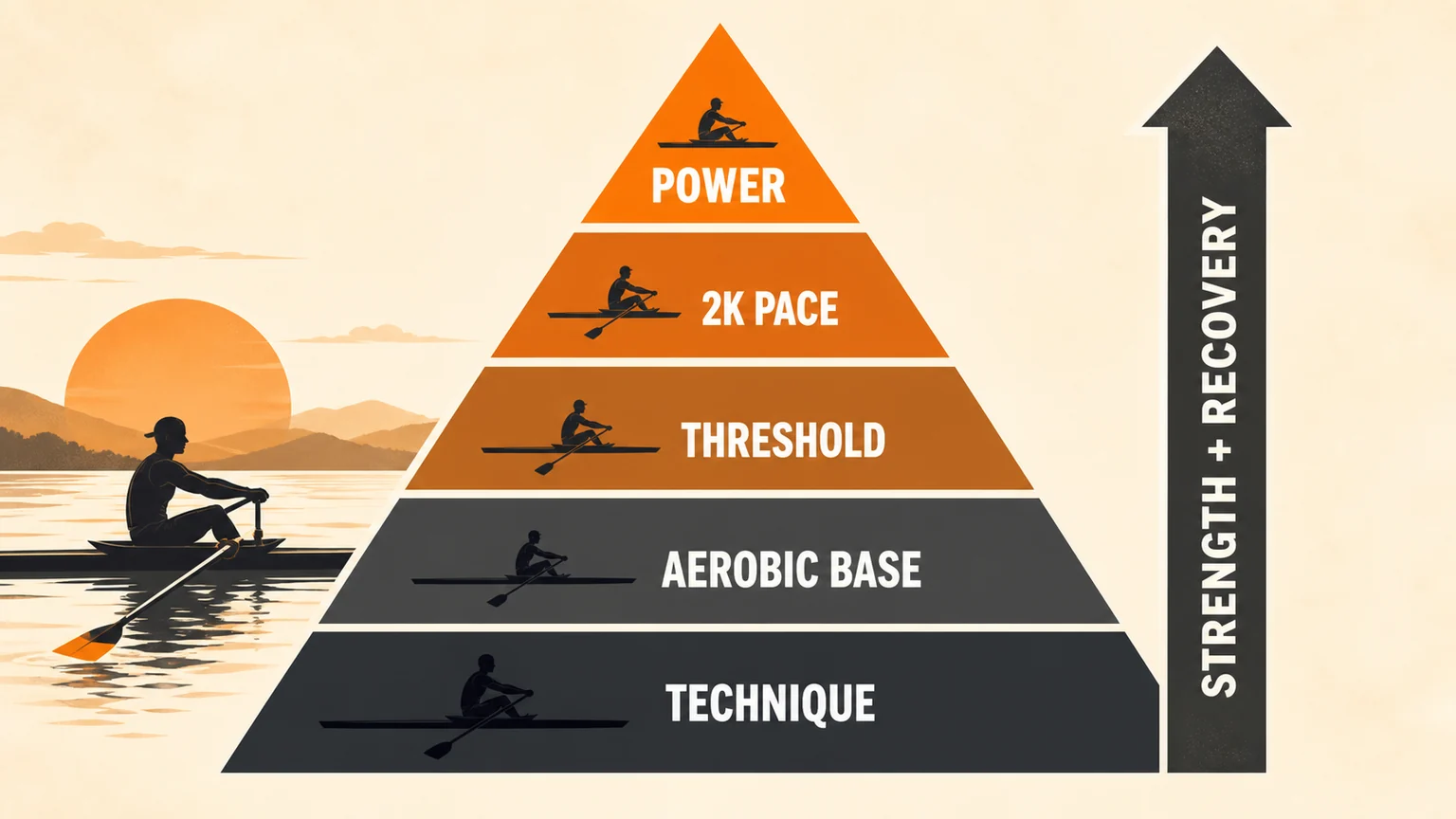
Rowing-specific training prepares the stroke and the energy systems that produce it. It includes technical rowing, low-intensity aerobic volume, threshold, 2K race pace, sprint power, maximal strength, trunk capacity, and recovery arranged so fatigue does not degrade sequence or posture.
Train the Limiter, Not Every Quality at Once
| Session | Primary target | Example | Main metric |
|---|---|---|---|
| Technique row | Sequence and connection | 20–40 min easy | Stroke quality |
| Long aerobic | Base and durability | 45–90 min conversational | Stable heart rate and split |
| Threshold | Sustainable power | 3–5 x 8 min | Even pace |
| 2K pace | Race specificity | 6 x 500 m or 4 x 750 m | Target split |
| Sprint power | Start and peak output | 8–12 x 10–20 strokes | Watts with full recovery |
| Strength | Force potential | Squat, hinge, bench pull, row | Load with clean reps |
Amazon Product Shortlist
These tools cover rowing access, intensity tracking, and supporting strength. PrimeForMen has not independently tested them; confirm fit and specifications before purchase.

WENOKER Magnetic Rowing Machine
For home trainees who have checked rail length, footprint, resistance feel, and service expectations.
- Thirty-two resistance levels with electronic control.
- Magnetic system suits indoor home sessions.
- Machine choice cannot replace stroke instruction.

Polar H10 Heart Rate Monitor
For controlling aerobic and threshold effort when wrist readings are inconsistent during the stroke.
- Chest-based heart-rate measurement.
- Works with many apps and training devices.
- Training data is not a medical reading.

SUNPOW Pull-Up Assistance Bands
For rows, pulldowns, trunk work, and warm-up patterns away from the ergometer.
- Five long-loop resistance levels.
- Supports pulling and mobility variations.
- Inspect every loop and anchor before loading.
*As an Amazon Associate, PrimeForMen earns from qualifying purchases. Availability and prices can change.
Technique: Connect Legs, Trunk, and Arms
- At the catch, keep the shins near vertical, shoulders relaxed, and pressure through the feet.
- Drive the legs first while the trunk angle changes gradually.
- Open the hips and finish with the arms only after the handle is moving.
- Recover arms, then body, then slide—slower than the drive.
- Keep the next catch quiet rather than crashing into the front stops.
Film from the side at easy and moderate intensity. The useful question is whether posture and sequence remain similar as pressure rises.
Yes. A 2026 systematic review and meta-analysis found strong correlations between leg-press or back-squat strength, bench-pull strength, and rowing-ergometer performance. Explosive and strength-endurance measures also related to rowing outcomes, but intervention studies are still needed to identify the best prescription.
The 2026 rowing neuromuscular review supports training maximal and explosive strength as part of the system. Correlation does not mean chasing a powerlifting total or replacing rowing practice with gym work.
A Practical Two-Day Strength Plan
Day A — Maximal force
- Back squat or leg press: 4 x 4–6
- Bench pull or chest-supported row: 4 x 5–8
- Romanian deadlift: 3 x 6–8
- Split squat: 3 x 6–8 per side
- Loaded carry: 3 controlled trips
Day B — Power and support
- Low-volume jump or medicine-ball throw: 4 x 3
- Trap-bar deadlift or clean-pull derivative: 4 x 3–5
- Pull-up or pulldown: 3 x 6–10
- Landmine press: 3 x 6–10
- Anti-rotation press: 3 x 8–12 per side
Build the 2K Without Testing It Constantly
Use a baseline 2K or a recent race, then train components. Threshold intervals develop sustainable power. Five-hundred- to one-thousand-meter repetitions teach race rhythm. Short starts and tens develop acceleration. Retest after four to eight weeks, not every hard day.
Start slightly controlled. Middle pace should be sustainable. The final quarter can rise only if technique and breathing remain organized. A dramatic first 500 followed by collapse gives less useful training information than an even test.
Manage prolonged ergometer exposure, preserve hip and pelvic control, vary training, and stop fatigue from increasing lumbar flexion at the catch. Previous low-back pain is an important risk factor and persistent or radiating symptoms require assessment.
A systematic review of rowing biomechanics and low-back pain found that fatigue increased lumbar flexion at the catch, particularly on the ergometer. A 2023 scoping review also identified prolonged ergometer use and prior low-back pain as notable risk factors while highlighting fragmented evidence.
The same split can come from a longer connected stroke or a rushed high-rate pull. Track rate, split, perceived effort, and video together so the monitor does not reward a technical shortcut.
Connect the Full Rowing System
Use the rowing workout guide, rowing-machine guide, strength basics, core training, recovery tools, recovery planning, and the sports-specific pillar.
What to Do This Week
- Film ten easy strokes from the side and review sequence.
- Complete two low-intensity technique-focused rows.
- Add one threshold or 2K-pace interval session.
- Perform two concise strength sessions with leg and pulling work.
- Reassess split consistency and back response before increasing volume.
Conclusion
Build efficient volume, train the specific pace you need, preserve maximal and explosive strength, and stop fatigue from rewriting the stroke.
Next Step: Build the Full Sports-Specific System
Connect this plan to the PrimeForMen sports-specific training guide so strength, conditioning, skill, and recovery support the same goal.
Frequently Asked Questions About Rowing-Specific Training
What is rowing-specific training?
It combines technical stroke practice with aerobic endurance, threshold, race pace, sprint power, strength, and mobility based on the demands of rowing and the athlete’s current limitation.
Can rowing replace strength training?
No. Rowing develops endurance and some force, but dedicated strength work can train maximal force, pulling capacity, trunk support, and tissue tolerance more directly.
How often should rowers do hard intervals?
One or two hard rowing sessions per week suit many recreational rowers. Total volume, strength work, racing, sleep, and technical quality determine the correct dose.
Is rowing bad for the lower back?
Not inherently, but previous pain, prolonged ergometer use, fatigue, limited hip motion, and deteriorating pelvic or spinal control can increase risk.
How should I train for a faster 2K row?
Build easy volume, improve technique, add threshold work, practice controlled 2K-pace intervals, maintain strength, and use occasional tests rather than constant maximal trials.
This article is educational and does not replace individualized medical advice, diagnosis, or treatment. Discuss persistent symptoms, hormone concerns, cardiovascular risk, digestive problems, medications, or exercise restrictions with a qualified clinician.
Some links are affiliate links. PrimeForMen may earn a commission at no extra cost to you. Product inclusion does not override evidence, fit, or safety.