

Does collagen affect testosterone? See what human research actually measures, why collagen is not a hormone booster, and when testing or supplementation makes sense.
- Collagen research does not establish a meaningful testosterone effect.
- Collagen is an incomplete protein and should not replace protein-rich meals.
- Low-testosterone concerns require symptoms plus reliable repeat testing.
Bottom line Use collagen only for a clearly defined connective-tissue or convenience goal, and keep testosterone assessment on an evidence-based clinical path.

Does Collagen Affect Testosterone works best when the plan matches the real question, the current training load, and the reader's recovery capacity. The goal is a clear decision and a repeatable next step—not another list of disconnected tips.
Quick Summary: Does Collagen Affect Testosterone
- No good human evidence shows that collagen supplementation reliably increases or decreases testosterone.
- A 2024 meta-analysis reported small benefits for several musculoskeletal outcomes, with certainty ranging from very low to moderate.
- Those trials did not establish testosterone improvement as the mechanism or outcome.
- Collagen lacks tryptophan and is low in several essential amino acids, so it is not a complete replacement for dietary protein.
- Symptoms of testosterone deficiency require clinical context and repeat morning measurements—not supplement guesswork.
The Prime Perspective
A supplement should solve the problem it was studied for. Buying collagen for testosterone turns a connective-tissue product into a hormone promise the evidence does not support.
Current human evidence does not show that collagen supplements meaningfully raise or lower testosterone. Collagen research focuses on connective tissue, body composition, strength, and recovery. Testosterone concerns should be evaluated from symptoms and repeat morning blood tests, not inferred from collagen use.
What Collagen Studies Actually Measure
| Question | Evidence status | Practical conclusion |
|---|---|---|
| Raises testosterone | No reliable direct human evidence | Do not buy collagen as a testosterone booster |
| Lowers testosterone | No established effect at normal use | Look for other causes of symptoms |
| Supports tendon or tissue outcomes | Some positive findings; certainty varies | Possible adjunct, not guaranteed repair |
| Builds muscle like complete protein | Inferior amino-acid profile | Do not replace complete protein |
| Diagnoses low testosterone | Impossible | Use symptoms plus repeat morning testing |
Amazon Product Shortlist
If you buy collagen, choose it for a defined connective-tissue or convenience goal. PrimeForMen has not independently tested these products, and none is a testosterone treatment.
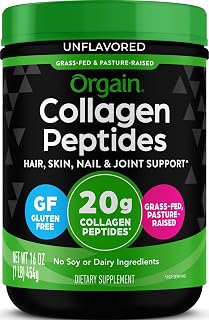
Orgain Hydrolyzed Collagen Peptides
For readers who still want plain collagen for a connective-tissue goal—not as a testosterone booster.
- Unflavored hydrolyzed collagen format.
- Twenty grams of collagen per labeled serving.
- Does not replace complete dietary protein or hormone evaluation.
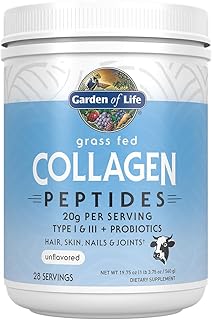
Garden of Life Grass Fed Collagen
For comparing another unflavored peptide powder when ingredient simplicity and serving size fit the plan.
- Hydrolyzed bovine collagen peptides.
- Unflavored powder for flexible mixing.
- Label claims do not establish testosterone effects.

Nutricost Collagen Peptides
For a smaller-format trial before committing to a large tub or subscription.
- Type I and III peptide format.
- Small container reduces initial commitment.
- Track the target symptom rather than vague wellness impressions.
*As an Amazon Associate, PrimeForMen earns from qualifying purchases. Availability and prices can change.
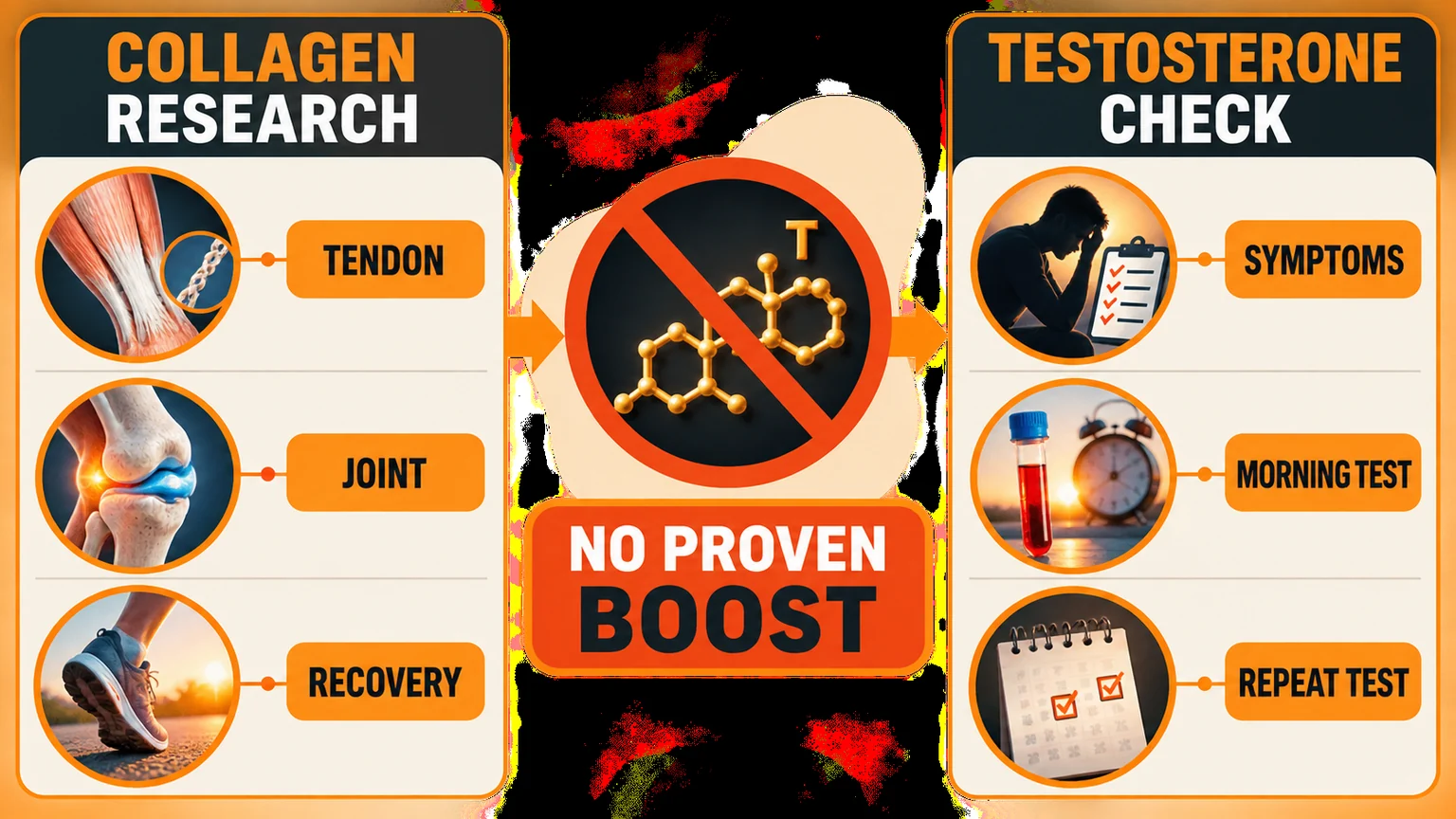
A 2024 systematic review and meta-analysis included 19 studies and 768 participants. It reported favorable changes in fat-free mass, tendon morphology, muscle architecture, maximal strength, and short-term reactive-strength recovery. Certainty ranged from very low to moderate, and testosterone was not established as the mechanism.
No. Collagen lacks tryptophan and contains relatively little of several essential amino acids, including leucine. It can add protein, but whey, dairy, eggs, meat, soy, or balanced plant proteins are more suitable for maximizing muscle protein synthesis.
Why the Testosterone Claim Persists
Collagen is abundant in connective tissue, and testosterone can influence tissues throughout the body. Those two facts do not prove that eating collagen changes testosterone. Biological plausibility must be separated from randomized human outcome evidence.
Another source of confusion is resistance training. Training can change strength and body composition while a collagen group also uses a supplement. If testosterone was not measured—and the design cannot isolate it—the result cannot be converted into a hormone claim.
When Collagen May Be Reasonable
- You have a specific tendon, joint, or connective-tissue goal discussed with an appropriate clinician or dietitian.
- You understand that the effect, if any, is likely modest and depends on training and total nutrition.
- You already meet complete-protein needs rather than replacing meals with collagen.
- You can track a relevant outcome such as pain-free function, training tolerance, or rehabilitation progress.
Skip it when the goal is vague “anti-aging,” a testosterone boost, or a substitute for a medical evaluation. Be cautious with allergies, digestive symptoms, kidney restrictions, or products with numerous added ingredients.
Clinical guidelines recommend diagnosing hypogonadism only when compatible symptoms or signs occur with unequivocally and consistently low testosterone. Initial testing should use an accurate fasting morning total-testosterone measurement and confirm the result with a repeat morning test.
The Endocrine Society clinical guideline also emphasizes further evaluation of the cause. One result, a supplement response, libido alone, or a gym plateau does not establish a diagnosis.
“No direct evidence” is not proof that an interaction is impossible. It means the responsible conclusion is limited: collagen is not an evidence-based way to raise testosterone, and normal use has no established testosterone-lowering effect.
Choose the Right Next Guide
Compare post-workout supplements, multivitamins for men, omega-3 supplements, melatonin and testosterone, running and testosterone, and the testosterone evidence hub.
What to Do This Week
- Write down the exact outcome you expect from collagen.
- Separate joint or tendon goals from testosterone concerns.
- Check whether complete daily protein is already adequate.
- Use the same dose and outcome measure for eight to twelve weeks if appropriate.
- Discuss persistent hormone symptoms with a qualified clinician instead of changing supplements repeatedly.
Conclusion
Use collagen only for a clearly defined connective-tissue or convenience goal, and keep testosterone assessment on an evidence-based clinical path.
Next Step: Keep the Plan Evidence-Based
Use the linked PrimeForMen guides to turn this answer into a practical routine without chasing unsupported shortcuts.
Frequently Asked Questions About Does Collagen Affect Testosterone
Does collagen increase testosterone?
No reliable human evidence shows that collagen supplements increase baseline testosterone. Existing trials focus mainly on connective tissue, body composition, strength, or recovery.
Can collagen lower testosterone?
There is no established evidence that normal collagen supplementation lowers testosterone. Product additives, total diet, energy intake, and health context still matter.
Is collagen a good protein for building muscle?
Collagen can contribute protein, but it is incomplete and less suitable than whey, dairy, eggs, meat, soy, or balanced plant proteins for maximizing muscle protein synthesis.
Should men take collagen peptides?
Only when a specific connective-tissue, dietary, or convenience goal justifies the cost. It should not be purchased as a hormone treatment.
When should testosterone be tested?
Persistent symptoms such as low libido, reduced morning erections, unexplained fatigue, or declining strength can justify clinician-guided repeat morning testing and evaluation.
This article is educational and does not replace individualized medical advice, diagnosis, or treatment. Discuss persistent symptoms, hormone concerns, cardiovascular risk, digestive problems, medications, or exercise restrictions with a qualified clinician.
Some links are affiliate links. PrimeForMen may earn a commission at no extra cost to you. Product inclusion does not override evidence, fit, or safety.