
Endorphins and exercise explained: runner's high, endocannabinoids, mood effects, useful intensity, timing, and why not every workout feels euphoric.
- Endorphins are involved in pain modulation but do not fully explain exercise euphoria.
- Endocannabinoids are strong candidates in the runner's-high response.
- A workout can be beneficial even when it produces no dramatic mood lift.
Bottom line Use exercise because the repeatable habit supports health and mood—not because every session must produce a chemical rush.

Endorphins And Exercise works best when the plan matches the real question, the current training load, and the reader's recovery capacity. The goal is a clear decision and a repeatable next step—not another list of disconnected tips.
Quick Summary: Endorphins And Exercise
- Endorphins are opioid peptides involved in pain and stress responses, but circulating levels do not directly prove what is happening in the brain.
- A randomized human experiment found that opioid blockade did not prevent running-related euphoria or anxiety reduction.
- Endocannabinoids such as anandamide can cross the blood-brain barrier and are plausible contributors to the runner’s high.
- Mood effects also depend on expectation, mastery, environment, music, social contact, sleep, and the workout dose.
- No immediate mood boost does not mean the workout failed.
The Prime Perspective
The useful outcome is not a hormone screenshot. It is a training pattern that leaves your weeks more energetic, capable, and emotionally stable.
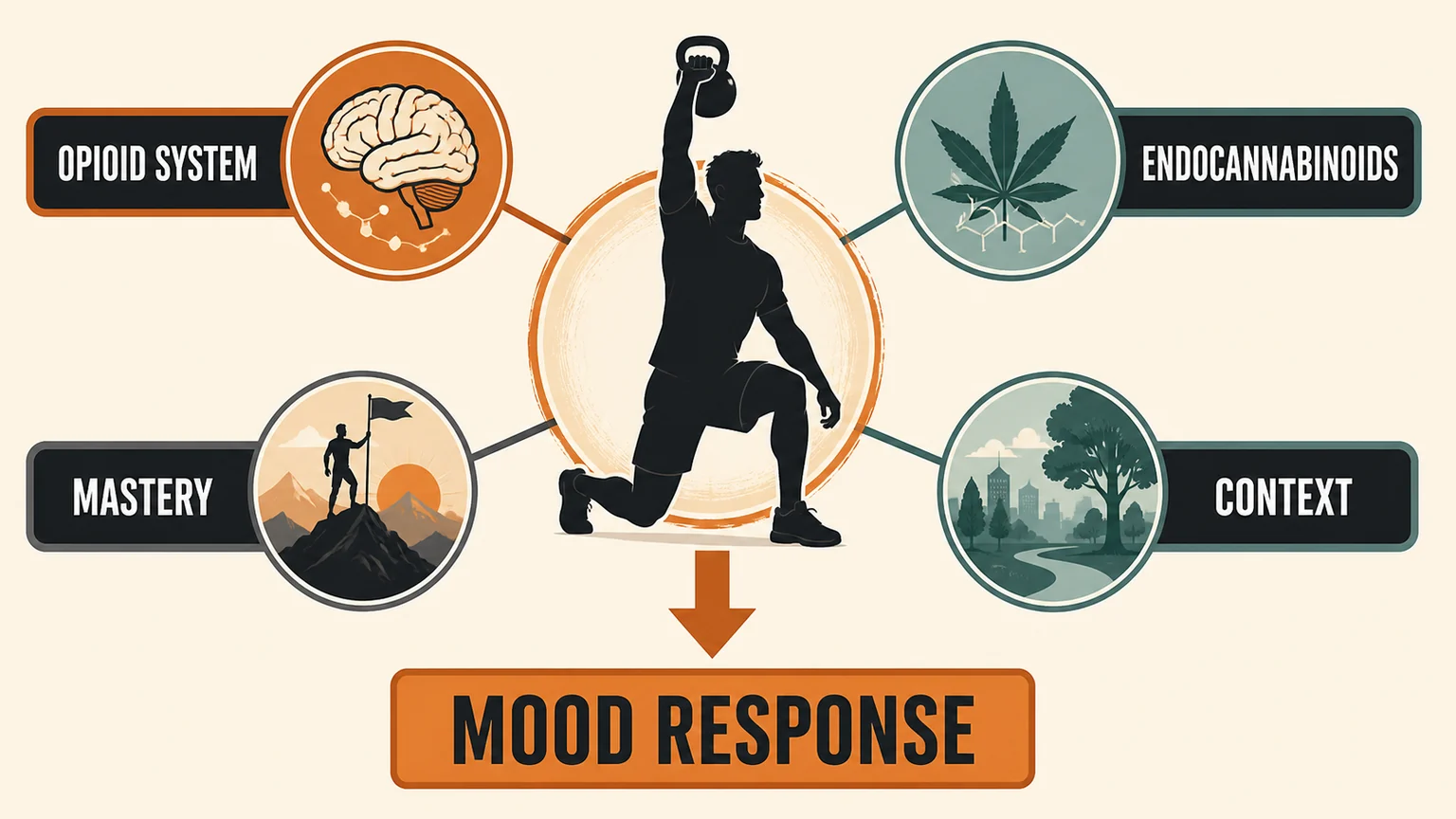
Exercise can activate endogenous opioid systems involved in pain modulation, but endorphins do not fully explain improved mood or the runner’s high. Endocannabinoids, autonomic changes, body temperature, expectation, mastery, environment, and social context can contribute to how a workout feels.
Endorphins Are Real—But the Popular Story Is Too Simple
Endorphins are peptides that bind opioid receptors. They can influence pain and stress responses. The common leap is to assume that a post-workout blood increase proves endorphins crossed into the brain and caused euphoria. That chain is not established by a peripheral measurement alone.
| System or factor | Potential role | Important limit |
|---|---|---|
| Endogenous opioids | Pain modulation and stress response | Do not fully explain runner’s high |
| Endocannabinoids | Euphoria, reduced anxiety, reward | Response varies and is not guaranteed |
| Autonomic regulation | Shift after exercise | Depends on intensity and recovery |
| Mastery and self-efficacy | Sense of control and accomplishment | Psychological, not a single molecule |
| Environment and social contact | Nature, music, group connection | Context changes the experience |
Amazon Product Shortlist
These tools make repeatable moderate movement easier. PrimeForMen has not independently tested them, and none guarantees an endorphin rush or treats a mood disorder.
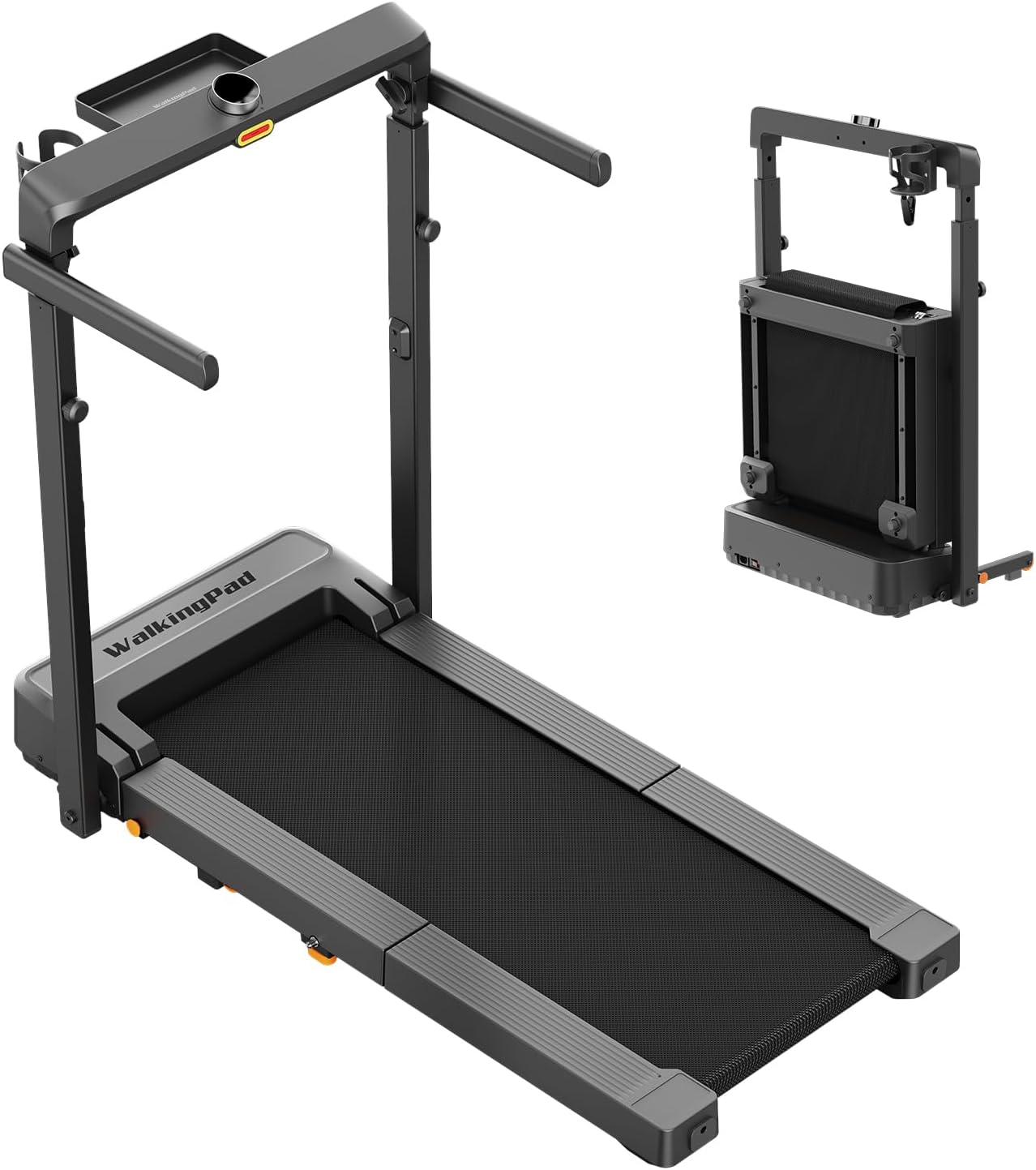
WalkingPad C2
For making moderate indoor walking easier to repeat when weather or schedule is the main barrier.
- Foldable footprint for shared spaces.
- Supports controllable low-intensity walking.
- Designed for walking rather than hard running.

Amazon Basics Aerobic Step
For short step circuits that combine rhythm, leg work, and adjustable effort in a small space.
- Adjustable platform height.
- Simple pattern for timed intervals.
- Use a rail or wall when balance is uncertain.

Redify Adjustable Jump Rope
For brief rhythmic conditioning when calves, feet, and Achilles tendons already tolerate jumping.
- Adjustable rope length.
- Portable high-cadence conditioning tool.
- Not appropriate for every joint or beginner.
*As an Amazon Associate, PrimeForMen earns from qualifying purchases. Availability and prices can change.
Not necessarily. In a randomized placebo-controlled human experiment, 63 participants still developed greater euphoria and reduced anxiety after 45 minutes of moderate running when opioid receptors were blocked. Endocannabinoid levels also rose, making them strong candidate mediators.
Read the 2021 human runner's-high study. It does not prove that endocannabinoids explain every mood benefit, but it directly challenges the idea that endogenous opioids are required.
What Intensity and Duration Are Useful?
There is no universal chemical threshold. The cited human experiment used 45 minutes of moderate treadmill running, but that is a research protocol—not a minimum prescription. Beginners and adults returning after a break may feel better after 10 to 20 minutes of walking, cycling, or strength work.
Harder is not automatically happier. Excessive intensity can increase discomfort, fatigue, nausea, or anxiety. Choose the lowest dose that you can repeat and progress. Use the talk test for moderate work and keep one or two repetitions in reserve during most strength sets.
A Three-Level Mood-Supporting Plan
Level 1 — Minimum viable movement
Ten minutes of outdoor walking or easy indoor cycling, three to seven days per week.
Level 2 — Mixed weekly training
Two 30-minute strength sessions plus two or three 20- to 40-minute aerobic sessions.
Level 3 — Enjoyable challenge
Add one controlled interval, group, or sport session when recovery is stable. Do not replace every easy session with intensity.
Exercise can be an effective component of depression care. A 2024 network meta-analysis of 218 studies found moderate symptom reductions for walking or jogging, yoga, strength training, and mixed aerobic exercise, but evidence confidence was low or very low for many comparisons.
The 2024 depression exercise review studied people meeting clinical cutoffs for major depression. It supports exercise alongside other care, not as a reason to discontinue prescribed treatment without professional guidance.
You do not need to feel euphoric for exercise to work. Improved sleep pressure, strength, blood-pressure control, aerobic capacity, routine, and social connection remain valuable even when the immediate mood change is subtle.
Build the Habit Around the Experience You Actually Have
Compare stress relief workouts, cardio training, quick workouts, home cardio, beginner home workouts, and recovery guidance.
What to Do This Week
- Choose one enjoyable activity with low setup friction.
- Use 20 to 45 minutes at a conversational or moderately hard effort.
- Record mood before and 30 minutes after without expecting euphoria.
- Repeat two or three times under similar conditions.
- Adjust the activity or dose if you consistently feel worse afterward.
Conclusion
Use exercise because the repeatable habit supports health and mood—not because every session must produce a chemical rush.
Next Step: Keep the Plan Evidence-Based
Use the linked PrimeForMen guides to turn this answer into a practical routine without chasing unsupported shortcuts.
Frequently Asked Questions About Endorphins And Exercise
Does exercise release endorphins?
Exercise can increase peripheral endorphin measures, especially with sufficient duration or intensity, but a blood increase does not by itself explain mood changes inside the brain.
How long do exercise endorphins last?
There is no useful universal duration. Hormone and neurotransmitter responses vary by dose and person, while perceived mood changes can be brief, delayed, or absent.
What causes a runner’s high?
The runner’s high appears to involve endocannabinoids and other systems rather than endorphins alone. Expectation, environment, fitness, and exercise dose also shape the experience.
Why do I not feel happy after exercise?
Fatigue, pain, heat, poor sleep, under-fueling, excessive intensity, medication, depression, and simple individual variation can blunt an immediate mood response.
Which workout is best for mood?
Choose a safe activity you enjoy and can repeat. Walking, jogging, cycling, strength training, yoga, and group sport can all fit; adherence matters more than chasing one mechanism.
This article is educational and does not replace individualized medical advice, diagnosis, or treatment. Discuss persistent symptoms, hormone concerns, cardiovascular risk, digestive problems, medications, or exercise restrictions with a qualified clinician.
Some links are affiliate links. PrimeForMen may earn a commission at no extra cost to you. Product inclusion does not override evidence, fit, or safety.