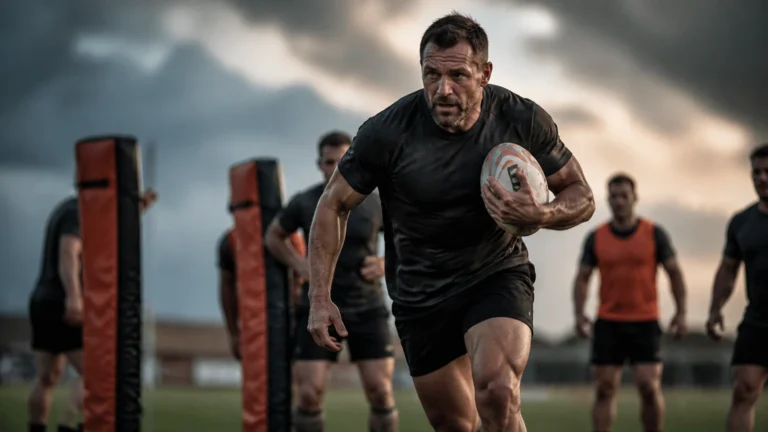
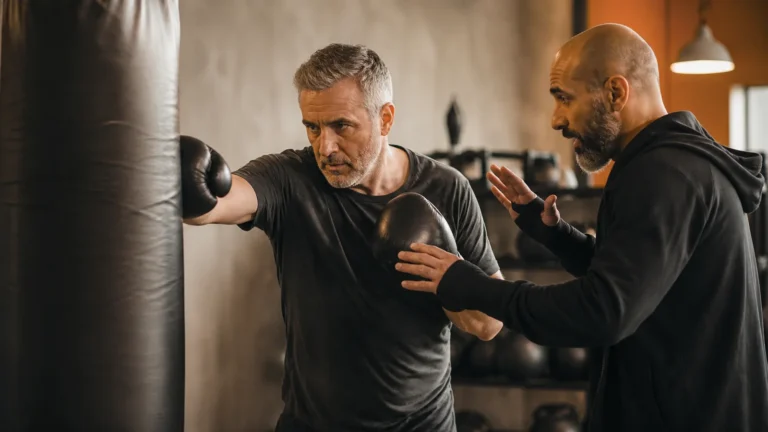
Boxing and combat training for beginners: learn stance, footwork, shadowboxing, bag work, conditioning, strength, recovery, and sparring safety.
- Boxing fitness and competitive boxing are different commitments.
- Skill deteriorates when every round becomes a conditioning test.
- Head contact is not required for a valuable boxing workout.
Bottom line Join a reputable coached class, spend the first month on stance, footwork, straight punches, defense, and controlled rounds, and never let fitness marketing blur the risks of head contact.
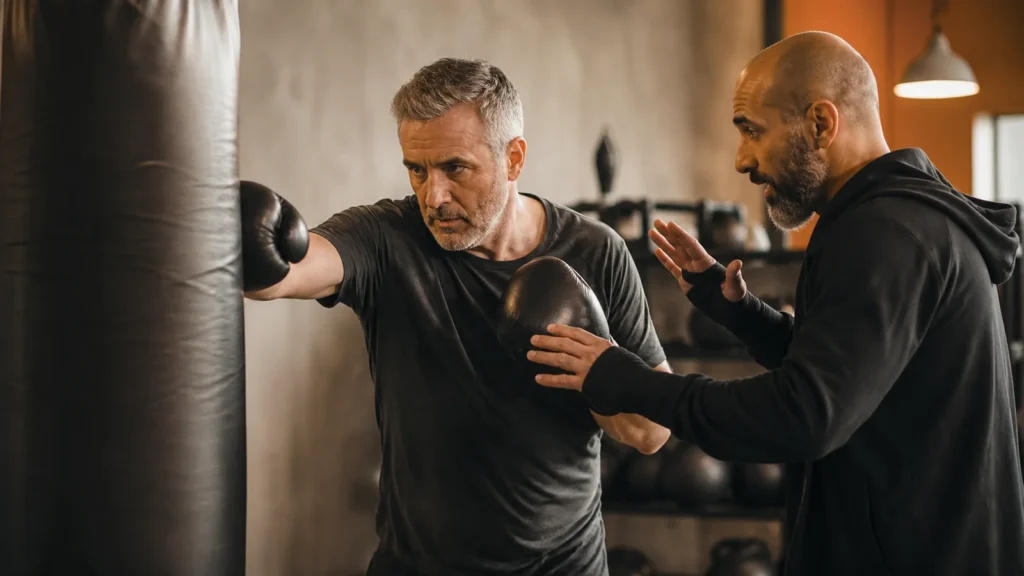
Boxing And Combat Training is most useful when the plan separates the skill you are learning from the physical quality you are training. That distinction keeps effort measurable and prevents fatigue from masquerading as progress.
Quick Summary: Boxing and Combat Training
- A complete beginner session separates technical practice, bag or pad work, conditioning, and recovery.
- Shadowboxing develops movement and sequencing only when it has a specific technical goal.
- Bag work adds impact and feedback but cannot replace coaching.
- Hard sparring adds brain and injury risk; it is not necessary for general fitness.
- Hand pain, concussion symptoms, chest symptoms, or neurological changes require prompt assessment.
The Prime Perspective
The beginner who leaves class wanting one more round often improves faster than the beginner who survives ten ugly rounds. Technical sports reward attention, not just toughness.
Beginner boxing training teaches stance, guard, footwork, basic punches, defense, distance, and balance before adding speed or contact. Conditioning supports those skills, but exhaustion should not decide whether technique is correct.
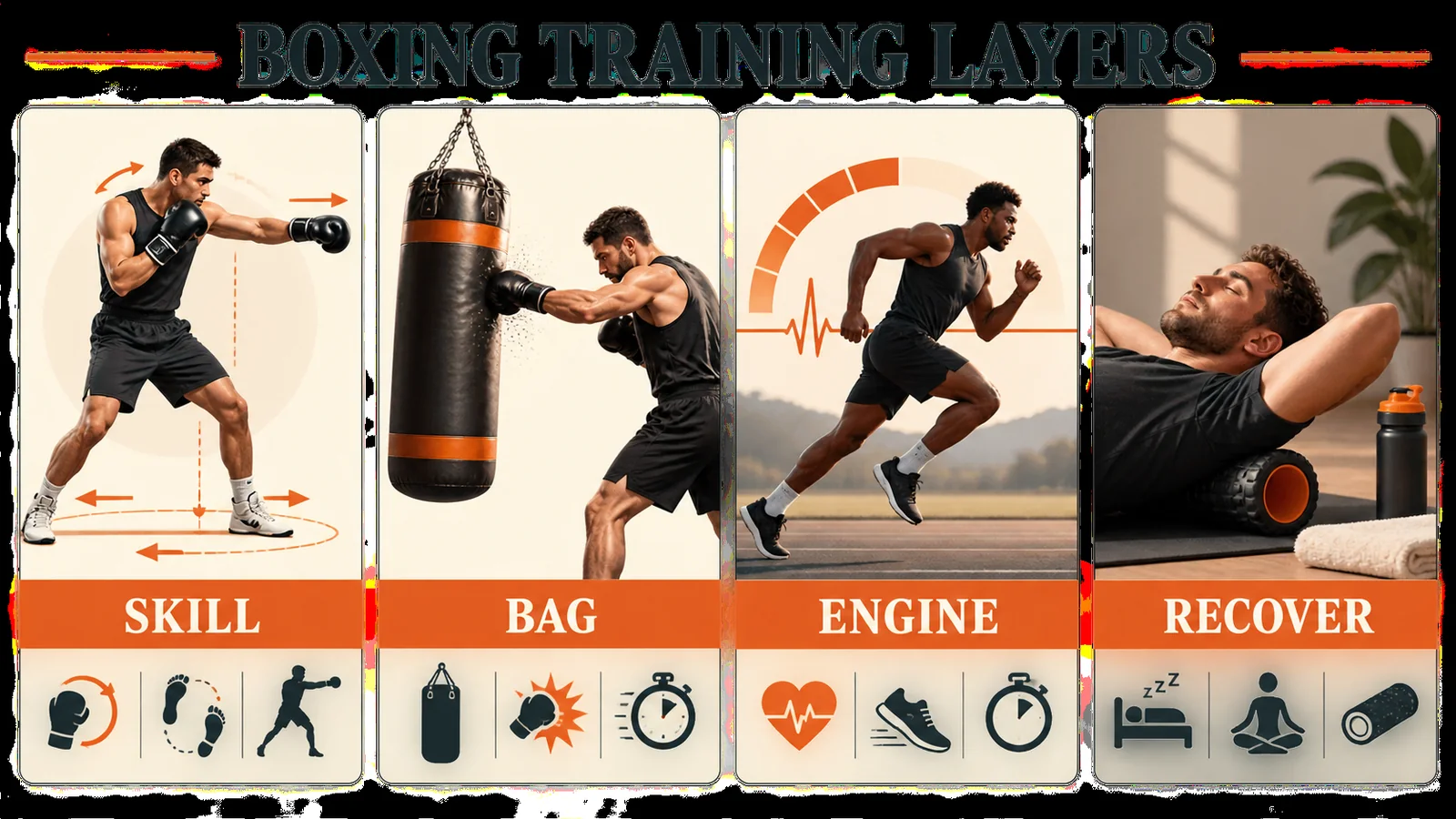
The Four Layers of Boxing Training
| Layer | Purpose | Beginner example | Main boundary |
|---|---|---|---|
| Technical skill | Position and mechanics | Stance, jab, cross, defense | Practice before fatigue |
| Shadowboxing | Sequence movement without impact | Three focused two-minute rounds | Use a task, not random flailing |
| Bag or pads | Accuracy, rhythm, and impact feedback | Three controlled rounds | Protect hands and preserve form |
| Conditioning | Support repeated rounds | Easy aerobic work plus intervals | Do not make every day hard |
| Sparring | Live timing and decision-making | Coach-controlled only | Adds head and injury risk |
Amazon Product Shortlist
Confirm glove size and equipment rules with your gym. PrimeForMen has not independently tested these products, and gear reduces some risks without making contact safe.

Hayabusa Sport Boxing Gloves
For coached bag, pad, and beginner sparring contexts after the gym confirms the correct glove size.
- Multi-density padding.
- Dual-splinted wrist support design.
- Glove ounces and purpose should match coach guidance.

Hayabusa 4.0 Hand Wraps
For supporting the hand and wrist inside gloves after learning a proper wrap method.
- 180-inch semi-elastic format.
- Thumb loop and hook-and-loop closure.
- Wrapping too tightly can impair comfort and circulation.

Redify Adjustable Jump Rope
For short footwork and conditioning intervals when calves and Achilles tendons tolerate jumping.
- Adjustable length.
- Portable conditioning option.
- Not the best first choice for impact-sensitive joints.
*As an Amazon Associate, PrimeForMen earns from qualifying purchases. Availability and prices can change.
No. Beginners can develop fitness, footwork, punch mechanics, defense patterns, and bag or pad skills without sparring. Live sparring adds timing experience but also adds impact and head-injury risk, so it is a separate, informed decision.
A Technique-First Beginner Session
About 45 minutes
- Warm-up — 8 minutes: easy rope or marching, shoulder movement, stance steps.
- Technical block — 12 minutes: stance, guard, jab, cross, and exits with full resets.
- Shadowboxing — 3 x 2 minutes: one task per round, one minute easy between.
- Bag or pads — 3 x 2 minutes: moderate power, accuracy first, one minute recovery.
- Conditioning — 6 minutes: six rounds of 20 seconds brisk and 40 seconds easy.
- Cool-down — 5 minutes: easy movement and symptom check.
Give Each Round One Job
A round can focus on returning the rear hand to guard, stepping after the jab, exiting at an angle, or maintaining distance. Trying to fix ten skills at once creates noise. Between rounds, name one cue and keep it for the next two minutes.
Shadowboxing is useful because it removes impact and lets you rehearse positions. It becomes low value when speed rises faster than balance or the hands drift without feedback.
Build most conditioning with easy aerobic work, then add short round-based intervals one or two times per week. Keep technical practice separate enough that fatigue does not repeatedly change stance, guard, or punch mechanics.
A systematic review and meta-analysis of amateur boxing responses found substantial acute physiological and biochemical demands, with competitive bouts generally producing larger responses than sparring or simulations. The practical lesson is to periodize contact and recovery, not imitate fight stress every session.
Strength Training for Boxing
Use two short full-body sessions built around a squat or split squat, hinge, row, press, carry, and rotational or anti-rotational trunk work. Avoid exhausting the shoulders immediately before technical sessions. Strength supports force and durability; it does not replace timing or coaching.
Hand, Wrist, and Head Safety
- Learn wrapping from a qualified coach and confirm glove size for the session type.
- Increase bag power gradually; impact tolerance lags behind enthusiasm.
- Stop for sharp hand or wrist pain, deformity, or loss of grip.
- After any head impact, stop for headache, dizziness, confusion, nausea, vision change, imbalance, or unusual fatigue and seek appropriate care.
- Do not use painkillers or bravado to conceal symptoms from a coach.
Non-contact boxing fitness, technical boxing, and competitive boxing are not the same risk category. Ask whether a class includes partner contact, head contact, open sparring, or competition preparation before you sign up.
Connect Skill to the Rest of Your Training
Use the martial arts fitness decision guide, home cardio exercises, quick workouts, home core training, unilateral training, agility ladder drills, and recovery guidance to support—not crowd out—skill practice.
What to Do This Week
- Book a fundamentals class with a coach who explains contact levels clearly.
- Practice stance, guard, and footwork before adding combinations.
- Complete three technical rounds and three controlled bag or pad rounds.
- Keep conditioning short enough that technique remains recognizable.
- Record hand, shoulder, calf, and headache symptoms after training.
Conclusion
Join a reputable coached class, spend the first month on stance, footwork, straight punches, defense, and controlled rounds, and never let fitness marketing blur the risks of head contact.
Next Step: Build the Full Training System
Connect this practice to the PrimeForMen advanced fitness techniques guide so skill, strength, conditioning, and recovery support the same goal.
Boxing And Combat Training: Frequently Asked Questions
What should a beginner learn first in boxing?
Start with stance, guard, balance, basic footwork, the jab and cross, and returning safely to position after each punch.
Is shadowboxing enough for a boxing workout?
It can build coordination and aerobic work, but coaching, pads, or bag feedback are needed to develop impact mechanics and correct errors.
Do beginners need to spar?
No. Fitness and technical development can come from non-contact practice. Sparring is optional and introduces additional injury and head-impact risk.
How often should a beginner box?
Two or three skill-focused sessions per week are a practical start, especially when combined with separate strength and easy aerobic work.
What is the difference between bag work and pad work?
Bag work provides a fixed impact target; pad work lets a coach or partner cue timing, accuracy, movement, and combinations dynamically.
This article is educational and does not replace individualized medical advice, diagnosis, or treatment. Discuss persistent symptoms, hormone concerns, cardiovascular risk, digestive problems, medications, or exercise restrictions with a qualified clinician.
Some links are affiliate links. PrimeForMen may earn a commission at no extra cost to you. Product inclusion does not override evidence, fit, or safety.