Learn whether ashwagandha really boosts testosterone, why stress and sleep evidence is stronger, who may benefit, safety checks, and trial rules.
- Ashwagandha is better framed as stress, sleep, and recovery support than as a guaranteed testosterone booster.
- The testosterone signal is limited and depends on extract, dose, duration, population, and whether labs are actually low.
- Screen thyroid, liver, medication, surgery, sedation, and prostate-risk context before trying it.
Bottom line Use ashwagandha only when stress or sleep is the bottleneck; use labs, not guesswork, when low testosterone is the question.
Does ashwagandha boost testosterone? The honest answer is conditional: ashwagandha has a stronger case for stress, sleep, and recovery support than for guaranteed direct testosterone elevation.
If stress, poor sleep, and under-recovery are dragging down your system, ashwagandha may be worth a measured trial. If you are trying to diagnose low testosterone, replace TRT, or force hormones upward with a capsule, it is the wrong tool.
Quick Summary: Does Ashwagandha Boost Testosterone?
- Ashwagandha is best framed as stress, sleep, and recovery support first; testosterone is a secondary and limited claim.
- Human studies vary by extract, dose, duration, population, and outcome, so one label cannot represent the whole category.
- If low-T symptoms are persistent, morning testosterone labs and clinical interpretation matter more than a supplement trial.
- Safety screening comes first for thyroid disease, liver history, autoimmune disease, sedatives, blood-pressure or diabetes medication, anti-seizure drugs, surgery, and prostate cancer concerns.
- The cleanest trial uses one transparent ashwagandha product, not a multi-ingredient testosterone or sleep blend.
The Prime Perspective
Ashwagandha belongs in the support-the-system category. That means it may help when the system is being pulled down by stress load, poor sleep, and recovery debt. It does not belong in the force-testosterone-up category, and it should not be used to avoid bloodwork when symptoms are persistent.
Evidence-Grading: Stress, Sleep, Cortisol, Testosterone, Safety
The evidence is not one bucket. The NCCIH summary on ashwagandha is careful: some preparations may help stress and sleep, while testosterone evidence is limited and product-dependent. That is the tone this topic needs.
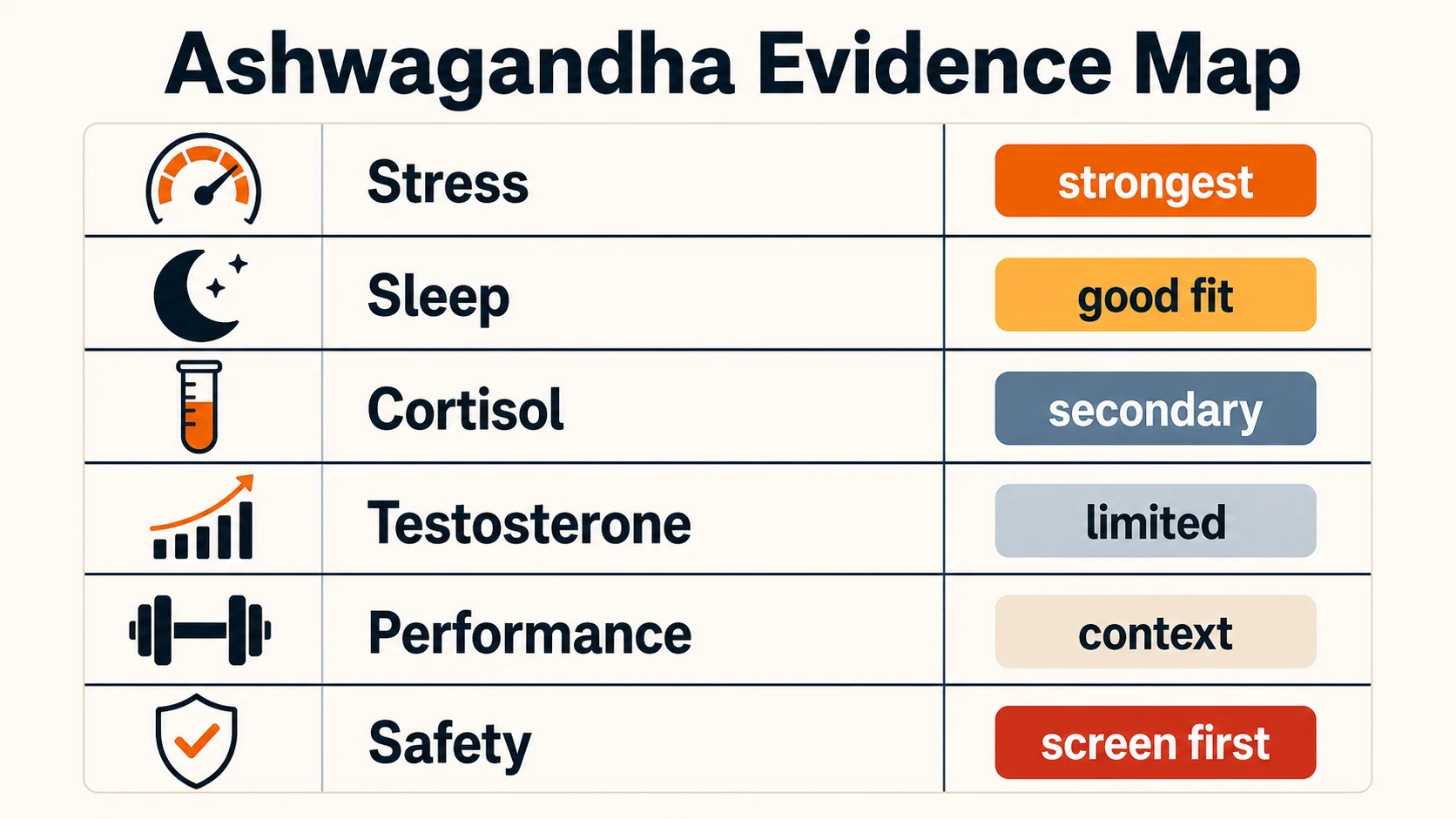
| Claim | Evidence direction | Better wording | PrimeForMen verdict |
|---|---|---|---|
| Stress reduction | Most plausible use case | May help perceived stress in some adults | Strongest practical reason |
| Sleep support | Promising, extract- and duration-dependent | May improve sleep quality when sleep is the bottleneck | Good conditional use |
| Cortisol signal | Interesting but not a standalone buy reason | May support stress physiology | Secondary support |
| Testosterone | Mixed, limited, and population-dependent | Possible increase in some male studies, not guaranteed | Do not lead with this |
| Performance | Context matters | Training, sleep, and recovery determine relevance | Use cautiously |
| Safety | Short-term better studied than long-term | Screen interactions and risk factors first | Mandatory |
What the Human Studies Actually Look Like
Most overconfident claims hide the study details. The real questions are extract, dose, duration, population, endpoint, and limitation.
| Study type | Population | Extract or dose issue | Outcome | Main limitation |
|---|---|---|---|---|
| Stress trials | Stressed adults | Different root or root/leaf extracts | Stress, anxiety, or cortisol signals can improve | Often small and short |
| Sleep trials | Adults with sleep problems or insomnia | Often 6-12 week protocols, variable extracts | Sleep quality may improve | Products are not interchangeable |
| Male testosterone studies | Men in fertility, stress, or training contexts | Different preparations and durations | Some testosterone signals | Not a guaranteed healthy-man result |
| Performance studies | Training or healthy adult samples | Training and diet context varies | Possible strength or recovery signals | Not the primary reason to buy |
| Safety reports | Case reports and monitoring | Product identity may vary | Liver, thyroid, sedation, and interaction concerns | Long-term safety remains less clear |
If the Real Question Is Low Testosterone, Get Labs First
If your concern is persistent low libido, erectile issues, fertility, mood changes, unusual fatigue, or suspected low testosterone, do not use ashwagandha as a diagnostic shortcut. The Endocrine Society guideline emphasizes symptoms plus consistently low testosterone values, confirmed with repeat morning testing, before diagnosing hypogonadism.
- No persistent symptoms: consider ashwagandha only as a stress or sleep experiment if that bottleneck is obvious.
- Persistent symptoms and no labs: get clinician-guided labs first.
- Confirmed low values: medical evaluation comes before supplement-first thinking.
- Normal labs but poor sleep or high stress: treat ashwagandha as a recovery-support trial, not a hormone treatment.
Ashwagandha Labels: Extract, Dose, and Withanolides Matter
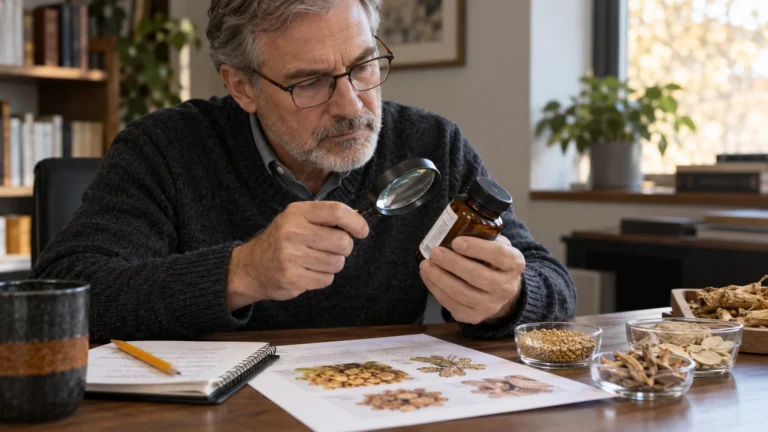
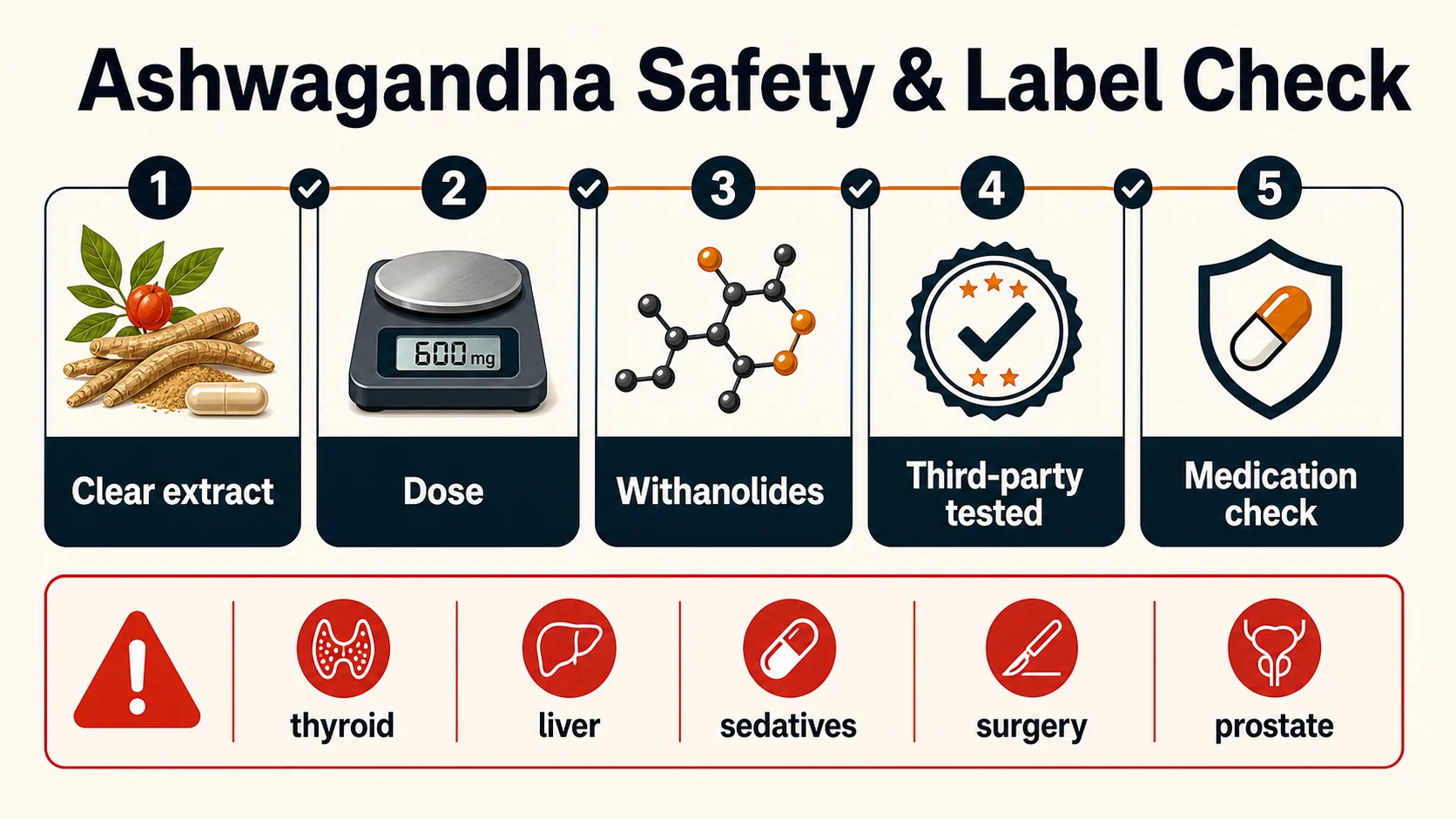
Ashwagandha is not one uniform product. Root extract, root-and-leaf extract, KSM-66, Sensoril, Shoden, generic extract, gummies, sleep blends, and cortisol-support blends are different buying decisions. A clean trial needs a clear label.
Extract Type
Root extract and root/leaf extract are not automatically interchangeable.
Withanolides
Standardization helps compare products, but it does not guarantee an effect.
Single Ingredient
One variable is easier to interpret than a 12-ingredient sleep or stress blend.
Who Is Most Likely to Benefit?
| Candidate type | Ashwagandha fit | Why |
|---|---|---|
| High stress, poor sleep, under-recovered | Good | Matches the strongest practical use case |
| Normal labs with obvious stress bottleneck | Good | Indirect recovery pathway is plausible |
| Already sleeping well and training/eating well | Weak | Direct testosterone claim is not strong enough |
| Seeking TRT-like effect | Weak | Wrong expectation |
| Persistent libido, ED, fertility, or fatigue symptoms | Medical first | Labs and clinician interpretation matter |
| Thyroid, autoimmune, liver, medication context | Medical check | Safety filter comes first |
Safety, Interactions, and When to Skip It
Ashwagandha is often marketed as gentle, but natural does not mean casual. Screen the risk context before the product page.
- Thyroid disease or thyroid medication: get medical guidance first.
- Autoimmune disease or immunosuppressants: do not self-experiment blindly.
- Liver history or liver symptoms: avoid casual use and seek medical input.
- Sedatives, sleep aids, alcohol, or melatonin stacking: watch grogginess and interaction risk.
- Blood-pressure, diabetes, anti-seizure, or immune medication: check with a clinician or pharmacist.
- Upcoming surgery or prostate cancer concerns: do not treat it as a harmless wellness herb.
Ashwagandha Product Shortlist
Use these as category searches only after the evidence and safety filter are clear. Start with one variable, not a noisy stack.
Single-Ingredient Ashwagandha
Best fit when stress and sleep are the obvious bottleneck and you want a clean trial.
- Clear extract type
- Visible dose and withanolide info
- Third-party testing or COA signal
Ashwagandha Sleep Formula
Only consider this when sleep is the main issue and you understand every added active.
- Check melatonin and sedative herbs
- Avoid hidden proprietary blends
- Track grogginess and next-day fatigue
Stress Support Blend
Second choice when single-ingredient ashwagandha is not the right fit, because blends add variables.
- Read every active ingredient
- Watch caffeine and sedative overlap
- Skip dramatic hormone claims
* As an Amazon Associate, PrimeForMen earns from qualifying purchases.
How to Run a Sensible 8-12 Week Trial
A 4-week trial is useful for tolerance, sleep, and early stress signals. It is not enough to promise a testosterone change. If testosterone is the target, labs are the endpoint, not mood, libido, or workout motivation.
| Phase | Goal | What to track |
|---|---|---|
| Week 0 | Baseline | Sleep, wake-ups, stress, libido, mood, training, meds, conditions |
| Weeks 1-2 | Tolerance | GI issues, grogginess, mood changes, rash, sedation |
| Weeks 3-4 | Stress and sleep signal | Sleep quality, stress downshift, recovery, caffeine need |
| Weeks 5-8 | Stable recovery read | Training quality, soreness, consistency, sleep trend |
| Weeks 8-12 | Continue only if useful and safe | Benefit vs cost, side effects, clinician context |
| Lab retest | Only when testosterone is the real endpoint | Do not replace labs with feelings |
The Knowledge Gap: Testosterone Content Often Skips the Pathway
Most shallow articles ask whether ashwagandha boosts testosterone and stop there. The better question is whether stress, sleep, and recovery are suppressing the system you are trying to improve. If the bottleneck is stress load, read our guide to cardio and cortisol. If the bottleneck is a broad supplement stack, compare labels with supplement recommendations. If the question is booster safety, start with testosterone booster safety.
Common Claim Mistakes
Calling It TRT
Ashwagandha is not testosterone therapy and should not be framed as a medical replacement.
Ignoring Extracts
Different preparations make different products hard to compare.
Skipping Labs
Low-T suspicion needs testing. A supplement trial cannot diagnose hormone status.
Conclusion: Use Ashwagandha for the Right Job
Ashwagandha may help some men when stress, sleep, and recovery are the real problem. It is much weaker as a guaranteed testosterone promise. That is not a negative verdict. It is a cleaner verdict.
If you try it, test one transparent product, track the right outcomes, screen safety first, and stop if the benefit is vague. For broader context, compare the ingredient-level evidence map and the full testosterone support framework.
Frequently Asked Questions About Ashwagandha and Testosterone
Does ashwagandha directly increase testosterone?
It may raise testosterone in some male studies, but the evidence is too limited and product-dependent to promise a direct increase. The stronger practical case is stress, sleep, and recovery support.
Is ashwagandha better for stress than testosterone?
Yes, that is the cleaner way to think about it. Ashwagandha fits best when stress, sleep quality, or under-recovery are the bottleneck. Testosterone should be treated as a secondary claim.
What kind of men are most likely to benefit?
The best candidate is a stressed, under-recovered man with poor sleep who is willing to track a single-ingredient trial. A man chasing a TRT-like effect is a weak candidate.
Should I test testosterone before taking ashwagandha?
If the real concern is persistent low libido, erectile issues, fertility concerns, mood changes, or unusual fatigue, labs and clinical interpretation should come before a supplement experiment.
What dose of ashwagandha is used in studies?
Studies use different extracts, doses, and durations, so there is no universal dose. A label should clearly state extract type, milligrams per serving, withanolide standardization when available, and other active ingredients.
What are withanolides?
Withanolides are a group of active compounds used to standardize many ashwagandha extracts. They help compare products, but they do not guarantee that a product will work for a specific man.
Can ashwagandha affect thyroid or liver health?
It can be a concern for some users. Men with thyroid disease, thyroid medication, liver history, or symptoms such as dark urine, yellowing eyes, or severe fatigue should skip self-experimenting and get medical guidance.
Can I take ashwagandha with sleep aids or melatonin?
Be careful. Ashwagandha can cause drowsiness in some people, and stacking it with sedatives, sleep aids, alcohol, or multi-ingredient sleep products can make grogginess and interactions harder to judge.
How do I know if ashwagandha is working?
Track sleep quality, wake-ups, stress, recovery, training consistency, mood, side effects, and whether the benefit is worth the cost. Do not use mood or libido as a substitute for testosterone labs.
This article is for educational purposes only and is not medical advice. Talk with a physician, pharmacist, endocrinologist, or another qualified professional before using supplements, especially if medications, abnormal labs, surgery, prostate concerns, liver history, thyroid disease, autoimmune disease, or persistent low-testosterone symptoms are involved.
Some links may be affiliate links. If you buy through them, PrimeForMen may earn a commission at no extra cost to you.