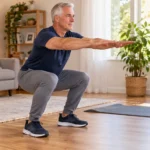
Fitness for Men Over 50 | Strength, Cardio & Mobility
Build a complete fitness plan after 50 with strength, cardio, mobility, nutrition, and recovery dosed to your current capacity—not your birth certificate.
Cardio you recover from
Mobility with purpose

Four Focused Plans for Men Over 50
Pick the job your week needs most. Each guide gives you the exercises, dose, progression, and recovery rules.
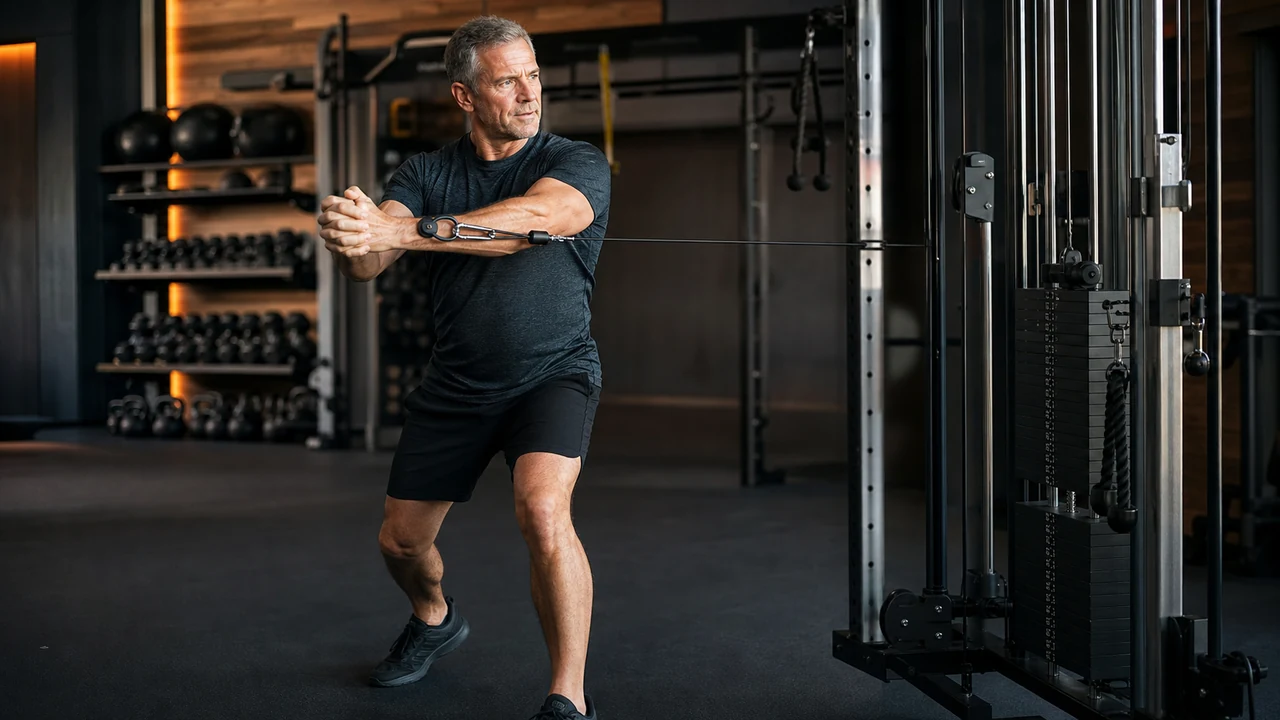
Build a Stronger Core
Train bracing, anti-rotation, carries, and back-aware control.
Open core plan
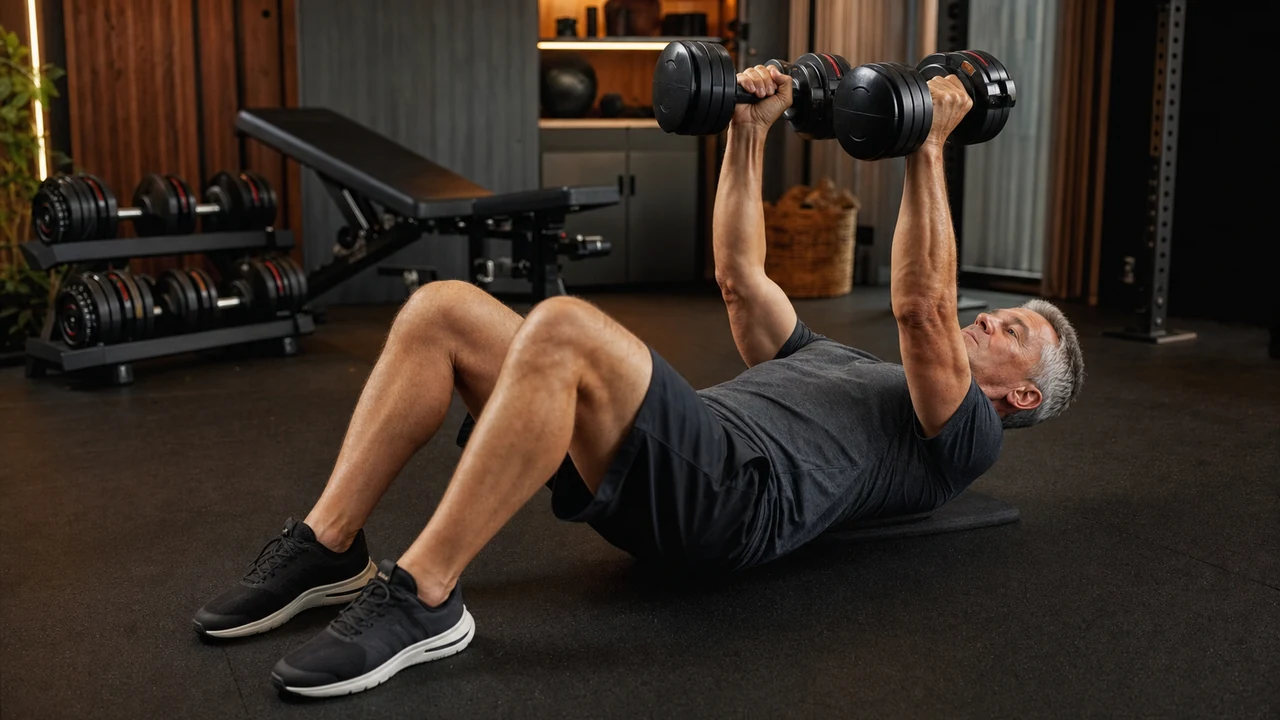
Train With Dumbbells
Follow a joint-friendly three-day week with simple progression.
Open dumbbell plan
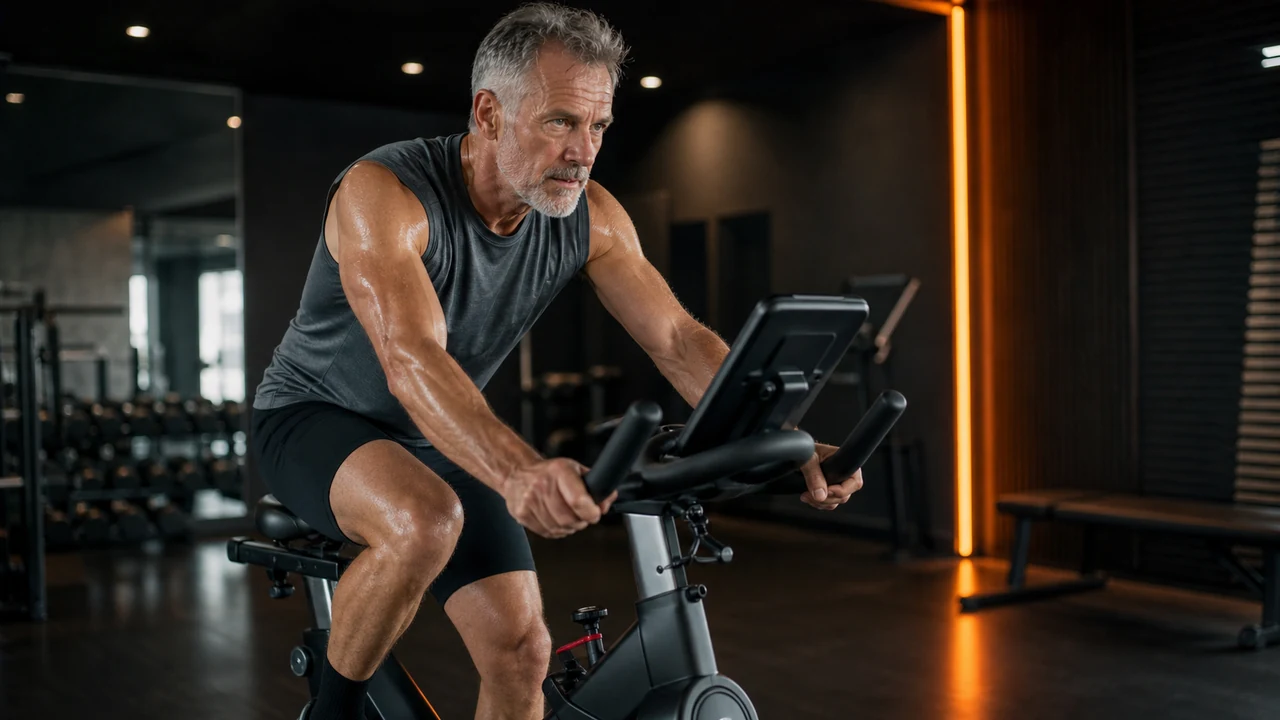
Add Smarter Intervals
Use stable modes, practical work-rest ratios, and recovery checks.
Open HIIT guide

Learn Kettlebells Safely
Build the hinge and strength base before adding faster skills.
Open kettlebell plan
Fitness for Men Over 50
Fitness for men over 50 works best when your week contains recoverable strength work, aerobic conditioning, mobility or balance practice, enough protein, and deliberate recovery. Age changes the dose and the feedback you watch—not your ability to train with purpose.
- Train all five pillars instead of chasing one quality.
- Start from your current capacity and training history.
- Progress only what your sleep, joints, and performance can recover from.
Program the man, not the birthday
Turning 50 does not place every man in the same training category. A 52-year-old who has lifted for twenty years needs a different start from a 52-year-old returning after a decade. We program from training history, current capacity, joint tolerance, and recovery—not from the birthday alone.
Your body still adapts after 50
Muscle, power, aerobic capacity, balance, and connective-tissue tolerance can drift downward with age, especially when activity falls. But the body still adapts to progressive resistance and aerobic work. The useful change is not “train easy forever.” It is to earn intensity through repeatable technique and recovery.
The CDC activity framework combines aerobic, muscle-strengthening, and balance work. That is a sound floor, not a ceiling. If you are healthy and experienced, you can train beyond the minimum. If you are restarting, the minimum gives you a direction without forcing every quality into one hard session.
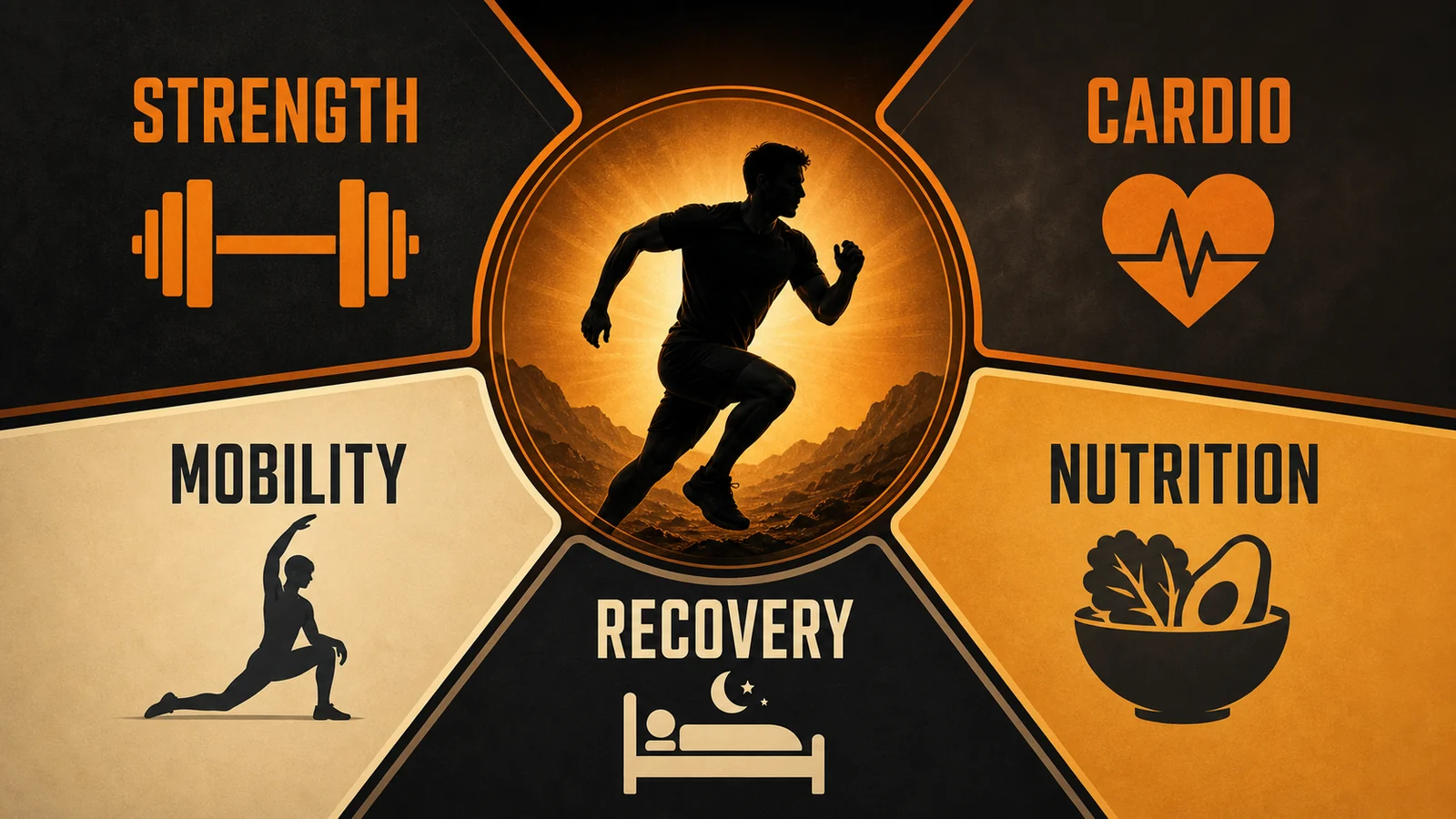
The Five-Part 50+ Fitness System
Each pillar supports the others. Strength creates capacity, cardio improves conditioning, mobility preserves options, nutrition supplies the raw material, and recovery controls what you can repeat.
1. Strength
Train squat, hinge, push, pull, carry, and trunk control with loads you can own.
2. Cardio
Build an aerobic base and add intervals only when the base and joints tolerate them. For equipment, compare home ellipticals by stride and space.
3. Mobility and Balance
Keep usable range, single-leg control, and confidence changing direction.
4. Nutrition
Cover protein, energy, plants, fluids, and micronutrients before chasing supplements. Use the supplement guide for men over 50 to separate real gaps from default stacks.
5. Recovery
Use sleep, rest days, stress load, and performance trends to control the next dose.
Choose the Right Starting Point
Your first four weeks should match your recent training history, not your best year.
| Profile | First four weeks | Intensity rule | Next step |
|---|---|---|---|
| Beginner | Two full-body lifts, two easy cardio sessions, brief balance work. | Finish sets with 3–4 reps in reserve. | Add reps before load. |
| Returning | Two or three lifts at roughly half of remembered volume. | Do not chase old numbers in week one. | Restore technique, then volume. |
| Experienced | Keep key lifts, trim junk volume, preserve one hard exposure. | Use performance and joint feedback. | Progress one variable at a time. |
| Limited load capacity | Short sessions, supported variations, walking or cycling. | Stay within professional guidance and symptom limits. | Build frequency before intensity. |
A Practical Example Week
| Day | Main work | Purpose |
|---|---|---|
| Monday | Full-body strength A | Squat, push, pull, carry. |
| Tuesday | 30–40 minutes easy cardio | Aerobic base; talk in full sentences. |
| Wednesday | Mobility, balance, easy walk | Movement quality and low-cost activity. |
| Thursday | Full-body strength B | Hinge, press, row, split stance. |
| Friday | Rest or short easy cardio | Recover without becoming sedentary. |
| Saturday | Optional third lift or longer cardio | Use only when the week has recovered well. |
| Sunday | Rest | Review sleep, soreness, pain, and performance. |
Men who want the exact lifting week should use the three-day workout plan for men over 50. This pillar explains the system; the plan tells you what to do on each training day.
The dose must be recoverable
The right weekly volume is not the largest amount you can survive once. It is the amount that lets technique, performance, sleep, and joint comfort remain stable enough to train again.
Progress one variable
Add one set, one small load jump, or five cardio minutes—not all three at once. Keep the other variables stable long enough to judge the response.
Choose Your Detailed 50+ Guide
Prefer an interactive starting point? Visit the PrimeForMen fitness tools hub to build a three-day plan, estimate protein, calculate training loads, or set heart-rate zones.
Use the guide that matches your next decision. Each one goes deeper than this pillar without repeating the entire system.
Start or Restart
Turn the framework into a repeatable three-day week.
Get Stronger
Control load, effort, technique, and progression after 50.
Build Muscle
Combine hypertrophy training, energy intake, protein, and recovery.
Improve Conditioning
Compare low-impact cardio options by joint load and training effect.
Use Supplements Rationally
Understand where creatine and protein help—and where they do not.
Review the Foundations
Revisit movement patterns, progression, conditioning, and recovery basics.
Build a Stronger Core
Train bracing, anti-rotation, carries, and back-aware control.
Train With Dumbbells
Use a joint-friendly three-day full-body plan with simple progression.
Add Smarter Intervals
Choose a stable mode, workable intensity, and a recovery-aware HIIT dose.
Learn Kettlebells Safely
Progress from deadlifts and carries to squats, presses, and earned swings.
For additional background, review cardio workouts, progressive overload, muscle recovery techniques, and the broader fitness by age guide.
Warning Signs That Need Medical Guidance
Stop the session and seek urgent help for chest pressure, fainting, severe shortness of breath, sudden weakness, new confusion, or symptoms that feel acute and dangerous.
Pause and arrange guidance
Recurring dizziness, unusual heart rhythm sensations, unexplained exercise intolerance, persistent swelling, or pain that changes your movement deserve medical context before you push harder.
The Johns Hopkins overview for adults 50+ also emphasizes matching activity to health context.
Your First Seven Days
Use your last six months, not your best year.
Book two strength sessions and two easy cardio sessions.
Track load, reps, RIR, sleep, joint feedback, and next-day energy.
Change only one variable next week if recovery is stable.
Gear Decisions for Men Over 50
Age does not create one universal equipment list. Choose gear by the training goal, current capacity, available space and any medical guidance that applies to you.
Conclusion
Fitness for men over 50 is not a smaller version of a younger man’s program. It is a better-controlled system: strength, cardio, mobility, nutrition, and recovery are dosed from your current capacity and progressed from evidence. Start with a week you can repeat, measure how you respond, and earn the next increase.
Frequently Asked Questions About Fitness for Men Over 50
How many days a week should a man over 50 work out?
Most men can start with two strength sessions, two or three cardio sessions, and brief mobility or balance work. Experienced men may do more when recovery remains stable.
Should men over 50 lift heavy weights?
Heavy is relative. Men over 50 can use challenging loads when technique, health context, and joint tolerance support them. Most work does not need to reach failure.
Is cardio or strength more important after 50?
Both solve different problems. Strength protects muscle and force production; cardio builds aerobic capacity. A complete plan includes both.
How long does it take to get fit after 50?
You may notice better work capacity within weeks, but meaningful strength, body-composition, and habit changes usually require months of consistent training.
Do I need a medical check before exercising after 50?
Age alone does not answer that. A long layoff, chronic condition, medication, recent surgery, or concerning symptoms can make professional guidance important before increasing intensity.
Medical Disclaimer: This article is general educational information and is not a substitute for diagnosis, treatment, or individualized medical advice. If you have symptoms, a chronic condition, or a long training layoff, discuss the appropriate starting point with a qualified healthcare professional.