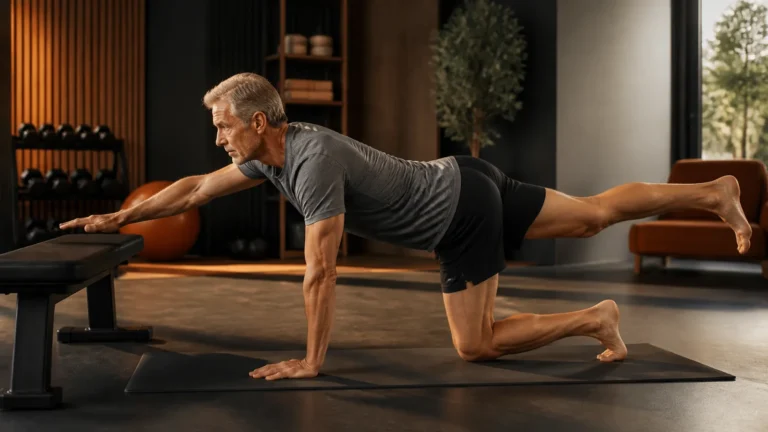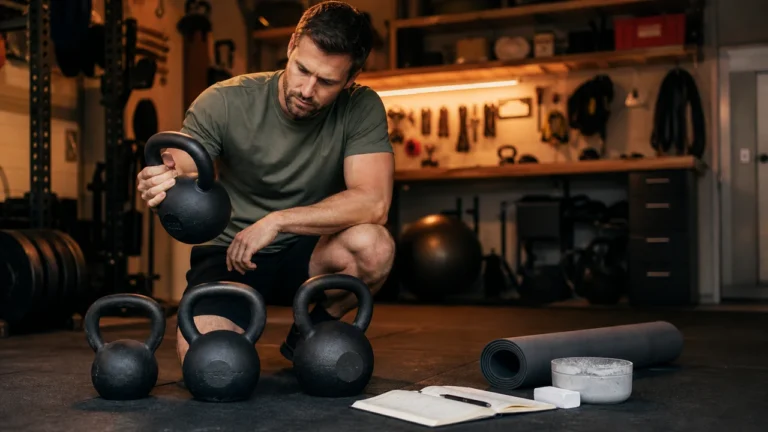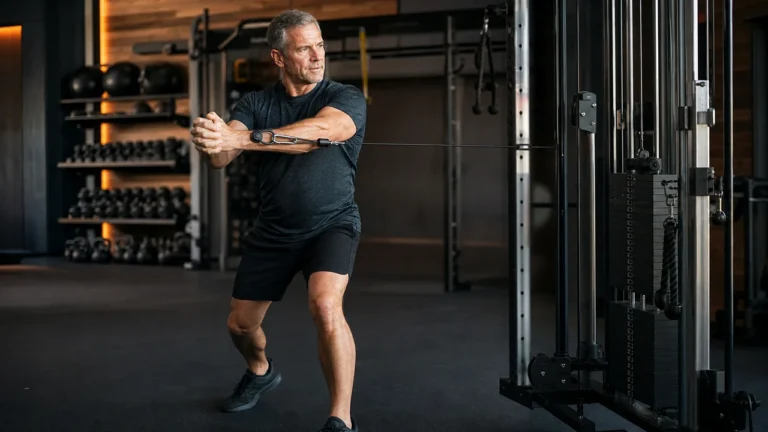
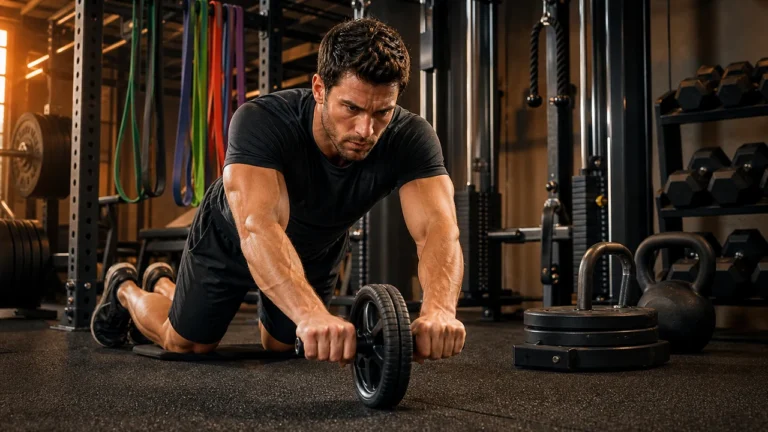
Advanced core workouts for men who already own the basics: loaded carries, anti-rotation, ab-wheel progressions, and control.
- Advanced core training starts with prerequisites: breathing, bracing, pelvic control, and repeatable form under fatigue.
- Use load, longer levers, anti-rotation, carries, and controlled instability before chasing random novelty.
- The best advanced core work looks less like endless crunches and more like rollouts, loaded carries, Pallof variations, hanging control, and unilateral strength work.
Bottom line Use advanced core workouts as a repeatable training filter: clear purpose, clean execution, and progression matter more than doing more.
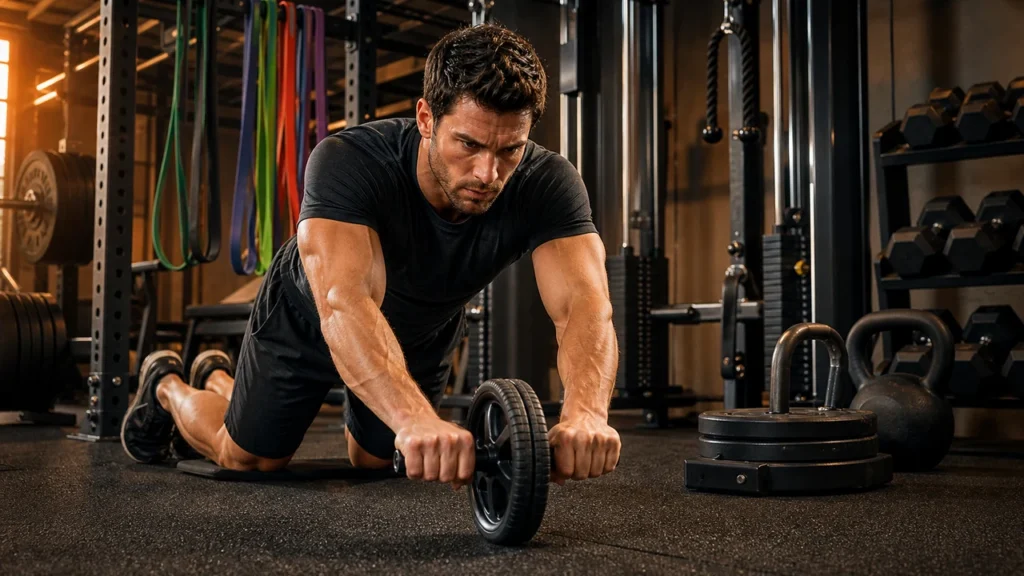
Advanced core workouts are not just harder ab circuits. For men who already own the basics, the next step is learning to keep the ribs, pelvis, and spine organized while load, speed, leverage, fatigue, and instability try to pull you out of position.
If you cannot hold clean control in planks, dead bugs, side planks, carries, and controlled hinges, stay with core workout basics first. Advanced work earns its name only when the added difficulty improves strength transfer instead of hiding sloppy reps.
Quick Summary: Advanced core workouts
- Advanced core training starts with prerequisites: breathing, bracing, pelvic control, and repeatable form under fatigue.
- Use load, longer levers, anti-rotation, carries, and controlled instability before chasing random novelty.
- The best advanced core work looks less like endless crunches and more like rollouts, loaded carries, Pallof variations, hanging control, and unilateral strength work.
- Progress only one variable at a time: load, range, tempo, instability, density, or total volume.
- Deload when control drops, low-back tension rises, or your main lifts start feeling worse.
The Prime Perspective
The goal is not to make your midsection burn. The goal is to build a trunk that can transmit force, resist unwanted motion, and recover fast enough to support the next hard session.
That means advanced core training should have standards. If a drill makes you shake but you lose position, it is not automatically productive. If a drill forces you to brace, breathe, rotate less, carry more, and finish with clean reps, it belongs in the program.
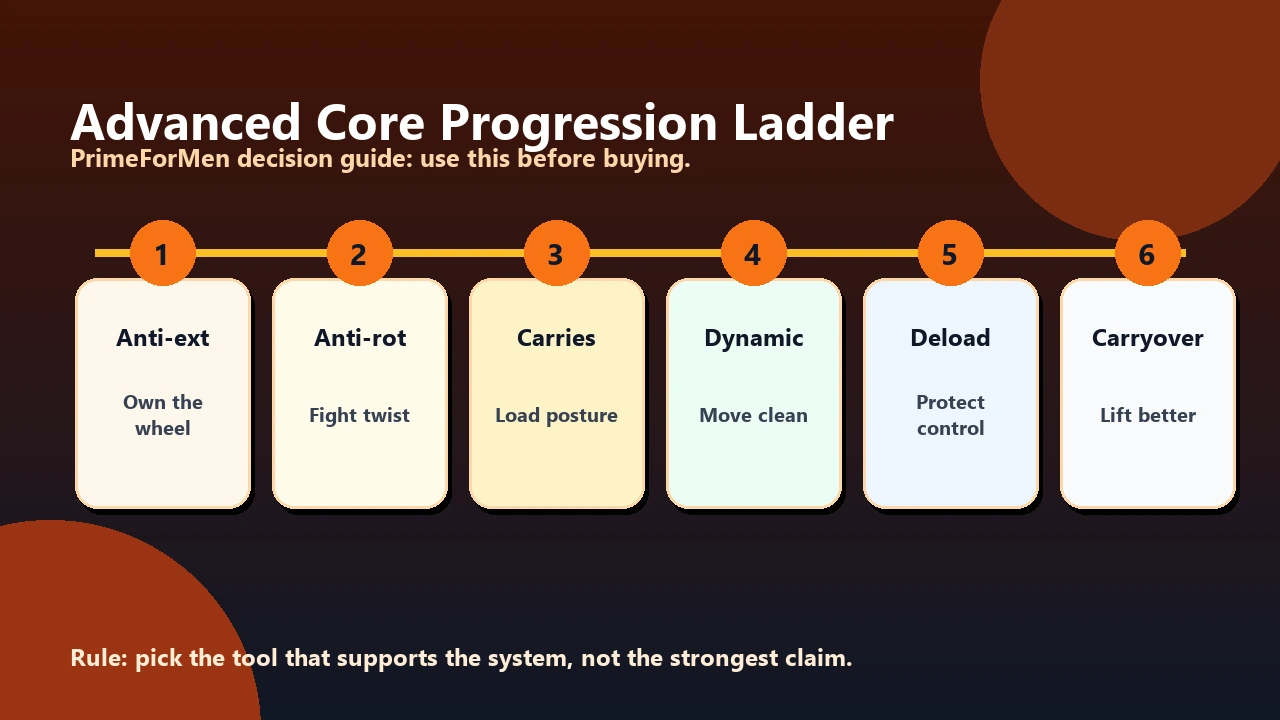
Advanced Core Gear That Actually Has a Job
Use equipment when it lets you load a pattern, measure progress, or create a clear stability demand. Skip gear that only makes a drill look harder.
- Choose tools that scale gradually instead of forcing max difficulty on day one.
- Keep the setup simple enough that you can repeat it week after week.
- Stop the set when control changes, not only when your abs feel tired.
Amazon Product Shortlist
These are practical product starting points, not medical or performance guarantees. Use the images, sizing, labels, reviews, and return policy to compare the real item before buying.

Ab Wheel
A compact core tool for men who can brace and want a harder anti-extension challenge.
- Progresses beyond basic planks without needing a machine.
- Makes range easy to scale by shortening the rollout.
- Rewards control instead of high-rep crunch fatigue.
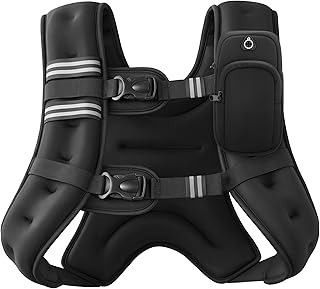
Weighted Vest
A clear progression tool when bodyweight work is too easy but form still matters.
- Adds load without changing the exercise setup.
- Fits carries, crawls, push-ups, step-ups, and conditioning.
- Best after basic positions are already clean.

Resistance Bands
The easiest low-friction tool for warm-ups, anti-rotation work, and travel training.
- Scales from rehab-style activation to hard accessory sets.
- Supports push, pull, and core patterns without much space.
- Useful when cables or machines are not available.
*Affiliate disclosure: PrimeForMen may earn from qualifying purchases. Product images are loaded from Amazon media URLs and product availability can change.
*As an Amazon Associate, PrimeForMen may earn from qualifying purchases.
What Makes a Core Workout Advanced?
Advanced does not mean circus-level instability. It means the drill asks more of your trunk while your spine stays quiet and your breathing remains usable.
Suitcase carries, front-rack carries, heavy cable holds, and weighted bodyweight patterns teach the trunk to transfer force.
Rollouts, body saws, long-lever planks, and hollow-body variations increase torque without needing sloppy speed.
Pallof presses, offset carries, half-kneeling chops, and single-arm presses train you to resist twist when force is uneven.
Instability belongs late in the progression. It should make you cleaner and more aware, not weaker and more chaotic.
The American College of Sports Medicine review on core training facts and fiction is a useful reminder that core work should be judged by function, context, and carryover, not by how exotic the exercise looks.
Advanced Difficulty-vs-Control Meter
Use this meter before you progress a drill. If difficulty rises faster than control, the exercise is too advanced for the current week.
41-75: productive challenge
76-100: advanced zone only if control stays clean
Prerequisites Before You Add Load or Instability
Before moving into advanced core workouts, you should be able to repeat these standards without breath-holding panic, rib flare, or low-back compensation.
- Hold a hard-style plank for 45-60 seconds with glutes on and ribs down.
- Perform dead bugs without the low back arching away from the floor.
- Carry a heavy object on one side without leaning or twisting.
- Brace during squats, hinges, presses, and pulls without losing breathing rhythm.
- Recover from core work without lingering back tightness the next day.
If those boxes are not checked, use core workouts with equipment to bridge the gap with more controllable loading before pushing advanced variations.
| Progression Variable | Advanced Example | Control Standard | Common Mistake |
|---|---|---|---|
| Load | Heavy suitcase carry | Shoulders level, no side bend, steady steps | Choosing weight that turns the walk into a lean |
| Leverage | Standing or long-kneeling ab wheel rollout | Ribs stay down, glutes stay active, no lumbar sag | Reaching farther than you can return from cleanly |
| Anti-rotation | Split-stance Pallof press with pause | Hands move without torso drift | Letting the band pull the sternum off center |
| Instability | Stability-ball body saw | Small range, smooth breathing, pelvis controlled | Adding wobble before earning position |
| Density | Carry and rollout superset | Final set looks like first set | Turning fatigue into form collapse |
The Advanced Core Exercise Menu
Pick from categories, not random exercises. Two or three categories per session are enough when the work is loaded and strict.
- Ab wheel rollout
- Body saw
- Long-lever plank
- Hollow-body hold with controlled breathing
- Pallof press with pause
- Half-kneeling cable chop
- Band lift from split stance
- Single-arm plank row
- Suitcase carry
- Front-rack carry
- Farmer carry
- Overhead carry if shoulders tolerate it
- Hanging knee raise with posterior tilt
- Slow toes-to-bar regression
- Captain’s chair raise
- Reverse crunch with pause
The Knowledge Gap: Advanced Is a Control Problem
Most articles list harder exercises but skip the decision rule. The real question is not “Can you survive the variation?” It is “Can you keep the same position, breathing, and force transfer while the drill becomes harder?”
- If the spine position changes first, regress the drill.
- If breathing disappears, reduce load or duration.
- If the target area shifts into the low back, shorten range or return to the prerequisite.
- If performance improves in main lifts and carries, the core work is probably transferring.
How to Program Advanced Core Workouts
Use the same logic you would use for the rest of strength training: planned exposure, clean progression, and recovery. For a deeper framework, connect this work to progressive overload instead of adding random intensity every session.
| Training Day | Core Emphasis | Sample Work | Progression Rule |
|---|---|---|---|
| Lower-body strength | Anti-extension | Ab wheel 4 x 6-10, long-lever plank 3 x 25-35 sec | Add range before load |
| Upper-body strength | Anti-rotation | Pallof press 3 x 8 each side, single-arm carry 4 x 30-40 m | Add pause before band tension |
| Conditioning or home day | Carries and crawling | Vest carry 6 x 40 m, bear crawl 5 x 20 m | Add distance before speed |
The CDC guidelines emphasize that adults benefit from regular physical activity plus muscle-strengthening work, and the Physical Activity Guidelines for Americans support treating strength work as part of a complete weekly plan rather than a random add-on.
Practical Progression and Deload Block
Run advanced core work in 4-week waves. Progress only when the previous week is clean.
- Week 1: establish the variation and leave 2-3 clean reps in reserve.
- Week 2: add one variable: 5-10% load, 1-2 reps, a longer pause, or slightly longer distance.
- Week 3: repeat the hardest clean work or add a small density challenge.
- Week 4: deload by cutting volume 30-50% while keeping technique crisp.
Use muscle recovery techniques to manage soreness, sleep, and readiness so core training supports your main lifting instead of competing with it.
Sample Advanced Core Sessions
- Ab wheel rollout: 4 x 6-8
- Suitcase carry: 5 x 30 m each side
- Half-kneeling cable chop: 3 x 8 each side
- Hollow hold breathing: 3 x 5 slow breaths
- Band Pallof press: 4 x 10 each side
- Weighted vest bear crawl: 5 x 15-20 m
- Long-lever plank: 4 x 25 sec
- Side plank row with band: 3 x 8 each side
- Farmer carry: 4 x 40 m
- Front-rack carry: 3 x 30 m
- Single-arm overhead carry: 3 x 20 m each side
- Dead bug reset: 2 x 6 each side
If you train mostly outside a commercial gym, build the week around strength training at home principles: fewer tools, stricter standards, and progressions you can repeat without setup friction.
Bottom Line
Advanced core workouts should make you stronger, harder to move, and better at transferring force. Start with control, add one stressor at a time, and judge progress by the quality of your position under load.
The winning formula is simple: prerequisites first, loaded patterns second, instability last, and recovery always in the plan.
Frequently Asked Questions About Advanced Core Workouts
How do I know if I am ready for advanced core workouts?
You are ready when you can brace, breathe, and keep pelvic control during basic planks, dead bugs, side planks, carries, and loaded strength movements without back compensation.
Are ab wheel rollouts advanced?
They can be. A kneeling rollout is intermediate to advanced depending on range and control. Standing rollouts are advanced and should not be rushed if your low back sags.
How often should advanced core training be done?
Two to four short exposures per week usually works better than one exhausting session. Keep the work high quality and place it where it does not reduce your main lift performance.
Should advanced core workouts include instability tools?
Only after you can control load and leverage on stable ground. Instability can sharpen control, but it should not replace heavy carries, anti-rotation work, and clean bracing.
Can advanced core workouts help with strength carryover?
Yes, when they train force transfer and position under load. Carries, anti-rotation presses, rollouts, and unilateral strength work usually carry over better than endless high-rep ab fatigue.