

Supplements for seniors guide: B12, vitamin D, protein, medication interactions, and what older men should check first.
- Start with the boring review: prescriptions, over-the-counter drugs, kidney history, recent labs, diet pattern, and fall risk.
- Protein often matters more than a broad supplement stack, especially when appetite, chewing, training, or recovery has changed.
- Vitamin D, calcium, and B12 are common discussion points for older men, but dose and form should follow need, diet, and labs.
Bottom line Use supplements for seniors as a targeted support choice: match the reason, evidence, and safety fit before buying.

Supplements for seniors should start with a medication list, a food-and-protein check, and targeted labs before a man adds another bottle to the cabinet. For older men, the best supplement plan is usually smaller, more specific, and reviewed with a clinician.
Quick Summary: Supplements for seniors
- Start with the boring review: prescriptions, over-the-counter drugs, kidney history, recent labs, diet pattern, and fall risk.
- Protein often matters more than a broad supplement stack, especially when appetite, chewing, training, or recovery has changed.
- Vitamin D, calcium, and B12 are common discussion points for older men, but dose and form should follow need, diet, and labs.
- B12 deserves extra attention if a man uses metformin, proton pump inhibitors, H2 blockers, or has low animal-food intake.
- Omega-3, multivitamins, and specialty products are optional tools, not automatic fixes.
The Prime Perspective
The older a man gets, the less useful a generic “best supplements” list becomes. The real question is not “What can I add?” It is “What problem am I trying to solve, what evidence do I have, and what could this interact with?”
A smart senior supplement plan usually has three layers: food first, labs second, products third. That is also why our broader supplement recommendations keep safety and fit ahead of hype.
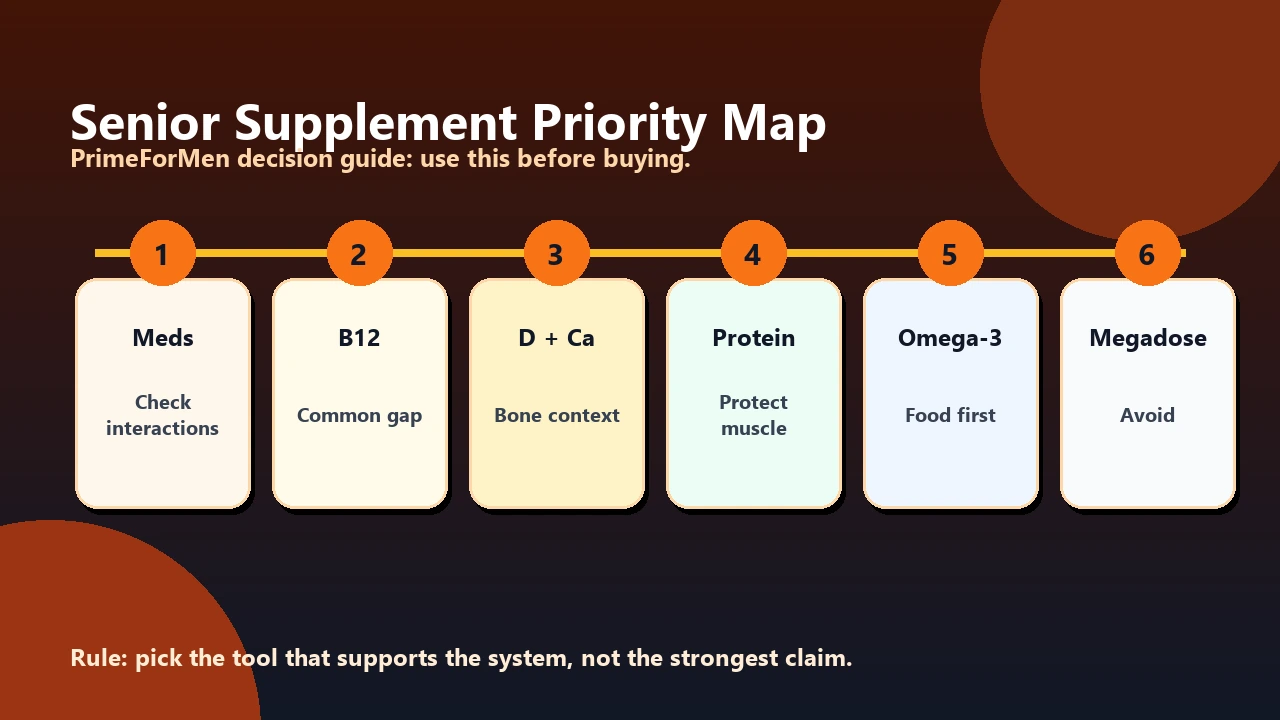
What Older Men Should Check Before Buying Supplements
Bring the full list: prescriptions, aspirin or NSAIDs, sleep aids, antacids, diabetes drugs, blood thinners, and anything taken “only sometimes.”
Low appetite, low meat or dairy intake, vegan patterns, chewing issues, and weight loss can change supplement priorities fast.
Ask which labs are relevant instead of guessing: vitamin D, B12, iron markers, kidney function, A1c, lipids, and others based on history.
Protein, vitamin D status, strength training, balance, and medications that cause dizziness often matter more than exotic ingredients.
Smart Starter Categories to Compare on Amazon
These are not automatic recommendations. They are common categories older men often compare after a clinician has reviewed medications, labs, and diet pattern.
- Use a product only when it matches a clear need.
- Avoid duplicate dosing across multivitamins and single-ingredient products.
CTA disclaimer: older adults should check medication interactions and lab needs with a clinician.
Amazon Product Shortlist
Older adults should check medication interactions and lab needs with a clinician before adding supplements.

50+ Multivitamin
A broad fallback when the goal is covering common gaps rather than chasing one miracle pill.
- Simplifies the baseline supplement routine.
- Useful when diet consistency is imperfect.
- Best when doses are moderate and labels are easy to review.

Vitamin B12
A sensible check when diet pattern, age, or deficiency risk makes B12 relevant.
- Especially relevant for vegan diets and older men.
- Easy to compare by form, dose, and serving frequency.
- Supports deficiency correction, not a direct testosterone shortcut.

Vitamin D3
A practical first-check supplement when sun exposure, labs, or diet suggest a possible gap.
- Relevant to hormone, immune, bone, and general health conversations.
- Easy to compare by dose, form, and third-party testing.
- Works best when guided by diet, lifestyle, and lab context.
*Affiliate disclosure: PrimeForMen may earn from qualifying purchases. Product images are loaded from Amazon media URLs and product availability can change.
* Affiliate note: PrimeForMen may earn a commission from qualifying purchases. Product categories are for comparison, not medical advice.
The Senior Supplement Priority Table
| Priority | Why it matters | What to check first | Common mistake |
|---|---|---|---|
| Medication review | Interactions and overlapping ingredients can turn a simple supplement into a problem. | Pharmacy list, clinician review, kidney function, bleeding risk, diabetes drugs, acid reducers. | Adding capsules without telling the prescriber. |
| Protein intake | Older men often need enough high-quality protein to support training, recovery, and lean mass. | Daily meals, appetite, dental issues, body weight trend, resistance training. | Buying pills while under-eating protein. |
| Vitamin D and calcium | Calcium and vitamin D are tied to bone and muscle function, but calcium supplements are not for everyone. | Dietary calcium, vitamin D lab status, kidney stone history, osteoporosis risk, medications. | Taking high-dose calcium without clinician guidance. |
| Vitamin B12 | B12 supports red blood cell formation and neurological function, and low status can be missed for a long time. | B12 lab, methylmalonic acid when needed, metformin use, acid-reducing drugs, vegan or low animal-food intake. | Assuming fatigue equals a B12 problem without testing. |
| Omega-3 | May help some men close a low fish-intake gap, but it should be reviewed if bleeding risk or blood thinners are involved. | Fish intake, triglycerides, anticoagulant or antiplatelet use, upcoming procedures. | Using high doses because “more is better.” |
Protein Comes Before Most Pills
If an older man is losing strength, eating smaller meals, or recovering slowly from training, the first check is often protein intake. A protein powder can be useful, but it is not magic. It is a convenient food tool when regular meals fall short.
- Look at breakfast first; many older men under-eat protein early in the day.
- Spread protein across meals instead of saving most of it for dinner.
- Use resistance training to give the body a reason to use that protein.
- Review kidney disease or fluid restrictions with a clinician before pushing protein higher.
For a practical meal-and-training lens, see our guide to protein timing for men over 40 and our breakdown of best protein powders.
Vitamin D, Calcium, and Bone Health: Do Not Guess the Dose
Vitamin D helps the body absorb calcium, and calcium is part of strong bone structure. NIAMS explains the bone-health role of calcium and vitamin D, but the practical move is still individualized: check intake, blood status where appropriate, and risk factors before supplementing.
Good questions for the appointment
- Do I need a vitamin D blood test before choosing a dose?
- Am I already getting enough calcium from food?
- Do kidney stones, kidney disease, constipation, or heart-risk factors change my plan?
- Should I adjust this if I start osteoporosis medication or a new prescription?
Vitamin B12: The Senior-Specific Blind Spot
B12 is one of the more logical nutrients to check in older men, especially with low animal-food intake, digestive issues, or certain medications. The NIH Office of Dietary Supplements notes that vitamin B12 status and medication interactions can matter, including gastric acid inhibitors and metformin.
That does not mean every tired man needs high-dose B12. It means B12 belongs on the review list when symptoms, diet, or medications make it plausible. For hormone-specific context, read does vitamin B12 affect testosterone?
Vegan, Low-Meat, or Low-Appetite Patterns Need a Different Lens
A man who eats fish, dairy, eggs, and meat regularly has a different risk profile than a man who is vegan, mostly plant-based, or simply eating less than he used to. The stack should follow the pattern.
- Vegan men should pay close attention to B12 and overall protein quality.
- Low dairy intake may shift attention to calcium-rich foods or fortified options.
- Low fish intake may make omega-3 status worth discussing.
- Low appetite can make meal structure more important than another capsule.
For the plant-based version of this discussion, use our vegan supplements guide.
Knowledge Gap: The Missing Step in Most Senior Supplement Lists
Most lists skip the interaction review. That is a problem because older men are more likely to use prescriptions, acid reducers, diabetes drugs, blood pressure medication, sleep aids, or blood thinners.
- A “natural” supplement can still affect bleeding risk, sedation, blood sugar, blood pressure, or lab interpretation.
- A multivitamin can duplicate vitamin D, calcium, zinc, magnesium, or B vitamins already taken elsewhere.
- A single lab result can change the plan from “buy this” to “do not supplement this without follow-up.”
Need-vs-Interaction Risk Meter
Select what applies. This is an educational sorting tool, not a diagnosis or dosing instruction.
Moderate review priority: compare needs against medications and recent labs before buying.
Practical Doctor-Review Checklist
Take this list to a primary-care visit, pharmacist consult, or dietitian appointment.
- Bring every bottle, including sleep aids, antacids, powders, gummies, and “as needed” products.
- Ask which labs matter for your situation instead of ordering random panels.
- Ask whether kidney function changes protein, magnesium, calcium, potassium, or vitamin dosing.
- Ask whether B12 should be checked if you use metformin or long-term acid-reducing medication.
- Ask whether vitamin D status, calcium intake, fall risk, or bone density changes your plan.
- Ask whether omega-3 is appropriate if you use blood thinners, have surgery planned, or bruise easily.
- Write down the exact dose, timing, stop criteria, and follow-up date for anything you add.
Where Immune Support Fits
Immune support for seniors is mostly about fundamentals: adequate protein, enough sleep, vaccines when appropriate, medical follow-up, and correcting real deficiencies. High-dose zinc, megadose vitamin C, or complex blends should not be treated as insurance. Use our immune support supplements guide if that is the specific goal.
Bottom Line
The best supplements for seniors are the ones that solve a verified problem with the least risk. For many older men, the correct first move is not a bigger stack. It is a medication review, protein check, targeted labs, and a clear plan for vitamin D, calcium, B12, omega-3, or a multivitamin only when the case is strong.
Frequently Asked Questions About Supplements for Seniors
What supplement should most older men check first?
There is no universal first supplement. Most older men should first check medications, diet quality, protein intake, and targeted labs. B12, vitamin D, calcium intake, and protein are common review points.
Is a 50+ multivitamin enough?
Sometimes it is a reasonable low-dose backstop for poor diet variety, but it will not fix low protein, medication interactions, low vitamin D status, B12 deficiency, or an undiagnosed medical issue.
Should seniors take calcium and vitamin D together?
They are often discussed together for bone health, but calcium needs depend heavily on food intake and medical history. Vitamin D dosing should also follow status, risk factors, and clinician guidance.
Can vitamin B12 improve energy in older men?
B12 can matter when status is low or absorption is impaired. In men with adequate B12 status, it should not be treated as a guaranteed energy booster.
Are omega-3 supplements safe for older men?
They can be appropriate for some men with low fish intake, but older adults should review bleeding risk, blood thinners, surgery timing, and dose with a clinician or pharmacist.