

Safety-first immune support supplement guide: useful nutrient gaps, overhyped stacks, and what men should check before buying.
- Supplements do not guarantee disease prevention or treatment; avoid products that make those claims.
- Vitamin D, zinc, and vitamin C have plausible immune-function roles, but the best case is usually correcting insufficiency or shortfall.
- More is not better: high doses can cause side effects, interact with medications, or create new nutrient imbalances.
Bottom line If a product promises more than targeted nutritional support, step back.

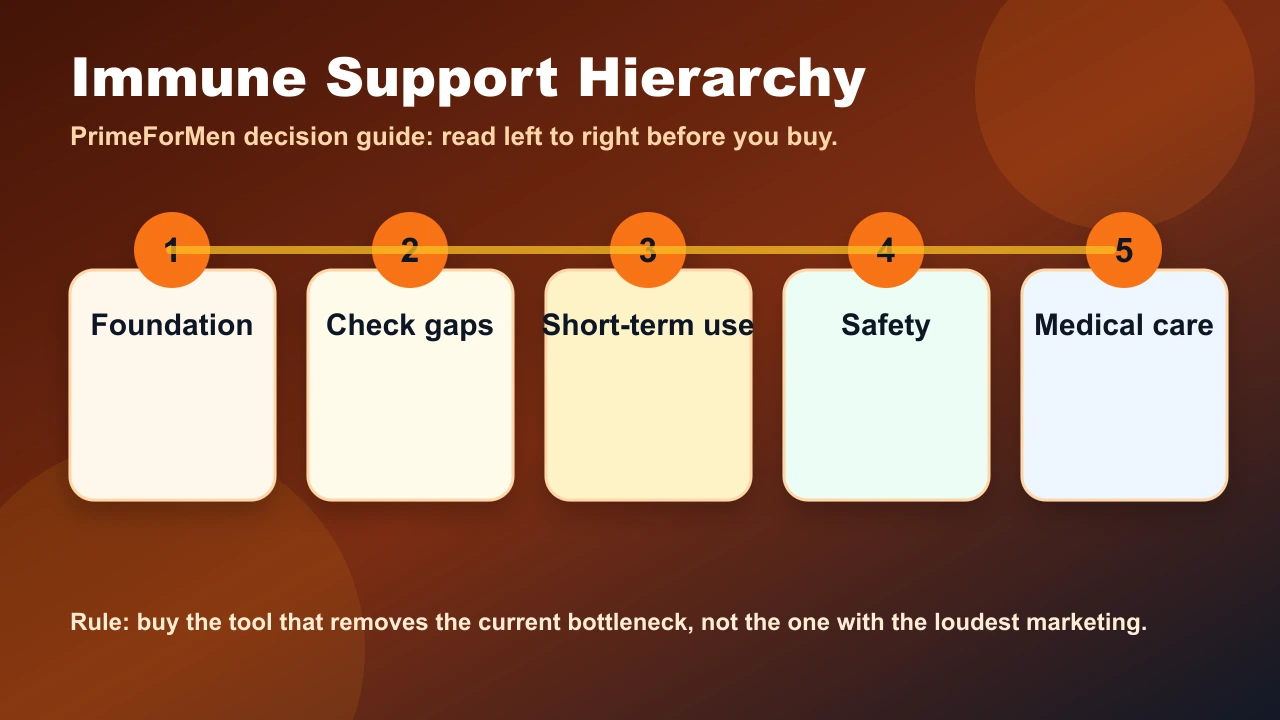
Immune support supplements can help most when they correct a real nutrition gap, not when they promise to shield you from illness. The safer frame is simple: food, sleep, vaccines when appropriate, hygiene, training recovery, and medical care sit at the base. Supplements are a narrow support layer for nutrients such as vitamin D, zinc, and vitamin C when intake, blood work, or lifestyle context suggests a need.
Quick Summary: Immune support supplements
- Supplements do not guarantee disease prevention or treatment; avoid products that make those claims.
- Vitamin D, zinc, and vitamin C have plausible immune-function roles, but the best case is usually correcting insufficiency or shortfall.
- More is not better: high doses can cause side effects, interact with medications, or create new nutrient imbalances.
- Skip mega-dose stacks, proprietary immune blends, and products built around fear-based claims.
- Use supplements as part of a basic health system, not as a substitute for sleep, diet quality, vaccination guidance, or medical care.
The Prime Perspective
Most men do not need a complicated immune stack. They need fewer gaps: enough protein and micronutrient-dense food, consistent sleep, manageable alcohol intake, regular training that does not crush recovery, and a supplement plan that does not pretend to be medicine.
If you want a broader starting point, our supplement recommendations page explains how we separate practical basics from hype. For daily coverage, a sensible men’s multivitamin may be a better fit than stacking several isolated nutrients without knowing your intake.
What Actually Counts as Immune Support?
Immune support is not the same as treating infections, preventing every cold, or making your body invincible. A responsible supplement claim should be narrower: this nutrient plays a role in normal immune function, and supplementation may help when intake or status is low.
That distinction matters because the immune system is not one switch. It depends on barriers such as skin and mucosa, immune cells, inflammation signaling, gut health, protein status, micronutrients, sleep, stress physiology, and overall health. A capsule can support one piece of that system, but it cannot replace the system.
| Supplement | Best evidence-based use | Safety-first caution |
|---|---|---|
| Vitamin D3 | Most relevant when sun exposure is low, dietary intake is low, or blood work suggests low vitamin D status. | High intake can raise calcium levels and cause harm. Do not mega-dose without a clinician. |
| Zinc | Most relevant when zinc intake is low or short-term use is being considered within labeled limits. | Too much zinc can cause nausea and copper deficiency and may interfere with some medications. |
| Vitamin C | Most relevant when fruit and vegetable intake is low or training stress is high and diet quality is inconsistent. | Very high intakes can cause GI upset and may be inappropriate for some kidney-stone-prone men. |
| Herbal immune blends | Usually less predictable because dose, extract quality, interactions, and evidence vary widely. | Higher interaction risk, especially with autoimmune conditions, anticoagulants, immunosuppressants, or surgery. |
Evidence-Strength Meter
This meter ranks the practical case for common immune-support categories. It is not a disease-prevention score.
The Three Nutrients Worth Considering First
Vitamin D has roles in immune function and inflammation signaling, but the practical move is not blind mega-dosing. The NIH Office of Dietary Supplements notes vitamin D’s role in immune function and also lists upper-limit and medication considerations in its vitamin D fact sheet.
Zinc supports normal immune function, but higher dose does not mean better support. The NIH ODS zinc fact sheet is clear on tolerable upper intake, side effects, and interactions.
Vitamin C helps normal immune function and antioxidant protection. It makes the most sense when diet quality is poor, fruit and vegetable intake is low, or training stress is paired with inconsistent recovery.
Targeted Basics, Not an Immune Stack
These three categories fit the safety-first version of immune support: targeted nutrients with understandable roles, not fear-based cure language.
- Choose single-ingredient products so dose and tolerance are easier to track.
- Stay near label directions unless a clinician gives a different plan.
- Stop and reassess if side effects, new medications, or unusual symptoms show up.
Amazon Product Shortlist
These are practical product starting points, not medical or performance guarantees. Use the images, sizing, labels, reviews, and return policy to compare the real item before buying.

Vitamin D3 Supplement
A practical first-check supplement when sun exposure, labs, or diet suggest a possible gap.
- Relevant to hormone, immune, bone, and general health conversations.
- Easy to compare by dose, form, and third-party testing.
- Works best when guided by diet, lifestyle, and lab context.

Zinc Supplement
Most useful when intake is low or a real nutrient gap is suspected.
- Connects to testosterone-support discussions without promising a boost.
- Easy to compare by dose and form.
- Best used conservatively rather than stacking megadoses.

Vitamin C Supplement
A practical buying option for the vitamin c supplement use case in this article.
- Matches the article's specific vitamin c supplement recommendation.
- Gives readers a concrete product page and image to compare.
- Worth checking for size, dose, fit, reviews, and return policy before buying.
*Affiliate disclosure: PrimeForMen may earn from qualifying purchases. Product images are loaded from Amazon media URLs and product availability can change.
*As an Amazon Associate, PrimeForMen may earn from qualifying purchases. Product links are educational starting points, not medical recommendations.
What to Skip
If a label combines high vitamin D, high zinc, high vitamin C, herbs, stimulants, and vague proprietary blends, you lose control of dose and interactions.
Any supplement marketed as a way to prevent or treat infections should raise the burden of proof. That is a medical claim, not ordinary wellness copy.
Chronic high zinc can lower copper status. If your multivitamin already contains zinc, count that before adding more.
The Gap Most Immune Supplement Guides Miss
They rank ingredients without asking whether the reader is deficient, over-supplementing, or taking medications. That is the safety gap. The same supplement can be reasonable for one man and unnecessary or risky for another.
For example, vitamin D may deserve more attention if you work indoors, live far from the equator, cover most skin outdoors, or have lab-confirmed low status. Zinc may deserve more caution if you already use a high-dose multivitamin. Vitamin C may be boring but useful if your diet has almost no produce. Context changes the answer.
A Safer Decision Framework
- Start with the base: protein, colorful plants, sleep, alcohol moderation, regular movement, and recovery from training.
- Look for likely gaps: low sun exposure, low produce intake, restrictive dieting, low appetite, or limited food variety.
- Choose one change at a time: introduce one supplement, track tolerance, and avoid stacking products that repeat the same nutrient.
- Respect medical context: kidney disease, autoimmune disease, pregnancy planning with a partner, anticoagulants, immunosuppressants, antibiotics, and surgery all change the risk conversation.
- Use evidence standards: our editorial policy explains why supplement claims need stronger scrutiny than marketing copy usually provides.
What to Do This Week
1. Audit your current stack. Write down every supplement and check repeated nutrients, especially vitamin D, zinc, and vitamin C.
2. Fix the food floor. Add two produce servings per day before assuming you need more pills. If broader nutrient coverage is the issue, compare that against a basic multivitamin for men rather than building a loose stack.
3. Use labs where they matter. Vitamin D status can be checked with blood work. That is more useful than guessing for months.
4. Keep hormone claims separate. If a product blends immune support with testosterone language, read carefully. Our guide to vitamin D and testosterone explains why deficiency correction and hormone boosting are not the same claim.
Conclusion
The best immune support supplement plan is usually modest: correct real gaps, avoid mega-dose stacks, and keep medical claims out of your shopping cart. Vitamin D3, zinc, and vitamin C can be reasonable tools when the context fits, but they are not replacements for sleep, diet quality, vaccination guidance, or professional care when symptoms are severe or persistent.
If a product promises more than targeted nutritional support, step back. For a broader look at claims that sound stronger than the evidence, see our breakdown of ingredients that boost testosterone and apply the same skepticism here.
Next Step
If you want a cleaner supplement plan beyond immune support, start with the PrimeForMen supplement recommendations hub. It is the better next step when you want evidence, fit, safety, and product categories in one place.
Medical Disclaimer: This article is for educational purposes only and does not diagnose, prevent, treat, or cure any disease. Talk with a qualified healthcare professional before using supplements if you have a medical condition, take medication, have persistent symptoms, or are considering high-dose nutrients.
Affiliate Disclosure: PrimeForMen may earn a commission from qualifying purchases through affiliate links. This does not change the editorial standard: supplements are included only when they fit the evidence, safety, and reader-use case.
Frequently Asked Questions About Immune Support Supplements
Do immune support supplements prevent colds or flu?
No supplement should be treated as a guaranteed way to prevent colds, flu, or other infections. Some nutrients support normal immune function, especially when intake is low, but prevention and treatment claims require a much higher medical standard.
Is vitamin D the best immune supplement?
Vitamin D is one of the more rational first checks because low status is common in some groups and vitamin D has immune-function roles. The safest approach is to use diet, sun exposure context, and blood work rather than blind high dosing.
How much zinc is too much?
The risk rises when zinc from several products stacks up or when high doses are used for long periods. Too much zinc can cause side effects and interfere with copper status, so count all sources and stay conservative unless a clinician advises otherwise.
Should I take vitamin C every day?
Daily vitamin C can be reasonable if your diet is low in fruits and vegetables, but it is not a substitute for a better food pattern. High doses often add more GI risk than practical benefit.
Are herbal immune blends worth it?
Usually not as a first step. Herbal blends vary in dose, extract quality, evidence, and interaction risk. For most men, correcting basic nutrient gaps is clearer and safer than using a multi-herb immune formula.