
Compare jump ropes by type, sizing, surface, safety, beginner progression, and premium gear picks for repeatable conditioning.
- Choose the rope by job: rhythm, conditioning, footwork, travel, or weighted intervals.
- Match rope length, surface, and weekly volume to your calves, Achilles, ankles, and skill level.
- Start with short repeatable sets before chasing speed, double-unders, or weighted ropes.
Bottom line A good jump rope should make conditioning easier to repeat, not punish your joints for buying the wrong rope or doing too much too soon.
Jump ropes are one of the cheapest cardio tools you can buy, but the right choice depends on your skill, surface, space, calves, ankles, and training goal. Beginners often need feedback more than speed. Conditioning users need short repeatable intervals. Men over 40 need progression that respects Achilles and calf tolerance. Buy the rope that supports the session you will actually repeat.
Quick Summary: Jump ropes
- Do not buy by speed alone. Buy by job: rhythm, conditioning, footwork, travel, or weighted intervals.
- Most beginners should start with feedback, adjustability, and short sets before chasing double-unders.
- Surface matters. Rough concrete can increase cable wear, noise, and lower-leg stress.
- Progression should be judged the next morning: calves, ankles, feet, and Achilles response decide the next step.
- The best setup is usually one rope, one surface solution, and one pacing tool you will actually use.
The Prime Perspective
A jump rope is not magic cardio. It is a small conditioning tool that rewards rhythm, repeatability, and restraint. The mistake is buying the fastest rope, then using it on the wrong surface with too much volume.
Think of the rope as a training filter. If it makes your warm-up cleaner, your footwork sharper, or your travel workout easier to repeat, it is doing its job. If it creates sore calves, irritated ankles, or skipped sessions, the setup is wrong.
Best simple setup
- Adjustable rope or beaded rope for timing.
- Mat or smooth surface for indoor work.
- Short intervals before long workouts.
Jump Rope Buyer Scorecard: What Actually Matters
Score a jump rope by use case, length, surface, handle feel, feedback, impact tolerance, and travel fit. A rope that is fast but constantly trips you is not better. A rope that feels simple, quiet, and repeatable will usually create more cardio than a premium rope you avoid.
| Criterion | Weight | Why it matters |
|---|---|---|
| Use-case fit | 25% | Footwork, conditioning, warm-ups, and travel sessions need different rope behavior. |
| Length / adjustability | 20% | Wrong length ruins rhythm, posture, and trip rate before fitness is the issue. |
| Surface compatibility | 15% | Concrete, carpet, mats, and gym floors change cable wear, noise, and impact. |
| Handle comfort / bearings | 15% | Good handles reduce wrist fatigue and make cadence easier to control. |
| Rope feedback | 10% | Beginners often need feel and timing feedback more than raw speed. |
| Impact tolerance | 10% | Calves, Achilles, ankles, knees, and feet must tolerate the contacts. |
| Travel / storage | 5% | A small tool wins only if it actually comes with you. |
Speed Rope vs Beaded Rope vs Weighted Rope
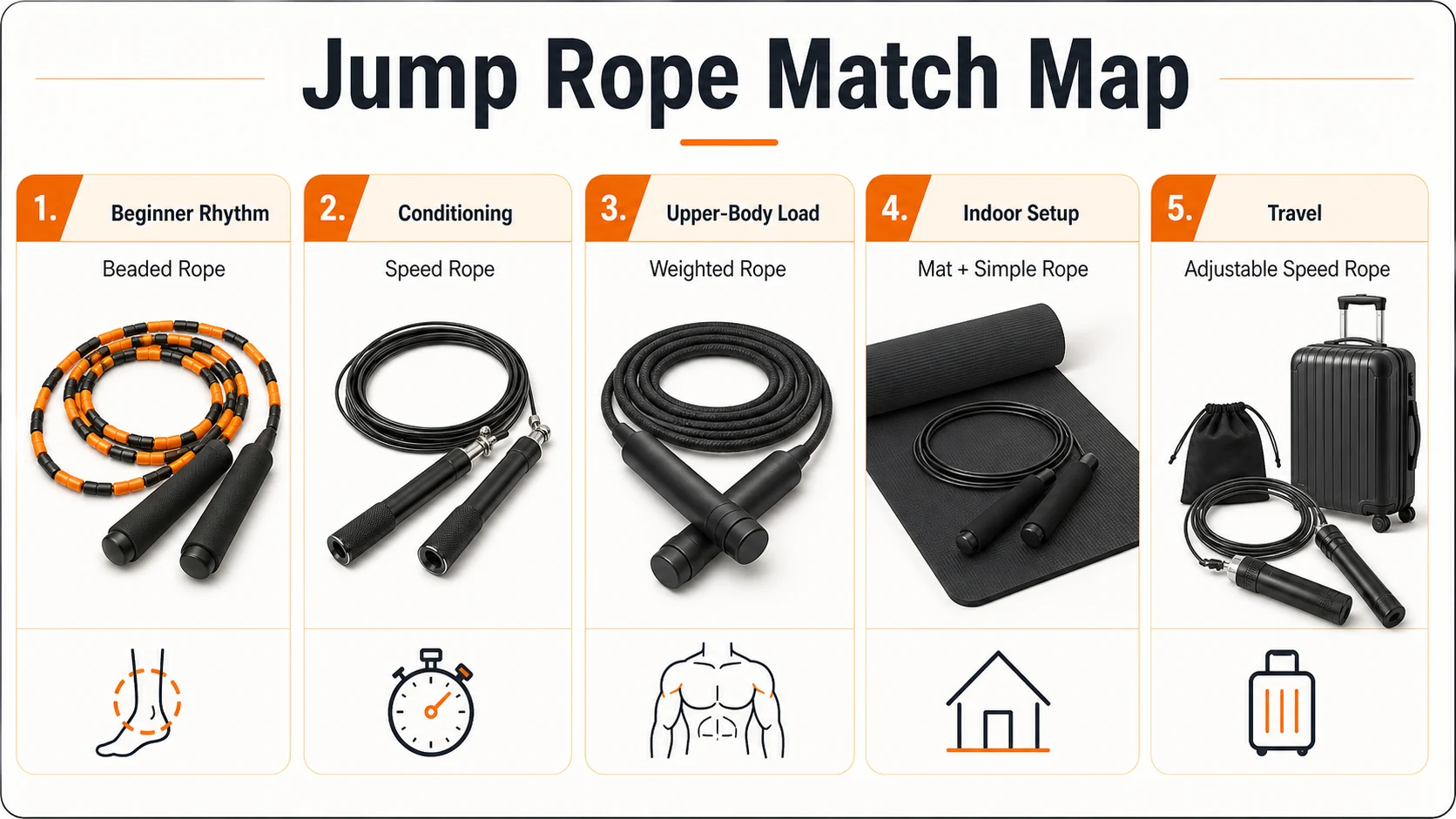
A speed rope is not automatically the best rope. Beginners often need feedback more than speed. A beaded rope can teach rhythm. A PVC rope can be the cheapest useful start. A weighted rope adds upper-body demand, but it should come after basic timing. A cable rope is fast, but rough concrete can destroy it quickly.
| Rope type | Best for | Upside | Tradeoff | PrimeForMen verdict |
|---|---|---|---|---|
| Basic PVC / licorice rope | Low-cost cardio start | Simple, light, cheap | Less feedback | Good first test |
| Beaded rope | Beginners and timing | Clear rhythm feedback | Not very fast | Best learning rope for many men |
| Speed rope / cable rope | Intervals, cadence, travel | Fast and efficient | Less forgiving | Use after basic timing |
| Weighted rope | Slower resistance feel | More upper-body demand | Shoulders and grip fatigue faster | Later tool, not beginner-first |
| Ropeless rope | Tiny spaces or fear of tripping | Indoor-friendly | Less skill transfer | Fallback, not main recommendation |
How to Size a Jump Rope
Rope length is not a minor detail. A rope that is too long drags and gets noisy. A rope that is too short forces bad posture and trips. Buy adjustable first, then shorten only when timing and posture are stable.
Beginner check
Stand on the middle of the rope. Handles near chest or armpit height are a practical starting point.
Too long
The rope slaps far in front, drags, gets loud, and slows your timing.
Too short
You lift the knees, shrug the shoulders, duck the head, or trip repeatedly.
Surface Matters: Mat, Floor, Concrete and Noise
Surface is not an accessory detail. It changes impact, noise, rope wear, and rhythm. Rough concrete can destroy cables and irritate joints. A mat can protect floors, reduce wear, and create a clear training zone, but it must be large enough to keep your landing consistent.
| Surface | Recommendation | Main issue |
|---|---|---|
| Concrete | Avoid as the default or use a mat | Cable wear, impact, noise |
| Wood / gym floor | Good if clear and allowed | Floor marks possible |
| Rubber mat | Strong home setup | Must be stable and large enough |
| Carpet | Usually poor | Too much friction and rope catch |
| Apartment floor | Use mat and short intervals | Noise and vibration |
| Grass | Usually skip it | Uneven footing and rope drag |
Calf, Achilles and Ankle Safety
Jump rope fitness is limited first by tissue tolerance, not lungs. Your heart may be ready for more before your calves, Achilles, and ankles are. Start with short intervals, count contacts, use a forgiving surface, and judge progress by how you feel the next morning.
The American Academy of Orthopaedic Surgeons notes that Achilles problems are often linked to repetitive stress and doing too much too quickly. That is the exact trap a motivated jump-rope beginner can fall into.
Reduce volume
If calves, ankles, or feet feel worse the next morning, cut contacts before adding speed or tricks.
Change surface
If the rope is loud, harsh, or chewing up the cable, fix the ground before blaming your fitness.
Stop signs
Sharp pain, swelling, numbness, chest symptoms, dizziness, or a sudden pop need professional evaluation.
4-Week Beginner Jump Rope Plan
The first month is not about double-unders. It is about rhythm, landing quality, and tissue tolerance. Add time before speed, speed before tricks, and tricks before weighted ropes. If the next morning feels worse, the plan progressed too fast.
| Week | Goal | Session | Rule |
|---|---|---|---|
| Week 1 | Learn rhythm | 6-8 x 20 sec jump / 40 sec rest, 2-3x/week | Stop before form breaks |
| Week 2 | Tolerate contacts | 8-10 x 20-30 sec jump / 30-40 sec rest | Keep landings quiet |
| Week 3 | Add duration | 8-10 x 30 sec jump / 30 sec rest | No tricks yet |
| Week 4 | Check consistency | 10 x 30 sec or 6 x 45 sec | Progress only if next day feels fine |
Jump Rope for Men Over 40
For men over 40, jump rope works best as short conditioning and coordination practice, not as daily punishment. Use a good surface, short intervals, enough recovery, and a rope that matches your current timing. Weighted ropes and double-unders should wait until basic rhythm and tissue tolerance are stable.
The CDC adult activity guidelines frame weekly activity around a mix of aerobic work and muscle-strengthening. A rope can support the aerobic side, but it should not replace strength training, recovery, or lower-impact cardio options when your joints need them.
Use it for
Short finishers, coordination, travel workouts, and low-equipment cardio.
Do not use it for
Daily max-effort punishment, sudden HIIT volume, or ignoring next-day tendon feedback.
Pair it with
recovery habits, mobility work, and strength training.
Premium Jump Rope Setup by Buyer Situation
These are direct product CTAs, not random accessories. The useful setup is usually one rope, one surface solution, and one pacing tool that matches how you train.
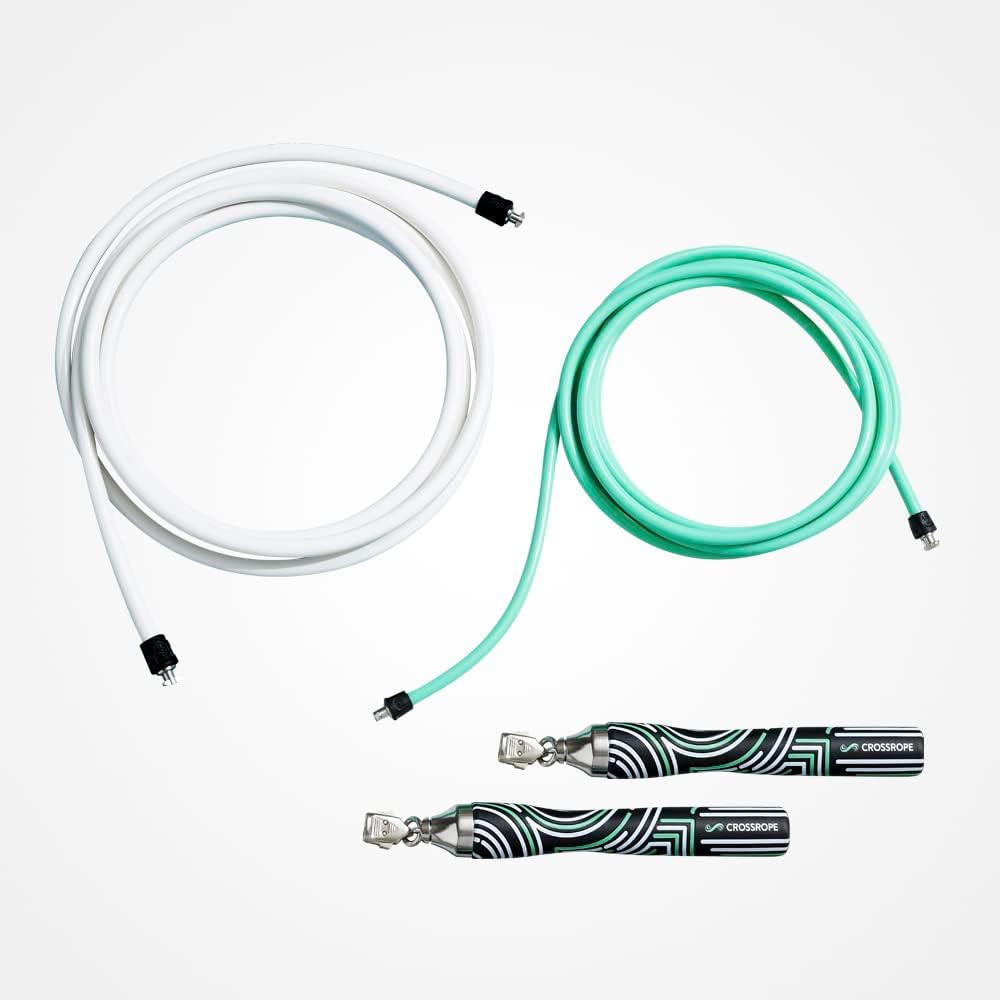
Crossrope Get Lean Set
Best for men who want a premium, repeatable conditioning setup with light weighted feedback.
- Two rope weights make progression easier than guessing with one cable.
- Good fit for short conditioning blocks, travel workouts, and skill practice.
- Premium handles and interchangeable ropes reduce the need to rebuy later.

Elite Jumps Bullet COMP Speed Rope
Best for clean speed work, double-under practice, and faster conditioning once timing is stable.
- A true speed-rope choice for cadence, fast wrists, and advanced intervals.
- Better after basic rhythm is reliable; not the most forgiving beginner rope.
- Works well with a mat or smooth gym surface to protect the cable.

Rx Smart Gear Black Ops Rope
Best for fixed-size feel, boxing-style rhythm, HIIT, and men who want a more controlled cable.
- Good feedback for footwork, alternate-foot steps, and controlled conditioning.
- Fixed sizing rewards a correct fit instead of endless adjustment fiddling.
- A strong option when you care more about rhythm than cheap rope cost.
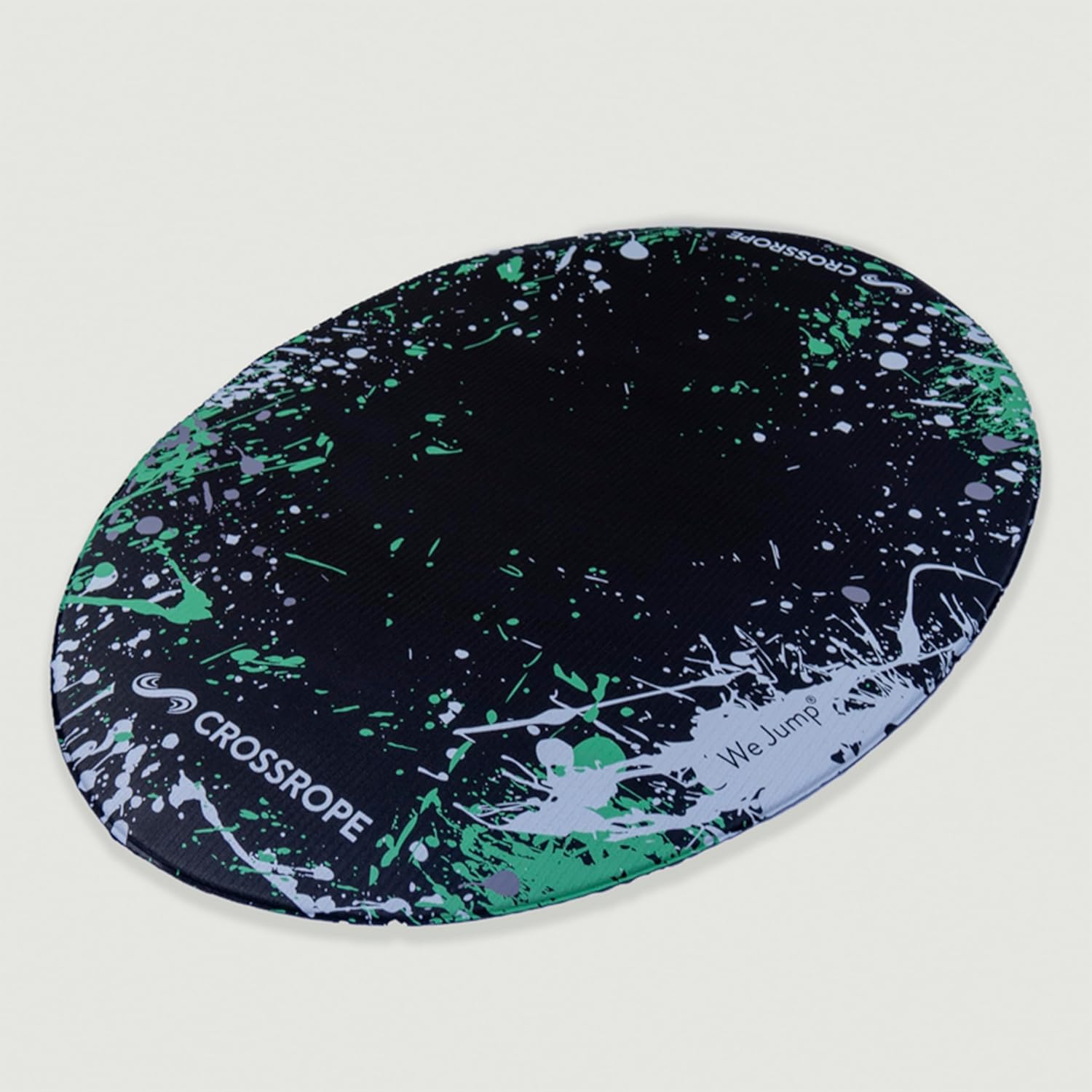
Crossrope Jump Rope Mat
Best for indoor sessions, apartment-friendly practice, floor protection, and reducing cable wear.
- Creates a defined landing zone so foot placement stays consistent.
- Helps protect floors and cables when concrete or rough surfaces are the alternative.
- Useful for men who quit rope sessions because noise or surface feel is annoying.

Polar H10 Heart Rate Chest Strap
Best for men who overcook intervals and need pacing feedback instead of another harder workout.
- Useful for keeping finishers short instead of turning every session into max effort.
- More stable for interval work than relying on guesswork or motivation.
- Pairs well with jump rope, home cardio, running, cycling, and strength circuits.
* As an Amazon Associate, PrimeForMen earns from qualifying purchases. Product availability and pricing can change on Amazon.
Jump Rope Workouts by Goal
A jump rope workout should match the goal. Beginners need rhythm. Lifters need short finishers. Travelers need simple circuits. Footwork users need skill blocks. Fat-loss-focused men need repeatable conditioning that does not wreck strength training or recovery.
Beginner rhythm
Warm up 3-5 minutes. Do 6-10 rounds of 20 seconds jumping and 40 seconds rest.
Conditioning finisher
After strength training, use 8-12 rounds of 30 seconds easy jump and 30 seconds rest.
Footwork block
Alternate basic bounce, boxer step, alternate-foot step, and lateral step for short clean sets.
Travel circuit
Combine 60 seconds rope, push-ups, squats, plank, and rest for 3-5 rounds.
Easy aerobic option
Use 30-45 seconds easy rope or step-through work with 30-60 seconds walking rest.
Beyond the rope
Use agility ladder drills when you want footwork without as many repeated jumps.
How to Track Progress Without Overdoing Impact
Track the metric that changes behavior. Time works for beginners. Clean contacts help rhythm. Heart rate can help men who turn every interval into an all-out test. Cadence matters only after posture and landings are stable.
| Metric | Use it when | Do not chase it when |
|---|---|---|
| Work time | You are learning consistency | Technique breaks after 20 seconds |
| Contacts / skips | You want objective lower-leg volume | You ignore next-day soreness |
| Cadence | You already land quietly | You trip because the rope is too short or long |
| Heart rate | You need pacing discipline | You treat every session as a test |
What most buyer guides miss
Most jump-rope guides rank ropes by speed, price, or brand. The missing question is whether the setup fits your surface, lower-leg tolerance, training week, and reason for using the rope. A cheaper rope that you use three times per week beats a premium rope that punishes your calves once and disappears into a drawer.
Common Buying Mistakes
Buying a speed rope too soon
Speed is useful only after rhythm is reliable. Beginners need feedback first.
Ignoring the surface
Concrete and rough asphalt can ruin cables and make the session feel harsher than needed.
Starting too heavy
Weighted ropes can be useful, but not when basic timing and shoulder tolerance are not ready.
Skipping recovery
Calves and Achilles may need more time than your lungs. Respect the next-day check.
Using rope as the whole plan
Rope work supports cardio workouts, but it does not replace strength, mobility, or nutrition.
Buying data you ignore
A tracker or strap helps only if it changes pacing, recovery, or session length.
When to Stop, Regress or Switch Cardio Tools
Jump rope is optional cardio. If it repeatedly irritates your calves, Achilles, feet, knees, or ankles, switch the tool instead of forcing the identity. Use home cardio options, cycling, incline walking, rowing, or low-impact intervals while you build capacity.
If you want a broader equipment comparison, see our fitness gear and equipment guide and the home gym equipment hub.
Conclusion
The best jump rope is not the fastest rope. It is the rope you can size correctly, use on the right surface, and progress without turning conditioning into a lower-leg problem.
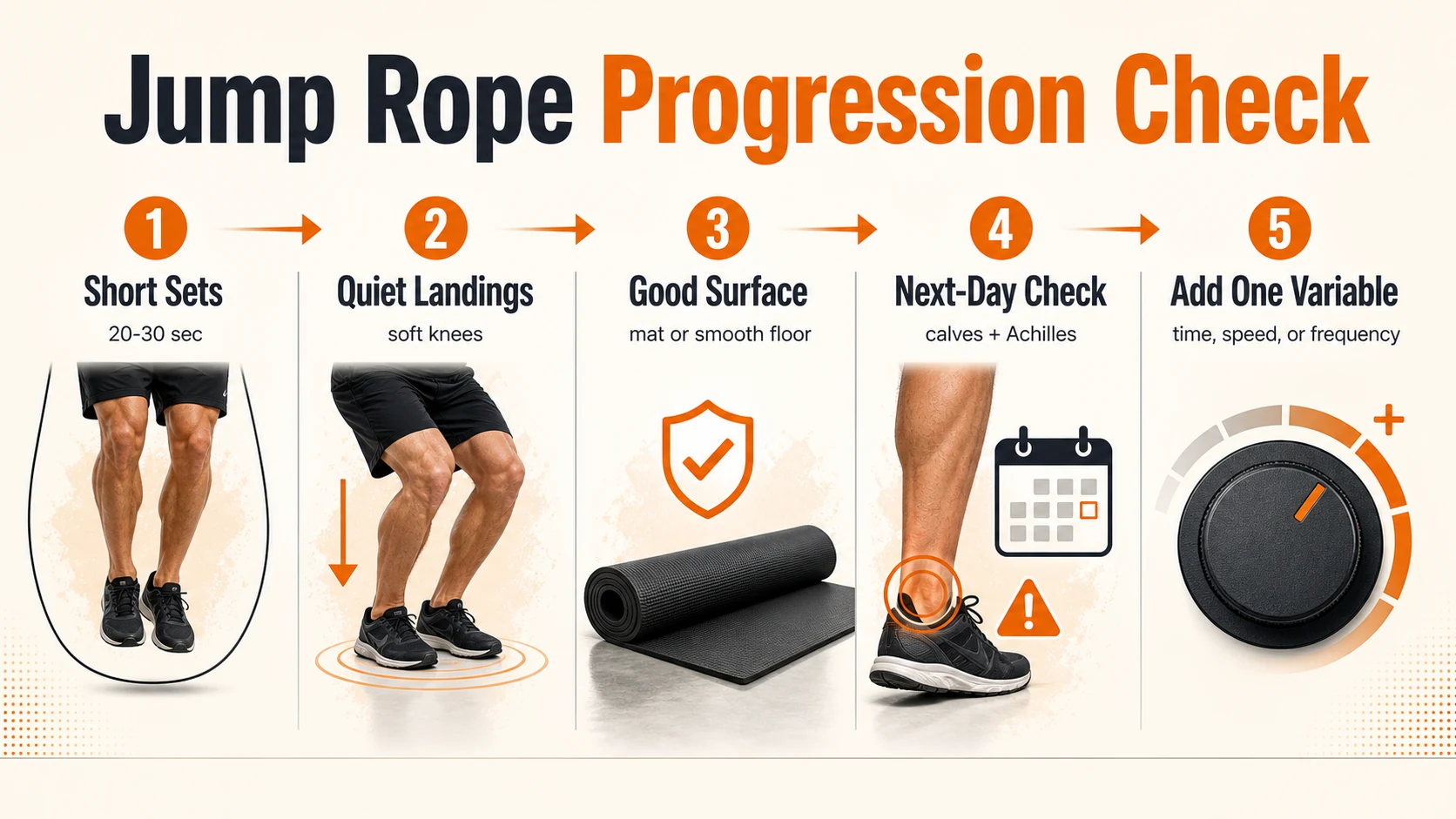
Start with one simple setup. Practice short sets. Keep landings quiet. Check how calves and Achilles feel the next morning. Then add one variable at a time: more time, more speed, more frequency, or a more advanced rope.
Medical Disclaimer
This article is educational fitness content, not medical advice. Stop training and consult a qualified professional if you have sharp pain, swelling, numbness, chest symptoms, dizziness, a sudden pop, or persistent Achilles, ankle, knee, or foot pain.
Affiliate Disclosure
PrimeForMen may earn a commission from qualifying Amazon purchases. Recommendations are based on use-case fit, article relevance, and practical training value, not on guaranteed outcomes.
FAQ
What is the best jump rope for beginners?
Most beginners should start with an adjustable PVC rope or a beaded rope. The best first rope gives feedback, fits your height, and lets you practice short sets without chasing speed.
Is a beaded rope better than a speed rope for beginners?
Often, yes. A beaded rope is slower and gives clearer feedback, which can make rhythm easier. A speed rope is better after timing is stable.
Should men buy a weighted jump rope?
A weighted rope can be useful later, but it is not the best first choice for most beginners. Build timing and lower-leg tolerance before adding more load.
How long should my jump rope be?
A simple starting point is to stand on the middle of the rope and bring the handles toward the chest or armpit area. Then adjust based on posture, trip rate, and rope drag.
Can I jump rope on concrete?
You can, but concrete is a poor default. It can increase rope wear, noise, and impact. A mat or smoother surface is usually a better long-term setup.
How often should beginners jump rope?
Two or three short sessions per week is enough at first. The next-day calf, ankle, and Achilles response matters more than forcing daily sessions.
Is jump rope good for men over 40?
It can be, if the dose is smart. Use short intervals, a forgiving surface, and enough recovery. The goal is repeatable conditioning, not proving toughness every day.
Is jump rope better than running?
It depends on the goal. Jump rope is portable and skill-based, while running is simpler for longer aerobic sessions. Both need gradual progression and recovery.
Do double-unders matter?
No. Double-unders are an advanced skill, not a requirement for conditioning. Most men get more value from quiet landings, steady rhythm, and repeatable intervals.
Sources: ACE Fitness on jump rope benefits, CDC adult physical activity guidelines, AAOS Achilles tendinitis overview.