

Compare food, protein powder and creatine after 50. Calculate label servings, see a worked protein-gap example and keep safety questions separate.
- Protein powder and creatine have different jobs.
- Read protein grams separately from powder weight.
- Clinical needs and exact product labels change the decision.
Bottom line Check a few ordinary food days against an appropriate target, then identify the exact job and label of any product you consider.

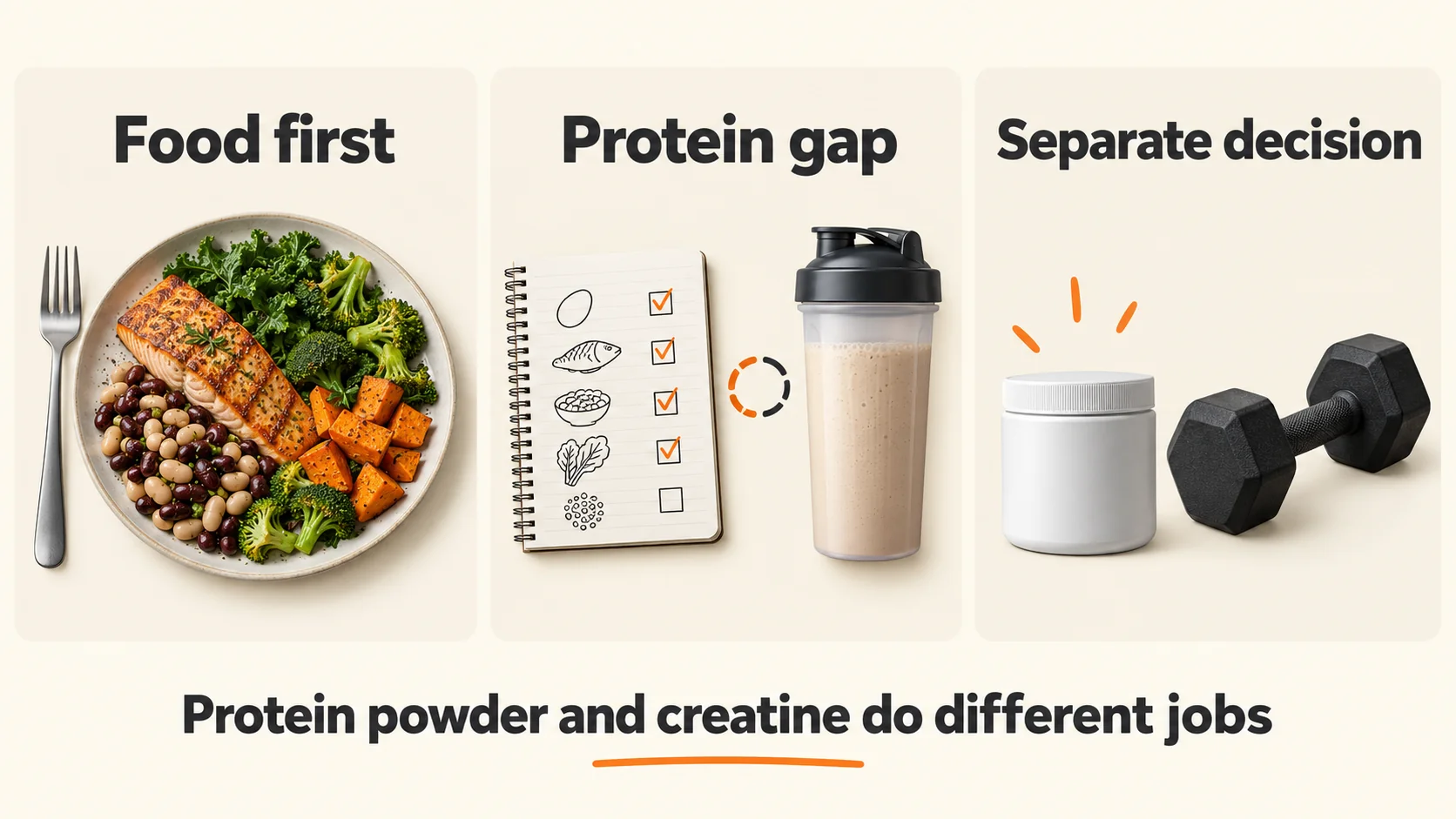
Creatine and protein after 50 have different jobs. Protein provides amino acids; creatine helps support rapid energy recycling during repeated intense efforts. Protein powder can be convenient when food intake falls short of an appropriate target. Creatine is an optional training-support choice. You do not automatically need both because you have passed a particular birthday.
Review your current routine and ordinary food intake alongside your health needs. This guide shows how to read serving labels, calculate a protein gap and keep the creatine decision separate. It does not diagnose a deficiency or prescribe a supplement dose for your medical circumstances.
Quick Summary: Creatine and Protein After 50
- Food contributes protein; powder is one way to cover convenience or an intake gap.
- Grams of powder and grams of protein are different numbers.
- Creatine monohydrate has a substantial exercise evidence base, including older-adult trials.
- Benefits in groups do not guarantee extra growth for an individual or prove a combined stack is necessary.
- Kidney concerns, medication, dietary restrictions and adverse symptoms need professional guidance.
The Prime Perspective
Before buying a tub, write down the problem it would solve. Missing lunch is a meal-planning problem. A shortfall in protein may justify a food change or convenient powder. Wanting support for a consistent resistance-training routine is a separate reason to consider creatine. One problem does not prove you have the other.
Use the fitness system for men over 50 to connect training, conditioning and recovery. The muscle-building guide explains how to interpret performance and body-weight observations without calling them measured muscle growth.
Training, food protein, powder and creatine
| Input | Useful role | Important limit |
|---|---|---|
| Resistance training | Repeated muscle work provides an adaptation stimulus. | The routine must fit current abilities; supplements do not establish suitability. |
| Protein foods | Provide amino acids alongside other nutrients. | Portions, dietary pattern and clinical needs affect intake. |
| Protein powder | Provides a convenient, countable protein serving. | No unique requirement to drink a shake if food already meets the need. |
| Creatine monohydrate | Can support repeated high-intensity exercise and adaptations with training. | It does not count as food protein or replace meals, training or medical care. |
Keep the language on the label straight. A tub may contain 33 g of powder per serving but 24 g of protein. Adding 5 g of creatine does not turn that into 29 g of protein. A scoop is a volume measure associated with a particular product, not a universal gram weight.
What research in older adults actually tells us
A 2017 meta-analysis of creatine during resistance training combined 22 studies with 721 men and women. Mean ages across studies ranged from 57 to 70; training generally occurred two or three days weekly over 7 to 52 weeks. Pooled lean-tissue and strength outcomes favored creatine. Different protocols and populations limit how directly that result applies to your routine, and lean tissue is not identical to newly built muscle.
Evidence for taking creatine and protein together is more specific than the marketing suggests. In a 14-week randomized exploratory trial in older people with frailty, participants received whey plus creatine or whey alone while completing supervised exercise. The study did not find between-group improvements in body composition or muscle function from adding creatine. This small trial does not settle every combined-use question, but it prevents a claim that the pair always outperforms adequate protein and training.
For protein, a 2018 review of 49 resistance-training studies found additional benefits from protein supplementation in healthy adults. Its 1,863 participants were not a trial exclusively in men over 50. Responses depended on factors including age and training status. Do not convert a pooled average or estimated intake breakpoint into a precise personal requirement.
Choose a protein target before calculating a gap
The Stanford Lifestyle Medicine overview discusses roughly 1.2 to 1.6 g/kg/day for adults 50+ alongside resistance exercise. That is an orientation, not a prescription for every body size, activity pattern or medical condition. Your clinician or dietitian may recommend a different target, especially with kidney disease, a restricted diet, poor appetite or unintended weight loss.
Our existing protein calculator explains its assumptions and translates them into a daily range. The label helper below deliberately does not create another target. Enter a target you have chosen using an appropriate source, then enter reasonably complete food records.
Collect several ordinary days, including a training day and a day with your usual schedule difficulties. Use actual package labels or a consistent food database, and count drinks and snacks. Record raw versus cooked weights where relevant. Do not make a precise-looking total from portions you have not estimated at all.
An illustrative food day and a 24 g gap
This fictional food record illustrates the calculation; it is not a prescribed menu. Breakfast, lunch and dinner totals are assumed from that person’s complete food entries. One snack uses a checked manufacturer label to show why the exact product and portion matter.
| Entry | Basis | Protein in this example |
|---|---|---|
| Breakfast: eggs, toast and fruit | Assumed total from the fictional food record; not a claim for unspecified portions | 21 g |
| Lunch: chicken, rice and vegetables | Assumed complete meal-record total | 30 g |
| Dinner: beans, grain and vegetables | Assumed complete meal-record total | 30 g |
| Snack: FAGE Total Plain 5% yogurt | 170 g serving in the checked US multi-serving label | 15 g |
| Total | 21 + 30 + 30 + 15 | 96 g |
The checked FAGE label lists 15 g protein per 170 g portion for that format. A separate 150 g container lists 14 g; other fat levels and flavors differ. This is a label-reading example, not a requirement to eat that yogurt.
If the fictional agreed target is 120 g, the arithmetic is 120 − 96 = 24 g. An additional food portion can close it. Alternatively, the checked NOW unflavored pea protein label lists 24 g protein in 33 g powder, so one label serving would add 24 g. This calculation describes quantities, not the best nutritional choice for every reader.
If the target is already met, more powder is not required by this arithmetic. If you were missing a whole meal, a shake alone may still leave too little energy, fiber or dietary variety. When appetite makes eating difficult, ask for individualized help rather than repeatedly replacing meals with supplements.
Products for defined needs
These are optional examples: one plain creatine, one dairy-free protein powder and one tool for ordinary food portions. They are not a required stack. The pea listing is a large seven-pound tub; confirm tolerance and storage before committing to that size. We have not independently tested these products.
* As an Amazon Associate, PrimeForMen earns from qualifying purchases.
Best for: For a separate creatine routine you have decided is appropriate. Skip pending professional advice if kidney, medication or clinical concerns apply. Current Amazon listing: Nutricost Micronized Creatine Monohydrate Powder - 500g (100 Servings) - Pure Unflavored - 5g Per Serving - Non-GMO, Gluten Free Best for: For a dairy-free protein gap when this formula and large pack fit. Skip if food already covers intake or you have not checked tolerance. Current Amazon listing: NOW Sports, Pea Protein 24 g, Mixes Easily, Unflavored Powder, 7 lbs Best for: For checking ordinary food portions in grams. Skip if you already have one or weighing food conflicts with your care plan. Current Amazon listing: Etekcity Food Kitchen Scale, Digital Grams and Ounces, 11lb * As an Amazon Associate, PrimeForMen earns from qualifying purchases.Recommended Products
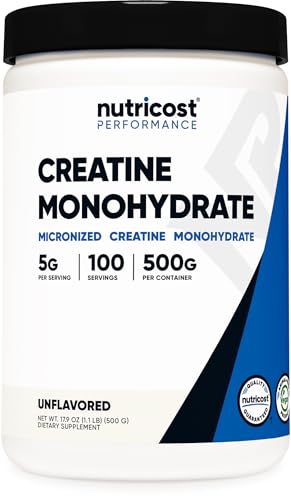
Nutricost plain creatine monohydrate, 500 g
View on Amazon

NOW Sports unflavored pea protein, 7 lb
View on Amazon

Etekcity digital kitchen scale
View on Amazon
Count protein, not the weight of the scoop
The worked example compares an assumed 120 g target with a 96 g food record. A checked 33 g powder serving supplies 24 g protein. Creatine remains a separate choice and contributes no protein grams to this total.
Compare a food record with a protein label
Enter your chosen target and an ordinary food total, then compare a powder amount. This calculates entered quantities only. It does not choose a target or tell you how much supplement to take. Input ceilings are technical limits, not safe intake limits.
Use the article worked example and the fillable PDF when the helper is unavailable. Keep the source of your target, units and uncertainty visible. This record does not diagnose symptoms, determine supplement safety or clear exercise.
How to read a protein powder label
- Identify the exact product. Check flavor, tub size, serving weight and label version. A similar name can hide a different formula.
- Find grams of protein per serving. Do not substitute the scoop’s powder weight or a marketing number for that line.
- Check what you plan to use. Two label servings double the listed quantities; half a serving halves them, subject to normal label rounding.
- Read the rest of the label. Energy, sodium, sweeteners, allergens and added ingredients may matter for your dietary needs.
- Count the mixing liquid separately. Milk, soy drink and water do not contribute the same nutrients. Use the drink’s own label and actual volume.
The FDA explains that serving size is a labeling basis, not a recommendation of how much to consume. This is why the helper calculates what you enter rather than issuing a serving instruction.
For the checked pea example, 16.5 g powder is half the 33 g label serving and estimates 12 g protein. A 24 g gap would still have 12 g remaining. Scoops can be inconsistently filled, and nutrient labels are rounded. Decimal output here is arithmetic, not a laboratory measurement.
Whey, plant protein and dietary fit
Whey is milk-derived, so a lower-lactose isolate still does not make it suitable for someone with a milk allergy. A pea or mixed-plant product may fit a dairy-free diet; check the actual ingredients and cross-contact statements. Taste, texture and tolerance vary, and protein concentration differs across formulas.
Compare a product with the need you identified rather than buying the largest tub first. The protein-powder guide covers product formats. New digestive symptoms call for reviewing the product and amount; severe or persistent symptoms need professional advice. Do not interpret swelling, wheezing or breathing difficulty as routine intolerance. Seek urgent help.
Creatine: a separate ingredient and a separate decision
The NIH Office of Dietary Supplements describes benefits mainly for intense efforts repeated with short recoveries. Creatine monohydrate is the most studied form. General study routines commonly use 3 to 5 g daily after an optional loading phase. Those are research and practice patterns, not a personalized order or a special age-50 formula.
Loading is not necessary to make a consistent routine possible. It increases complexity and may increase gastrointestinal discomfort. This guide does not ask you to calculate a loading regimen. Discuss whether creatine is appropriate, then follow your agreed approach and the actual product instructions. The existing creatine guide covers the ingredient in more depth.
Read blend labels carefully. A flavored serving can weigh more than the creatine it contains. The checked plain unflavored Nutricost product lists 5 g creatine monohydrate per serving; flavored or hydration products are different. Do not use a heaped protein scoop to measure creatine or assume an ordinary kitchen scale accurately resolves a tiny amount.
Protein and creatine can be mixed in the same drink when suitable for you, but combining them does not create a unique requirement or prove synergy. Keep the quantities separate in the record. If you change several products at once, symptoms and tolerability are harder to interpret.
Kidney context, tests and product quality
The Mayo Clinic creatine overview describes appropriate use as generally safe for many people and distinguishes healthy-adult evidence from kidney concerns. A healthy-adult study is not reassurance for someone with kidney disease, abnormal tests or a complicated medication regimen. Ask your healthcare team before changing supplements or a prescribed protein intake.
Tell the person ordering or interpreting kidney tests that you take creatine. Mayo Clinic’s creatinine-test guidance notes that creatine can affect creatinine levels and preparation instructions. Do not stop a medicine, change a supplement or dismiss an abnormal test on your own; follow the clinician’s instructions.
Creatine can also change body weight through water-related changes. A heavier scale reading after starting it cannot establish muscle gain, and a short-term fluctuation cannot tell you its cause. Persistent swelling, reduced urination, unusual weakness or other concerning symptoms deserve assessment rather than reassurance from a supplement article.
Independent testing can help address identity, contaminants or prohibited substances, depending on the program. It does not prove that a product is needed or safe for your conditions. Verify the exact product and current certification in the certifier’s directory before relying on a logo. No product in this article is described as universally safe or clinically approved.
Watch a food-focused protein explanation
Mayo Clinic Health System’s “Are you getting too much protein?” explains food choices, changing needs and why additional protein does not replace training. Its general examples are not a personal target or a creatine protocol. Compare the message with your own health and training context before changing intake.
Take the label-check sheet shopping
The eight-field PDF keeps your target source, food record, exact label quantities and creatine question together. Fill it digitally or print it. It is a record for comparison, not a supplement prescription.
Download the fillable protein and creatine label-check sheet
Your next decision
Bring a few ordinary food records to an appropriate target, then decide whether a food change or convenient powder solves the gap. If you want to consider creatine, review that separately with your training and medical context. Keep exact products and amounts visible, and avoid changing several inputs at once.
Conclusion
Creatine and protein after 50 can fit a useful routine without becoming an automatic two-product purchase. Read the serving basis, count food and powder honestly, and keep creatine out of the protein total. Choose a product only when its job and your relevant safety questions are clear.
Return to the fitness and nutrition overview for the connected plan. Our editorial policy explains the separation between study evidence, illustrative examples and affiliate recommendations.
Questions about creatine and protein after 50
Do I need both creatine and protein powder?
No. Powder can address a protein gap or convenience need, while creatine is an optional training-support ingredient. Adequate food intake does not automatically create a need for powder, and using one supplement does not require the other.
Does a 33 g scoop mean 33 g protein?
No. It can mean 33 g of powder. Read the protein line on that exact label. In the checked pea example, 33 g powder supplies 24 g protein; other formulas differ.
Can I put creatine in a protein shake?
They can be mixed when both products and quantities are suitable for you. Count each independently, including any nutrients in the mixing liquid. The combination does not establish a special muscle-building effect or personal safety.
Is a loading phase necessary after 50?
Loading is optional, not an age-based requirement. Common routines and research protocols differ. Discuss suitability and use the agreed routine rather than inventing a loading schedule from a marketing claim.
What should I tell my clinician?
Bring the exact product names, label quantities, actual use, medications, symptoms and any dietary restrictions. Mention creatine before kidney testing because it can affect creatinine interpretation and preparation instructions.