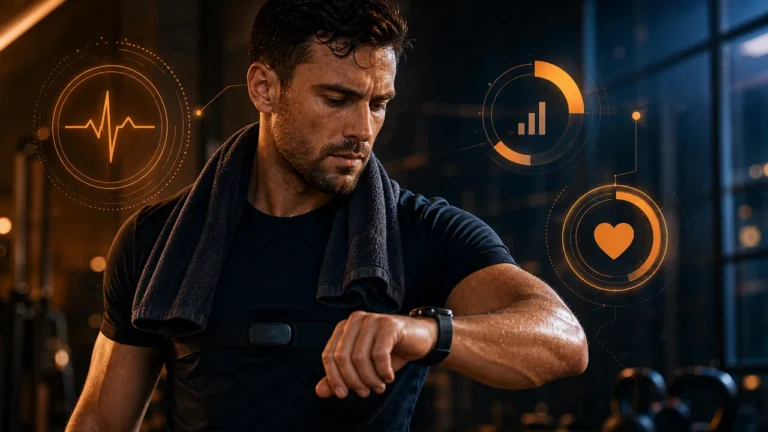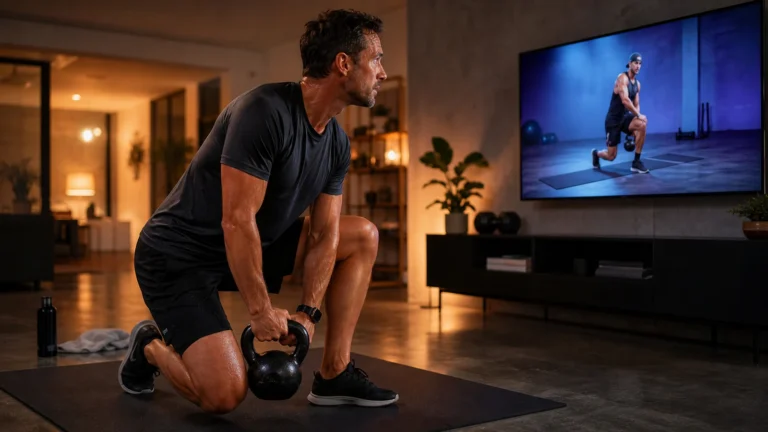
Explore how biohacking for fitness leverages nutrition, technology, and science to optimize workouts, recovery, and overall health.
- Biohacking for fitness should optimize measurable basics first: sleep, training, nutrition, and recovery.
- Wearables help only if you use data to make decisions, not just collect numbers.
- High-return biohacks: sleep regularity, HR-based zone work, creatine strategy, and recovery planning.
Bottom line That is how you build a high-performance system that survives real life.
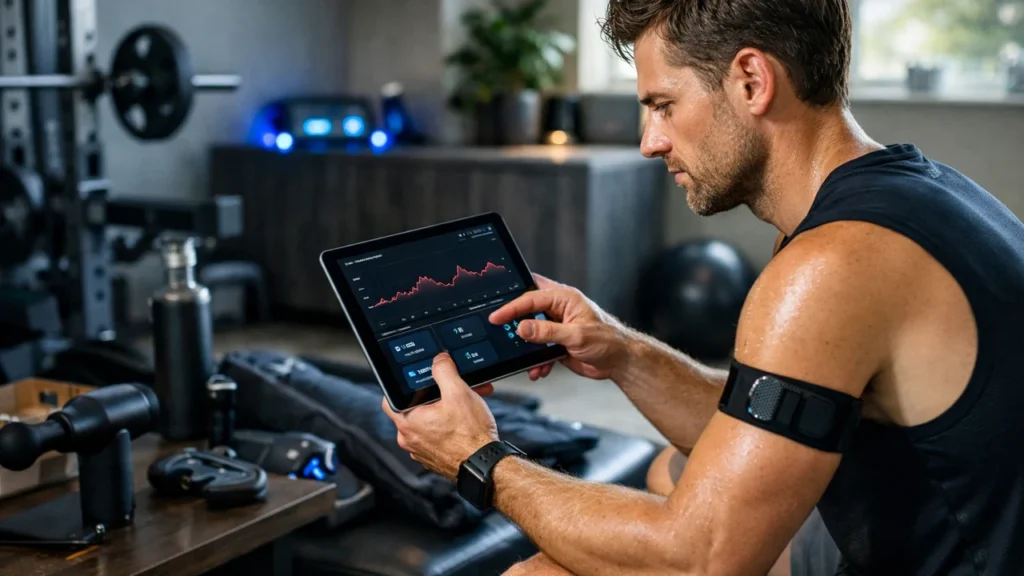
Biohacking for fitness can be useful, but only when you separate real performance levers from social-media noise. The best biohacks are usually boring: sleep timing, training load control, hydration, nutrition timing, and consistent progress tracking.
If you are a man trying to improve body composition, strength, endurance, and recovery, this guide gives you a no-fluff framework: what works, what is overhyped, and how to build a practical system you can sustain.
Quick Summary: Biohacking for fitness
- Biohacking for fitness should optimize measurable basics first: sleep, training, nutrition, and recovery.
- Wearables help only if you use data to make decisions, not just collect numbers.
- High-return biohacks: sleep regularity, HR-based zone work, creatine strategy, and recovery planning.
- Low-return biohacks: expensive protocols without clear progression or measurable outcomes.
- Run a 6-week testing cycle with one change at a time so you can see what actually works.
Upgrade Systems, Not Hype
The strongest fitness biohacks improve consistency and decision quality, not just novelty.
Track metrics that change decisions.
Use one-variable tests for clear outcomes.
Keep protocols realistic for real life.
For complementary guides, see nutritional wearables, meditation for athletes, and hybrid workouts.
The Prime Perspective
Most men fail with biohacking because they chase ten tools at once. The winning approach is fewer variables, stronger routines, and objective progress checks every week.
What Biohacking for Fitness Actually Means
In plain language, biohacking for fitness means using feedback loops to improve training outcomes. You test, measure, and adjust. That is all. No magic, no extreme protocol required.
Useful biohacking categories include:
- Behavioral: sleep schedule, meal timing, screen/light control, training habit design.
- Physiological: resting heart rate trends, HRV direction, recovery markers, bodyweight trends.
- Nutritional: protein timing, hydration strategy, evidence-based supplements.
- Environmental: training temperature, light exposure, workspace movement breaks.
- Technology-enabled: wearables, heart-rate monitors, training analytics apps.
High-ROI vs Low-ROI Biohacks for Men
| Biohack Type | Potential Benefit | Evidence Depth | Cost | PrimeForMen Verdict |
|---|---|---|---|---|
| Sleep consistency + morning light | Better recovery and training readiness | High | Low | Start here first |
| Zone-2 + interval balance | Cardio fitness and work capacity | High | Low | Core performance lever |
| Creatine + structured strength plan | Strength and lean mass support | High | Low | Strong value play |
| Wearable tracking + weekly review | Better decision quality | Moderate to high | Medium | Useful if behavior follows data |
| Expensive novelty recovery devices | Variable | Low to mixed | High | Only after basics are locked |
Evidence Reality Check for Biohacking for Fitness
US guidance supports consistent aerobic activity plus strength training as foundational for long-term health and performance (CDC adult activity guidelines). For nutrition and supplement-related biohacking decisions, national health guidance also emphasizes safety checks, quality, and interaction awareness before use (NCCIH supplement safety guidance).
Translation: the best biohacks are still built on consistent movement and measurable routines.
Amazon.com Picks
Biohacking for Fitness Starter Kit
Why these categories: they improve data quality, hydration reliability, and recovery consistency without overcomplicating your routine.
Fitness Trackers
Useful for trend tracking across sleep, heart rate, and daily movement volume.
- Objective activity trends
- Sleep and recovery visibility
- Better weekly decision-making
Electrolyte Powders
Supports hydration consistency during high-sweat sessions and hard training weeks.
- Improved fluid strategy
- Helps training output
- Simple daily habit layer
Blue Light Glasses
Can support evening wind-down routines when late screen exposure is unavoidable.
- Improved sleep routine compliance
- Low-cost recovery support
- Easy to integrate
* As an Amazon Associate, we earn from qualifying purchases.
The 6-Week Biohacking for Fitness Protocol
This protocol is built to avoid random stacking and make progress measurable.
| Phase | Weeks | Primary Focus | Track This | Decision Rule |
|---|---|---|---|---|
| Baseline | 1-2 | No new tools, just measurement | Sleep duration, resting HR, workout output | Identify weakest variable first |
| Single-hack test | 3-4 | Add one intervention only | Same metrics + perceived recovery | Keep only if trend improves |
| Layering | 5 | Add second high-ROI intervention | Training quality and fatigue score | Remove if recovery drops |
| Consolidation | 6 | Keep only proven changes | Weekly averages vs baseline | Build long-term routine |
Key Metrics That Actually Matter
- Training performance: load, reps, pace, and repeatability.
- Recovery markers: resting heart rate trend, sleep consistency, soreness carryover.
- Body composition trend: weekly weight average plus waist measurement.
- Adherence score: percentage of planned sessions completed.
- Energy and focus: subjective ratings to interpret hard data context.
If a biohack does not improve at least one key metric after a fair test window, it is probably not worth keeping.
Biohacking Mistakes That Waste Time and Money
- Stacking too many protocols: no way to know what works.
- Ignoring sleep: trying to out-supplement poor recovery.
- Buying devices before behavior: data without execution has no value.
- No review cadence: collecting metrics but never adjusting plan.
- Chasing extreme interventions first: high cost, low practical return.
Beginner vs Advanced Biohacking for Fitness
| Level | Priority Stack | Typical Tools | Main Goal |
|---|---|---|---|
| Beginner | Sleep schedule, hydration, simple training structure | Step tracker + basic log | Consistency and baseline fitness |
| Intermediate | Zone planning, supplement timing, weekly reviews | HR monitor + training app | Performance and recovery balance |
| Advanced | Load periodization, deeper recovery analytics | Wearables + structured dashboards | Marginal gains and precision |
Daily Biohacking Routine That Fits a Real Schedule
You do not need a full-day optimization protocol. Most men get better outcomes with a short daily structure that reduces decision fatigue.
- Morning (5-15 min): hydration, light exposure, and movement primer before work stress starts.
- Training window: choose a stable time block and keep pre-session fueling predictable.
- Afternoon reset: 5-minute walk or mobility break to control stress carryover.
- Evening: lower light intensity, reduce late stimulants, and lock a consistent wind-down.
- Night: record one-line training/recovery score so next-day adjustments are easier.
This routine matters because biohacking is mostly execution hygiene. The tools help, but the schedule is what creates consistent adaptation.
To scale this correctly, combine with online personal training, magnesium for testosterone boost, and post-workout supplements.
What Most Guys Miss
The best biohack is not a device. It is a decision loop: measure, adjust, repeat. When that loop is strong, most “advanced” tools become optional, not essential.
Minimalist Biohacking Stack (High Return, Low Complexity)
- Fixed sleep-wake window for at least 5 days/week.
- 3 strength sessions plus 2 zone-2 sessions per week.
- Daily hydration target with electrolytes on hard sessions.
- Protein-forward meal structure and basic supplement consistency.
- 10-minute weekly performance review every Sunday.
This stack beats most expensive biohacking setups because it focuses on leverage, not novelty.
Weekly Biohacking Scorecard (Use This Every Sunday)
| Metric | Target | Your Weekly Data | Status Rule | Next Action |
|---|---|---|---|---|
| Sleep consistency | Within 60 minutes bedtime/wake window | __ / 7 days | Green at 5+ days | Tighten evening screen cutoff |
| Training completion | At least 80% planned sessions | __ / __ sessions | Green at 80%+ | Reduce plan complexity if below |
| Resting HR trend | Stable or improving baseline | Weekly average: __ | Red if rising with fatigue | Deload or improve sleep volume |
| Hydration adherence | Daily target hit 5+ days | __ / 7 days | Green at 5+ days | Pre-fill bottles/electrolyte prep |
| Subjective readiness | Average score 7/10+ | __ / 10 | Red at 5 or below | Cut intervals, prioritize recovery |
Use this scorecard to prevent emotional decision-making. A clear weekly review gives your biohacking system direction and helps you avoid random protocol hopping.
Red Flags: When a Biohack Is Not Worth Continuing
- No measurable improvement after a fair 2-4 week trial.
- Higher stress and lower adherence despite \”good\” tracker data.
- Declining training quality while adding new interventions.
- Sleep disruption from late stimulants or aggressive protocol timing.
- Protocol complexity that you cannot sustain in busy weeks.
If you see two or more red flags, simplify immediately and return to baseline behaviors for one week before retesting.
Your 24-Hour Action Plan
- Step 1: Choose one metric to improve this week (sleep hours, resting HR trend, or workout completion).
- Step 2: Add one high-ROI intervention only and track it for 14 days.
- Step 3: Keep, adjust, or remove based on measurable results, not feeling alone.
Conclusion
Biohacking for fitness works when it strengthens your fundamentals, not when it distracts from them. Use data to support better decisions, run clear test windows, and keep only strategies that improve measurable outcomes.
That is how you build a high-performance system that survives real life.
Frequently Asked Questions About Biohacking for Fitness
What is the best biohacking for fitness strategy for beginners?
Start with sleep consistency, structured training, hydration, and one simple tracking method before adding advanced tools.
Do wearables really improve fitness results?
They can, but only when you use the data to change behavior and training decisions week to week.
How long should I test a biohack before judging it?
Most interventions need at least 2-4 weeks of consistent implementation before you can assess impact reliably.
Is biohacking for fitness expensive?
It does not have to be. The highest-return interventions are often low-cost habits and structured programming.
Can supplements replace core biohacking habits?
No. Supplements can support progress, but sleep, training, nutrition, and recovery habits drive the majority of results.
The information provided in this article is for educational purposes only and is not intended as a substitute for advice from your physician or other health care professional.
PrimeForMen may earn commissions from qualifying purchases when readers use product links. This does not change our editorial standards for evidence, fit, and safety.