

Does magnesium increase testosterone? See what human studies show, who may be low, safe supplement limits, useful forms, interactions, and when to test.
- Most reviewed ‘testosterone boosters,’ including zinc-magnesium approaches, do not reliably raise total testosterone.
- Men age 31 and older need 420 mg of magnesium per day from all sources according to NIH guidance.
- The adult upper limit of 350 mg applies to supplemental magnesium, not magnesium naturally present in food.
Bottom line Treat magnesium as a nutrient with a defined need—not as hormone therapy. Improve intake, review medications and kidney health, and investigate persistent low-testosterone symptoms properly.

Quick Summary: Magnesium For Testosterone
- Small and older studies can explain the claim, but they do not establish a dependable testosterone effect for the general population.
- Nuts, seeds, legumes, whole grains, and leafy greens can raise magnesium intake without supplement-level dosing.
- Supplement labels should state elemental magnesium; the compound weight is not the dose your body receives.
- Diarrhea and cramping are common signs that supplemental intake or form does not suit you.
- Kidney disease and interacting medicines make clinician or pharmacist input especially important.
PrimeForMen Perspective
If energy, libido, strength, or mood has changed, magnesium is only one possible piece. Sleep apnea, medications, calorie restriction, thyroid problems, depression, chronic illness, and true hypogonadism need different decisions.
Magnesium is required for normal health, but supplements have not been shown to reliably increase total testosterone across healthy, magnesium-replete men. The strongest reason to supplement is a documented or plausible intake gap—not a promise of supraphysiologic hormone levels.
Why the Claim Exists—and Why It Is Too Strong
A small older exercise study reported testosterone changes after magnesium supplementation, and an observational study in older men linked magnesium status with anabolic hormones. Those designs can generate a hypothesis, but they cannot show that an over-the-counter dose will raise testosterone for most men.
A 2023 systematic review of 52 testosterone-booster studies included five zinc/magnesium studies and concluded that most proposed boosters failed to increase total testosterone. That higher-level finding should carry more weight than one dramatic small trial.
Start With Magnesium Need, Not a Hormone Claim
| Question | Practical answer | Why it matters |
|---|---|---|
| Daily target | 420 mg/day for men 31+ | Includes food, drinks, and supplements |
| Supplement upper limit | 350 mg/day for adults | Applies to supplements and magnesium medicines, not food |
| Best first step | Estimate food intake | May reveal a correctable pattern without pills |
| Best testosterone step | Symptoms plus repeat morning testing | Avoids diagnosing from fatigue or one result |
The NIH Office of Dietary Supplements magnesium fact sheet lists the recommended intake, supplement upper limit, food sources, adverse effects, and medication interactions. The 350 mg limit does not mean food magnesium becomes unsafe above that amount.
Amazon Product Shortlist
These products represent different delivery formats, not a ranking or a testosterone claim. PrimeForMen has not independently tested them. Verify the current Supplement Facts panel, elemental dose, serving size, and third-party certification before buying.

NatureWise Triple Magnesium Complex
For comparing a capsule that combines glycinate, malate, and citrate after checking elemental magnesium per serving.
- Three labeled magnesium forms in one capsule product.
- Capsule format avoids measuring powder.
- The blend does not establish a testosterone benefit.

BulkSupplements.com Magnesium Glycinate Capsules
For readers who prefer a single named form and can verify serving size against their total supplemental intake.
- Single-form glycinate product.
- Four capsules per labeled serving at the time checked.
- Confirm elemental magnesium and current directions on the listing.

BulkSupplements.com Magnesium Citrate Powder
For a measured powder trial when citrate is appropriate and dose flexibility matters.
- Unflavored powder permits smaller adjustments.
- Citrate can loosen stools in some users.
- Use an accurate scale and follow the current label.
*As an Amazon Associate, PrimeForMen earns from qualifying purchases. Availability and prices can change.
Food-First Ways to Raise Magnesium
| Food pattern | Examples | Easy use |
|---|---|---|
| Seeds and nuts | Pumpkin seeds, almonds, cashews | Add a measured portion to breakfast or a snack |
| Legumes | Black beans, edamame, lentils | Build one lunch around beans |
| Whole grains | Oats, whole-wheat foods, brown rice | Swap one refined grain serving |
| Leafy greens | Spinach and similar greens | Add to eggs, soup, or a side |
| Dairy or fortified foods | Yogurt, selected cereals | Check the label and added sugar |
Why Magnesium Status Is Hard to Read From One Number
Most magnesium is stored in bone and soft tissue, while only a small share circulates in serum. A normal serum result therefore does not always prove that intake and tissue stores are ideal, yet a vague symptom list cannot diagnose deficiency either. Clinicians interpret laboratory findings alongside diet, gastrointestinal losses, alcohol use, kidney function, and medicines that alter magnesium balance.
This uncertainty is another reason not to use a supplement response as a testosterone test. Better sleep or fewer cramps after correcting low intake can matter without proving that testosterone changed. Define the outcome in advance and measure the outcome that actually answers it.
No magnesium form has established superiority for raising testosterone. Choose a form by elemental dose, gastrointestinal tolerance, medication spacing, and cost; the form is secondary to whether supplementation is appropriate at all.
How to Run a Safer Supplement Trial
- Record three representative days of food and identify realistic gaps.
- Check the label for elemental magnesium, not only compound weight.
- Use the lowest practical supplemental dose rather than stacking a multivitamin, sleep blend, and standalone product.
- Take one product consistently and record bowel tolerance, sleep, cramps, and the original target.
- Reassess after two to four weeks; do not escalate because testosterone was never measured.
Safety, Kidney Function, and Medication Spacing
Supplemental magnesium can cause diarrhea, nausea, and cramping. Risk becomes more serious when kidney function is impaired because magnesium clearance may be reduced. The NIH also notes interactions with oral bisphosphonates and tetracycline or quinolone antibiotics, while diuretics and proton-pump inhibitors can alter magnesium status. Ask a pharmacist or clinician for individualized timing.
When Low Testosterone Needs a Real Workup
The Endocrine Society clinical practice guideline recommends diagnosing hypogonadism only when compatible symptoms occur with unequivocally and consistently low testosterone, confirmed with repeat morning fasting measurement. A supplement response, gym performance, or libido fluctuation is not a diagnostic test.
- Discuss persistent changes in libido, erections, unexplained anemia, bone loss, or strength with a clinician.
- Review sleep apnea, medication effects, calorie restriction, alcohol, illness, and thyroid symptoms.
- Do not stop prescribed medicines or start testosterone based on a supplement article.
Connect Magnesium to the Bigger Plan
Use multivitamin guidance to avoid nutrient stacking, compare claims in salt and testosterone, and separate sleep support from hormone claims in melatonin and testosterone. The omega-3 guide and prebiotic guide use the same evidence-first decision standard.
What to Do This Week
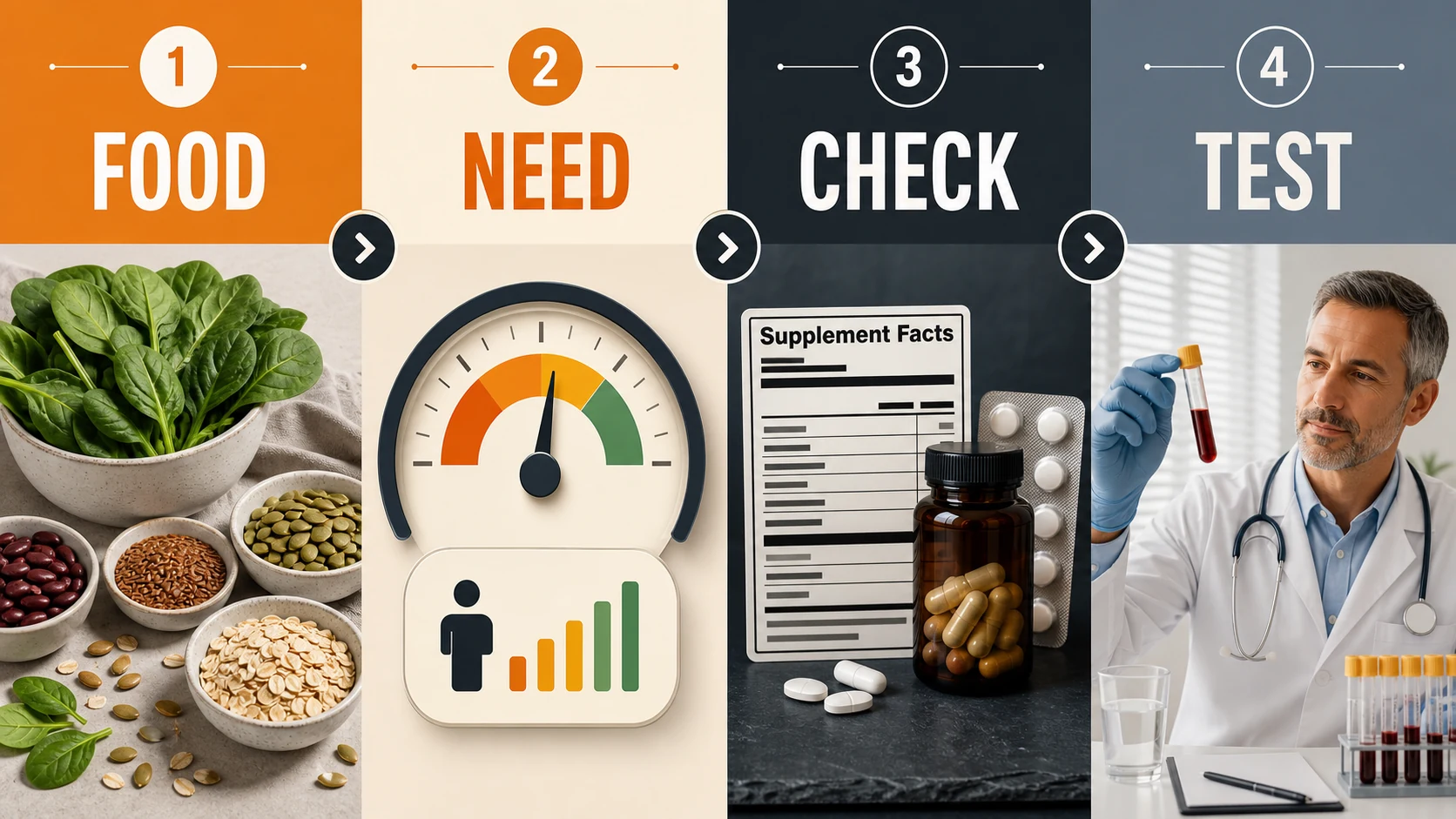
- Estimate magnesium from food for three representative days before buying a high-dose supplement.
- Check the label for elemental magnesium and review kidney disease, antibiotics, bisphosphonates, diuretics, and acid-suppressing medicines.
- If low-testosterone symptoms persist, seek proper morning testing instead of escalating the supplement dose.
Conclusion
Treat magnesium as a nutrient with a defined need—not as hormone therapy. Improve intake, review medications and kidney health, and investigate persistent low-testosterone symptoms properly.
Next Step: Turn the Answer Into a Measured Plan
Use the linked PrimeForMen guides to connect this decision with training, nutrition, and recovery instead of treating one method, mineral, or device as a complete system.
Frequently Asked Questions About Magnesium For Testosterone
Does magnesium increase testosterone?
Not reliably in men who already have adequate magnesium status. Limited studies suggest context may matter, but systematic reviews do not support magnesium as a dependable testosterone booster.
How much magnesium should a man take for testosterone?
There is no evidence-based testosterone dose. NIH lists 420 mg per day as the total requirement for men age 31 and older, while the adult upper limit for supplements and medications is 350 mg per day unless a clinician directs otherwise.
Which magnesium form is best?
Choose by elemental dose, tolerance, medication compatibility, and cost. Glycinate is often selected for tolerance, while citrate can affect bowel movements; neither has proven superiority for raising testosterone.
Can magnesium deficiency lower testosterone?
Deficiency can disrupt normal health, but symptoms are nonspecific and serum magnesium has limitations. Correcting a true deficiency is sensible; assuming every low testosterone result is caused by magnesium is not.
When should testosterone be tested?
When compatible symptoms persist, discuss morning fasting total testosterone testing with a clinician. Diagnosis requires symptoms plus consistently low results confirmed on repeat testing.
This article is educational and does not replace individualized medical advice, diagnosis, or treatment. Discuss persistent symptoms, hormone concerns, cardiovascular risk, digestive problems, medications, or exercise restrictions with a qualified clinician.
Some links are affiliate links. PrimeForMen may earn a commission at no extra cost to you. Product inclusion does not override evidence, fit, or safety.