
Nutrition tool · Men 50+
Calorie & TDEE Calculator for Men Over 50
This calorie calculator for men over 50 estimates resting energy, maintenance calories and a starting intake for your goal. Use the two-week log to check how the estimate fits your routine.
Free, no account required. Updated October 4, 2026 · PrimeForMen Editorial Team
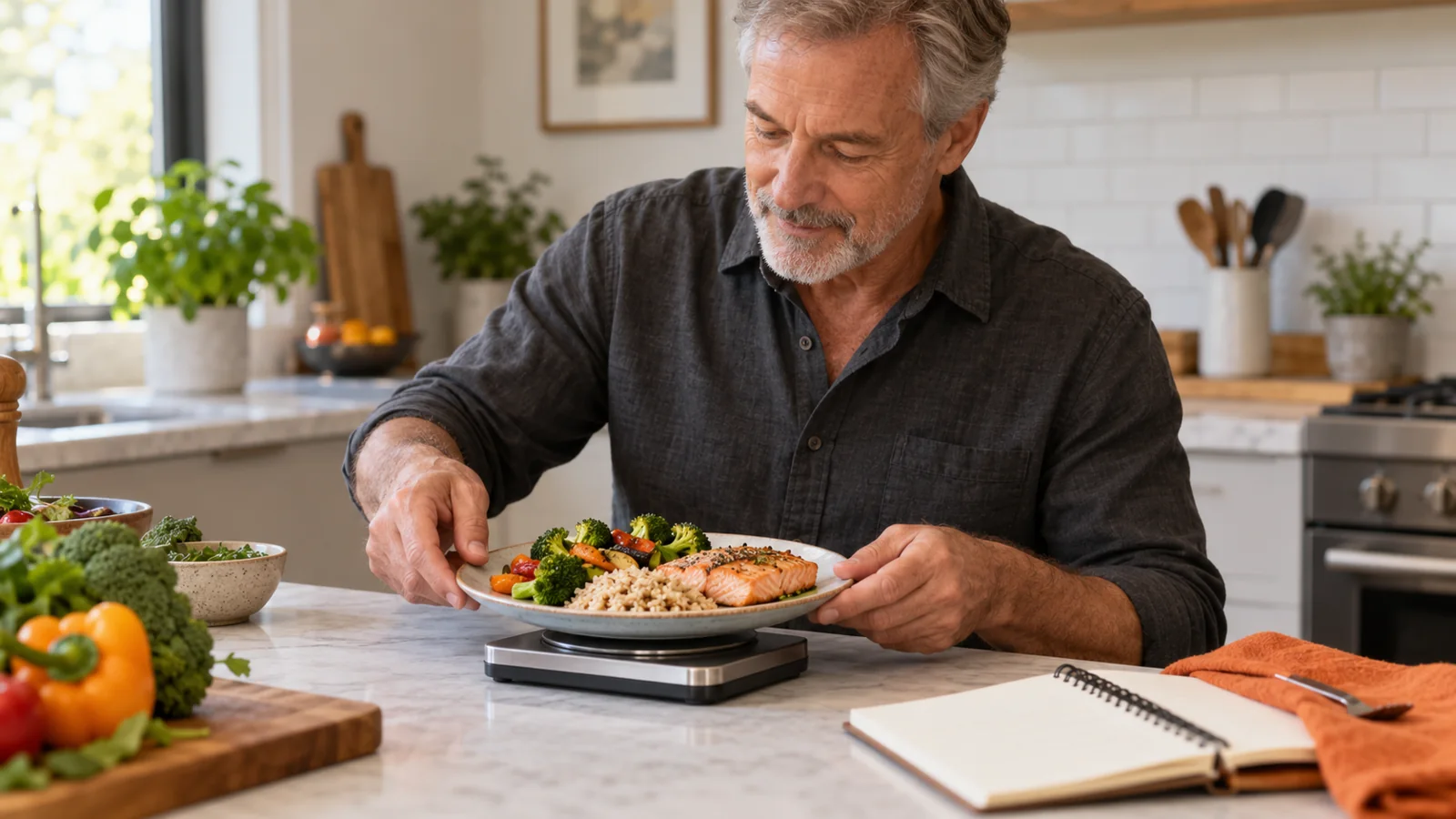
Calculate your daily calorie estimate
Worked example
55 years · 84 kg · 178 cm
With an activity factor of 1.375, estimated resting energy is 1,682.5 kcal/day and maintenance is 2,313.44 kcal/day before rounding. See the method below.
The interactive calculator needs JavaScript. You can still use the formula and worked example below, then record your weights in the printable log.
The Prime Perspective
Use the number as a starting intake
Your calorie target needs to leave room for balanced meals and training. Choose an activity category that describes your whole day, keep a complete food log and review several weeks of results before making repeated adjustments.
For a muscle-building goal, pair the estimate with the protein calculator for men over 50 and our guide to building muscle after 50. A calorie surplus by itself cannot tell you how much weight gain will be muscle.
Unexplained weight loss or gain, frailty, eating-disorder history, diabetes, kidney or liver disease, recent major illness, or a clinician-directed diet need individual guidance. If tracking makes you anxious or leads to restrictive eating, stop using the log and seek support.
Choose activity from your whole day
Three gym visits a week can fit very different lifestyles. Someone who drives to a desk job may move less overall than someone who walks throughout a shift. The factors below are broad calculator conventions. The original Mifflin equation does not validate them for each person.
| Factor | Ordinary-day example | What to check |
|---|---|---|
| 1.2 | Mostly seated with little walking or structured exercise. | Count routine movement, not only exercise. |
| 1.375 | A seated day with some walking and occasional manageable sessions. | A few gym visits do not automatically justify a higher category. |
| 1.55 | Regular movement through the day plus consistent training. | Review the estimate if most non-training hours are seated. |
| 1.725 | Physically active work or substantial activity across most days. | Hard individual workouts alone may not fit this category. |
Exercise is already included in the multiplier. Adding every watch-reported workout calorie on top can count the same activity twice. This calculator does not estimate an exact calorie value for steps or individual workouts.
How the calculation works
The male Mifflin–St Jeor equation estimates resting energy expenditure, often labeled BMR on calculators. It is not a direct measurement. The original study included healthy adults aged 19–78.
Resting kcal/day = 10 × weight (kg) + 6.25 × height (cm) − 5 × age (years) + 5
Maintenance kcal/day = resting estimate × activity factor
We convert pounds to kilograms using lb ÷ 2.2046226218 and inches to centimeters using inches × 2.54. Calculations use unrounded values. Displayed calorie totals round to the nearest 10 kcal.
The goal settings use maintenance, maintenance minus 300 kcal/day, or maintenance plus 200 kcal/day. These are editorial starting adjustments, not individual prescriptions. The displayed range adds 100 kcal on either side for practical planning; it is not the formula’s measured error margin.
The tool withholds an intake range when its lower end is below 1,500 kcal/day. This is an editorial safeguard, not proof that every higher intake is adequate or that 1,500 is right for you.
Worked example: 55 years, 84 kg, 178 cm
10 × 84 + 6.25 × 178 − 5 × 55 + 5 = 1,682.5 kcal/day at rest. At factor 1.375, maintenance is 2,313.4375 kcal/day. With the fat-loss setting, the central estimate is 2,013.4375 kcal/day.
What changes after 50?
This is the general male equation with your actual age, not a separate formula validated specifically for men over 50. It cannot distinguish two men of the same age, height and weight who have different body composition.
A large study of energy expenditure across the lifespan found that expenditure adjusted for body size and composition was broadly stable from about 20 to 60, then declined in older adulthood. Population patterns do not predict an individual’s calorie needs, and they do not support a sudden metabolic drop on your 50th birthday.
If you reduce food intake, retain enough variety and nutrients. The NIDDK guidance for older adults explains nutrient-dense meals, portion awareness and reasons to seek advice about weight changes. Our nutrition and supplements hub helps connect the calorie estimate to food choices.
Check your real routine
Use a 14-day calorie and weight log
If weighing is appropriate for you, use comparable conditions: the same scale, a similar time of day and similar clothing. Record complete daily intake, including drinks, cooking oils and snacks. Weight also responds to water, digestion, sodium and changes in training; the difference between two averages is not necessarily body-fat change.
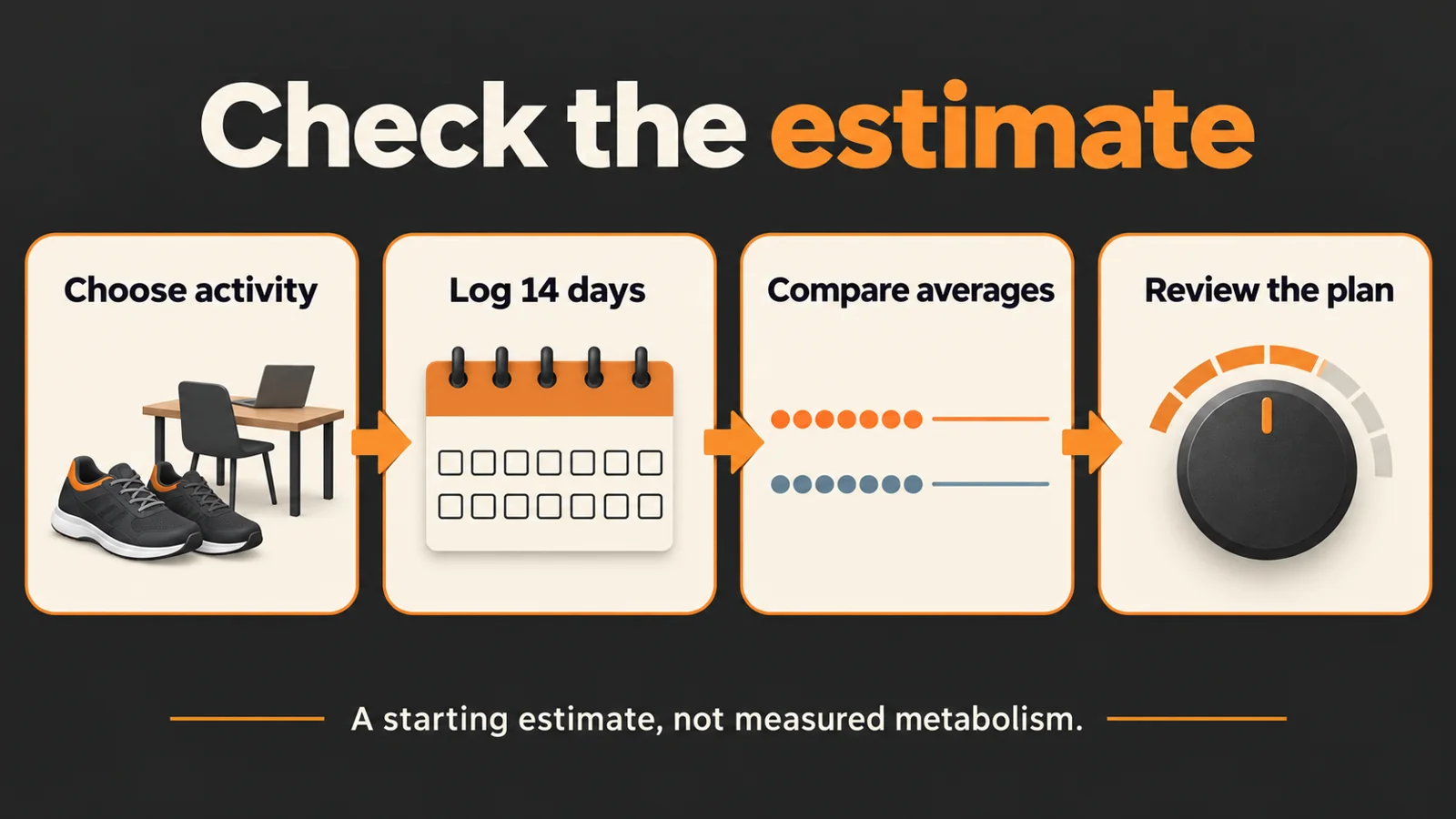
From daily entries to weekly averages
Compare week 1 with week 2
Entries stay in this page’s memory and disappear on reload. The tool does not send these entries to our server or save them in your browser. Standard site analytics and embedded media follow the site’s privacy settings. Download or print before leaving.
Enter at least four weights in each week. Seven per week gives a more complete comparison.
Without JavaScript, use the downloadable worksheet. Add each week’s recorded weights and divide by that week’s entry count. Leave missing days out of the calculation.
The review compares available weights within each seven-day block. A change smaller than 0.25% is labeled roughly steady; a change above 1% prompts a closer review. These are editorial flags for this short log, not clinical thresholds. No calorie-burn value is inferred from weight change, and a partial intake log cannot establish maintenance.
Two weeks is an initial check. If the trend and your goal still disagree over additional weeks, first check food-log completeness and daily movement. Where appropriate, try a small change of about 100–200 kcal/day and review again. Worsening fatigue, low appetite or unexplained changes need individual advice.
Prefer paper?
Keep your starting estimate, fourteen entries and review notes on a two-page worksheet.
Watch: when a longer-term planner helps
NIDDK’s Body Weight Planner video introduces its separate planning tool for a goal weight and timeline. Our calculator gives a simple starting estimate; the NIDDK planner models changing energy needs over time. The video does not validate our activity categories or goal adjustments.
Watch on YouTube · Read about the NIDDK planner
Affiliate disclosure: As an Amazon Associate, PrimeForMen earns from qualifying purchases. The following Amazon.com links are affiliate links.
Use simple tools to make your log consistent
Use equipment you already own if it does the job. These picks support portion weighing, body-weight records and optional waist tracking. Selection is based on specifications and task fit, not hands-on testing.
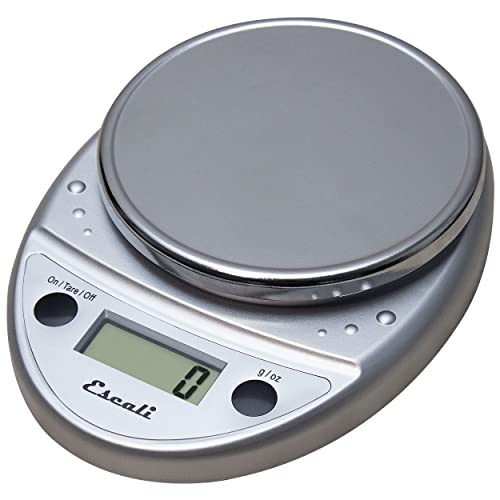
Escali Primo Digital Kitchen Scale
Best for: Recording ingredients by weight when spoonfuls and serving sizes vary.
Useful for foods such as oats, cooking oil and nut butter. Keep your existing kitchen scale if it has gram units and tare.
Current Amazon listing: Escali Primo Digital Food Scale Multi-Functional Kitchen Scale and Baking Scale for Precise Weight Measuring and Portion Control, 8.5 x 6 x 1.5 inches, Chrome
- Tare the empty container before weighing the food.
- Use package nutrition values for the same weighed quantity; cooked and dry weights are not interchangeable.
- Keep the scale dry and check its load limit before using a heavy bowl.
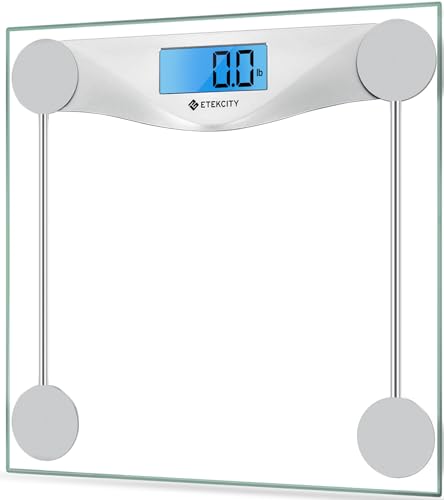
Etekcity Digital Body Weight Scale
Best for: Taking comparable body-weight readings on the same device.
A simple weight display is enough for this tracker. Skip it if your current scale works reliably; you do not need a body-fat estimate or an app.
Current Amazon listing: Etekcity Digital Body Weight Bathroom Scale, 6mm Tempered Glass, 400 lbs
- Use the same hard, level surface for repeated readings.
- Keep timing and clothing similar where practical.
- The listed model has a 400 lb maximum capacity; check the selected listing and choose suitable equipment for your needs.

MyoTape Body Measure Tape
Best for: Adding a consistent waist measurement to your longer-term review.
Useful if a self-measuring tape is easier to handle. A basic flexible tape is sufficient if you can repeat the same method.
Current Amazon listing: MyoTape Body Measure Tape Arms Chest Thighs or Waist Measuring Tape
- Use the same measurement location each time.
- Keep the tape level and snug without compressing the skin.
- Record the measurement as context; this tool does not diagnose health or calculate body fat from it.
* As an Amazon Associate, PrimeForMen earns from qualifying purchases.
Buying equipment does not improve the accuracy of the calorie formula. Check the model, seller, capacity and current availability before ordering.
Your next step
Calculate once with a realistic activity category. Keep meals and training reasonably consistent, record the log where appropriate, then review the averages and how you feel. To plan your training, use the workout plan builder; for food and supplement decisions, start with the nutrition hub.
Questions about calories and TDEE after 50
Is TDEE the same as resting metabolism?
No. Resting energy is the energy used at rest. TDEE includes daily movement, exercise and digestion. The multiplier is a broad way to estimate that total.
Does being over 50 automatically mean I need fewer calories?
Your size, body composition and activity matter. The formula includes age, but it cannot measure those individual differences. Use the result with real trends and clinical advice where needed.
Should I add the calories from my watch?
The activity factor already includes exercise. Adding every workout estimate may double-count it. Changes in your usual activity are a reason to review the category and subsequent trend.
Can this tell me how quickly I will lose fat?
No. A starting deficit is not an exact weight-loss forecast. Water, food-log error, changing activity and adaptation can alter the observed trend.
Is the range a scientifically measured error margin?
No. The 100 kcal either side is planning flexibility. Your true requirement may fall outside the range; the calculator has not measured your metabolism.
When should I calculate again?
Review after a meaningful weight or activity change, or when several weeks of consistent records show a mismatch. Daily scale fluctuations alone are not a reason to keep changing intake.
This page provides educational estimates and editorial planning guidance. It does not diagnose a condition, prescribe a diet or replace a qualified clinician or dietitian. Follow individual advice for medical conditions, medication, frailty, unexplained weight changes or eating-disorder history.
Prepared and reviewed by the PrimeForMen Editorial Team on October 4, 2026. This is an editorial review; we have not conducted a clinical review or personally tested these products. See our editorial policy.