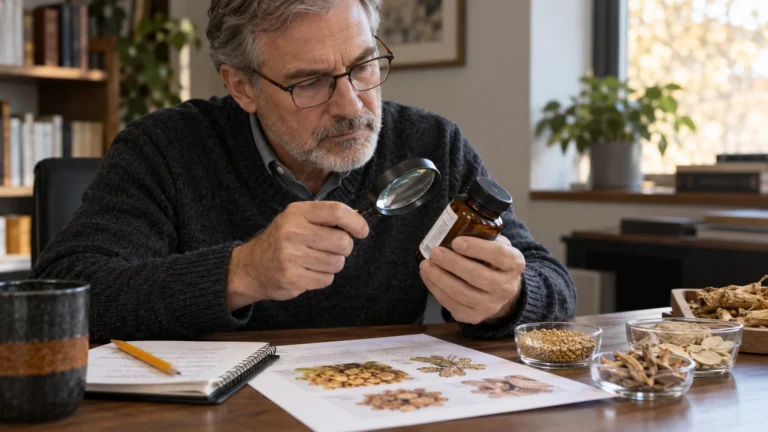

Fenugreek as a testosterone booster explained: possible signals, limits, safety checks, and what men should expect.
- Fenugreek may support sexual well-being or training-related outcomes in some studies, but testosterone results are mixed.
- The most plausible benefit is not "instant T boosting"; it is a modest support role when sleep, nutrition, resistance training, and deficiency gaps are already addressed.
- Men with diabetes medication, blood-thinning medication, hormone-sensitive conditions, or planned surgery should be cautious.
Bottom line For fenugreek as a testosterone booster, the practical rule is simple: Fenugreek may support sexual well-being or training-related outcomes in some studies, but testosterone results are mixed.

Fenugreek as a testosterone booster sounds appealing because it is simple, natural, and widely sold, but the evidence is more nuanced than the marketing. Some men may notice libido, training, or body-composition signals, yet fenugreek should not be treated as a guaranteed fix for low testosterone or a replacement for medical evaluation.
- Fenugreek may support sexual well-being or training-related outcomes in some studies, but testosterone results are mixed.
- The most plausible benefit is not “instant T boosting”; it is a modest support role when sleep, nutrition, resistance training, and deficiency gaps are already addressed.
- Men with diabetes medication, blood-thinning medication, hormone-sensitive conditions, or planned surgery should be cautious.
- Use fenugreek as an ingredient decision, not as proof that a whole supplement stack will work.
Fenugreek belongs in the “possible support” category, not the “proven testosterone reset” category. If you are comparing it with broader ingredients that boost testosterone, the key question is not whether the herb sounds masculine. It is whether the dose, extract type, safety profile, and realistic outcome match your actual problem.
What fenugreek is and why it shows up in testosterone formulas
Fenugreek is an herb used in food and traditional health practices. Modern supplement labels often highlight seed extracts, saponins, protodioscin-like compounds, fiber, and “free testosterone” claims. The public evidence summary from the National Center for Complementary and Integrative Health is a useful reminder: natural does not automatically mean proven, risk-free, or appropriate for every man.
The testosterone angle usually rests on three ideas: fenugreek may influence libido, may interact with metabolism and body composition, and may affect enzymes involved in androgen availability. Those are interesting hypotheses. They are not the same as showing that a supplement reliably corrects clinically low testosterone.
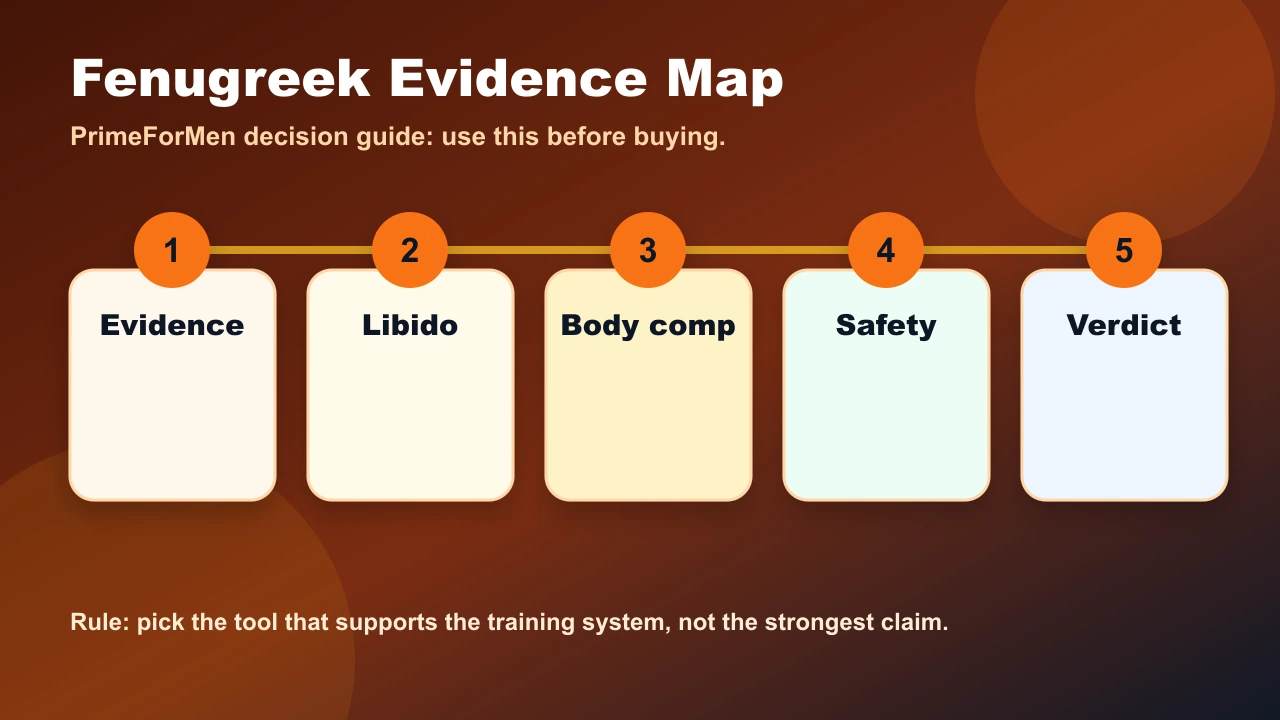
Evidence vs. Hype Meter
Fenugreek earns a middle score: more interesting than random herbal filler, but not strong enough to sell as a stand-alone testosterone solution.
What the evidence can and cannot tell you
Some fenugreek studies report improvements in libido, sexual function questionnaires, strength-related markers, or body composition. Others are small, use specific branded extracts, or combine the herb with training programs and diet changes. That makes it hard to separate the ingredient from the full context.
If your goal is a complete testosterone booster decision, fenugreek should be one line in the evidence table rather than the whole argument. A product that leans on one herb but ignores vitamin D, zinc status, sleep, alcohol intake, calorie balance, and progressive resistance training is usually selling confidence before clarity.
| Claim | What is plausible | What is overreach |
|---|---|---|
| Raises testosterone | Some trials show favorable hormone-related markers in specific groups or extracts. | Assuming it will fix low testosterone in every man. |
| Improves libido | Libido and sexual well-being signals are among the more interesting areas. | Promising reliable erectile or fertility outcomes without medical context. |
| Improves physique | It may sit beside training, protein, and recovery in a performance stack. | Expecting visible body recomposition from fenugreek alone. |
Supplement Shopping: Keep the Stack Boring and Verifiable
Why this product fit here? Fenugreek only makes sense when the label is transparent, the goal is realistic, and the rest of your basics are not being ignored.
- Prefer third-party tested products when possible.
- Avoid mega-stacks that hide fenugreek inside large proprietary blends.
- Do not combine multiple hormone-focused products just because each label sounds moderate.
- Track sleep, training, libido, digestion, and side effects for a defined trial window.
Amazon Product Shortlist
These are practical product starting points, not medical or performance guarantees. Use the images, sizing, labels, reviews, and return policy to compare the real item before buying.

Fenugreek supplements
A testosterone-support ingredient to evaluate cautiously, not a guaranteed hormone fix.
- Most claims are limited and context-dependent.
- Useful only if dose, extract type, and tolerance make sense.
- Should be avoided when medication or health interactions are a concern.
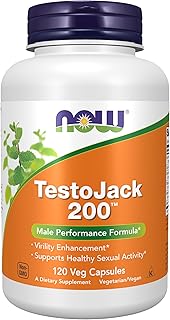
Testosterone support supplements
A practical buying option for the testosterone support supplement use case in this article.
- Matches the article's specific testosterone support supplement recommendation.
- Gives readers a concrete product page and image to compare.
- Worth checking for size, dose, fit, reviews, and return policy before buying.

Men's multivitamin
A broad fallback when the goal is covering common gaps rather than chasing one miracle pill.
- Simplifies the baseline supplement routine.
- Useful when diet consistency is imperfect.
- Best when doses are moderate and labels are easy to review.
*Affiliate disclosure: PrimeForMen may earn from qualifying purchases. Product images are loaded from Amazon media URLs and product availability can change.
*Affiliate disclosure: PrimeForMen may earn a commission from qualifying purchases through these links, at no extra cost to you.
Who might consider fenugreek, and who should pause
Fenugreek may be most reasonable for a healthy adult man who wants to test whether a single ingredient changes subjective libido, training drive, or recovery perception over a short, defined period. It is much less appropriate when symptoms suggest a medical issue, when testosterone labs are already abnormal, or when medication interactions are possible.
Safety matters because “herbal” is not a free pass. Fenugreek may affect blood sugar, digestion, allergy risk, and medication decisions. If your main concern is whether products in this category are appropriate at all, read the broader safety framework on whether testosterone boosters are safe for men before buying another bottle.
Most fenugreek content asks, “Does it boost testosterone?” A better question is: “What problem am I trying to solve, and is testosterone even the bottleneck?”
- If libido is low, sleep debt, stress, relationship strain, medication effects, and alcohol may matter more than an herb.
- If gym progress is stalled, calories, protein, programming, and recovery usually beat hormone-themed shopping.
- If fatigue is persistent, do not assume testosterone before checking basic health markers with a clinician.
How fenugreek compares with other popular options
Fenugreek is often compared with ashwagandha because both appear in men’s vitality formulas. The comparison is not one-to-one. Ashwagandha is usually discussed through stress, cortisol, sleep, and performance pathways, while fenugreek is more often positioned around libido, metabolism, and androgen availability. For that separate evidence picture, see the review of whether ashwagandha really boosts testosterone.
Micronutrients are a different category again. A deficiency can matter more than an exotic ingredient, but taking more of a vitamin you already have enough of is not automatically useful. That is why questions such as whether vitamin B12 affects testosterone should be handled as status-and-context questions, not as blanket supplement claims.
A practical way to test fenugreek without fooling yourself
- Start with a baseline: note libido, training performance, sleep quality, digestion, weight, and any medication changes.
- Use one new variable: do not start fenugreek, a stimulant pre-workout, a new diet, and a sleep supplement in the same week.
- Set a window: many supplement trials need several weeks, so avoid judging from one good or bad day.
- Stop for side effects: digestive discomfort, allergy symptoms, unusual bleeding/bruising, or blood sugar concerns are reasons to pause and seek professional guidance.
For timing expectations, compare your plan with the broader guide on how long testosterone boosters take to work. The more dramatic the promise, the more important it is to slow down and define what you are actually measuring.
The performance supplement fact sheet from the NIH Office of Dietary Supplements is also a useful reality check: exercise supplements vary widely in evidence quality, and context matters.
This article is for educational purposes only and is not medical advice. Fenugreek may not be appropriate for men with medical conditions, medication use, fertility concerns, hormone-related diagnoses, or persistent symptoms. Speak with a qualified clinician before using hormone-focused supplements, especially if you suspect low testosterone.
Bottom line: fenugreek is a maybe, not a mandate
Fenugreek can be a reasonable ingredient to understand, especially if your interest is libido or a modest support role inside a disciplined training and nutrition routine. But the current evidence does not justify treating it as a guaranteed testosterone booster or as a shortcut around sleep, labs, medical context, and lifestyle fundamentals.
If you want a broader decision path, start with the full testosterone booster guide, then compare individual ingredients with the same standard: plausible mechanism, human evidence, realistic dose, safety, and a clear reason it fits your situation.
This article contains affiliate links. If you buy through qualifying links, PrimeForMen may earn a commission. Recommendations are editorially framed around fit, safety, and evidence limits; commissions do not turn a weak claim into a strong one.
Frequently Asked Questions About Fenugreek as a Testosterone Booster
Does fenugreek actually increase testosterone?
It may improve some hormone-related markers in certain studies, but the evidence is not strong enough to promise a reliable testosterone increase for every man. Treat it as possible support, not a diagnosis or treatment strategy.
Is fenugreek better for libido than testosterone?
The libido signal is one of the more commonly discussed reasons men try fenugreek. Still, libido is affected by sleep, stress, relationship context, medication, alcohol, and health status, so it should not be reduced to one herb.
How long should a fenugreek trial last?
A defined multi-week trial is more useful than judging from a single day. Keep other variables stable, track benefits and side effects, and stop if the supplement causes problems.
Who should avoid fenugreek supplements?
Men using blood sugar medication, blood thinners, or hormone-related treatment should ask a clinician first. Anyone with allergy concerns, planned surgery, fertility questions, or persistent symptoms should be cautious.
Can fenugreek replace testosterone therapy?
No. Testosterone therapy is a medical decision based on symptoms, labs, risks, and monitoring. Fenugreek should not be used as a replacement for evaluation or prescribed treatment.