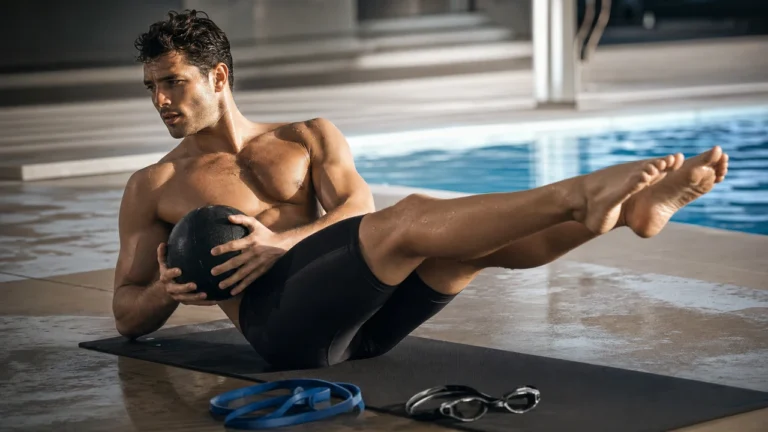
Core workouts for swimmers: dryland training for rotation, streamline control, anti-extension strength, and shoulder-friendly transfer.
- Swimmers need core work for rotation, streamline control, anti-extension, and shoulder-friendly force transfer.
- Prioritize dead bugs, side planks, Pallof presses, band chops, hollow holds, bear crawls, and controlled carries.
- Do core dryland two to three times weekly, usually after swim practice or strength work, not before key pool speed sets.
Bottom line Use core workouts for swimmers as a repeatable training filter: clear purpose, clean execution, and progression matter more than doing more.
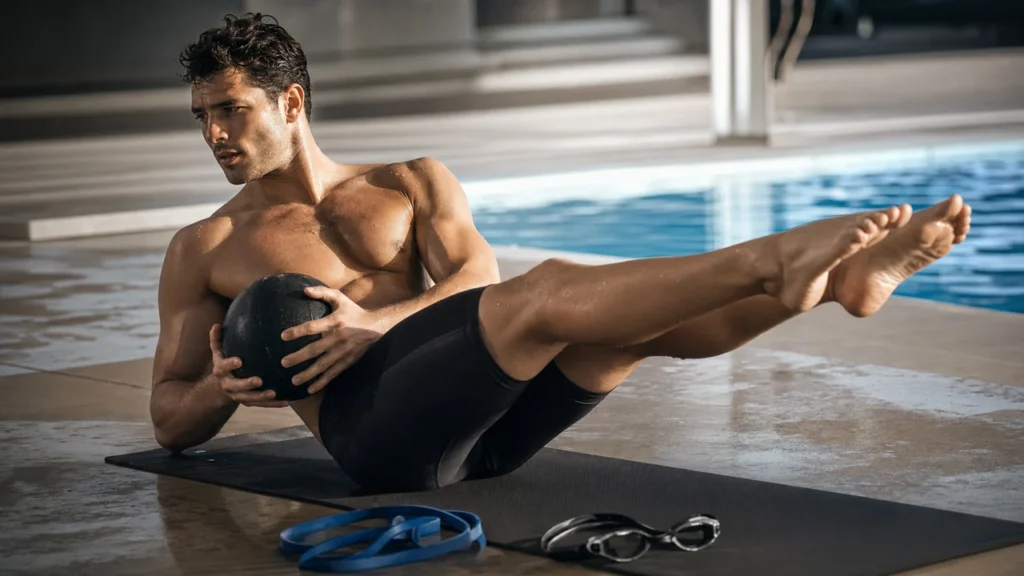
Core workouts for swimmers should make your stroke cleaner, not just make your abs tired. The goal is a trunk that can rotate with control, hold a long streamline, resist low-back arching, support the shoulders, and keep breathing rhythm steady when fatigue builds.
Swimming already gives you a lot of repetition. Dryland core work should fill the gaps the water does not always expose: anti-extension strength, rotational timing, scapular support, hip control, and the ability to stay long without stiffening up.
Quick Summary: Core workouts for swimmers
- Swimmers need core work for rotation, streamline control, anti-extension, and shoulder-friendly force transfer.
- Prioritize dead bugs, side planks, Pallof presses, band chops, hollow holds, bear crawls, and controlled carries.
- Do core dryland two to three times weekly, usually after swim practice or strength work, not before key pool speed sets.
- Train breathing under tension so your brace supports the stroke instead of locking your ribs down.
- Progress range, time, band tension, or load only when your ribs, pelvis, and shoulders stay organized.
The Prime Perspective
Most swimmers do not need circus ab drills. They need a trunk that connects the kick, hips, rib cage, shoulders, and catch without leaking energy.
Dryland core training works when it respects what happens in the lane. Freestyle and backstroke need controlled rotation. Butterfly and breaststroke need rhythm, extension control, and a clean line. Starts and turns need stiffness on demand. The best plan trains those jobs directly, then leaves enough recovery for quality swimming.
The obliques guide hip-to-shoulder timing so the stroke rolls instead of twists loosely.
Anti-extension strength helps you stay long without dumping into the low back.
A stable trunk gives the shoulder blade a better base during high-repetition pulling.
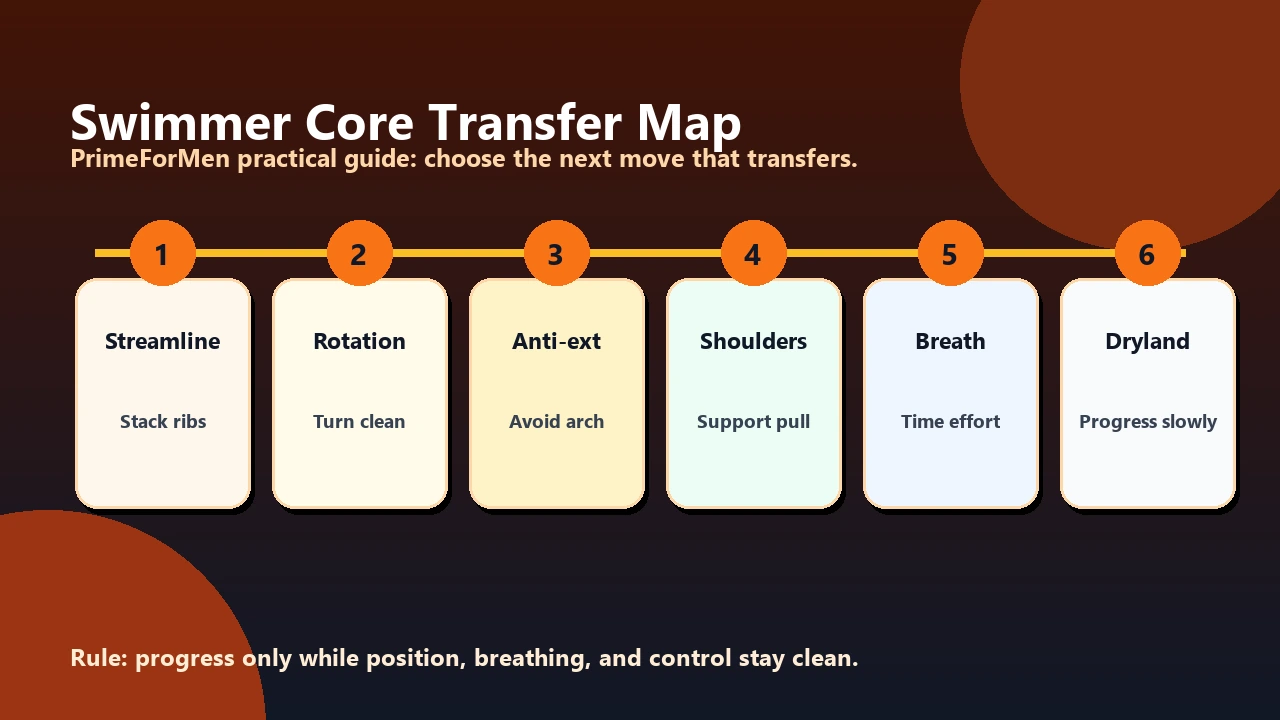
What Makes Swimmer Core Training Different?
A general ab workout can make you sore and still miss the transfer that matters in the pool. Swimmers need a core that can alternate between motion and stiffness: rotate through the thoracic spine, hold the pelvis steady, reach overhead without rib flare, and breathe without losing shape.
If your general foundation is shaky, build it first with core workout basics. Then bias your dryland sessions toward the demands of your stroke and weekly swim volume.
- Freestyle: smooth body roll, anti-rotation control, and stable reaching.
- Backstroke: rotation timing, long-line tension, and shoulder blade control.
- Butterfly: anti-extension, hip rhythm, and trunk stiffness through the catch.
- Breaststroke: anterior core control, hip timing, and a clean recovery line.
- Starts and turns: fast bracing, hollow-body tension, and force transfer from wall to streamline.
Dryland Gear That Fits Swimmer Core Work
Why these tools here? They build the three practical needs swimmers can train almost anywhere: band-based rotation, pool-specific line awareness, and comfortable floor work.
- They support short sessions before or after practice without a full gym setup.
- They let you progress tension and body position without chasing random fatigue.
- They match the movement themes of stroke control, streamline, and recovery-friendly strength.
Amazon Product Shortlist
These are practical product starting points, not medical or performance guarantees. Use the images, sizing, labels, reviews, and return policy to compare the real item before buying.

Resistance Bands
The easiest low-friction tool for warm-ups, anti-rotation work, and travel training.
- Scales from rehab-style activation to hard accessory sets.
- Supports push, pull, and core patterns without much space.
- Useful when cables or machines are not available.

Swim Kickboard
A practical buying option for the swim kickboard use case in this article.
- Matches the article's specific swim kickboard recommendation.
- Gives readers a concrete product page and image to compare.
- Worth checking for size, dose, fit, reviews, and return policy before buying.

Exercise Mat
A practical base layer when floor comfort decides whether the session actually happens.
- Adds cushioning for planks, mobility, and bodyweight work.
- Makes home sessions repeatable on hard floors.
- Easy to store next to bands, sliders, or an ab wheel.
*Affiliate disclosure: PrimeForMen may earn from qualifying purchases. Product images are loaded from Amazon media URLs and product availability can change.
*PrimeForMen may earn a commission from qualifying purchases through these Amazon links, at no extra cost to you.
Swim-Transfer Meter
Swim-Transfer Meter
Choose the stroke quality you want to improve. The meter points your next dryland block toward the core job most likely to carry into the water.
The Core Jobs That Carry Into the Pool
Use dryland exercises as tools, not entertainment. Each drill should map to a stroke problem you can recognize: dropping the hips, over-rotating, losing the line off the wall, arching during breathing, or feeling the shoulders do all the work.
| Swim demand | Best dryland drills | Pool transfer | Common mistake |
|---|---|---|---|
| Anti-extension | Dead bug, hollow hold, body saw, long-lever plank | Better streamline and less low-back arch during kick, fly, and overhead reach. | Letting the ribs flare to make the drill look bigger. |
| Rotation control | Side plank reach, Pallof press, half-kneeling band chop, plank shoulder tap | Smoother body roll and cleaner connection from hip drive to the catch. | Twisting through the low back instead of controlling the rib cage and hips. |
| Shoulder support | Bear crawl, plank plus, banded reach, farmer carry | More stable pulling mechanics because the shoulder blade has a better base. | Shrugging the neck and losing pressure through the floor. |
| Breathing rhythm | Dead bug exhale, side plank breathing, crocodile breathing, low bear breathing | Better ability to breathe without collapsing the stroke line. | Holding the breath so hard that the movement becomes stiff and panicked. |
| Wall power | Hollow rock, squat-to-streamline hold, suitcase carry, med-ball dead bug | Cleaner bracing for turns, push-offs, and starts. | Training fatigue instead of crisp tension and repeatable shape. |
When you are ready for harder levers and stronger anti-rotation work, progress through advanced core workouts without dropping the swim-specific intent.
A Practical Dryland Core Plan for Swimmers
Use this two-to-three-day template for four weeks. Keep it short enough that it supports your swimming instead of stealing from your pool quality.
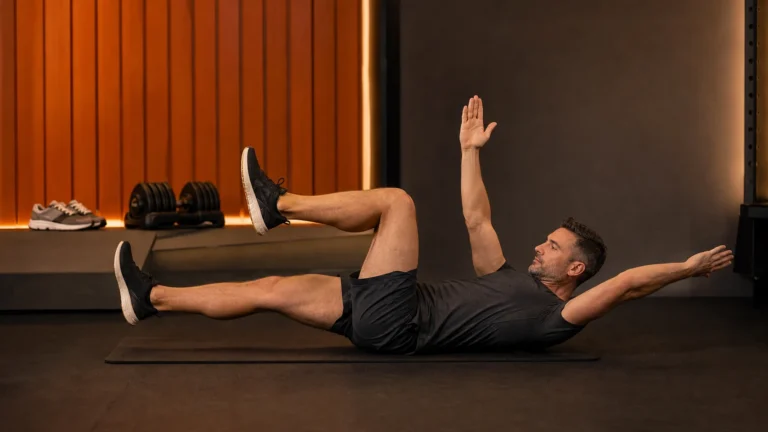
- Session A, streamline control: dead bug with full exhale 3 x 8 per side, hollow hold 4 x 15-25 seconds, long-lever plank 3 x 20-35 seconds.
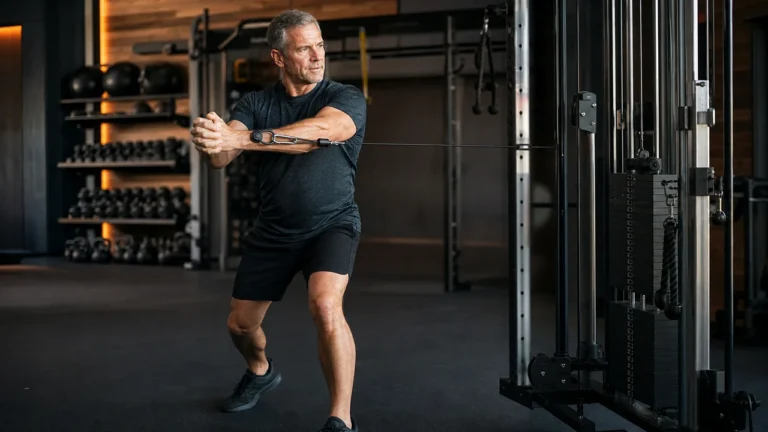
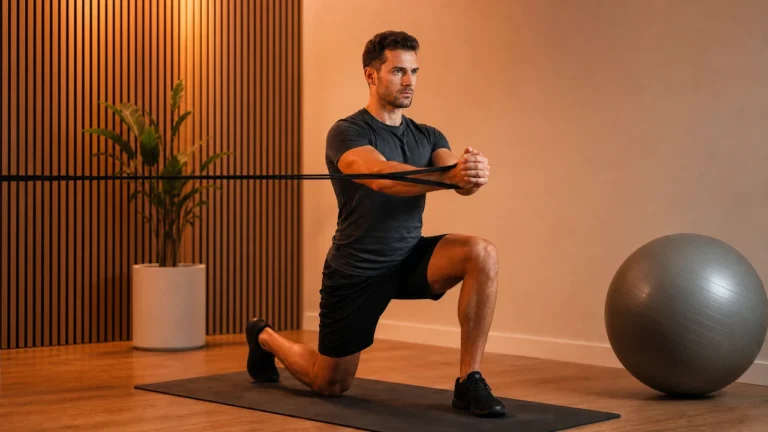
- Session B, rotation control: side plank reach 3 x 6 per side, Pallof press 3 x 10 per side, half-kneeling band chop 3 x 8 per side.
- Session C, optional turn support: bear crawl 4 x 10-15 meters, squat-to-streamline hold 3 x 20 seconds, suitcase carry 4 x 30 meters per side.
- Progression rule: add time, band tension, range, or load only when your breathing remains controlled and your low back stays quiet.
Where Bodyweight and Equipment Fit
Bodyweight drills are the best starting point because they expose whether you can control the ribs and pelvis before adding tension. If you train at home, the bodyweight core workouts guide pairs well with swimmer dryland because it keeps setup low and position quality high.
Equipment becomes useful when you need measurable progression. Bands, mats, cables, dumbbells, and carries give you resistance without forcing a bulky gym session. For more loading options, use core workouts with equipment as the next layer.
Use light activation only: dead bug breathing, plank plus, and gentle band reach work. Save hard sets for later.
Use your main core block when stroke quality no longer depends on being fresh.
Keep the session low-impact and technical so it supports recovery instead of becoming another hard workout.
The Missing Link: Core Strength Must Still Let You Breathe
What most swim dryland misses
A swimmer can brace hard on land and still lose rhythm in the water if that brace blocks breathing. The better target is pressure you can manage: enough trunk tension to hold a line, enough rib movement to breathe, and enough relaxation to keep the stroke smooth.
- Exhale first. Use a long controlled exhale before the hardest part of dead bugs, hollow holds, and Pallof presses.
- Keep the neck quiet. If your neck takes over, the shoulder support benefit usually drops.
- Match the set to the swim week. Heavy dryland core before sprint or race-pace pool work is often the wrong trade.
- Respect recovery. Use muscle recovery techniques when dryland volume starts affecting stroke quality, sleep, or shoulder comfort.
Safety, Pool Health, and Balanced Training
Swimming is low-impact for many people, but it is still training stress. The CDC notes that water-based exercise can offer physical and mental health benefits while also requiring attention to healthy and safe swimming habits; use their healthy swimming guidance as the broader pool-safety backdrop.
Dryland should also live inside a complete training week. Mayo Clinic’s well-rounded fitness training guidance is a useful reminder that strength, aerobic work, flexibility, balance, and core training all have a place.
- Do not train through sharp pain. Shoulder, back, or neck symptoms that change your stroke need attention.
- Keep dryland shoulder-friendly. Avoid sloppy high-rep plank work if it irritates the front of the shoulder.
- Separate hard stressors. Race-pace swimming, heavy lifting, and intense core work do not all need to land on the same day.
- Use clean surfaces. Mats, bands, and pool-deck gear should be kept dry enough and clean enough for safe use.
Technique Rules for Better Transfer
- Stack ribs over pelvis. This is the dryland version of staying long in the water.
- Reach without shrugging. Overhead core drills should feel like length, not neck tension.
- Rotate around a stable line. In band chops and side planks, avoid throwing the hips around just to finish reps.
- Use quiet reps. If the movement gets jerky, reduce band tension, range, or set length.
- Link one cue to the pool. After dryland, pick one swim cue: longer streamline, quieter ribs, smoother breath, or cleaner body roll.
Bottom Line
Core workouts for swimmers should build transfer: rotation that supports the stroke, anti-extension that protects the streamline, shoulder support that keeps pulling cleaner, and breathing rhythm that survives fatigue. The right plan is not the hardest ab circuit. It is the one that makes your next swim session feel more connected.
Start simple, progress slowly, and judge the work by what happens in the water. If your line, turns, breath, and body roll improve, the dryland core work is doing its job.
Next step: For the broader core training structure behind this swimmer-specific plan, use the main core workout pillar and adapt the progression to your swim schedule.
Frequently Asked Questions About Core Workouts for Swimmers
How often should swimmers do core workouts?
Most swimmers do well with two to three focused dryland core sessions per week. Keep them short, technical, and scheduled so they do not reduce stroke quality during important pool sessions.
What is the best core exercise for swimmers?
There is no single best exercise, but dead bugs, side planks, Pallof presses, hollow holds, bear crawls, and band chops cover the most useful swimmer demands: streamline, rotation, bracing, and shoulder support.
Should swimmers train abs before or after swimming?
Use light activation before swimming if it improves body position. Put harder core work after practice, after lifting, or on a separate dryland day so fatigue does not interfere with technique.
Can core training improve freestyle rotation?
It can help when the drills train controlled rotation rather than random twisting. Side planks, Pallof presses, and band chops teach the trunk to connect hip drive and shoulder movement more cleanly.
Do swimmers need crunches?
Crunches are optional. Swimmers usually get more carryover from anti-extension, anti-rotation, breathing, and shoulder-support drills. If you use crunches, keep them controlled and do not let them replace stroke-specific core work.
Exercise safety disclaimer: This article is for general fitness education only and is not medical advice. Stop any movement that causes sharp pain, numbness, radiating symptoms, dizziness, unusual shortness of breath, or symptoms that alter your swimming mechanics, and speak with a qualified health professional when symptoms are persistent, severe, or safety-relevant.
Affiliate disclosure: This article includes Amazon affiliate links. PrimeForMen may earn a commission from qualifying purchases at no additional cost to you. Recommendations are based on training fit, not guaranteed outcomes.