

Hydration supplements guide for men: when water is enough, when electrolytes help, and what to buy for sweat and heat.
- For normal daily hydration and most short workouts, plain water is enough.
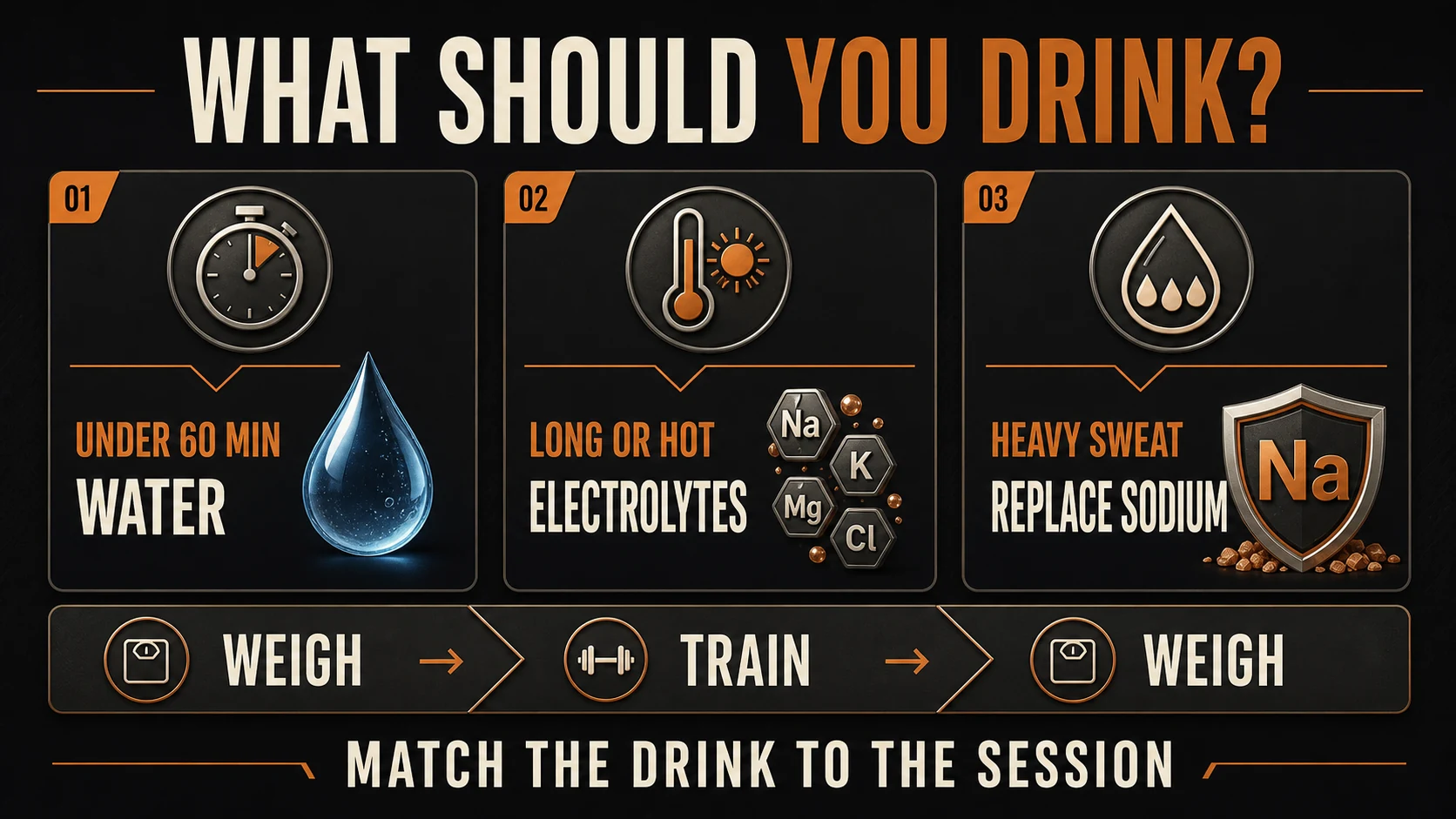
- Electrolytes make more sense when sessions run long, heat is high, sweat is heavy, or you train more than once per day.
- Sodium is usually the electrolyte that matters most during sweaty training; magnesium and potassium are not magic performance switches.
Bottom line For most men, the correct buying order is simple: first fix the water habit, then add a practical electrolyte option for high-sweat situations, then refine dose based on how you actually train.

Hydration supplements can help men train, work, and recover better when sweat loss is actually the limiting factor, but they are not a replacement for drinking enough water, eating enough food, or pacing hard sessions in heat.
- For normal daily hydration and most short workouts, plain water is enough.
- Electrolytes make more sense when sessions run long, heat is high, sweat is heavy, or you train more than once per day.
- Sodium is usually the electrolyte that matters most during sweaty training; magnesium and potassium are not magic performance switches.
- Choose powder for adjustable dosing, tablets for travel, and a reliable bottle if your real problem is not drinking enough.
- Men with blood pressure, kidney, heart, or medication concerns should clear electrolyte supplements with a clinician.
The Prime Perspective
The supplement industry makes hydration sound complicated because complexity sells packets. The practical question is simpler: did you lose enough fluid and sodium that water alone is no longer the best tool?
For a 35-minute lift in an air-conditioned gym, probably not. For a 90-minute summer run, a long treadmill interval session, outdoor labor, sauna-heavy routines, or back-to-back training days, electrolytes can become a useful tool. The goal is not to sip neon water all day. The goal is to match the drink to the stress.
When Water Is Enough
Water should be the default. If you are sitting at a desk, walking, lifting for under an hour, or doing easy cardio without much sweat, hydration supplements usually add cost before they add benefit. The CDC’s adult activity guidance emphasizes regular aerobic and strength work, but it does not require specialized drinks for ordinary sessions. See the CDC adult physical activity guidelines for baseline training targets.
- You finish a normal workout without cramps, dizziness, unusual fatigue, or heavy salt marks on clothing.
- Your urine is usually pale yellow, not consistently dark.
- You are eating regular meals with sodium, potassium, and carbohydrate.
- The session is under 60 minutes and not performed in high heat.
If that describes your day, spend money on a good routine before a flavored electrolyte tub. For many men, the better first move is simply carrying water consistently, especially during long work blocks or home cardio sessions like those covered in our treadmill guide.
Sweat-Loss Need Meter
Use this as a quick read on when hydration supplements move from optional to useful. The meter is about context, not masculinity or toughness.
Water
Optional
Electrolytes
When Electrolytes Are Worth Considering
Electrolytes become more relevant when sweat loss is high enough that plain water may dilute sodium without replacing what you lost. The National Institutes of Health Office of Dietary Supplements notes that exercise performance products often include electrolytes and carbohydrate, but usefulness depends on the event, duration, and athlete context. The practical evidence summary is available from the ODS exercise and athletic performance fact sheet.
Outdoor runs, summer sports, hot garages, and job-site sweating increase fluid and sodium loss.
Electrolytes are more relevant once hard work pushes past about 60-90 minutes, especially with visible sweat.
Two-a-days, tournament play, and hard cardio plus lifting can make rehydration more than a one-bottle problem.
White salt marks, gritty skin, and soaked hats are clues that sodium replacement may matter.
What Most Hydration Guides Miss
The gap is not another list of exotic minerals. Men need a buying framework that separates everyday thirst from sweat-driven electrolyte need. That matters because overbuying can mean excess sodium, unnecessary sugar, and a habit of treating basic water intake like a supplement problem.
Electrolyte Powder vs Tablets vs Bottles
The best hydration supplement is the one that matches your actual use case. A lifter who forgets to drink needs a bottle system. A runner training in heat may need a sodium-forward powder. A traveler may prefer tablets that do not spill in a gym bag.
| Option | Best fit | Watch-outs |
|---|---|---|
| Electrolyte powder | Long workouts, heavy sweaters, summer cardio, adjustable sodium and flavor strength. | Can be overused on rest days; some formulas are high in sugar or sweeteners. |
| Electrolyte tablets | Travel, office drawers, hiking, sports bags, low-mess backup hydration. | Dose is less flexible; some tablets taste weak in large bottles. |
| Insulated water bottle | Men whose main issue is inconsistent water intake, warm water, or poor daily routine. | Does not replace sodium during long, hot, sweaty sessions. |
How to Choose a Hydration Supplement
Use a simple scorecard before buying. This keeps the decision grounded in training reality instead of label design.
- Start with sweat context: session length, heat, clothing, pace, and how soaked you get.
- Check sodium first: for sweaty sessions, sodium usually matters more than a long mineral blend.
- Match carbohydrate to the session: low or no sugar can work for short sessions; longer endurance work may benefit from carbohydrate.
- Test stomach tolerance: try new products before ordinary training, not race day or a demanding workday.
- Respect health context: blood pressure, kidney disease, heart conditions, and medications can change what is appropriate.
This same context-first approach applies across supplements. If you are comparing broader products, start with our supplement recommendations and keep hydration in the lane where it actually helps.
Practical Buying Shortlist
These are category links, not product endorsements. Compare labels, serving size, sodium dose, sugar, and tolerability before buying.
Amazon Product Shortlist
Choose a format only after the session creates a measurable need. Short indoor workouts usually need water; longer, hotter, or high-sweat sessions are where sodium content and portability become relevant.

Electrolyte Powder
Best when sweat, heat, session length, or low-carb phases make plain water feel insufficient.
- Supports sodium/fluid replacement during sweaty sessions.
- More useful for long or hot training than casual sipping.
- Powder or tablets make dosing easier to adjust.

Electrolyte Tablets
Best when sweat, heat, session length, or low-carb phases make plain water feel insufficient.
- Supports sodium/fluid replacement during sweaty sessions.
- More useful for long or hot training than casual sipping.
- Powder or tablets make dosing easier to adjust.

Insulated Water Bottle
A simple adherence tool when hydration depends on having cold water within reach.
- Helps keep fluids visible during work, travel, or cardio.
- Insulation matters during hot gyms and outdoor sessions.
- Works without making hydration more complicated.
*Affiliate disclosure: PrimeForMen may earn from qualifying purchases. Compare sodium per serving and serving size with your training conditions instead of choosing by flavor alone.
Training Scenarios: What Men Actually Need
Water is usually enough unless the room is hot or you are a very heavy sweater.
Electrolytes become more useful, especially with salt marks, high sweat rate, or performance drop-off.
Fluid, sodium, food, and sleep beat exotic blends. Pair hydration with the basics in our guide to muscle recovery techniques.
If cardio volume is high, hydration is one input. Stress load matters too, which is why our cardio and cortisol guide is worth reading.
What About Athletes, Protein, and Meal Timing?
Hydration is not isolated from the rest of training nutrition. Men who under-eat, skip sodium, or train fasted in heat may blame hydration when the real issue is fuel. Electrolytes can help replace sweat losses, but they cannot replace enough calories, protein, and carbohydrates across the day.
If you are building muscle after 40, hydration should sit beside recovery nutrition rather than competing with it. Use our guide to protein timing for men over 40 to keep the bigger picture in view. If you train competitively or sweat through long practices, our electrolytes for athletes guide goes deeper on sport-specific use.
Who Should Be Careful
Electrolyte supplements are common, but common does not mean universally appropriate. Be careful if you have high blood pressure, kidney disease, heart disease, fluid restrictions, or take medications that affect potassium, sodium, or fluid balance. Also be cautious with very high sodium formulas if you are using them outside sweaty training.
- Stop using a product that causes persistent stomach distress, swelling, unusual heart symptoms, or worsening headaches.
- Do not use electrolyte drinks to push through heat illness symptoms.
- Seek medical help for confusion, fainting, chest pain, severe weakness, or symptoms that do not resolve with rest and cooling.
Conclusion: Buy Less, Use Better
The best hydration supplement strategy is not daily electrolyte dependence. It is matching the tool to the day. Drink water consistently, eat normal meals, and use electrolytes when sweat, heat, duration, or repeated sessions make replacement useful.
For most men, the correct buying order is simple: first fix the water habit, then add a practical electrolyte option for high-sweat situations, then refine dose based on how you actually train.
FAQ
Do men need hydration supplements every day?
Usually no. Most men can cover daily hydration with water and normal food. Daily electrolyte use makes more sense when heat exposure, heavy sweating, long training, or medical guidance supports it.
Are electrolyte powders better than sports drinks?
Sometimes. Powders often let you control concentration and may have less sugar, while sports drinks can be useful when you also need carbohydrate during longer endurance work.
What electrolyte matters most for sweat?
Sodium is usually the priority because it is lost heavily in sweat and helps retain fluid. Potassium and magnesium matter for overall nutrition, but they should not distract from sodium and fluid basics during sweaty sessions.
Can hydration supplements prevent cramps?
They may help when cramps are linked to fluid or sodium loss, but cramps can also involve fatigue, pacing, heat, training load, and conditioning. Do not treat electrolytes as a guaranteed fix.
Should I choose sugar-free electrolytes?
Choose based on session demands. Sugar-free can be fine for shorter or lower-intensity training. Longer endurance sessions may benefit from carbohydrate, especially when performance and fueling matter.