A practical men’s guide to wearable fitness tech, key metrics, device fit, recovery signals, and buying categories.
- Use wearables to spot patterns, not to chase perfect daily scores.
- For most men, heart rate, HRV trend, sleep consistency, steps, training load, and body-weight trend matter more than exotic metrics.
- If you need product rankings, use our best fitness trackers guide ; this article explains what the numbers mean and how to decide what tech belongs in your routine.
Bottom line If it only gives you another score to chase, turn that metric off.
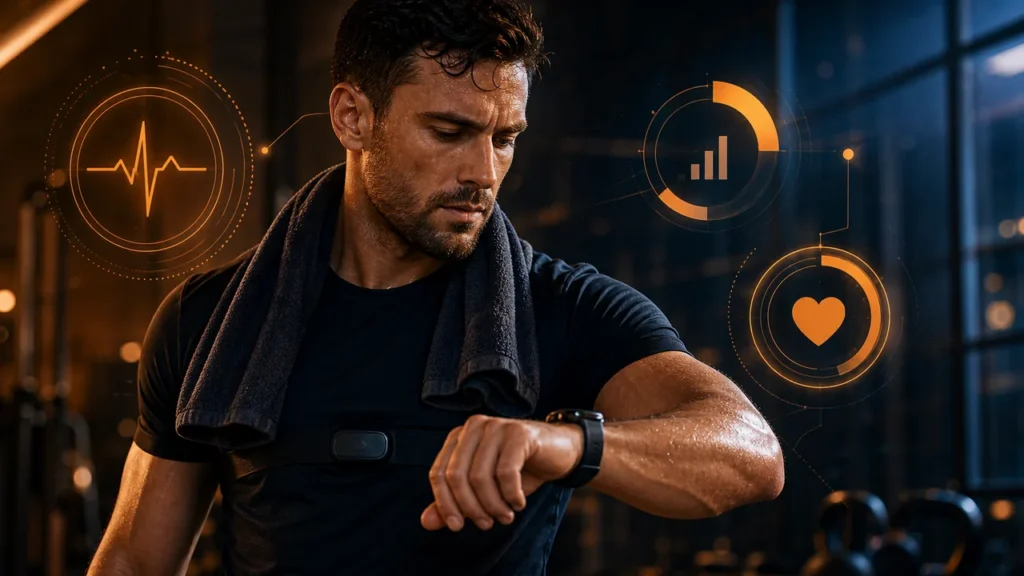
Wearable fitness tech for men is useful when it turns messy signals into better training, recovery, and health decisions. It becomes a waste of money when you buy the most advanced device but ignore which metric actually changes your next workout, sleep routine, or nutrition adjustment.
Men’s training context
Separate from tracker rankings
No medical overclaiming
Quick Summary: Wearable fitness tech for men
- Use wearables to spot patterns, not to chase perfect daily scores.
- For most men, heart rate, HRV trend, sleep consistency, steps, training load, and body-weight trend matter more than exotic metrics.
- If you need product rankings, use our best fitness trackers guide; this article explains what the numbers mean and how to decide what tech belongs in your routine.
- A chest strap still beats wrist sensors for hard intervals, while smart scales are best for long-term trend tracking, not daily emotional verdicts.
- Wearables can support health awareness, but symptoms, chest pain, fainting, abnormal rhythm alerts, or persistent fatigue belong with a clinician.
The Prime Perspective
The best wearable is not the one with the longest spec sheet. It is the one that changes a decision you already care about: train harder, back off, walk more, sleep earlier, adjust calories, or ask a professional question.
That is why this update treats wearable fitness tech as a metric system, not a shopping list. For buying picks, comparisons, and budget tiers, go to the dedicated fitness tracker buyer guide. Here, the goal is to help men understand which signals are worth trusting and which ones should stay in the background.
What Wearable Fitness Tech Actually Covers
Wearable fitness tech includes wrist trackers, smartwatches, chest heart-rate straps, smart rings, continuous glucose-style nutrition tools, smart scales, and app-connected recovery platforms. The category overlaps with smartwatches, but the useful question is narrower: does the device improve your training or health behavior?
For men who lift, run, cycle, play sports, or simply want better energy, the strongest use cases are trend visibility and feedback loops. You are not outsourcing judgment. You are using data to reduce guesswork.
The Metric Scorecard: What to Trust, What to Question
The table below is the practical filter. It separates metrics that reliably support decisions from metrics that can look precise while still being noisy.
| Metric | Decision value | Best device fit | What men should watch | Trust score |
|---|---|---|---|---|
| Resting heart rate | Recovery, aerobic base, illness or stress trend | Watch, ring, chest strap ecosystem | Use weekly trend, not one bad morning | High |
| Workout heart rate | Zone control, interval pacing, conditioning work | Chest strap for intervals; wrist for steady work | Wrist sensors can lag during sprints, rowing, lifting, and cold weather | High with strap |
| HRV trend | Stress and recovery direction | Ring or watch with consistent overnight capture | Compare your baseline; do not copy another man’s number | Medium-high |
| Sleep score | Behavior prompt for bedtime, alcohol, caffeine, and workload | Watch or ring | Sleep stages are estimates; sleep duration and timing are more useful | Medium |
| Steps and activity minutes | Fat-loss support, cardiovascular baseline, sedentary control | Any reliable wrist tracker or phone-watch combo | Great for consistency; incomplete for strength training quality | High |
| Calories burned | Rough energy-output context | Any tracker, but use cautiously | Often too imprecise for exact dieting; pair with body-weight trend | Low-medium |
| Body-fat percentage | Long-term direction only | Smart scale plus tape measure | Hydration and timing can swing readings; trend beats daily value | Medium |
Visual Decision Map: Match the Tech to the Job
Start with the outcome, then pick the sensor. A device that solves the wrong problem just adds another dashboard to ignore.
Use heart rate, pace, load, and intervals.
Use sleep timing, resting heart rate, and HRV trend.
Use steps, weigh-ins, waist trend, and food context.
Use alerts as prompts, not diagnoses.
How to Choose by Goal
If your main goal is lifting performance, a smartwatch can track sessions, but the real value comes from consistency, rest timing, and recovery trend. For hard conditioning or zone work, dedicated heart-rate monitors are still the cleaner tool.
If your main goal is fat loss, start with steps, weight trend, and food behavior. Smart scales can help, but they should not replace waist measurements or how your clothes fit. If you are interested in food-response technology, see our guide to nutritional wearables.
If your main goal is general health awareness, prioritize comfort, battery life, clean app design, and alert reliability. The FTC mobile health app guidance is a useful reminder: consumer wellness dashboards are not the same as medical diagnosis tools, and privacy claims need scrutiny. Read the FTC resource on mobile health apps before treating app data like clinical truth.
Amazon Category Shortlist
Why these products here? These three categories cover the practical stack: daily tracking, higher-accuracy workout heart rate, and body-weight trend monitoring.
- Use daily wearables for steps, sleep timing, resting heart rate, and habit feedback.
- Use a heart-rate monitor when interval accuracy matters more than smartwatch convenience.
- Use a smart scale for direction over weeks, not as a daily self-worth scoreboard.
Shop fitness trackers
Shop heart-rate monitors
Shop smart scales
* As an Amazon Associate, PrimeForMen may earn from qualifying purchases. Product fit should come before price, hype, or brand loyalty.
The Knowledge Gap: Data Is Not a Training Plan
Most wearable content either ranks devices or repeats feature lists. The missing step is decision translation. A low readiness score does not automatically mean skip training. It may mean reduce volume, extend warm-up, keep intensity lower, or move the hardest session by 24 hours.
The same applies to high scores. A green dashboard is not permission to add junk volume if joints hurt, sleep debt is building, or life stress is high. Wearable fitness tech works best when it supports a plan you would respect even without the device.
Red Flags and Limits
Wearables can encourage better awareness, but they can also create anxiety. If you repeatedly check scores, avoid normal training because of minor fluctuations, or feel worse because the app says your recovery is poor, reduce notifications and focus on weekly behavior.
Public health guidance is still built on consistent movement, not gadget ownership. The NHLBI notes that regular physical activity supports heart and lung function and helps lower several cardiovascular risk factors; the device is only useful if it helps you actually move, train, and recover more consistently. See the NHLBI overview of physical activity and heart health benefits.
A Practical 7-Day Wearable Reset
Where This Fits in the Bigger Fitness-Tech Stack
Wearables are one layer of the broader fitness technology shift. For market trends and broader context, read the ultimate guide to fitness trends. For coaching software, personalization, and app-driven programming, compare this with AI-powered fitness apps.
The strongest stack for most men is simple: one daily wearable, one accurate heart-rate tool if conditioning matters, one body-weight trend system if composition matters, and a training plan that does not change every time a score moves.
Conclusion: Buy Less Data, Use Better Signals
Wearable fitness tech for men should make your next action clearer. If a metric helps you train with better intensity, recover before you crash, walk more, sleep more consistently, or notice a pattern worth discussing with a professional, it earns its place.
If it only gives you another score to chase, turn that metric off. The goal is not to become a dashboard. The goal is to build a body and routine that performs better in real life.
Medical Disclaimer
This article is for informational and educational purposes only and is not medical advice. Wearable fitness tech can support awareness, but it cannot diagnose, treat, or rule out medical conditions. If you experience chest pain, fainting, unusual shortness of breath, irregular rhythm alerts, persistent fatigue, or any concerning symptoms, speak with a qualified healthcare professional.
Affiliate Disclosure
PrimeForMen may earn a commission from qualifying purchases made through affiliate links in this article, including Amazon links. This does not change the price you pay and does not override our editorial judgment. Recommendations should be evaluated by fit, evidence, and practical usefulness.
Frequently Asked Questions About Wearable Fitness Tech for Men
What wearable fitness metric matters most for men?
For most men, the most useful starting metrics are resting heart rate trend, steps, workout heart rate, sleep timing, and body-weight trend. They connect directly to training, recovery, and nutrition decisions.
Are smartwatch heart-rate readings accurate enough for workouts?
They are often good enough for steady cardio and daily trends, but a chest strap is usually better for intervals, cycling, rowing, lifting circuits, and sessions where wrist movement or sweat can disrupt optical sensors.
Should I trust my sleep score?
Use sleep scores as behavior prompts, not exact sleep-lab results. Sleep duration, bedtime consistency, wake time, and how you feel usually matter more than a single score or estimated sleep-stage breakdown.
Can wearable fitness tech help with fat loss?
Yes, if it helps you walk more, train consistently, and monitor body-weight trends over weeks. It is less useful when you treat calorie-burn estimates as exact numbers for dieting.
When should I ignore wearable readiness scores?
Ignore or downweight them when they conflict with obvious context: poor sensor contact, unusual sleep schedule, travel, alcohol, illness, or a workout that feels clearly better or worse than the app suggests.