
Compare cardio after 50, choose an accessible activity and set your starting pace with practical examples, a selection helper and a printable record.
- Choose an activity you can access and control.
- Check effort with breathing and the talk test.
- Record moderate minutes separately from total time.
Bottom line Try one manageable session with a comfortable setup, then repeat it before changing duration or effort.
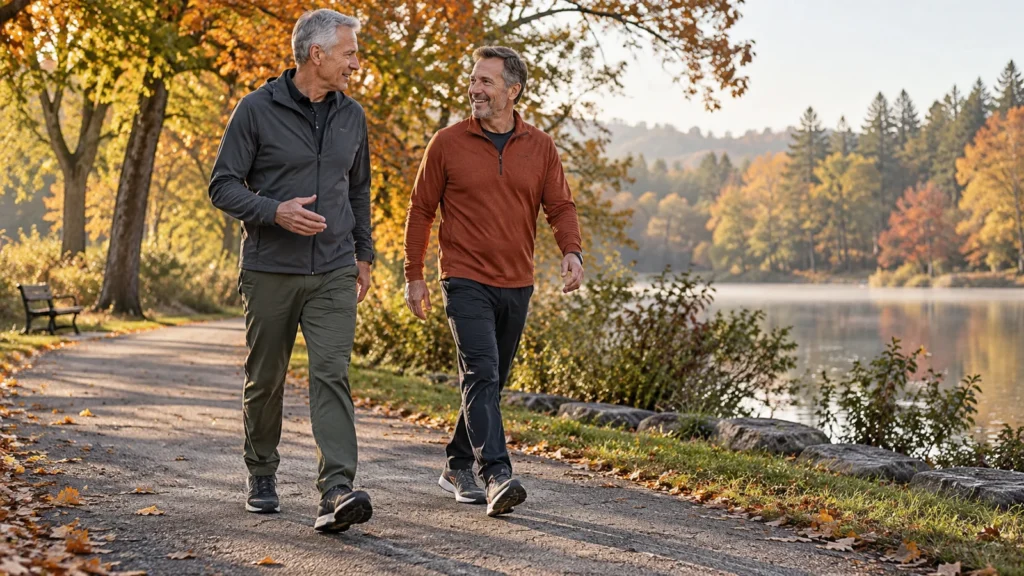
The best cardio for men over 50 is an activity you can access, control and repeat. For many beginners, that means walking on a suitable route or using a comfortably fitted exercise bike. Swimming, an elliptical, rowing and running can also fit, but each brings different demands on technique, access and recovery.
Start by choosing the activity, then choose the effort. An easy ride and a hard ride use the same machine; they are different training sessions. Use the comparisons to choose an activity and try a modest starting example. Medical suitability and rehabilitation need individual assessment.
Quick Summary: Best Cardio for Men Over 50
- Choose an accessible activity with a comfortable setup before comparing machines.
- Low impact describes contact forces; it does not tell you how hard the session feels.
- Use breathing and the talk test to check effort. Heart-rate formulas are estimates.
- Record total session time separately from time actually spent at moderate intensity.
- Repeat a manageable session before increasing its duration or effort.
The Prime Perspective
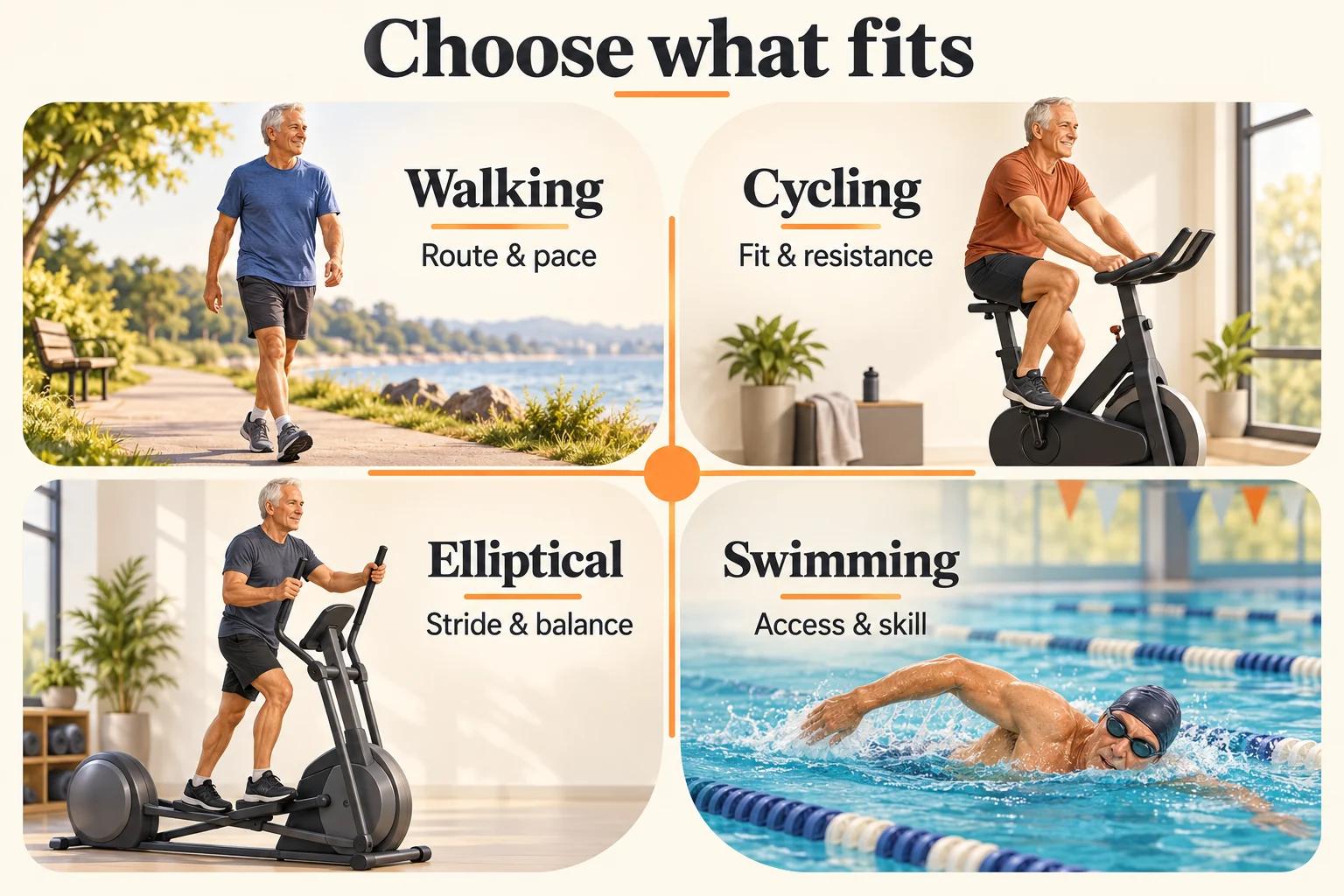
A nearby walking route may serve you better than a machine that requires a long trip. A bike may be easier to use consistently when weather is the obstacle. Choose the format that solves your actual barrier, then check how it feels during the session and afterward. A comparison table can narrow the options; it cannot tell whether your knee, back or heart condition makes an exercise suitable.
Our fitness guide for men over 50 connects cardio with strength, balance and recovery. Here, the task is narrower: choose your cardio activity and a starting pace.
Compare the activity before the equipment
The Cleveland Clinic overview of low-impact cardio explains why walking, cycling, swimming and other smooth movements can reduce impact compared with running. That is a useful distinction, but it is not a guarantee of comfort. Seat position, stride length, repeated joint motion and training dose still matter.
| Activity | Useful when | Check before starting | Main tradeoff |
|---|---|---|---|
| Level walking | You want a simple start with no machine purchase | Clear route, suitable shoes, visibility and a pace you can control | Weather and terrain change the task; a casual stroll may remain light activity |
| Stationary cycling | You prefer seated exercise and adjustable resistance | Comfortable seat and handlebar position, secure pedals and safe mounting | Leg fatigue and saddle discomfort can limit a session before breathing does |
| Elliptical | You like continuous standing movement without repeated foot strikes | Comfortable stride, stable hand support and safe entry and exit | The machine’s fixed path may not suit you; standing balance is still required |
| Swimming or water exercise | You have pool access and enjoy exercising in water | Swimming ability or a supervised class, pool entry, water rules and supervision | Travel, changing and skill can make short sessions less convenient |
| Rowing | You have equipment access and are willing to learn the stroke | Comfortable positions, foot setup and coordinated legs, body and arms sequencing | Technique and local back or leg fatigue can interfere with steady effort |
| Running or run–walk | You already tolerate running or specifically want to develop it | Current walking/running capacity, footwear, surface and a gradual transition | More impact and a larger change in loading than simply walking faster |
These are qualitative selection checks, not safety rankings. If you have a painful movement, balance difficulty or a medical restriction, get guidance on the activity and setup rather than selecting solely from the “low impact” label.
Three questions that narrow the choice
- Can I actually use it? Include travel, pool hours, floor space and getting on or off a machine.
- Can I control the pace? You should be able to slow down without losing position or struggling with unfamiliar controls.
- Will I repeat it? Try an available option before buying equipment. Enjoyment and convenience are valid selection criteria.
Choose an activity and a starting example
This helper organizes your stated access, experience and preferences. It does not test fitness, diagnose symptoms or clear you for exercise. If you need guidance, it keeps the next step focused on that conversation.
Without the helper: compare the activity table, check your setup and use a shorter manageable version of the walking, cycling or elliptical examples. New swimming and rowing activities need instruction first. Symptoms, restrictions or suitability uncertainty need professional guidance before trying a session.
Optional equipment for three different jobs
Use equipment you already have when it fits. A walking pad can address indoor access, a bike can provide adjustable seated exercise, and a sensor can add a heart-rate record. None is required to start walking on a suitable route. Our exercise bike guide and treadmill guide cover more detailed equipment checks.
* As an Amazon Associate, PrimeForMen earns from qualifying purchases. Check the exact selected model, package, seller and current instructions. We have not independently tested these products.
Best for: For indoor walking when weather or access is the barrier. Skip it if you need a handrail or cannot use a moving belt comfortably. Current Amazon listing: WALKINGPAD C2 Folding Treadmill Foldable Walking Pad Ultra Slim Smart Fold Free Installation Gym Running Device for Home Office Under Desk 0.5-3.72MPH S1(White) Best for: For adjustable indoor cycling when the selected bike fits your body and room. Skip it if mounting or the riding position is unsuitable. Current Amazon listing: Schwinn Fitness IC Indoor Cycling Bike Series Best for: For recording heart rate with a compatible device. Skip it when talk-test guidance meets your needs; it does not confirm medical safety. Current Amazon listing: Polar H10 Heart Rate Monitor Chest Strap - ANT + Bluetooth, Waterproof HR Sensor for Men and Women, Black, M-XXL * As an Amazon Associate, PrimeForMen earns from qualifying purchases.Recommended Products

WalkingPad C2 folding walking pad
View on Amazon

Schwinn IC indoor cycling bike series
View on Amazon
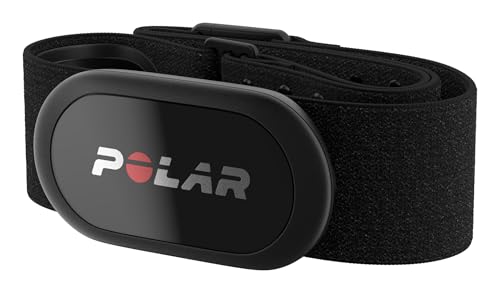
Polar H10 heart-rate sensor with M–XXL strap
View on Amazon
Set effort with the talk test and RPE
The CDC’s intensity guidance uses relative effort: moderate activity usually allows conversation but makes singing difficult; vigorous activity allows only a few words before a breath. On its 0–10 effort scale, moderate activity is about 5–6 and vigorous activity about 7–8. These are broad guides, not diagnostic cutoffs.
Easy movement
Conversation feels comfortable. Use this pace while learning controls, preparing for a session or finishing gradually. Light activity is useful even when it does not count toward a moderate-intensity target.
Moderate effort
You can talk but would struggle to sing. Check again when resistance, terrain or fatigue changes. Slow down when your intended moderate pace becomes harder than that.
Vigorous effort
Only a few words are comfortable before pausing for breath. It is optional and is not the default starting pace in this guide. Being unable to speak comfortably is not a goal for a beginner session.
A watch or chest strap can record heart rate, but the reading does not clear you to exercise. Medication, illness, heat and individual differences can affect the relationship between pulse and effort. Our heart-rate zone calculator for men over 50 supplies estimates, while the heart-rate monitor guide explains device choices. Follow individualized instructions when heart rate needs clinical interpretation.
Twenty minutes on the clock is not automatically twenty moderate minutes
Consider an example with 4 minutes of easy preparation, 12 minutes at a working pace and 4 minutes of easy finishing. The total is 20 minutes. If only 8 minutes of the working segment actually reach moderate effort, record 8 moderate minutes. Do not count pauses, easy periods or an entire machine session as moderate just because the timer was running.
Example session: 4 + 12 + 4 = 20 minutes
4 min
Easy preparation
12 min
Working pace
4 min
Easy finish
Editorial example; segment widths represent elapsed minutes. Effort determines whether any working minutes count as moderate. This is not a required warm-up duration or a cardiac rehabilitation protocol.
Check effort, not just minutes
An illustrative 20-minute session. The working segment counts as moderate activity only while your effort is moderate.
Silent, 8.5 seconds. Open the animation directly. Playback pauses offscreen; reduced-motion preferences keep playback manual. The explanation remains in readable text above.
Three starting examples you can adapt
The examples below suit comparison and familiarization, not every reader’s starting capacity. Choose a shorter trial if needed; do not stretch it to meet the printed duration. For a condition, recent procedure, symptoms or uncertainty about suitability, ask a qualified professional first. The NHS exercise-video safety guidance makes that distinction explicit.
Level walking: 10 minutes
Walk easily for 2 minutes. For 6 minutes, use a comfortable pace on a clear, level route; aim for moderate effort only if appropriate. Finish with 2 easy minutes. Keep steps natural instead of forcing a longer stride.
Check: can you change pace and turn without rushing? If the route is unsuitable, use a clear indoor corridor or another accessible activity.
Familiar stationary bike: 20 minutes
After adjusting the setup and checking the stop controls, pedal easily for 4 minutes. Continue for 12 minutes at a manageable resistance, then ease down for 4 minutes. Reduce resistance if pushing the pedals becomes the limiting task.
Check: secure feet, comfortable knee movement and relaxed shoulders. Do not increase resistance to compensate for an uncomfortable fit.
Familiar elliptical: 10 minutes
Use secure handles and check entry and exit first. Start with 2 easy minutes, continue for 6 minutes at a comfortable setting, then finish with 2 easy minutes. Keep the machine’s stride within a range that feels comfortable.
Check: stable position and a controllable pace. Do not lean heavily on the handles to sustain a setting that is too demanding.
If you have no machine and limited room, use the home cardio exercise guide for practical movement choices. Swimming beginners should seek supervised instruction or an appropriate class; a swimming timer cannot substitute for water competence. New rowers should learn the stroke before trying to maintain a target effort.
Watch the rowing stroke before choosing a rowing session
This short demonstration comes from Concept2, the rowing-equipment manufacturer, and is embedded on its official technique page. Watch the drive and recovery order. It is technique education, not an age-specific workout, medical clearance or an independent recommendation to buy that brand.
Watch the Concept2 demonstration on YouTube if the embed does not play.
What to notice in the rowing demonstration
Concept2’s technique instructions sequence the drive through the legs, body and arms. On recovery, the arms move away before the body tips forward and the knees bend. Begin with comfortable movement and light effort. Do not pull hard while still trying to coordinate the sequence, and get feedback if your position or comfort is uncertain.
Build the next session from your last one
Use a review cycle instead of automatically increasing every week. Record the activity, total time, effort and how you felt afterward. Before changing the next session, consider whether you could control the pace, whether the movement remained comfortable and whether the session disrupted your other training or daily tasks.
| Review | What to check | Possible next step |
|---|---|---|
| 1: Learn the setup | Controls, route, mounting or technique are manageable | Repeat the same short, easy version until it is familiar |
| 2: Confirm repeatability | Two comparable sessions felt manageable during and afterward | Repeat again, or add a few minutes to one session while keeping effort similar |
| 3: Check the response | The longer session remained comfortable and did not interfere with other tasks | Keep that duration; do not also add resistance or hard intervals |
| 4: Review the routine | Access, effort and recovery still fit your week | Keep the routine, change its timing or reconsider the activity; progression is optional |
“Two comparable sessions” is a practical editorial checkpoint, not a validated clearance test. If discomfort or unusual fatigue develops, stop the aggravating activity and review the setup and dose. Persistent or worsening symptoms deserve professional assessment. A harder session should not be the automatic response to a stalled routine.
Where intervals and strength fit
Intervals describe alternating work and easier periods; they do not have to mean sprinting. A walking session can alternate comfortable brisk sections with easy sections. High-intensity intervals are a separate choice for people with suitable capacity and guidance. See our HIIT guide for men over 50 before treating hard intervals as the next compulsory step.
When strength matters, choose cardio that leaves you able to complete the lifting you planned. If a ride leaves your legs too tired for the next lower-body workout, shorten it, reduce its effort or move it. The cardio workout planning guide covers weekly scheduling; strength training at home supplies the separate strength session. There is no single spacing rule that guarantees recovery for every combination.
How much cardio should you work toward?
The CDC adult activity guidance recommends at least 150 minutes of moderate aerobic activity or 75 minutes of vigorous activity weekly, or an equivalent combination, plus muscle-strengthening activity on at least 2 days. Smaller amounts still have value; the recommendation is not a starting-session requirement.
The U.S. Physical Activity Guidelines summary gives a range of 150–300 moderate minutes for substantial benefits. For adults 65 and older, the CDC older-adult guidance also includes balance activity and adapting activity to abilities and conditions. Turning 50 does not itself make the 65-plus recommendations an individualized prescription.
Compare those targets with the time and intensity you actually recorded. Three 20-minute sessions total 60 minutes on the clock; if each contains 12 moderate minutes, they contribute 36 moderate minutes. Extra easy movement can still be useful. Build from your current routine rather than making the arithmetic force an unsuitable pace.
Keep a cardio session record
Download the one-page cardio choice and session worksheet (fillable PDF). Its eight fields record your activity, time, effort and next review; you can also print it and write by hand. The helper’s print button creates a separate record with your current choices, notes and checkmarks.
Conclusion
Choose one accessible cardio activity, check its setup and try a manageable pace. Walking is a practical option when a suitable route is available; a fitted bike can solve an indoor-access problem. Keep swimming, rowing, elliptical work or running when their demands fit your skills and circumstances. Repeat and record a comfortable session, then review one change at a time.
For the wider training week, return to the fitness for men over 50 hub. Our editorial policy explains how we use sources and separate documented product details from hands-on testing.
Frequently asked questions
Is walking enough cardio after 50?
It can be. A walk counts as moderate activity when its effort is moderate for you; a slow stroll may remain light activity. Use breathing and the talk test rather than a universal speed. Walking does not replace separate strength training.
Is a bike better than a treadmill for joint discomfort?
Neither is automatically better. Cycling removes repeated foot strikes, while walking uses a different movement and setup. Comfort depends on the person, condition, fit and dose. Persistent pain calls for assessment, not a machine recommendation alone.
Do I need a heart-rate monitor?
No. Conversation and perceived effort provide useful starting guides. A compatible monitor can add a record, but it does not diagnose a problem or confirm that a pace is safe. Individualized clinical advice takes priority over generic zones.
Should every session become longer each week?
No. Repeatability, comfort and the rest of your week matter. Keep the same duration when it serves your needs. If you progress, change one variable and check the response before adding another.
Can I use these examples with a heart condition or after surgery?
These general examples are not rehabilitation protocols. Ask your clinician or rehabilitation team about suitable activity, effort, preparation and finishing periods. Do not shorten prescribed warm-ups or replace supervised guidance with the selection helper.
Medical Disclaimer: This is general exercise education, not diagnosis, rehabilitation or an individually assessed program. Get qualified guidance for symptoms, medical restrictions, recent surgery or uncertainty about suitability. Stop for pain, dizziness or feeling unwell. Chest pain, fainting or severe or unusual breathlessness can require urgent medical help; call emergency services for severe symptoms.
Affiliate Disclosure: As an Amazon Associate, PrimeForMen earns from qualifying purchases. Recommendations reflect documented listings and task fit, not hands-on product testing. Generated editorial images and the animated timeline are illustrative; they are not measured outcomes or individualized exercise instructions.