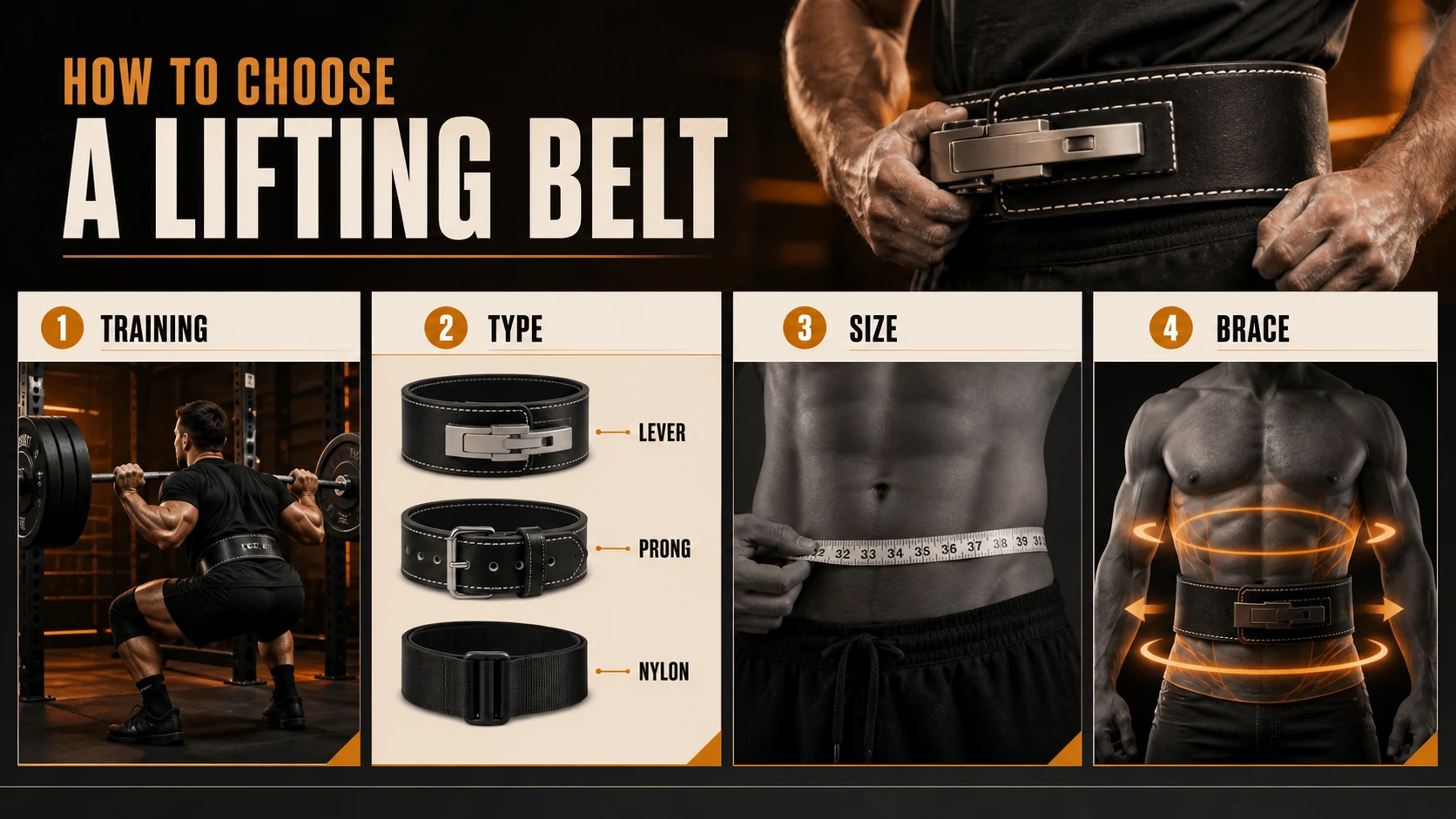
Choose a lifting belt by training style, closure, width, thickness, torso fit and bracing—not maximum stiffness alone.
- Learn to brace before adding a belt.
- Measure where the belt will actually sit.
- Choose closure and stiffness for your training, not ego.
Bottom line A good belt gives your brace a firm surface without blocking your start position or breathing.
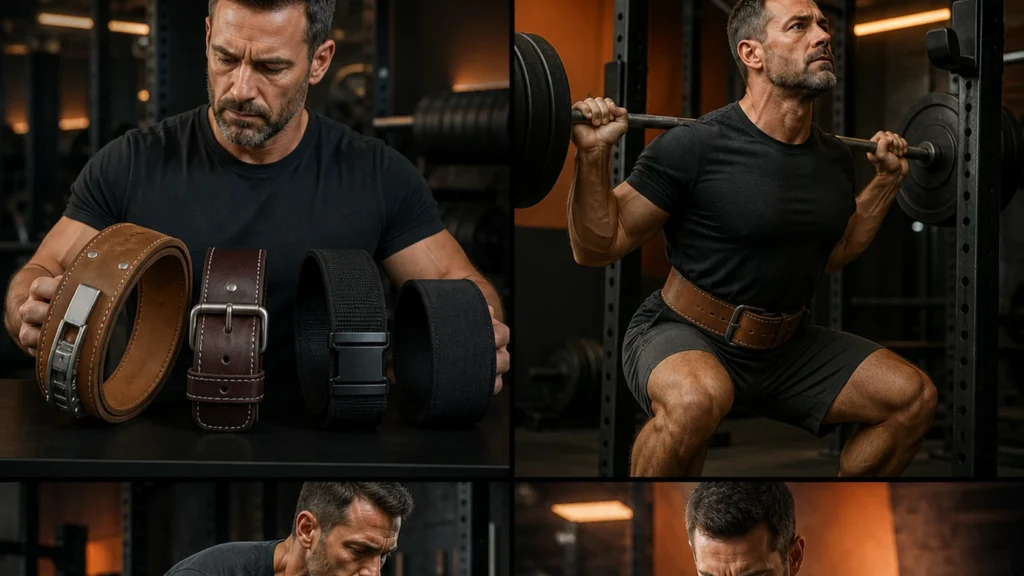
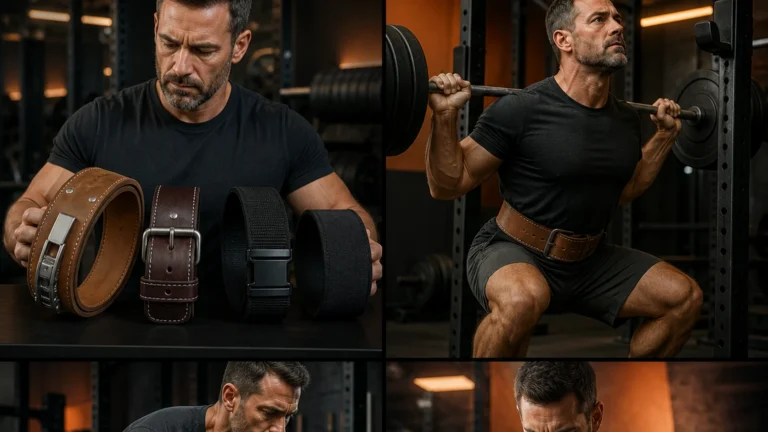
The best lifting belt for men matches the lift, torso, and bracing skill. A 10 mm single-prong leather belt is the versatile strength choice. A lever belt gives fast, repeatable tightness when body size is stable. A nylon belt is more comfortable for mixed training and positions where rigid leather digs into the ribs or hips.
10 mm single-prong leather.
Lever belt.
Nylon quick-lock belt.
Best lifting belts for men should give the abdominal wall a firm surface to brace against without blocking breathing or the start position. A belt does not replace trunk strength and is not necessary for every set. PrimeForMen compared current formats and specifications; we did not personally load-test every belt. Read our editorial policy for the research standard.
Quick Summary: Best Lifting Belt for Men
- Best all-around: 10 mm single-prong leather for squats, deadlifts, and general powerlifting.
- Best repeatable fit: lever closure when the same tightness works session after session.
- Best comfort: tapered leather or flexible nylon for shorter torsos and mixed movements.
- Best easy adjustment: nylon hook-and-loop for sets requiring different tightness.
- Skip the belt: on warm-ups, technique practice, or whenever it masks pain and poor control.
The Prime Perspective
The belt is feedback, not armor. Take a full breath, expand the torso around the belt, and maintain pressure through the hard portion of the lift. If you only pull the belt painfully tight without creating a brace, stiffness and price will not solve the problem.
Lifting-Belt Types Compared
| Type | Best for | Advantage | Tradeoff |
|---|---|---|---|
| Single prong | General strength and powerlifting | Durable, simple, easier than double prong | Slower than lever between sets |
| Lever | Powerlifting with stable sizing | Fast, repeatable closure | Adjustment often requires tools or a quick-release mechanism |
| Double prong | Lifters who specifically prefer it | Symmetrical appearance and secure closure | Harder to align; little practical gain for most users |
| Nylon | Mixed training, weightlifting, comfort | Flexible and quickly adjustable | Less rigid feedback; hook-and-loop wear varies |
| Tapered leather | Shorter torso or Olympic positions | Support with less rib and hip interference | Less uniform bracing surface |
Compare Lifting-Belt Formats on Amazon
Measure at the wearing position and confirm the current size chart, material, width, and closure before ordering.

Gymreapers Quick Lock Belt
For mixed training and lifters who want fast adjustment with less rigid torso contact.
- Measure over the clothing used for lifting.
- Inspect hook-and-loop grip as it ages.
- Recheck tightness before every heavy set.

Element 26 Self-Locking Belt
For functional training and frequent position changes that favor flexibility and quick release.
- Confirm uniform width suits your torso.
- Keep the buckle clear of the bar path.
- Use gradual load exposure while learning to brace.

Dark Iron Fitness Leather Belt
For general barbell training with a traditional leather feel and prong adjustment.
- Use the listing’s actual waist range.
- Expect leather to soften with use.
- Check stitch and edge condition regularly.
*Affiliate disclosure: PrimeForMen may earn a commission from qualifying purchases at no extra cost to you.
Learn to Brace Before Adding Load
A useful brace expands the abdomen, sides, and back rather than pushing only the belly forward. Practice with lighter loads: inhale into the torso, close the rib cage over the pelvis, create pressure against the belt, perform the rep, and reset when needed. Our strength training basics and powerlifting basics explain the broader technique context.
How to Measure a Lifting Belt
Do not use trouser size. Wrap a soft tape around the position where the belt will sit during the target lift, usually near the navel but sometimes slightly higher or lower. Stand relaxed, wear typical training clothing, and pull the tape snug without compressing the abdomen. Choose a size that places your measurement near the middle of the manufacturer’s range, leaving room for body-weight changes.
Torso length
A four-inch belt may pinch between ribs and hips on a shorter torso. A tapered or narrower format can preserve position.
Overlap and holes
You need usable adjustment in both directions, not a closure at the final hole on day one.
Lift position
Deadlift and squat placement may differ. Test the start position before removing tags.
Width and Thickness
Uniform four-inch belts are common for powerlifting because they create a consistent surface. Olympic lifters and short-torso users may prefer a tapered front. Ten millimeters is the practical leather thickness for most strength trainees: supportive without the break-in burden of very thick competition belts. Thirteen millimeters is a specialized choice for lifters who know they want maximum rigidity.
Competition rules can constrain maximum width, thickness, materials, and closures, so a competing lifter should verify the current federation rulebook rather than relying on a product badge. BarBend’s lifting-belt guide is also useful for comparing closure types and sport-specific needs.
Lever Versus Prong Versus Nylon
A lever closes quickly to the same setting and is convenient for repeated squat sets. A prong adapts more easily when waist size or placement changes. Single prong is simpler to line up than double prong. Nylon can be adjusted within seconds and flexes during cleans, rows, or conditioning. The best closure is the one you can position and release confidently without turning every set into a struggle.
What Most Belt Roundups Miss
More stiffness can reduce usable training if the belt collides with the ribs, hips, or bar. Comfort is not weakness. The correct belt lets you reach the start position, take a full breath, and maintain pressure. Numbness, sharp pinching, bruising, or pain are stop signals—not proof of a productive fit.
When to Wear the Belt
Use it on challenging compound sets where bracing demand is high and technique is stable. Warm up without it, then add it before the heaviest work so you can practice belt-specific breathing. Beltless accessory sets maintain unassisted trunk practice. A classic study indexed by PubMed found that belts can affect intra-abdominal pressure during lifting, but this does not mean they prevent injury or make poor technique safe; review the research abstract within that limited context.
Who Should Pause or Skip a Belt?
Skip it when pain is unexplained, a recent surgery or medical condition affects pressure tolerance, or the belt changes breathing in a way that feels unsafe. Seek individualized guidance if you have a hernia history, uncontrolled blood pressure, pelvic-floor symptoms, or cardiovascular restrictions. Do not use a belt to push through back pain.
For the rest of the setup, compare weightlifting shoes, home power racks, and essential fitness gear.
Conclusion
The best lifting belt for men supports a trained brace and fits the torso in the actual lift. Choose single-prong leather for versatility, lever for repeatable powerlifting setup, or nylon for flexible adjustment. Measure the wearing position and value usable comfort above maximum advertised stiffness.
Frequently Asked Questions About Lifting Belts for Men
When should I start using a lifting belt?
After you can brace and perform the lift consistently without one. Introduce it on moderate sets before relying on it near maximal loads.
How tight should a lifting belt be?
Tight enough to provide firm feedback but loose enough to take a full breath and expand the torso. Pain, numbness, and restricted breathing indicate a poor setup.
Is a lever or prong belt better?
A lever is faster and repeatable; a prong adjusts more easily as body size and placement change. Neither is universally stronger in practical home-gym use.
Should I buy a 10 mm or 13 mm belt?
Ten millimeters suits most lifters. Thirteen millimeters is very rigid and mainly appropriate for experienced powerlifters who know that format fits their torso and federation.
Does a lifting belt prevent back injuries?
No belt guarantees injury prevention. It can support bracing performance, but load management, technique, recovery, and appropriate medical care still matter.
This is general education, not medical advice. Stop for pain, numbness, dizziness, or breathing difficulty and obtain qualified guidance when needed.
Some links are affiliate links. PrimeForMen may earn a commission from qualifying purchases at no additional cost to you.