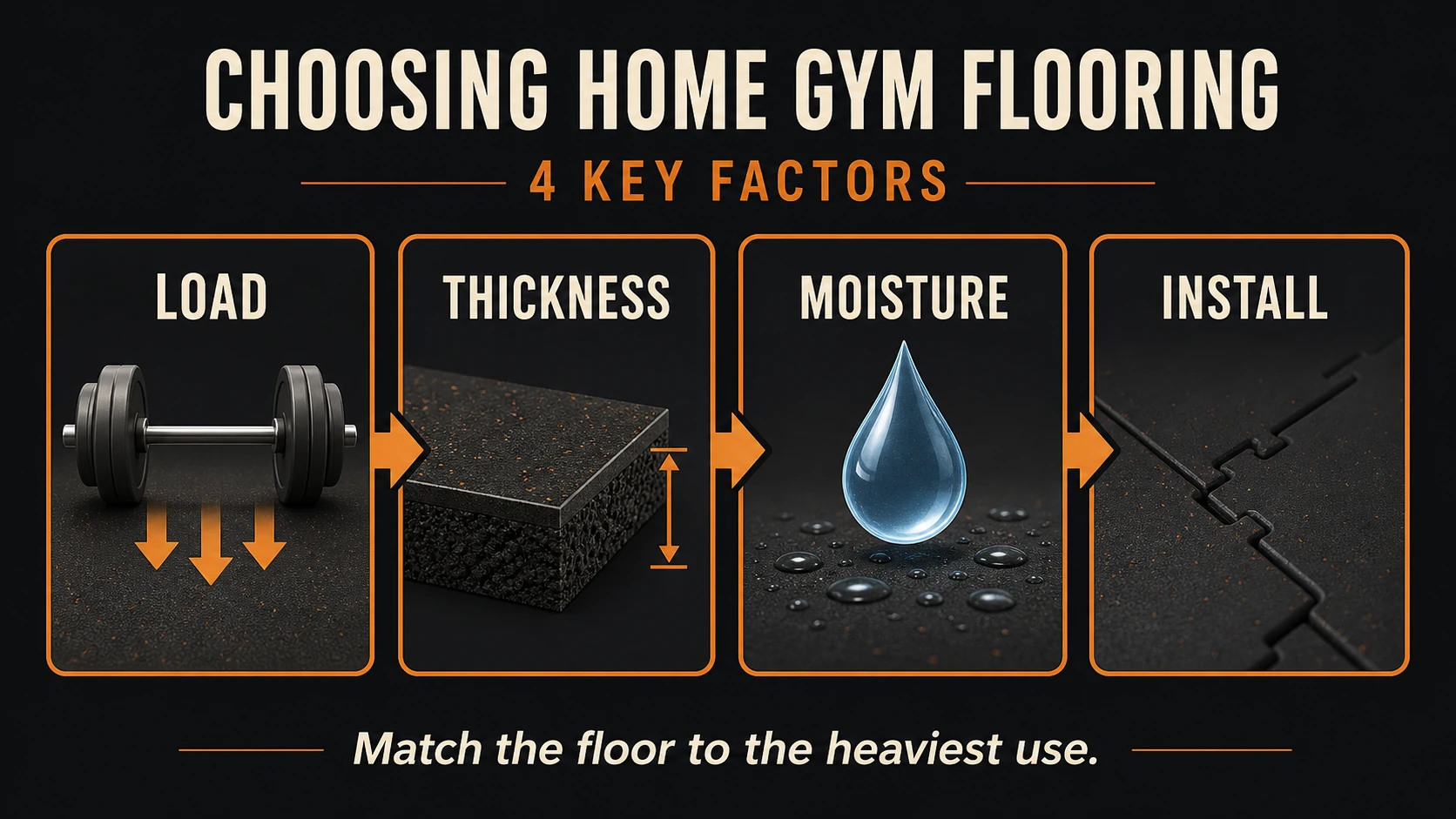
Compare home gym flooring by load, thickness, moisture, installation, noise and real room use before you buy.
- Match material to the heaviest load.
- Treat moisture before covering concrete.
- Protect a lifting zone, not only the machine feet.
Bottom line For most garage strength gyms, dense rubber in a planned training zone is the durable default; foam belongs under lighter work.
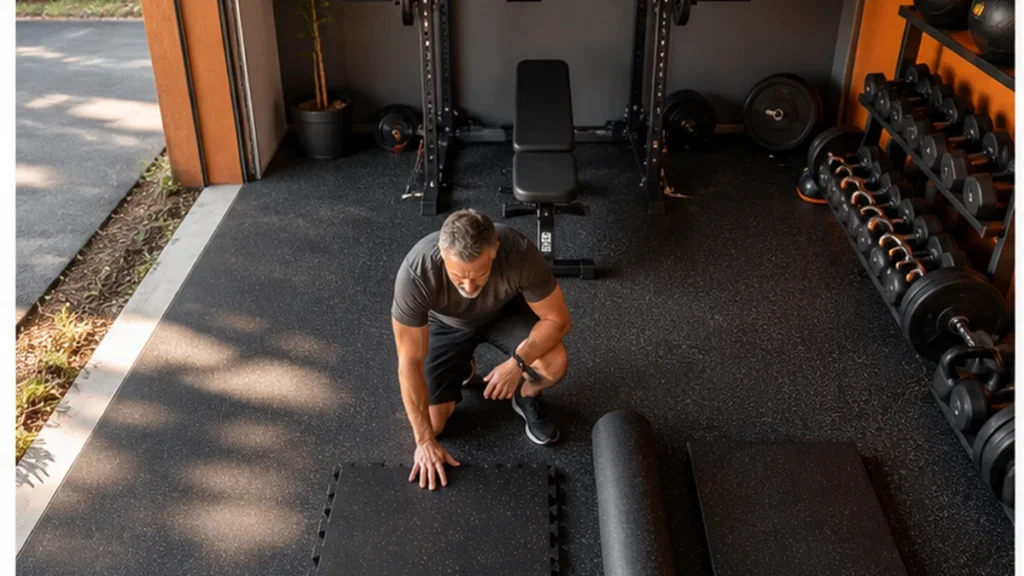
The best home gym flooring is dense rubber sized for the heaviest thing you do. Use thicker rubber or a layered lifting platform where loaded barbells may land, rolled rubber for broad seamless coverage, and interlocking rubber-top tiles when installation must stay modular. EVA foam is comfortable for bodyweight work, but it compresses and separates under heavy racks and benches.
Use dense rubber and add a platform or impact tiles in the drop zone.
A continuous rubber surface limits movement and protects the subfloor.
Rubber-top tiles are easier to remove than adhesive-backed rolls.
Best home gym flooring should solve a defined training or ownership problem without adding avoidable risk, maintenance or clutter. PrimeForMen compared current product formats, published specifications, live retail listings and authoritative guidance; we did not personally test every model. Our editorial policy explains that distinction.
Quick Summary: Best Home Gym Flooring
- Heavy barbell work: Use dense rubber and add a platform or impact tiles in the drop zone.
- Machines and dumbbells: A continuous rubber surface limits movement and protects the subfloor.
- Multipurpose room: Rubber-top tiles are easier to remove than adhesive-backed rolls.
- Concrete garage: Check vapor, drainage and slab condition before sealing the floor.
- Upstairs room: Prioritize vibration isolation and structural load—not thickness marketing alone.
The Prime Perspective
Flooring is infrastructure. It should make the room quieter, safer to clean and less likely to damage equipment or the building. A premium logo cannot compensate for a damp slab, moving seams or a lifting zone that ends under half the barbell.
Which Type Fits Your Use?
| Format | Best for | Main advantage | Main limitation |
|---|---|---|---|
| Rubber roll | Dedicated room | Few seams, stable machines | Heavy and harder to move |
| Rubber tile | Garage or modular gym | Replaceable sections | More seams to manage |
| Rubber-top EVA | Moderate equipment | Comfort plus easier install | Can compress under point loads |
| Plain EVA foam | Mobility and bodyweight | Light, warm, inexpensive | Poor heavy-equipment stability |
| Lifting platform | Barbell drop zone | Focused impact protection | Needs space and careful build |
Our Buying-Criteria Priority
This chart is not a product score. It shows how heavily we weight each factor when screening a purchase for real home use. A high number means the criterion can veto an otherwise attractive option.
95
90
78
62
45
Fit the use
Start with the person, movement and room. A feature has value only when it solves that use.
Check ownership
Include setup, cleaning, storage, parts, returns and the realistic frequency of use.
Control risk
Favor stable fit, conservative progression and clear manufacturer instructions over dramatic claims.
Compare Current Options on Amazon
Availability, variant details and seller terms can change. Confirm size, dimensions, included parts, warranty and return conditions on the current listing.

SUPERJARE Rubber-Top Tiles
For modular home gyms that need more surface grip than plain foam.
- Verify total square-foot coverage.
- Place rack feet fully inside the tiled zone.
- Inspect seams after the first loaded sessions.

ProsourceFit EVA Puzzle Mat
For bodyweight, mobility and light equipment where warmth and easy removal matter.
- Do not treat foam as a drop platform.
- Check compression under bench and rack feet.
- Order enough edge pieces for the layout.

SUPERJARE Large Rubber-Top Set
For covering a larger mixed-use room with replaceable interlocking sections.
- Measure the training zone in both directions.
- Leave doors and floor drains functional.
- Confirm the exact thickness of the selected set.
Affiliate disclosure: PrimeForMen may earn a commission from qualifying purchases at no extra cost to you.
Start With the Training Load
List the heaviest rack, machine, dumbbell and loaded barbell that will contact the floor. Static point loads from narrow feet can dent soft surfaces even when nothing is dropped. Dynamic impact is a different problem: deadlifts, cleans and dropped dumbbells need a controlled impact zone. Build for the worst credible event, then use a simpler surface elsewhere instead of overspending wall to wall.
Thickness Is Not the Whole Specification
Thickness helps only when the material density and construction suit the job. Soft foam may be thick yet unstable; dense rubber can feel firm at a lower profile. Ask whether the surface compresses under a bench foot, whether tiles curl, and whether a loaded bar rolls across seams. For a lifting platform, the combined layers and edge transitions matter more than one headline number.
For the surrounding setup, compare our home gym equipment guide and home gym equipment finder.
Moisture, Odor and Cleaning
Concrete can move moisture into a covered floor. Test the slab, repair drainage problems and follow the flooring maker's subfloor instructions before installation. Rubber odor usually fades with ventilation, but an enclosed basement needs a plan. Choose a surface you can vacuum and mop without trapping sweat in deep seams. A cleanable perimeter is more useful than decorative borders.
Measure the Usable Zone
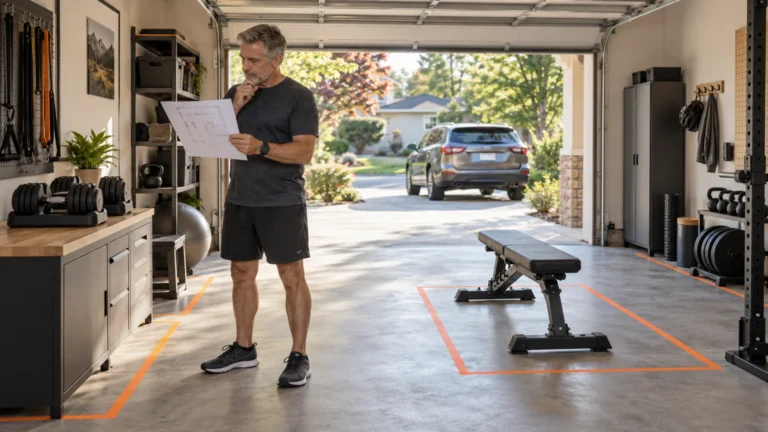
Draw the rack, bench path, plate storage, barbell sleeves and walking route on the floor with tape. Include space behind a treadmill, clearance for cable arms and room to roll a bench. Flooring should extend through the complete movement and storage zone. If a seam lands under a rack foot or along the bar path, shift the layout before cutting material.
Keep the purchase inside a complete plan with the power rack guide and weight bench guide.
What Most Flooring Guides Miss
Noise and vibration travel through the building differently from visible impact. A thick mat can protect hardwood yet still transmit low-frequency thuds to a room below. Upstairs gyms require conservative loading and, when in doubt, structural advice. In garages, door clearance, vehicle tires, petroleum exposure and freeze-thaw moisture may determine whether a permanent installation is sensible.
Installation and First-Week Check
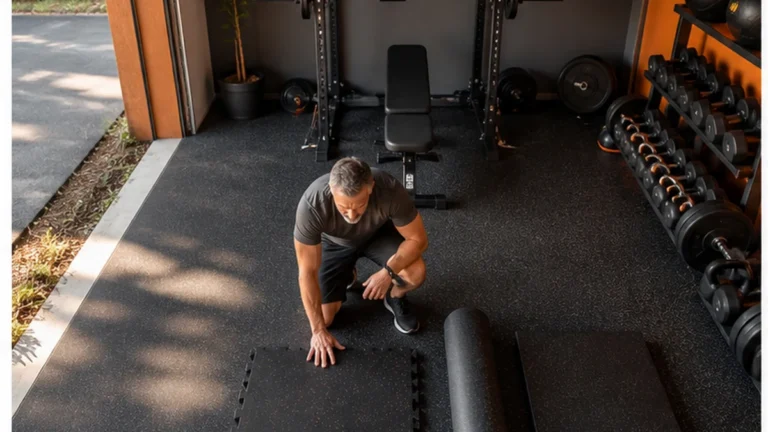
Acclimate material as directed, clean and dry the subfloor, and dry-fit the entire layout before trimming. Do not trap access panels or floor drains. After installation, load the bench, roll the rack accessories and perform light versions of the planned lifts. Recheck seams, rocking and edge movement after several sessions; early correction is easier than moving a complete gym later.
What Most Buying Guides Miss
The most expensive surface is not automatically the safest. The correct system is the one that stays flat, keeps equipment stable and manages the building conditions beneath it.
Five-Step Pre-Purchase Check
- Tape out every equipment and movement zone.
- Check slab moisture, level and door clearance.
- Select material by static load and impact separately.
- Dry-fit seams away from rack feet and bar paths.
- Test with light loads, then inspect movement after one week.
Evidence and Source Check
We used the EPA Moisture Control Guidance for why damp slabs and trapped moisture must be addressed before flooring. Product specifications and availability can change, so confirm the live manual and listing before purchase. Evidence about a category does not validate every consumer product or marketing claim.
Who Should Skip This Purchase?
Skip it when the item has no defined role, the room or body fit is uncertain, or the routine depends on motivation rather than a repeatable schedule. Borrow, try a gym version or choose a simpler substitute when the expected use is occasional. A good return policy helps with fit; it does not make an unsuitable category valuable.
Calculate the Real Ownership Cost
The checkout price is only the first line. Add delivery, assembly, floor protection, accessories, replacement wear parts, cleaning supplies, batteries or electricity where relevant. Then divide that realistic total by the number of sessions you expect during the first year. This is not a promise that cost per use will become low; it is a way to expose a purchase that has no credible schedule. Also confirm who pays return freight, whether opened fitness equipment can be returned and which components the warranty excludes.
Make a One-Page Decision Before Checkout
Write down the primary user, primary exercise or use, room location, minimum acceptable fit, three veto criteria and the exact model or variant. Save the current manual, dimension diagram and warranty rather than relying on a marketplace title. Photograph the measured space and keep the packaging until fit, function and condition have been checked. Finally, schedule the first four uses. If you cannot describe when and how the product enters the routine, the strongest decision is to wait rather than let a limited-time discount decide.
Conclusion
Choose home gym flooring as a room system: load, impact, moisture, seams and maintenance. Dense rubber is the practical default for strength equipment, while a deliberate platform handles the highest-impact zone. Measure first, keep machines stable and make the surface easy to clean.
Place This Purchase Inside the Full Training Plan
A product decision works better when it connects to your room, program and recovery priorities. Use the pillar that matches the constraint you are solving next.
Frequently Asked Questions About Best Home Gym Flooring
How thick should home gym flooring be?
Use thickness as one part of the decision. Light training can use thinner dense rubber; heavy lifting and drops need a purpose-built impact zone or platform. Material density and subfloor matter.
Is rubber or foam better for a home gym?
Rubber is the better general choice under heavy equipment. Foam is warmer and cheaper for mobility or bodyweight work but can compress and separate under point loads.
Can I put gym flooring directly on concrete?
Often yes, but first address moisture, cracks, drainage and manufacturer requirements. Covering a damp slab can trap odor and create hidden problems.
Do I need flooring under a power rack?
A stable protective surface is useful under a rack, but the rack's anchoring instructions still control. Flooring must not make the frame rock or weaken required fasteners.
Are horse stall mats good gym flooring?
Dense stall mats can be durable and economical, but dimensions, odor, surface texture and material consistency vary. Inspect them and plan seams before buying.
Follow the current manufacturer instructions, inspect equipment before use, progress conservatively and stop for pain, dizziness, numbness or loss of control.
Some links are affiliate links. PrimeForMen may earn a commission from qualifying purchases at no additional cost to you.