Compare the best home gym power racks by space, safety, hardware, attachments and budget before you commit.
- Measure ceiling, depth, barbell clearance, and floor first.
- Reliable safeties matter more than inflated capacity claims.
- Choose an attachment standard that fits your real upgrade plan.
Bottom line The best rack is the smallest reliable platform that safely supports the training you will actually do.
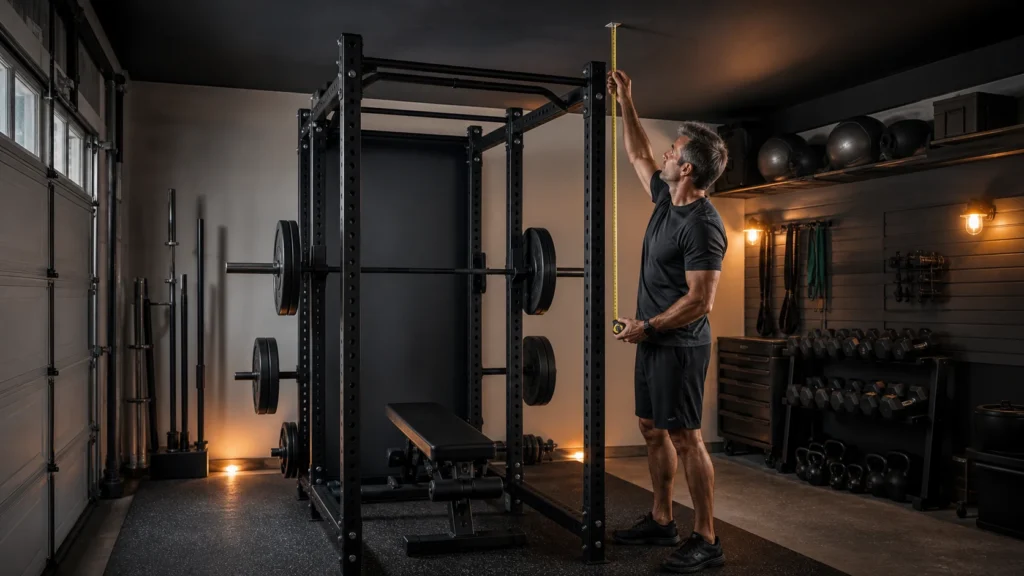
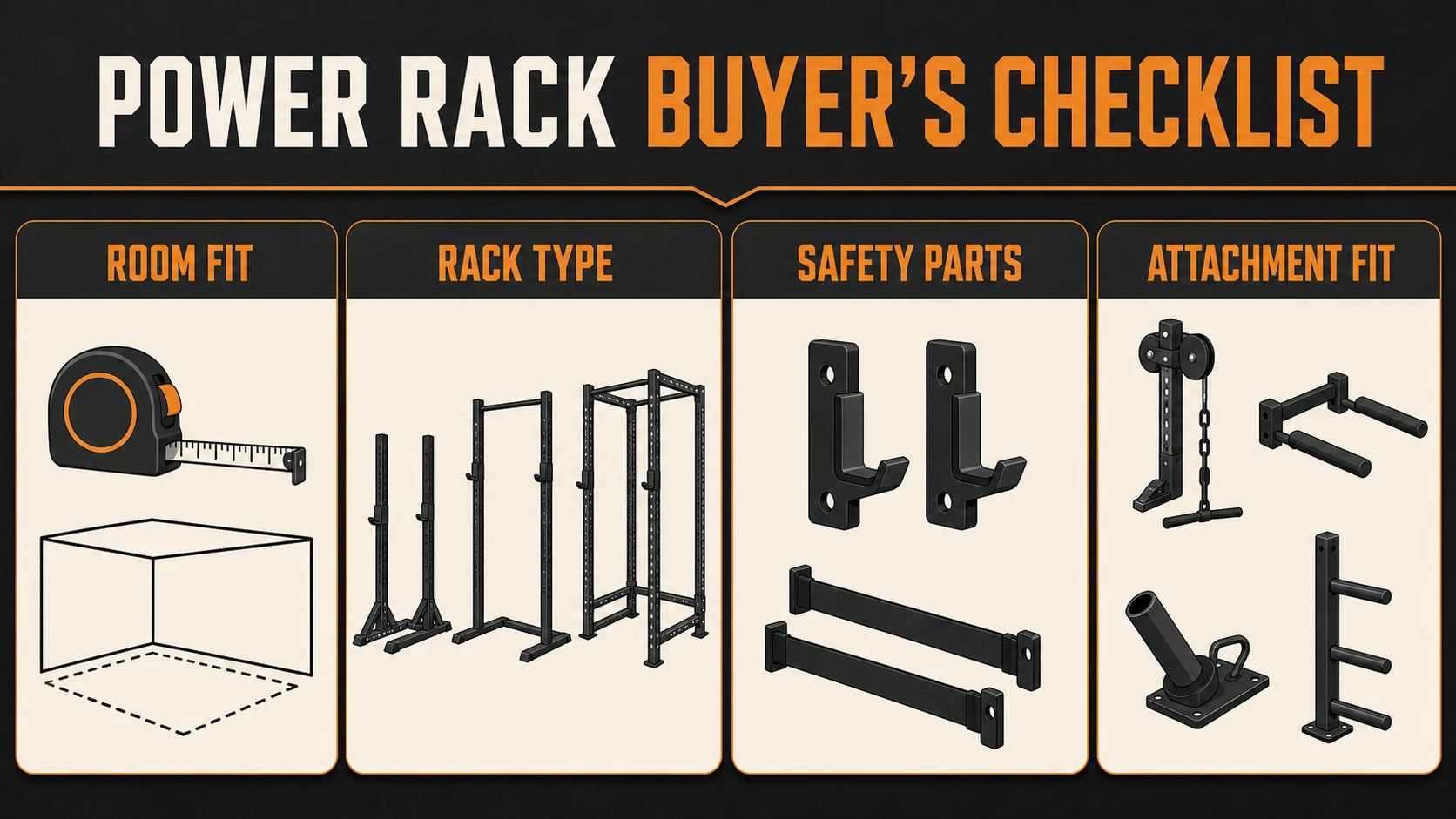
The best power rack for a home gym is the one that fits your room, training, and upgrade path before it impresses you with capacity claims. Measure ceiling height, usable depth, barbell clearance, floor type, and plate storage first. For most serious lifters, a modular rack with reliable safeties and a common attachment standard is a better long-term buy than the cheapest cage or the most complicated all-in-one.
Short, shallow, or folding rack.
Stable cage plus proven safeties.
Common hardware and attachments.
Best power racks for home gyms should make solo lifting safer and let your setup grow without forcing an expensive replacement. Following our editorial policy, this guide compares current product families and specifications using manufacturer data and established equipment-review consensus. PrimeForMen did not personally load-test every rack here, so we do not present research as hands-on testing.
Quick Summary: Best Power Rack for Home Gym Buyers
- Best expandable platform: REP PR-4000 for a common 3-by-3-inch ecosystem and broad configuration choices.
- Best budget cage: REP PR-1100 or a comparable four-post starter rack when basic safeties and pull-ups cover your needs.
- Best compact route: a short-depth or folding rack only after you confirm wall, floor, and installation requirements.
- Best all-in-one route: a rack-cable combination when one footprint must handle barbell and pulley work.
- Skip a full rack: if you lift light, cannot anchor or stabilize it as required, or mostly train with dumbbells and machines.
The Prime Perspective
A rack is not a trophy. It is a safety structure. Spend first on usable dimensions, safeties you will actually set, stable J-cups, and an attachment standard that will still make sense in five years. A 1,000-pound rating is meaningless if the rack does not fit your bench position or your bar hits the wall.
Our Researched Power-Rack Shortlist
| Rack family | Best for | Why it earns a look | Main tradeoff |
|---|---|---|---|
| REP PR-4000 | Best expandable rack | Modular 3-by-3-inch platform, multiple heights and depths, broad attachment ecosystem. | Configuration choices increase the real checkout price. |
| REP PR-1100 | Best starter cage | Compact footprint and approachable price for basic squat, bench, pull-up, and safety work. | Lighter-duty ecosystem and fewer premium refinements. |
| Titan T-3 Series | Best budget heavy-duty route | Established 2-by-3-inch platform with multiple heights and folding configurations. | Attachment compatibility needs closer checking than common 3-by-3 standards. |
| Rogue R-3 / Monster Lite | Best durability-first choice | Strong construction, established support, and a deep attachment catalog. | Premium cost and some models strongly favor anchoring. |
| Major Fitness F22 / similar all-in-one | Best rack-plus-cables concept | Combines barbell station, pulleys, and attachments in one footprint. | More moving parts, more assembly, and less modular freedom than a simple rack. |
Compare Power-Rack Categories on Amazon
Verify ceiling height, rack dimensions, installation requirements, and current warranty before buying.

Fitness Reality Four-Post Power Cage
For basic squats, benching, pull-ups, and safety work without a premium ecosystem.
- Confirm included J-cups and safeties.
- Check inside width and walk-in depth.
- Read assembly and stability feedback.

HulkFit Wall-Mounted Folding Rack
For garages or multipurpose rooms where permanent depth is the limiting factor.
- Verify wall and floor requirements.
- Measure barbell clearance when unfolded.
- Confirm safeties work in the chosen setup.

HulkFit Pro Series Power Cage
For lifters who want a full cage and an attachment path inside a dedicated gym footprint.
- Confirm which attachments are included.
- Account for plate and bar storage.
- Check current replacement-parts support.
*Affiliate disclosure: PrimeForMen may earn a commission from qualifying purchases at no extra cost to you.
Measure the Room Before Comparing Steel
Ceiling
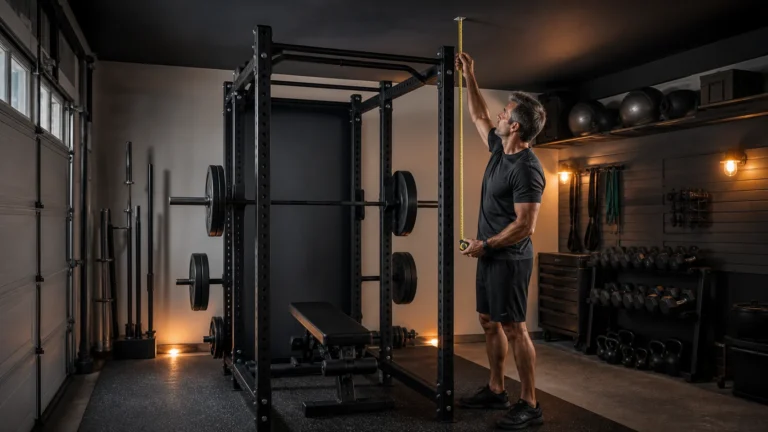
Measure the lowest obstruction, not the advertised room height. Pull-up bars, ceiling doors, ducts, lights, and stall mats all reduce usable height.
Working depth
Add space for bench movement, plate loading, spotter-arm clearance, and walking around the rack. Exterior footprint is only the starting number.
Bar path
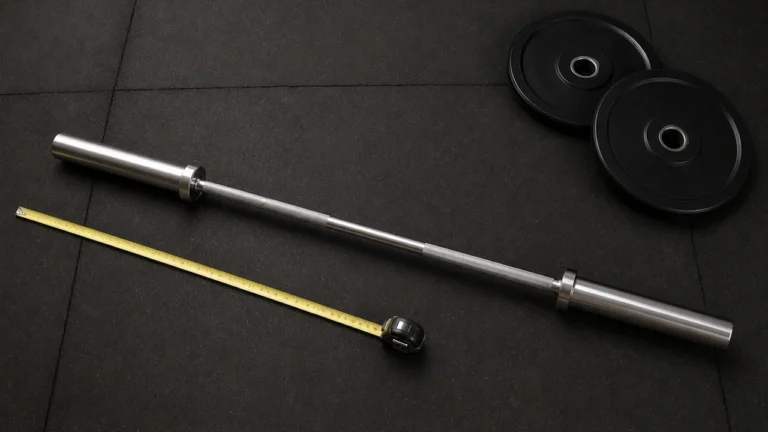
A seven-foot bar needs side clearance. Make sure sleeves can be loaded without hitting a wall, vehicle, storage shelf, or cable tower.
The 15-Minute Rack Measurement Protocol
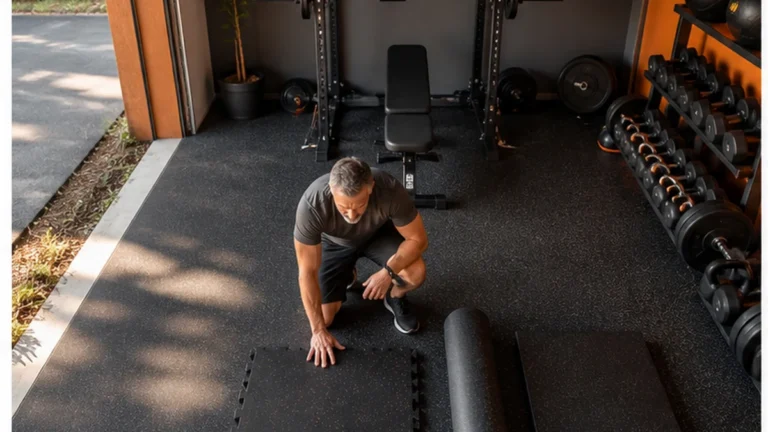
- Tape the proposed footprint on the floor.
- Add the bench in both flat and incline positions.
- Mark barbell sleeve clearance on both sides.
- Open garage doors and nearby cabinets.
- Simulate loading plates and setting safeties.
- Add floor thickness to the rack height.
Power Rack Types Compared
| Type | Best use | Strength | Compromise |
|---|---|---|---|
| Four-post power rack | Solo squat and bench training | Full inside safeties and strong stability potential | Permanent footprint |
| Six-post rack | Plate storage and premium builds | More storage and stability | More depth and cost |
| Half rack | Open lifting area | Easy access and moderate footprint | Mostly outside-rack lifting |
| Folding rack | Garage or shared room | Reclaims floor space | Installation and setup friction |
| All-in-one rack | Barbell plus cable training | High exercise variety per footprint | Complexity, price, and proprietary parts |
Steel, Uprights, and Hardware Without the Marketing Fog
Premium racks commonly use 3-by-3-inch uprights with either 5/8-inch or 1-inch hardware. That matters less because one size is automatically stronger and more because popular standards give you more attachment choices. Two-by-three-inch and two-by-two-inch racks can still be appropriate for home training, but compatibility becomes more model-specific.
Steel gauge is also only one factor. Hole spacing, weld quality, crossmembers, feet, anchoring instructions, and how the safeties engage all affect real use. BarBend’s current power-rack testing roundup similarly emphasizes dimensions, capacity, attachments, and overall design rather than one isolated number.
Power Rack Attachment Compatibility: Check the Exact System
A matching “3 × 3” label is a starting point, not a compatibility guarantee. Before ordering an attachment, identify your rack series and generation, the selected attachment variant and the manufacturer’s supported combinations. REP’s attachment guidance specifically calls for matching the series, upright dimensions, hole size and spacing; cross-brand fit is not guaranteed.
- Identify: record the rack model, generation, height and depth, then the attachment’s exact name and option.
- Compare the connection: check upright dimensions, pin and hole specifications, spacing and every fixing point the attachment uses. Do not substitute approximate metric and inch dimensions.
- Check the installation: confirm permitted mounting position, anchoring or stabilizer requirements and conflicts with existing cables, storage or safeties.
- Check the working area: allow for the attachment and the movement, not just whether it clips onto the upright.
- Save the evidence: keep the model-specific manual or written manufacturer confirmation with the order. Treat unanswered fit questions as unresolved.
| Rack family | Named attachment / source | What is confirmed and what to check |
|---|---|---|
| Rogue R-3 / Infinity | Infinity Matador, listed on the R-3BT page | Rogue lists the Infinity-family option. Do not substitute the Monster or Monster Lite version. Follow the rack’s anchoring instructions. |
| Rogue Monster Lite | Monster Lite Matador | Rogue specifies Monster Lite racks/rigs and explicitly excludes SML-1. The similar name does not make the versions interchangeable. |
| REP PR-4000 / PR-5000 | REP Smith Machine Rack Attachment | REP lists 80- and 93-inch rack heights. Four-/six-post configuration, depth and existing cable attachments impose further restrictions; confirm the complete configuration before ordering. |
This is a short list of manufacturer-described examples, not a universal interchangeability chart or an independent load test. For the REP Smith attachment, specifically check the maker’s current rules for safety use and combinations with Ares or Athena; a family match alone does not clear every configuration.
If fit is not confirmed, pause the purchase
Do not drill the rack, omit a locking pin or improvise an adapter to make an unconfirmed load-bearing attachment fit. Ask the manufacturer about the exact combination instead. Physical fit and approved use are different questions.
Once compatibility is established, place the attachment’s full use area into your home gym room plan. A part can belong to the correct system and still block the bench, plate loading or doorway in your room.
Safety Features That Matter Every Session
- Pin-pipe or strap safeties: set them just below the bottom position you can complete with control.
- Stable J-cups: protective lining, secure engagement, and enough room to unrack without hitting the upright.
- Anchoring or stabilizers: follow the specific manufacturer’s requirement; never assume a rack is freestanding.
- Bench alignment: test head position, upright interference, and the handoff path before loading heavily.
- Clear training zone: keep plates, collars, handles, and loose attachments out of the bailout area.
A rack reduces risk only when safeties are set correctly. Pair it with a suitable home-gym weight bench and build technique through the strength-training basics guide before chasing maximum loads.
What Most Rack Roundups Miss
Attachment ecosystems create lock-in. A cheap rack can become expensive if you replace it to add cables later. A premium rack can also become wasteful if you never use specialty attachments. List the five movements you need now and the three you may add later. Buy the smallest reliable platform that covers that list.
Low Ceilings and Small Spaces
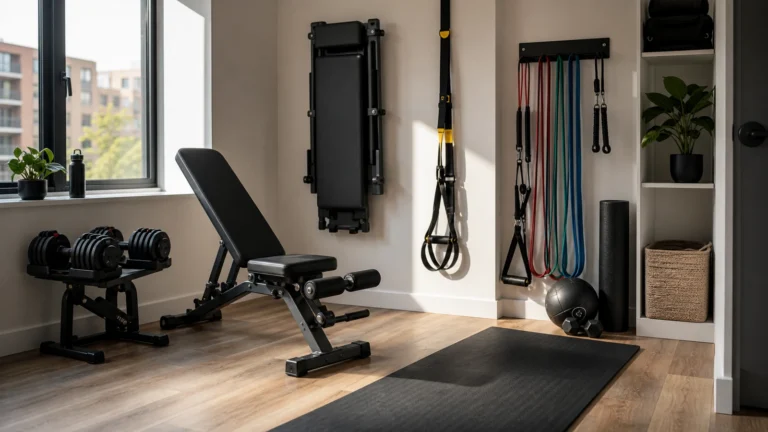
For a basement or low garage, compare rack height with your actual overhead-press and pull-up needs. A short rack may fit but prevent full hanging. A folding rack saves depth, not necessarily width. A half rack preserves open movement but uses outside safeties. If your room is genuinely tight, the broader small-space home gym guide can show whether adjustable dumbbells and a bench would serve you better.
When an All-in-One Power Rack Makes Sense
A rack with cable towers or a functional-trainer section is compelling when one footprint must support squats, presses, pulldowns, rows, curls, and accessory work. Check pulley ratio, starting resistance, cable travel, handle spacing, plate loading, and whether both sides can be used independently. Simpler racks usually win on repairability and open space; integrated systems win on exercise variety. Compare those tradeoffs in the home gym cable-machine guide before committing to a proprietary rack attachment.
If the rack fits but a full-length bar leaves too little loading room, compare short rackable barbells. Measure the actual outside support width and the bar’s clear shaft span separately; a short overall length does not establish rack compatibility. The guide also checks sleeve space for plates and collars.
Conclusion
The best power rack for a home gym fits the room before it fits the wish list. Measure the full working zone, choose safeties you will use, and prefer an attachment standard that matches your realistic training plan. Buy a six-post or all-in-one only when the extra functions solve an actual problem.
For many men, the sweet spot is a stable four-post rack with sensible depth, reliable safeties, and room to add one or two attachments later.
Frequently Asked Questions About Home Gym Power Racks
What is the best power rack for most home gyms?
A modular four-post rack with reliable safeties, suitable room dimensions, and a common attachment standard is the best general format. The REP PR-4000 is a strong expandable example; simpler starter cages cost less.
How much should I spend on a home gym power rack?
Budget for the complete usable setup: rack, safeties, J-cups, shipping, anchoring, floor protection, and any essential attachment. A lower sticker price can become expensive after missing parts are added.
Does a power rack need to be bolted down?
Some do and some provide stabilizer or flat-foot options. Follow the exact manufacturer’s instructions and account for movements, attachments, and loads that can tip or shift the frame.
Is a folding power rack safe?
A properly installed folding rack can be safe when used within its design limits. Wall structure, fasteners, installation quality, locking points, and safeties matter more than the folding label.
Should I buy a power rack with cables?
Choose integrated cables when limited space must support both barbell and pulley training. Choose a simpler rack if you value open space, easier maintenance, and maximum attachment flexibility.
This guide is educational. Follow manufacturer installation instructions, inspect equipment regularly, use correctly positioned safeties, and seek qualified coaching if you are unsure about lifting technique.
Some links are affiliate links. PrimeForMen may earn a commission from qualifying purchases at no additional cost to you.