Build a smarter home gym: starter, strength, and apartment setups with budget tiers, safety checks, and upgrade paths.
- If you are starting from zero, buy a workout mat, resistance bands set, and adjustable dumbbells before any cardio machine.
- For strength, prioritize load progression, stable flooring, a bench or rack only when needed, and enough clear space to fail safely.
- For apartments, choose quiet, vertical, foldable, or under-bed storage gear before treadmills, barbells, or heavy plates.
Bottom line The best home gym equipment for men is not the most impressive setup. It is the equipment that lets you train consistently, safely, and progressively in the space you actually have.
Buyer guide – home gym – men
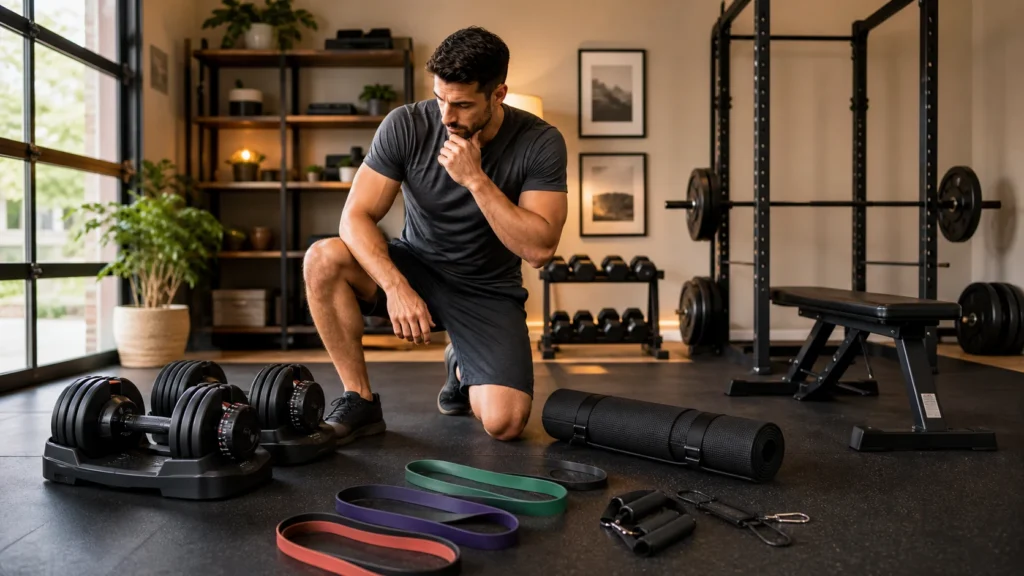
Home gym equipment for men works best when it is chosen around your space, training goal, and upgrade path, not around the biggest machine you can fit through the door. The right setup can start with a mat, bands, and adjustable dumbbells, then grow into a serious strength station only when your training justifies it.
This guide is built for the decision point: what to buy first, what to skip, how much to spend, and how to avoid turning a spare corner into an expensive storage problem.
Quick Summary: Home gym equipment for men
- If you are starting from zero, buy a workout mat, resistance bands set, and adjustable dumbbells before any cardio machine.
- For strength, prioritize load progression, stable flooring, a bench or rack only when needed, and enough clear space to fail safely.
- For apartments, choose quiet, vertical, foldable, or under-bed storage gear before treadmills, barbells, or heavy plates.
- Budget in tiers: under $150 for habit-building, $300 to $700 for a real starter gym, $1,000+ only when you know you will train consistently.
- Safety matters more than novelty: stable surfaces, secure collars, enough clearance, and exercises you can perform with control.
The Prime Perspective
A home gym is not a smaller commercial gym. It is a decision system. The best equipment removes friction, lets you train the major movement patterns, and gives you clear ways to progress without crowding your home.
For most men, the winning setup is boring in the best way: adjustable resistance, a non-slip surface, simple tracking, and enough room to train hard without negotiating with furniture. If you need workouts to match the setup, pair this guide with strength training at home and full body home workout programming.
Choose Your Setup Type First
Before comparing brands, decide which home gym you are actually building. A starter setup, a strength setup, and a compact apartment setup solve different problems. If pulley training is central to the plan, compare the best cable-machine formats for a home gym before spending floor space on a fixed station.
Best if you are rebuilding consistency, training 2 to 4 days per week, or replacing random workouts with a simple plan. Buy versatile gear first.
Best if you already lift and need progressive overload at home. Prioritize load, stability, bench options, and safe space.
Best if noise, neighbors, and storage are real constraints. Choose bands, adjustable dumbbells, a mat, and quiet conditioning.
If your budget is tight, read fitness on a budget before buying. Used equipment can be smart, but only if moving parts, welds, collars, cable systems, and padding are in good condition.
Home Gym Equipment Scorecard
Use this scorecard to decide whether a piece of equipment deserves floor space. The best home gym gear scores high on training value, space efficiency, safety, and upgrade potential.
High value because they cover presses, rows, squats, hinges, carries, and isolation work without needing a full rack.
Excellent for warmups, rows, pulldowns, mobility, travel, and joint-friendly accessory work.
Protects flooring, improves comfort, reduces slipping, and makes core, mobility, push-up, and stretching work easier.
Useful only when they match a proven habit. They are expensive, bulky, and often the first thing to become storage.
| Setup | Best first buys | Budget range | Space needed | Upgrade path |
|---|---|---|---|---|
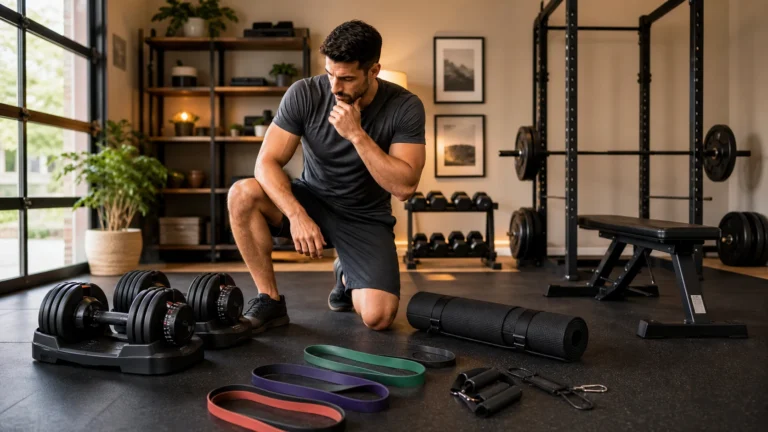
| Starter setup | Workout mat, resistance bands set, adjustable dumbbells | $100-$500 | 6 x 6 ft clear training zone | Add bench, heavier dumbbells, pull-up bar, or kettlebell |
| Strength setup | Adjustable dumbbells or barbell set, bench, flooring, rack if space allows | $700-$2,500+ | 8 x 8 ft minimum, more for barbell work | Add plates, safety arms, specialty handles, cable station |
| Compact apartment setup | Mat, bands, adjustable dumbbells, door anchor, quiet cardio option | $150-$800 | One open corner plus vertical storage | Add foldable bench, compact bike, suspension trainer |
Amazon Starting Kit: The 3 Categories That Cover Most Men
These are the three categories worth shopping first because they create the most exercise options per dollar and per square foot. Buy once, use often, then upgrade based on the exercises you actually repeat.
- They cover strength, mobility, warmups, core work, and small-space workouts.
- They store easily and do not require permanent installation.
- They let you test consistency before spending on benches, racks, or machines.
Adjustable dumbbells
Best for progressive strength training when you do not want a wall of fixed dumbbells.
- Look for stable handles and secure weight changes.
- Choose a max load that leaves room to progress.
Resistance bands set
Best for warmups, pulling work, travel workouts, and joint-friendly accessory training.
- Use loop bands for lower body and pull-aparts.
- Use handled bands for rows, presses, and anchors.
Workout mat
Best for floor work, stretching, push-ups, mobility, and protecting apartment surfaces.
- Choose non-slip texture and enough thickness for knees.
- Go larger if you train barefoot or do mobility work.
* As an Amazon Associate, PrimeForMen may earn from qualifying purchases at no additional cost to you.
Must-Have vs Nice-to-Have Equipment
The easiest way to overspend is to buy for an imagined future version of yourself. Start with the movements you can train this week.
| Category | Must-have | Nice-to-have | Skip at first if… |
|---|---|---|---|
| Strength | Adjustable dumbbells, bands, or a basic kettlebell | Bench, pull-up bar, weight vest, cable attachment | You do not yet train consistently 2+ days per week |
| Cardio | Walking route, jump rope if joints tolerate it, compact bike if needed | Rower, treadmill, elliptical, smart bike | You can get cardio outdoors or space is tight |
| Mobility | Workout mat, long band, foam roller if useful | Massage gun, mobility tools, balance board | You rarely stretch or warm up now |
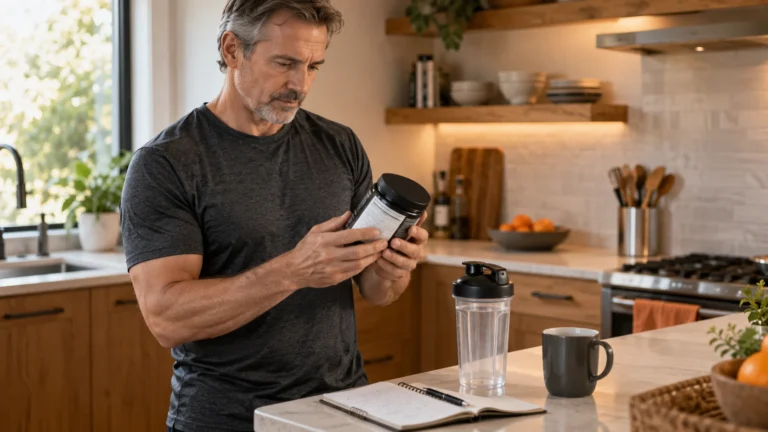
| Tracking | Notebook or app for sets, reps, load, and sessions | Smartwatch, heart-rate monitor, connected platform | The device adds data but no behavior change |
The Buying Mistake Most Guides Miss
Most home gym equipment guides list products. They do not ask whether the equipment creates a complete weekly training system. A man with dumbbells, bands, a mat, and a plan can train better than a man with a treadmill, a cable tower, and no progression rules.
Use the CDC baseline of aerobic activity plus muscle-strengthening work as a planning anchor. The CDC adult activity guidelines include muscle-strengthening activities on two or more days per week. Your equipment should make that easier, not more complicated.
Space Planning: Measure Before You Buy
Measure the training zone, not just the storage footprint. You need space to move, lift, set weights down, and step away safely.
- Minimum clear zone: 6 x 6 ft for dumbbell, band, mat, and bodyweight training.
- Better strength zone: 8 x 8 ft if you use a bench, heavier dumbbells, or kettlebells.
- Barbell zone: more width than most apartments offer, plus flooring and safety arms.
- Storage: vertical racks, under-bed bins, wall hooks, or one dedicated shelf prevent gear drift.
For tighter spaces, use apartment-friendly workouts and resistance bands before buying loud or heavy equipment.
Safety Checks Before Your First Session
Good equipment still needs good use. Mayo Clinic’s weight training technique guidance emphasizes proper form, controlled movement, and choosing appropriate weight. That matters more at home because no one else is watching your setup.
Use a stable surface. Avoid slick tile for lunges, heavy carries, and band work. Protect flooring before deadlifts or kettlebell training.
Check overhead space for presses and lateral room for lunges. Leave a path to set weights down without twisting.
Use secure collars, stable dumbbell mechanisms, and weights you can control without grinding every rep.
If you bench or squat heavy at home, use safeties or choose safer variations. Do not rely on hope as a spotter.
Budget Tiers That Make Sense
Spend according to training certainty. The more certain you are about your habit, the more sense durable equipment makes.
| Budget | Best use | Buy | Avoid |
|---|---|---|---|
| Under $150 | Testing the habit | Mat, bands, door anchor, jump rope if tolerated | Cheap machines, unstable benches, novelty gadgets |
| $300-$700 | Serious starter gym | Adjustable dumbbells, mat, bands, basic storage, optional bench | Oversized cardio machines before consistency is proven |
| $1,000-$2,500+ | Committed strength setup | Heavier dumbbells or barbell, bench, rack, safeties, flooring | Buying everything at once without a program |
The Upgrade Path: Build in Layers
Start with the layer that removes the most friction. Upgrade only when your current setup blocks progression.
- Layer 1: mat, bands, and a basic training plan.
- Layer 2: adjustable dumbbells and simple storage.
- Layer 3: bench, pull-up option, or heavier loading.
- Layer 4: rack, barbell, cardio machine, or cable station if your space and goals justify it.
If you already know dumbbells are your main tool, use the dedicated adjustable dumbbells guide. If you need the wider equipment category map, start with home gym equipment.
Your 24-Hour Buying Plan
Measure your usable training space and write down storage limits.
Choose one setup type: starter, strength, or compact apartment.
Buy only the first layer you will use this week.
Train for four weeks, then upgrade the bottleneck: load, comfort, safety, or conditioning.
Conclusion: Buy for the Program, Not the Room
The best home gym equipment for men is not the most impressive setup. It is the equipment that lets you train consistently, safely, and progressively in the space you actually have.
Start with the essentials. Add load when strength becomes the limiting factor. Add machines only when they solve a real training problem. That is how a home gym becomes a durable system instead of an expensive corner of unused gear.
Next step
Keep Building the Equipment System
For the broader PrimeForMen equipment library, continue with the fitness gear and equipment category. It is the logical next step when you want deeper reviews of mats, dumbbells, bands, benches, and home gym tools.
Frequently Asked Questions About Home Gym Equipment for Men
What home gym equipment should a man buy first?
Start with a workout mat, resistance bands set, and adjustable dumbbells. Those three categories cover strength, mobility, warmups, core training, and small-space workouts without requiring a dedicated room.
Is a bench necessary for a home gym?
No. A bench expands pressing and rowing options, but floor presses, push-ups, split squats, rows, and hip bridges can build a strong starter plan. Add a bench when your program clearly needs it.
What is the best setup for a small apartment?
A mat, bands, adjustable dumbbells, door anchor, and vertical storage are usually the best apartment setup. Avoid loud cardio, heavy dropping, and wide barbell work unless your space and flooring support it.
How much should I spend on a starter home gym?
Most men can build a useful starter setup for $300 to $700. Spend less if you are testing the habit. Spend more only when you already train consistently and know which limitation you are solving.
Are adjustable dumbbells better than fixed dumbbells?
For most home gyms, yes. Adjustable dumbbells save space and money compared with a full fixed set. Fixed dumbbells are faster and more durable, but they require more room and a larger budget.
Affiliate Disclosure: Some links in this guide may be affiliate links. As an Amazon Associate, PrimeForMen may earn from qualifying purchases at no additional cost to you.
Safety Disclaimer: This article is for educational purposes only and does not replace advice from a qualified healthcare or fitness professional. If you have pain, medical conditions, balance issues, or unusual symptoms, get professional guidance before starting or changing an exercise program.