
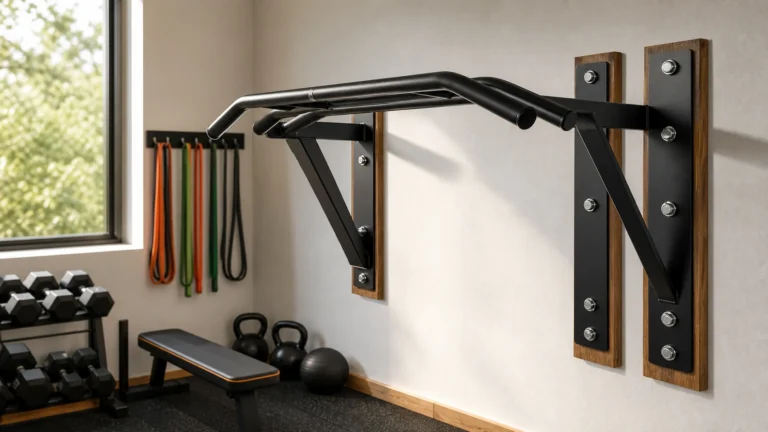
Compare the best pull-up bars for home workouts by setup, safety, grip options, and direct Amazon product picks.
- Match the bar to your structure before comparing brands.
- Skip friction-only telescopic bars unless the frame is truly verified.
- Neutral-grip options are usually the better long-term shoulder choice.
Bottom line Bottom line: buy the strongest setup your home can safely support, then train strict reps before harder variations.
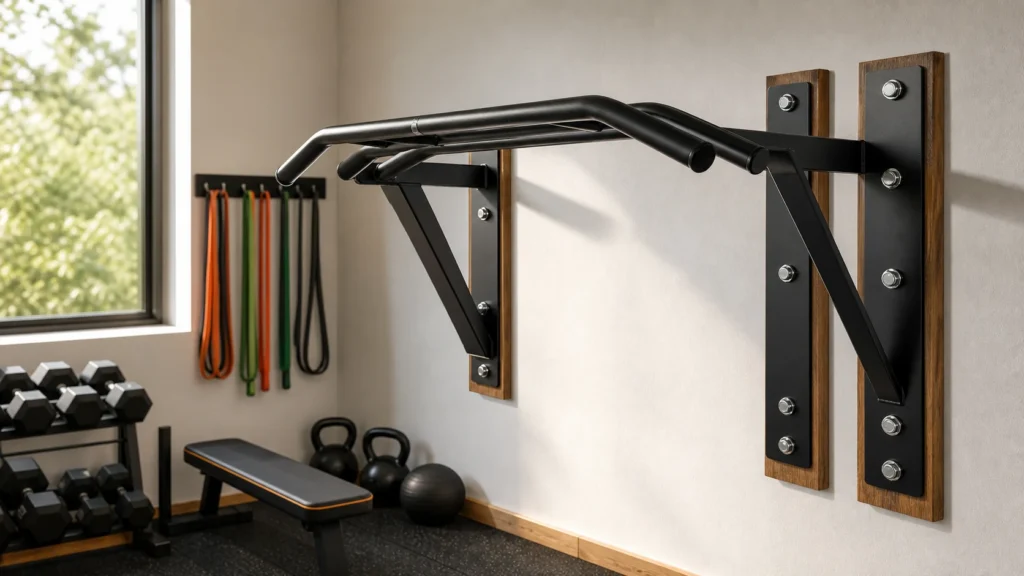
Best pull-up bars for home workouts are not just the bars with the highest listed weight rating. The right choice depends on what your wall, ceiling, door trim, shoulder position, and training plan can actually tolerate.
A pull-up bar is one of the most efficient tools for training your lats, upper back, biceps, grip, and trunk at home. It is also one of the few pieces of home gym equipment that interacts directly with your house. A bad pick can mean cracked trim, torn drywall, or a fall. This guide treats the bar like equipment and structure, not just another affiliate product.
Quick Summary: best pull-up bars for home workouts
- Permanent wall or ceiling mounts are the best choice when you can install into real structure.
- Leverage doorway bars are acceptable only when the trim is strong, square, and undamaged.
- Friction-only telescopic bars are the option most men should skip because they rely on side pressure.
- Neutral-grip handles matter more after 40 because they usually feel better on shoulders and elbows.
- Power towers are the cleanest answer when drilling is impossible and you have floor space.
The Prime Perspective
The best pull-up bar is the one you can load repeatedly without guessing. If the mounting surface is questionable, buy a different style. If your shoulders dislike wide overhand reps, prioritize neutral grips. If your house rules forbid drilling, do not pretend a cheap pressure bar is the same thing as a mounted system.
That is why this guide ranks pull-up bars by structural fit first, then training value. A stable bar that lets you practice controlled hangs, assisted reps, and strict neutral-grip pull-ups beats a flashy bar that makes every rep feel like a home repair risk.
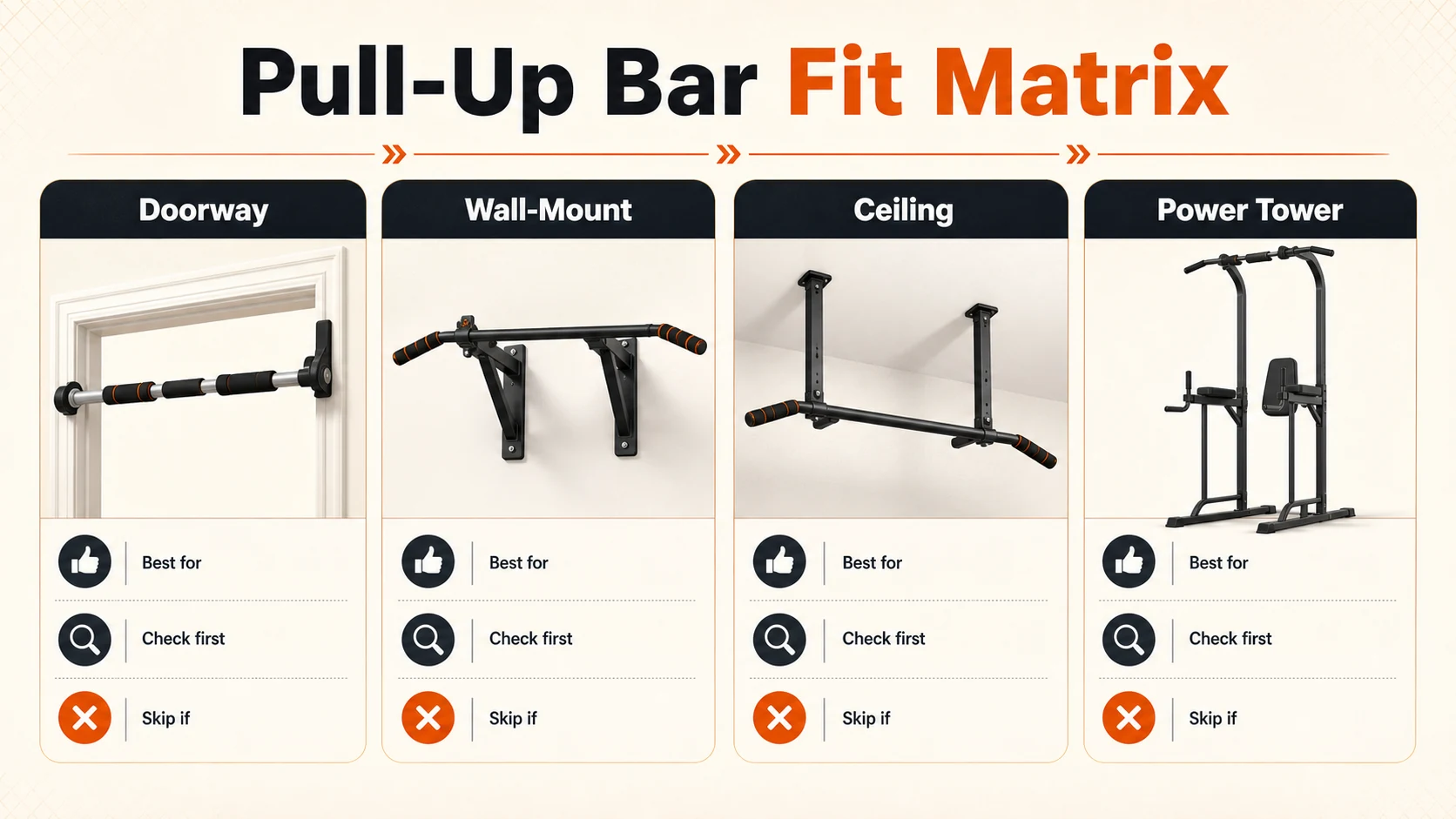
Best Pull-Up Bar Type by Real Home Constraint
Start with the space, not the product page. A renter with fragile trim, a homeowner with garage studs, and a man training in a basement with exposed joists do not need the same bar.
| Home situation | Best bar type | What to verify | Skip if |
|---|---|---|---|
| Garage, basement, owned home | Wall- or ceiling-mounted bar | Stud spacing, joist direction, lag bolts, masonry anchors, clearance | You cannot identify a real structural member |
| Apartment, no drilling | Leverage doorway bar | Trim depth, trim strength, doorway width, pad contact | The trim is loose, rounded, cracked, decorative, or thin |
| No safe door frame | Freestanding power tower | Floor space, wobble, ceiling height, base footprint | You need to move it after every session |
| Small hallway, but drilling allowed | Jammer-style or compact wall mount | Header or studs above the door, fastener quality, head clearance | You are guessing where the wood or masonry is |
High-Quality Pull-Up Bar Picks by Setup
These are direct product CTAs, not random category searches. Match the product to your structure first, then confirm measurements, current price, and availability on Amazon.
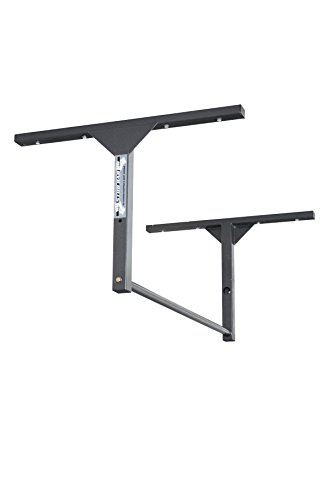
Stud Bar Pull-Up Bar
Best when you own the space and want a permanent bar mounted into joists, studs, or a reinforced header.
- Ceiling or wall install works well for garages and basements.
- Straight steel bar gives clean dead hangs, pull-ups, and band work.
- Use only with proper structural mounting, not drywall anchors.
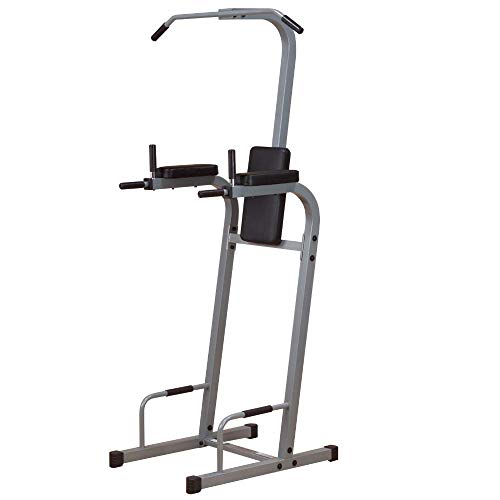
Body-Solid Powerline Power Tower
Best if drilling is not possible and you have floor space for a freestanding pull-up and dip station.
- No wall, ceiling, or door-frame load required.
- Adds dips, knee raises, and support handles to the setup.
- Needs stable flooring and more room than a doorway bar.
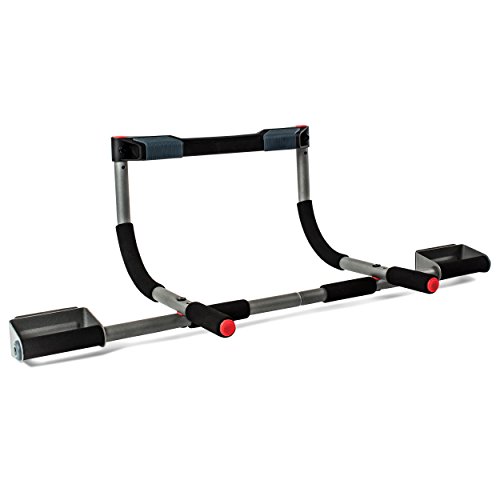
Perfect Fitness Multi-Gym Pro
Best for a removable doorway option when the trim is solid, square, and wide enough for leverage support.
- Leverage design is safer than friction-only telescopic bars.
- Multiple grip positions help avoid always using one shoulder angle.
- Check door trim depth and pad contact before the first rep.
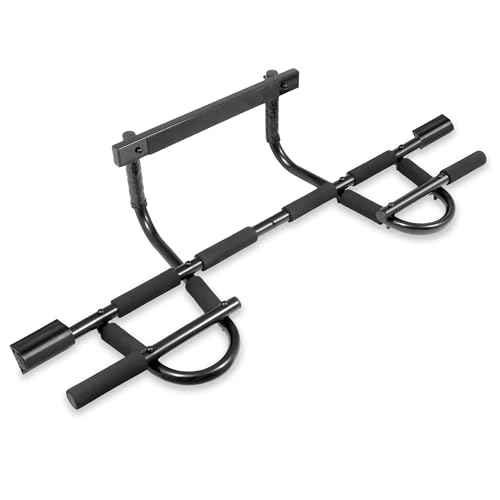
ProsourceFit Multi-Grip Doorway Bar
Best as a lower-cost doorway alternative when you still want leverage support instead of a pressure-only bar.
- Good entry point for assisted pull-ups and dead hangs.
- Neutral and angled handles add useful grip variation.
- Skip if your door trim is thin, cracked, rounded, or loose.
* As an Amazon Associate, PrimeForMen earns from qualifying purchases.
The Hidden Risk: Friction-Only Doorway Bars
Telescopic doorway bars look simple because they twist outward and press into the door frame. That simplicity is the problem. They depend on friction, rubber pad contact, frame stiffness, surface condition, and your body staying controlled. If the bar slips, you do not get a warning rep.
For most men, especially heavier lifters or beginners who may kick, swing, or panic during a failed rep, a leverage doorway bar is a better temporary choice. It hooks over the trim and spreads force across the doorway. It can still damage weak trim, but it is not relying only on side pressure.
Hard safety rule
Do not mount a pull-up bar to drywall alone. Plastic anchors, small toggle bolts, and ordinary screws are not a bodyweight-training plan. Use solid studs, joists, masonry, concrete, or a reinforced wood header with fasteners appropriate to the structure. If you cannot verify the structure, use a freestanding option.
What Most Buyers Miss About Pull-Up Bars
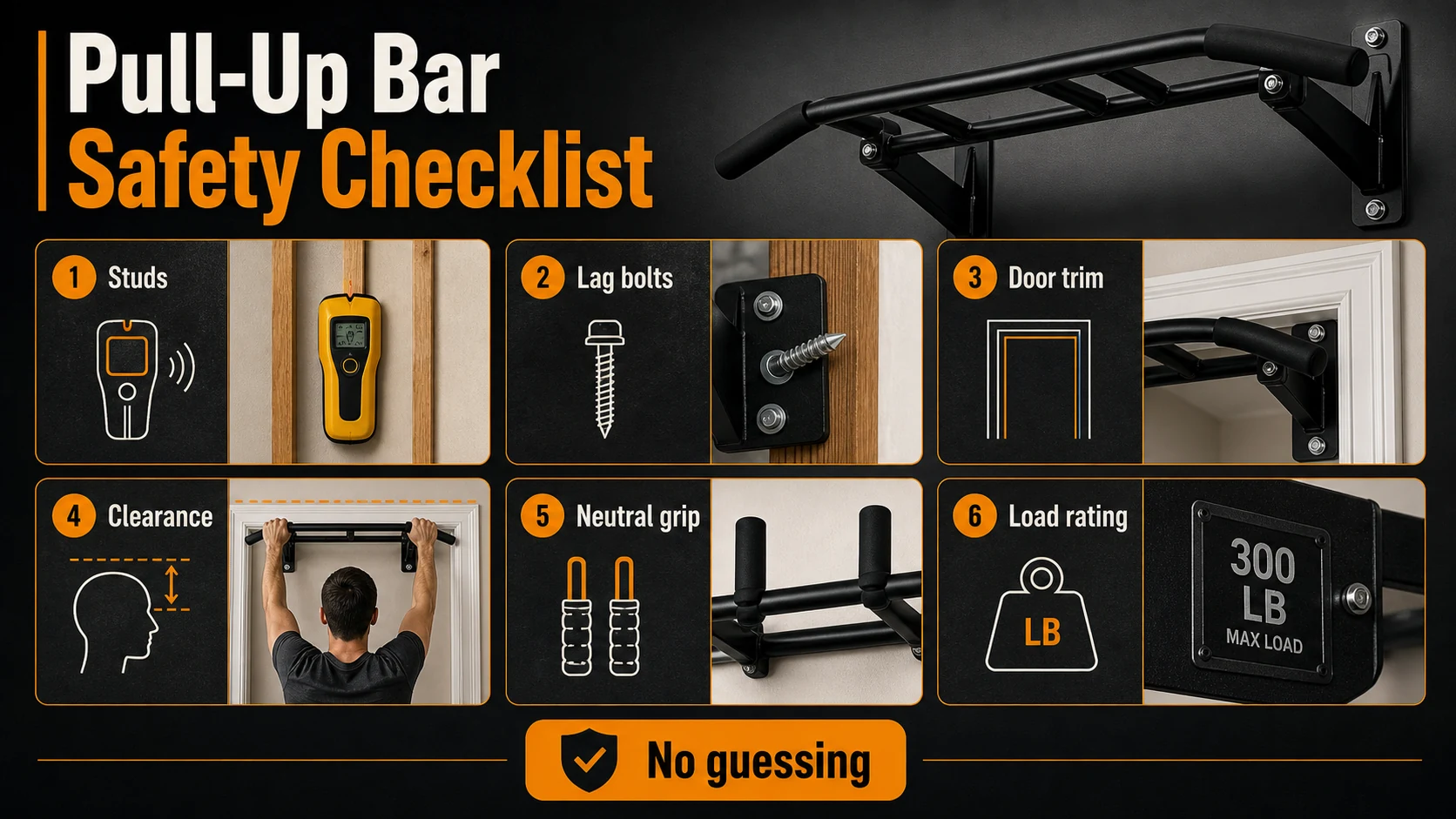
Stud spacing
Many U.S. walls use studs spaced 16 or 24 inches on center. If a mounting plate does not align, install a proper wood header across multiple studs rather than chasing one weak fastener point.
Dynamic load
Your body weight is not the only load. Fast reps, bands, weighted pull-ups, swinging, and failed reps create more force than a static hang.
Grip angle
A multi-grip pull-up bar is useful because neutral and angled handles let you train hard without forcing the same shoulder and elbow angle every session.
How to Choose a Pull-Up Bar Without Guessing
1. Choose the mount class
If you can drill into solid structure, choose wall or ceiling. If you cannot drill but have strong trim, choose leverage doorway. If neither is true, choose a power tower.
2. Check clearance
You need room above the bar for the top position, room below for a dead hang, and enough side clearance that your elbows do not hit walls or trim.
3. Prioritize neutral grip
Neutral grip pull-ups often feel cleaner for men with cranky shoulders or elbows. A straight bar is still useful, but neutral handles make progression easier to sustain.
4. Match the training plan
If you will use assistance bands, make sure the bar and mount can tolerate band tension. If you want rings, make sure the system has enough clearance and no sharp edges.
Doorway vs Wall-Mounted vs Ceiling vs Power Tower
Doorway bars are compact and cheap, but their real limit is the door frame. Wall-mounted bars are the best blend of stability and accessibility when installed correctly. Ceiling bars can be excellent in garages and basements, especially when joists are easy to inspect. Power towers take up more space but remove the house structure from the equation.
If you are building a broader setup, connect this decision to your home gym equipment, your strength training at home plan, and your available floor space. A pull-up bar pairs especially well with resistance bands, adjustable dumbbells, and a basic weight bench.
Grip Diameter, Knurling, Foam, and Shoulder Position
Grip details matter. A very smooth bar can make you over-grip when your hands get sweaty. Aggressive knurling can feel secure but may chew up the hands during high-volume hanging. Foam can be comfortable at first, but it compresses, tears, and may rotate on cheaper doorway bars.
For most home workouts, medium texture and multiple grip options beat extreme specs. Use shoulder-width neutral grip as your baseline, then rotate in chin-ups, overhand pull-ups, and controlled dead hangs as your elbows and shoulders tolerate them. This fits the broader progression logic in our strength training basics guide.
8-Week Pull-Up Progression for Beginners
The bar is only useful if you can train on it without ego reps. If you cannot do strict pull-ups yet, that is normal. Build the skill in phases.
| Phase | Weeks | Main work | Target |
|---|---|---|---|
| Foundation | 1-2 | Dead hangs, active hangs, scapular pull-ups | Grip comfort and shoulder-blade control |
| Control | 3-4 | Slow negatives and foot-assisted reps | Lower under control for 3-5 seconds |
| Assistance | 5-6 | Band-assisted neutral-grip pull-ups | Clean reps without kicking or shrugging |
| Strict reps | 7-8 | Low-rep strict sets plus rows | Accumulate quality volume, not max-out tests |
How We Chose These Pull-Up Bar Picks
This is an editorial buying guide. We prioritize structural fit, mount type, use-case clarity, grip options, Amazon product availability, and the ability to explain who should skip a product. We do not claim lab testing, engineering certification, or hands-on stress testing unless stated on a future dedicated review page.
We also treat safety as a ranking factor. A cheaper bar can be a good buy for the right doorway, but it is not a good buy for the wrong doorway. A stronger bar can still be a bad choice if you install it into the wrong material.
Sources and Safety Context
The CDC adult activity overview includes muscle-strengthening work as part of weekly physical activity. For pull-up technique context, the NSCA pull-up technique resource is a useful baseline. For injury-risk context, the NIAMS sports injury overview is a useful reminder that pain, poor mechanics, and unsafe loading should not be ignored.
Dip Stations and Pull-Up/Dip Towers: When a Power Tower Is the Better Buy
Portable dip bars
Best for dips, inverted rows and support holds in a flexible room. Look for a wide stable base and a connector that limits spreading.
Freestanding power tower
Best when one footprint must support pull-ups, dips and knee raises without drilling. It needs more open floor and stability margin.
Wall combination
Best for a permanent compact gym with verified framing. Installation quality and useful stand-off distance are decisive.
Score the Station Before Buying

RELIFE Pull-Up and Dip Power Tower
A current freestanding example for buyers comparing an adjustable multi-movement footprint.
- Measure ceiling height above the highest setting.
- Keep the complete base clear of mats and furniture edges.
- Verify current capacity, dimensions and included pads.
Measure More Than Height
Tape the base on the floor, then add body swing, bent-knee clearance, dip depth and the path used to enter the station. Tall users need room above the bar; broad users need elbow clearance at the dip handles. Test whether the station rocks during a controlled support hold before attempting full repetitions. A capacity label does not describe side-to-side stability.
Training Fit and Shoulder Comfort
Dips can be productive pressing work, but they demand shoulder extension and control. Begin with assisted support holds or shallow pain-free repetitions. Keep the shoulders away from the ears and stop if the front of the shoulder feels pinched. A station is not better because it forces a deeper range. Use the depth you can control and progress through repetitions before external load.
For a broader build, connect this choice to the home gym equipment guide, power-rack guide and strength-training basics.
Affiliate disclosure: PrimeForMen may earn a commission from qualifying purchases at no extra cost to you.
Conclusion
The best pull-up bars for home workouts are selected by structure first. If you can install into real studs, joists, masonry, or a reinforced header, a mounted bar gives the best long-term training value. If you cannot drill, use a leverage doorway bar only on strong trim or choose a power tower. Skip friction-only telescopic bars unless you have a very specific, verified reason to trust the frame and the product.
Next step: match the bar type to your home, then build the training around controlled hangs, neutral-grip reps, assistance bands, and steady progression. For a broader home plan, start with our home workout routines and upper-body home workouts.
Frequently Asked Questions About Pull-Up Bars
What is the safest pull-up bar for home use?
The safest option is usually a properly installed wall- or ceiling-mounted bar fixed into solid studs, joists, masonry, or a reinforced header. A freestanding power tower is safer than a weak doorway if you cannot drill.
Should I avoid telescopic doorway pull-up bars?
For most men, yes. Friction-only telescopic bars depend on side pressure and can slip if the frame flexes, the pads move, or the surface is slick. A leverage doorway bar is a better temporary option, but it still needs solid trim.
Will a doorway pull-up bar damage my door frame?
It can. Leverage bars press into the upper trim and side contact points. Use one only on strong trim, check for movement, and consider a towel or pad at the pressure points. Do not use it on cracked, loose, rounded, or decorative trim.
Can I mount a pull-up bar directly into drywall?
No. Drywall is not a structural mounting surface for bodyweight training. A wall-mounted pull-up bar needs solid studs, masonry, concrete, or a reinforced wood header with the correct fasteners.
What is better, doorway, wall-mounted, ceiling-mounted, or power tower?
Doorway bars are compact but depend on trim. Wall-mounted bars are stable when installed correctly. Ceiling-mounted bars are strong in garages or basements with exposed joists. Power towers avoid drilling but need floor space.
What grip is best for shoulders over 40?
A shoulder-width neutral grip is usually the most joint-friendly starting point because the palms face each other and the shoulders do not need to stay in a harsh wide-pronated position.
What load rating should a pull-up bar have?
Choose a rating comfortably above your body weight and remember that fast reps, swinging, bands, or weighted work increase force. The mount and wall structure matter as much as the published rating.
Can beginners use pull-up bars if they cannot do a pull-up yet?
Yes. Start with dead hangs, scapular pulls, band-assisted pull-ups, slow negatives, and foot-assisted reps. Do not test max-effort pull-ups before your grip and shoulder control are ready.
Are pull-up bars good for building back muscle at home?
Yes. A pull-up bar trains lats, upper back, biceps, forearms, and trunk control. It works best when paired with horizontal rows, resistance bands, and progressive volume.
How high should a pull-up bar be mounted?
Mount it high enough that your knees do not drag during a dead hang and low enough that you can reach it safely without jumping aggressively. Also leave head clearance above the bar for the top position.
Can I do kipping pull-ups on a home pull-up bar?
Only if the bar and structure are rated for dynamic movement and installed for that purpose. Most doorway bars are not appropriate for kipping, swinging, or aggressive CrossFit-style reps.
What should I buy with a pull-up bar?
A set of resistance bands, a small step or box, and a phone tripod can make training safer and more repeatable. Bands help with assisted reps, while video helps you catch shoulder shrugging or swinging.
Medical and Safety Disclaimer
This article is editorial guidance for fitness equipment decisions and training progression. It does not replace medical advice, physical therapy, structural engineering advice, or professional installation. If you have shoulder pain, elbow pain, previous injury, dizziness, or uncertainty about mounting surfaces, get qualified help before loading a pull-up bar.
Affiliate Disclosure
PrimeForMen may earn a commission when you buy through qualifying Amazon links. That does not change the price you pay, and it does not change the editorial logic: structural safety and use-case fit come before conversion.