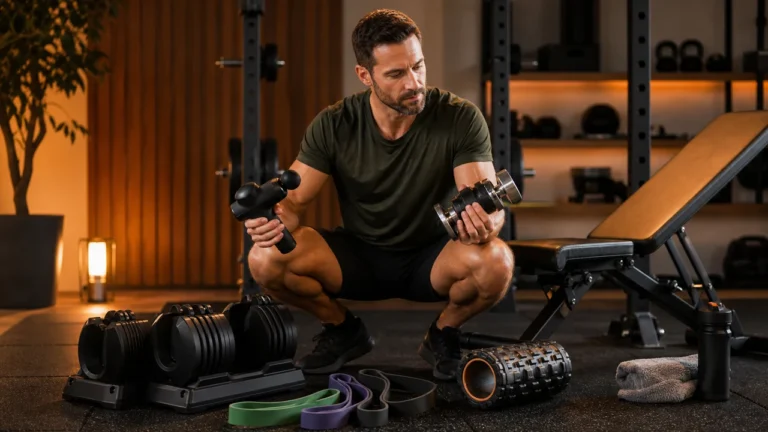
A practical fitness gear and equipment buyer guide for men: what to buy first, what to skip, and when to upgrade.
- Buy for the workouts you already repeat, not the workouts you imagine doing someday.
- Adjustable dumbbells, resistance bands, and a stable bench cover more useful training than most specialty tools.
- Upgrade when a piece of gear is limiting load, range of motion, safety, or consistency.
Bottom line Use fitness gear and equipment as a fit test, not a buying impulse: choose what supports the training you will actually repeat.
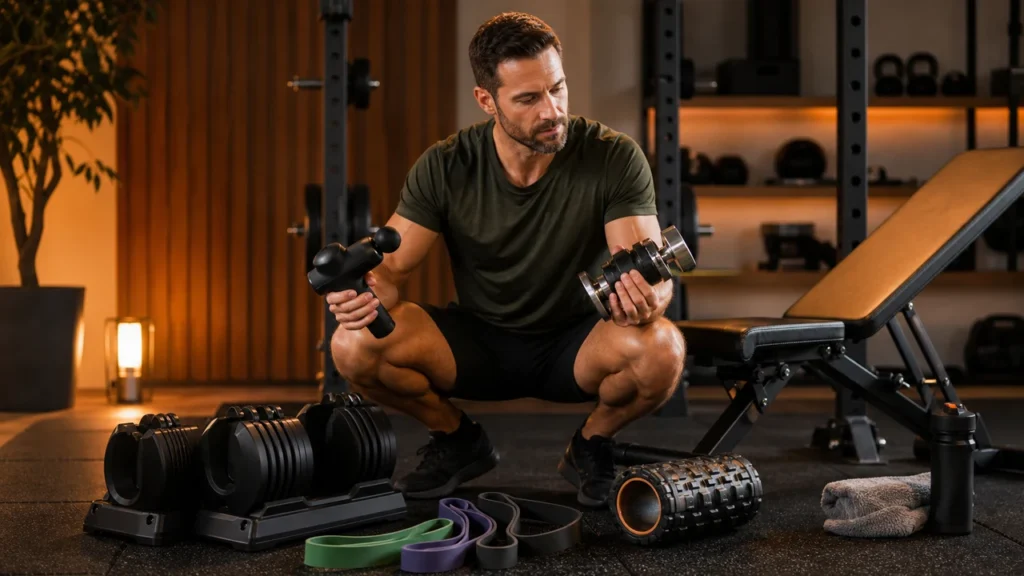
Fitness gear and equipment should earn its place by making training more repeatable, safer, or easier to progress. The best buy is rarely the most complicated item. For most men, the smartest sequence is adjustable resistance first, a stable bench second, recovery and tracking tools later, and novelty gear only after the basics are already being used consistently.
This guide is not another complete home gym equipment blueprint. It is a buyer ladder: what to buy now, what to skip, what to upgrade, and how to avoid spending money on gear that looks useful but does not change your week.
Quick Summary: Fitness gear and equipment
- Buy for the workouts you already repeat, not the workouts you imagine doing someday.
- Adjustable dumbbells, resistance bands, and a stable bench cover more useful training than most specialty tools.
- Upgrade when a piece of gear is limiting load, range of motion, safety, or consistency.
- Skip single-purpose gadgets until your weekly training base is already stable.
- Recovery tools are useful when they help you train again, not when they become a substitute for sleep or programming.
Men over 40 often overspend in the wrong direction: too much variety, not enough repeatability. A useful gear purchase should reduce friction. If it lets you train legs at home, load rows without a gym trip, or recover enough to keep the next session on schedule, it belongs on the shortlist. If it only makes the room look more serious, it waits.
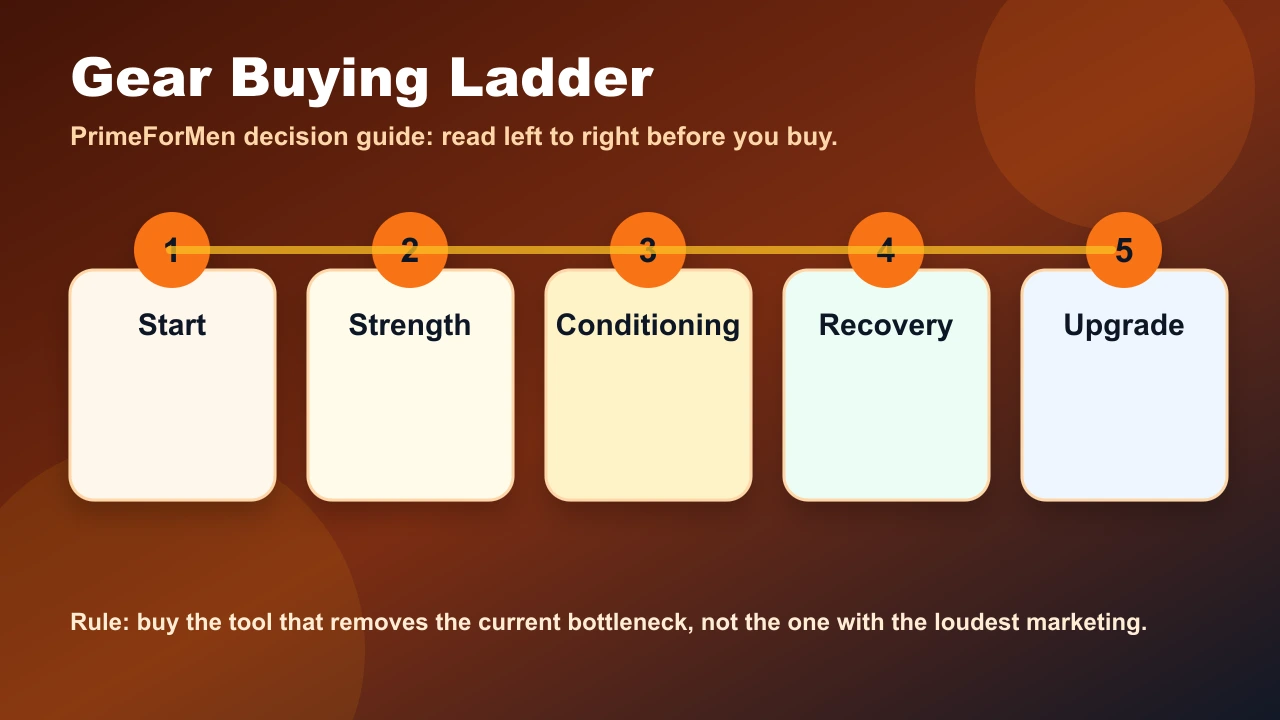
The Fitness Gear Ladder: Buy by Constraint, Not by Category
Start by naming the bottleneck. Are you missing load? Stable positions? Space? Joint-friendly conditioning? Recovery capacity? Once the constraint is clear, the right piece of equipment becomes obvious.
Level 1: Repeatable Resistance
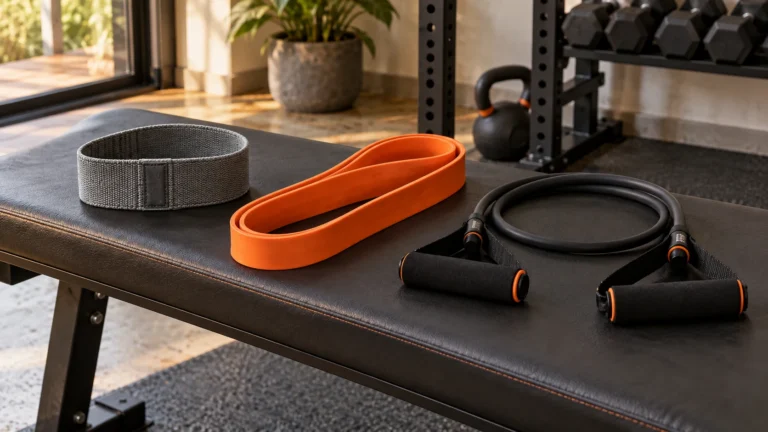
Adjustable dumbbells and bands solve the biggest problem first: enough loading options to train full-body without clutter.
Level 2: Better Positions
A bench, mat, handles, and stable supports improve exercise quality and make progressive overload easier to track.
Level 3: Recovery and Specificity
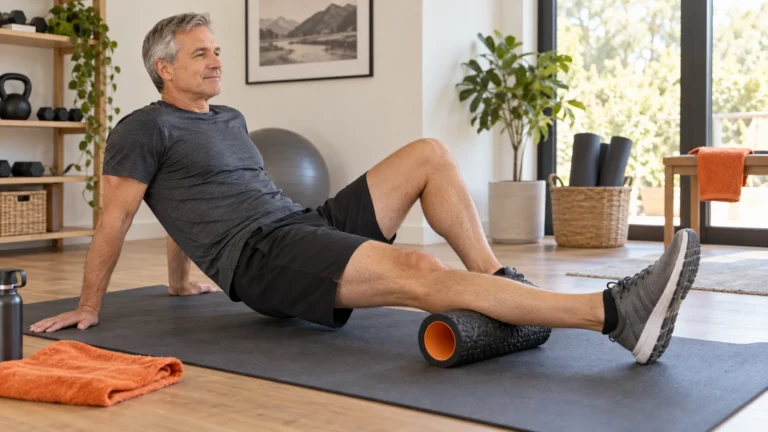
Mobility tools, massage balls, sleds, specialty bars, or cardio gear make sense after the main work is already consistent.
Quick Picks by Training Problem
| Problem | Best first buy | Why it works | Skip for now |
|---|---|---|---|
| Not enough load at home | Adjustable dumbbells | They cover presses, rows, split squats, hinges, carries, curls, and loaded core work. | Light fixed dumbbell sets that become too easy within a month. |
| Poor pressing and rowing positions | Weight bench | A stable bench adds incline, flat, seated, chest-supported, and step-up options. | Wobbly benches with low weight ratings or awkward pad gaps. |
| Travel or small-space training | Resistance bands | Bands add pulling volume, warm-ups, rehab-style accessories, and portable resistance. | Bulky machines that solve a problem you only have twice a month. |
| Unclear essentials | Essential fitness gear | A short list prevents the common mistake of buying accessories before training basics. | Balance boards, gimmick handles, and app-locked devices before habits are stable. |
Smart Amazon Shortlist
Why these products here? They solve the three most common gear constraints: adjustable load, stable exercise positions, and recovery support between sessions.
- Choose load range and stability before brand hype.
- Prefer compact gear that supports multiple exercises.
- Skip anything you cannot explain in one sentence: “This helps me do X more consistently.”
Amazon Product Shortlist
These are practical product starting points, not medical or performance guarantees. Use the images, sizing, labels, reviews, and return policy to compare the real item before buying.

Adjustable Dumbbells
The strongest space-saving upgrade when progression matters more than collecting equipment.
- Lets you increase load without filling a room with pairs.
- Works for strength, carries, presses, rows, and core loading.
- Keeps home training measurable week to week.

Foldable Weight Bench
A practical buying option for the foldable weight bench use case in this article.
- Matches the article's specific foldable weight bench recommendation.
- Gives readers a concrete product page and image to compare.
- Worth checking for size, dose, fit, reviews, and return policy before buying.

Recovery Tools
A repeatable recovery tool when soreness and tissue tolerance limit training consistency.
- Easy to use before or after sessions.
- Works well for quads, calves, glutes, and upper back.
- Pairs with mobility work without needing much space.
*Affiliate disclosure: PrimeForMen may earn from qualifying purchases. Product images are loaded from Amazon media URLs and product availability can change.
*Affiliate note: PrimeForMen may earn a commission if you buy through these links, at no extra cost to you.
Budget vs. Usefulness Meter
The sweet spot is not the cheapest item. It is the piece you will use weekly, can progress safely, and will not outgrow immediately.
Best value zone
Expensive niche
What to Buy First
If you are starting from almost nothing, build around the equipment that supports the most repeatable sessions. The CDC notes that adults should combine aerobic activity with muscle-strengthening work across the week in its adult physical activity guidance. That does not mean you need a complex room. It means your gear should make the weekly basics easier to complete.
- Adjustable dumbbells: first priority for load progression, especially if you train at home two or more days per week.
- Resistance bands: inexpensive support for rows, pull-aparts, warm-ups, deload sessions, and travel.
- Adjustable or foldable bench: useful once floor-only pressing and unsupported rows are limiting your exercise menu.
- Training mat and handles: small upgrades that improve comfort for mobility, push-ups, core work, and joint-friendly volume.
Most equipment lists rank products. They do not rank timing. A great bench is a bad purchase if you still do not own enough resistance to train. A premium recovery tool is a poor buy if your program is chaotic. The better question is not “Is this good?” It is “Is this the next constraint in my training week?”
What to Skip Until Later
Some gear is not bad. It is just early. Specialty equipment can be useful after the foundation is built, but it can also create clutter, decision fatigue, and a false sense that progress depends on more tools.
Single-Muscle Gadgets
Skip devices that train one narrow pattern unless that pattern is already a planned part of your program.
Too-Light Kits
Cheap sets can be useful for rehab or warm-ups, but they often fail once your legs, back, and presses need real loading.
App-Locked Equipment
Be careful with gear that needs a subscription to stay useful. Hardware should still work if you cancel the software.
When to Upgrade
Upgrade when the current tool is blocking measurable progress. Mayo Clinic’s strength training overview emphasizes proper form and appropriate resistance options; your equipment should support both.
- Load ceiling: you can exceed the top weight with controlled reps on major movements.
- Stability issue: the bench, handles, or platform moves enough to change your form.
- Range limitation: the gear prevents a useful exercise position, not just a preferred one.
- Consistency gain: the upgrade removes a repeated excuse, setup delay, or safety concern.
A Simple Buying Rule
Before buying, write down three exercises the item will support this week, where it will live, and what it replaces. If you cannot answer all three, wait. If you can answer them cleanly, the purchase is probably grounded in use rather than impulse.
How This Fits With a Broader Gear Plan
Use this buyer hub as the decision layer. For a broader category map, compare it with the updated fitness gear and equipment pillar. If your real goal is a dedicated garage, basement, or spare-room setup, the home-gym route may be the better next read. If your goal is simply better workouts with less waste, stay with the ladder here.
Pick one constraint for the next 30 days: load, positions, portability, or recovery. Buy only for that constraint. Then track whether the new gear increases completed sessions, exercise quality, or progressive overload. That is the only upgrade signal that matters.
This article is educational and does not replace medical advice. If you have pain, dizziness, chest symptoms, recent surgery, uncontrolled blood pressure, or a medical condition that affects exercise, speak with a qualified clinician before changing training or using new equipment.
Some product links may be affiliate links. PrimeForMen may earn a commission if you purchase through them. Recommendations are based on use-case fit, not guaranteed outcomes.
Frequently Asked Questions About Fitness Gear and Equipment
What fitness gear should I buy first?
Start with adjustable resistance, usually dumbbells or bands, because they support the largest number of strength exercises. Add a bench when floor-only training limits range of motion, comfort, or exercise selection.
Are adjustable dumbbells worth it?
They are worth it if you train at home consistently and need multiple weight jumps without storing many fixed dumbbells. Check the adjustment mechanism, handle feel, max load, and warranty before buying.
What equipment should beginners skip?
Most beginners can skip single-purpose gadgets, unstable balance tools, expensive smart machines, and recovery devices that do not support a real training plan. Build the repeatable basics first.
When should I upgrade my workout gear?
Upgrade when your current gear limits safe loading, stable form, range of motion, or weekly consistency. Do not upgrade only because a product looks more advanced.
Do I need a full home gym to get stronger?
No. Many men can make progress with adjustable dumbbells, bands, a bench, and a simple plan. A full home gym is useful when you have the space, budget, and training consistency to justify it.