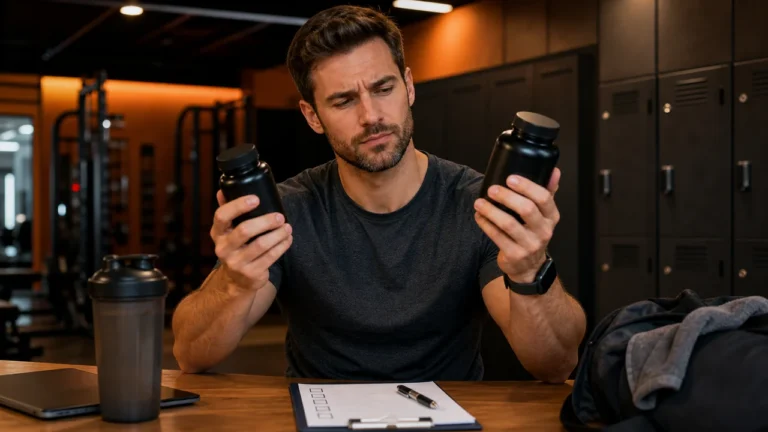
Testosterone Boosters in 2026 aren’t just “bigger labels with bigger promises.” The real challenge is that the supplement aisle has gotten louder, while the science has gotten more nuanced.
Here’s what changed:
- Your goal matters more than the product name. A booster that helps sleep and stress can indirectly support testosterone outcomes, but it won’t feel like a “steroid in a capsule.”
- Dosage and ingredient form now separate winners from label‑decorations. “Zinc” isn’t a dosage. “Magnesium” isn’t a form. And “proprietary blend” is usually code for “trust us.”
- Safety expectations are higher. In 2026, “talk to your doctor” is not enough. You need a clear, practical screen for interactions and red flags.
If you want a true edge, stop asking: What’s the #1 booster? Start asking: What’s the #1 reason my testosterone isn’t where I want it—and what’s the safest lever I can pull first?
To support that, this guide gives you:
- A No‑Hype Scorecard you can use on any label.
- A goal‑based map of booster “types” (not hype brands).
- An 8‑week plan that stacks lifestyle and supplements the smart way.
If you want the deep dive on the basics first, bookmark our main guide on testosterone boosters and come back here for the 2026 playbook.
Important: This article is for education—not medical advice. If you have symptoms of low testosterone or take prescription meds, talk to a qualified clinician before using any supplement.
Quick picks: the best types of testosterone boosters in 2026
Instead of pretending one bottle fits everyone, here are the most useful booster archetypes—the categories that reliably match real-life goals.
| Best For (Goal) | Best Booster Type | What to Look For on the Label |
|---|---|---|
| Low energy + high stress | Stress/sleep support | Ashwagandha (standardized extract), magnesium form, clear dosing |
| “I’m training hard but stalled” | Performance + recovery support | Vitamin D status, zinc form, sleep support, no proprietary blends |
| Libido + vitality over 40 | Libido/vitality blend | Clinically studied herbal extracts, transparent doses |
| “My diet is fine, but labs are low” | Deficiency corrector | Vitamin D + zinc + magnesium in absorbable forms |
| You want the safest first step | Foundation stack | Sleep, protein, strength training + basic micronutrients |
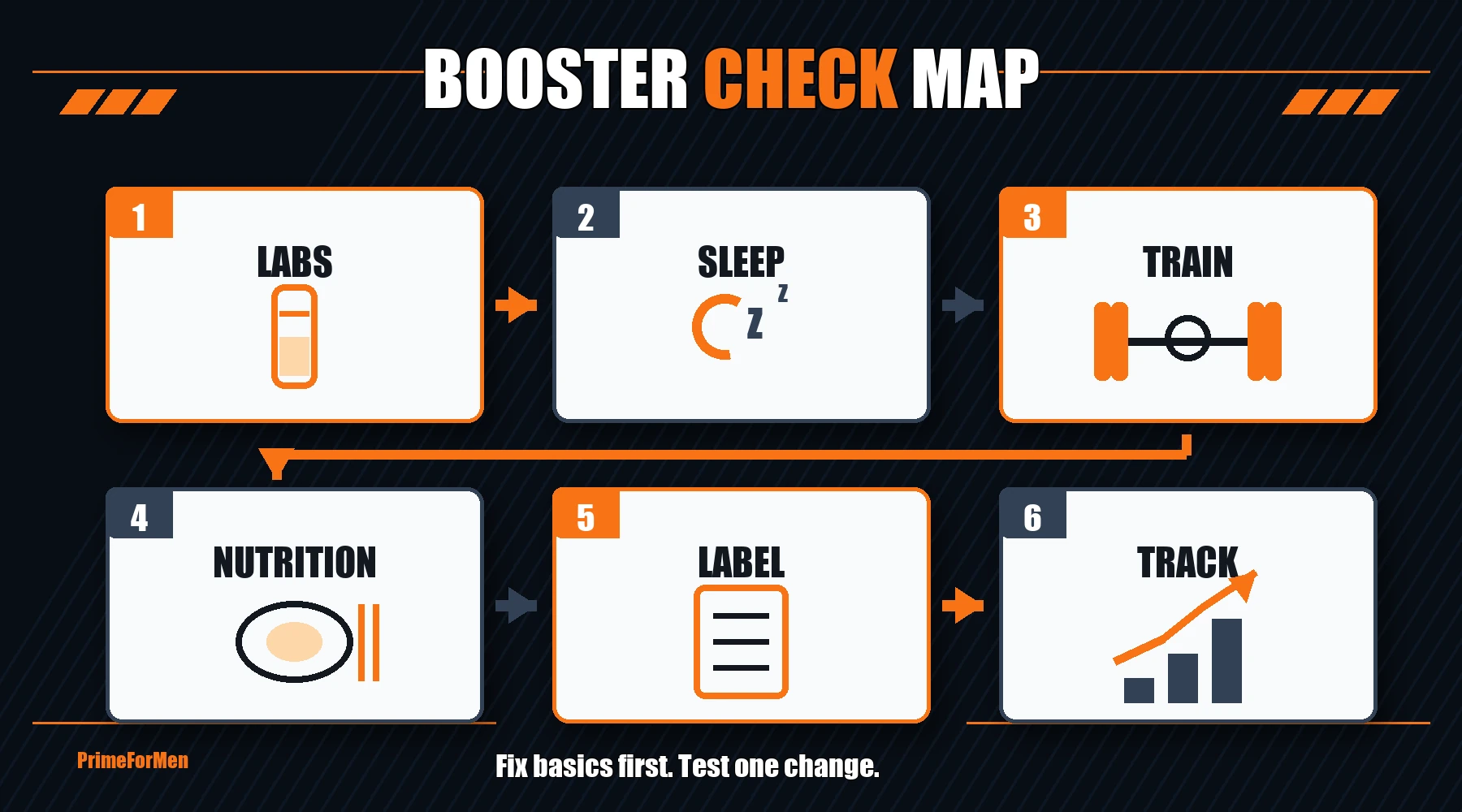
Pro move: If you’re not sure what you need, start with the safest lever—sleep + training + deficiency correction—before experimenting with exotic herbs.
Want a faster path on the training side? Pair this guide with exercises to boost testosterone and progressive overload to make sure your workouts actually send the “build” signal.
Step 1: confirm you’re solving the right problem
A lot of “low T” situations are really high stress, poor sleep, high body fat, or under-recovered training. Supplements can help, but only if they match the real bottleneck.

What low testosterone can look like
These are common, but not specific:
- Lower sex drive or fewer morning erections
- Lower motivation and drive
- Fatigue that doesn’t match your workload
- Harder time gaining muscle or losing fat
- Mood changes or brain fog
But here’s the catch: those symptoms overlap with sleep apnea, thyroid issues, depression, chronic stress, overtraining, and medication side effects.
If your training is brutal, this is worth reading: overtraining syndrome.
The most useful test move (without turning this into a medical drama)
If you’re serious, your best next step is to get objective data before spending money.
At minimum, ask your clinician about:
- Morning total testosterone (repeat if low)
- Free testosterone (or calculated), plus SHBG
- LH/FSH (to understand the signal from the brain)
- Prolactin (when symptoms suggest)
- Vitamin D status
This isn’t about chasing a number. It’s about figuring out whether you’re dealing with a lifestyle bottleneck or something that needs a medical plan.
“Do I even need a booster?” quick screen
Quick Screen: Boosters vs. Bigger Problems
Check the boxes mentally. If 2+ items from the “See a clinician” column apply, prioritize labs and medical guidance before supplements.
- Sleep is decent (7+ hours most nights)
- Training is consistent (2–4 strength sessions/week)
- Diet has protein + healthy fats
- Stress is managed (not constant “redline”)
- You want a small edge, not a miracle
- Severe fatigue, depression, or libido crash
- Possible sleep apnea (snoring + daytime sleepiness)
- Fertility concerns
- Breast tenderness/lumps, new headaches/vision changes
- Taking meds that can affect hormones
How we rank boosters in 2026 (the PrimeForMen Scorecard)
Most “best of” lists hide the scoring. That’s a trust problem. So here’s the method—simple enough to use in a store aisle, strict enough to protect you from junk.
The 6 ranking factors
- Evidence quality (human data beats hype). If claims are based on animal studies only, the “confidence” score drops.
- Effective dosage (not homeopathic dust). A great ingredient at a tiny dose is basically a label decoration.
- Bioavailability (the form that absorbs). Zinc picolinate is not the same as zinc oxide.
- Transparency (no proprietary blends). If dosages are hidden, assume they’re under-dosed.
- Safety profile + interaction risk. Especially if you take blood pressure meds, blood thinners, SSRIs, or diabetes meds.
- Goal match (energy, libido, performance, or deficiency correction). Wrong goal = wrong supplement.
Here’s a quick scoring table you can screenshot.
| Score Category | What “Good” Looks Like | What “Bad” Looks Like |
|---|---|---|
| Transparency | Full dosages listed | Proprietary blends, vague “matrix” |
| Forms | Absorbable forms (picolinate/glycinate, etc.) | Cheap forms (oxide) and fillers |
| Evidence | Human trials or strong reviews | Mostly marketing claims |
Want the ingredient roadmap? Use ingredients that boost testosterone as your reference list while you shop.
The 7 booster archetypes (choose based on your goal)
This is the part most articles skip: testosterone support isn’t one lane. It’s a set of levers.
Below are the seven most useful lanes for 2026, including what to look for, what to expect, and who should skip.
1) The Deficiency Corrector (Vitamin D + Zinc + Magnesium)
Who it’s for: Guys who don’t get much sun, eat inconsistently, or have labs showing deficiencies.
Why it matters: If your basics are low, you can’t “herb” your way out of the hole.
What to look for:
- A clear dose of vitamin D (and ideally, your plan includes checking your level)
- A quality zinc form (picolinate or citrate are common higher-absorption picks)
- Magnesium in a more absorbable form (often glycinate)
What to expect:
- Not a rocket launch. More like “I feel normal again.”
- Better sleep quality can be the first win.
Where to go deeper: vitamin D to boost testosterone and magnesium for testosterone boost.
2) The Stress Shield (Ashwagandha + sleep support)
Who it’s for: You’re training, working, and living in a permanent stress sprint.
Here’s the honest pitch: lowering stress doesn’t “create testosterone,” but it can remove a major roadblock.
What to look for:
- A standardized ashwagandha extract (not just “root powder”)
- A formula that supports sleep (magnesium, sleep hygiene—not heavy sedatives)
What to expect:
- Better recovery, calmer mood, improved training consistency
- Libido can improve because you’re not in fight‑or‑flight all day
Pair this with lifestyle leverage: stress relief workouts (calm your mind) and meditation for athletes.
Also see: Does Ashwagandha really boost testosterone?
3) The Training Amplifier (strength + compound lifts + recovery stack)
Who it’s for: You want performance, muscle, and better body composition.
Supplements don’t replace the work. They amplify the signal. If your training is random, boosters won’t rescue it.
Your 2026 checklist:
- 2–4 strength sessions/week (compound lifts, progressive overload)
- Enough calories and protein to recover
- Sleep as a performance tool
If you want a program structure, use strength training basics and functional fitness training.
4) The Libido & Vitality Blend (goal: sexual confidence)
Who it’s for: You’re not broken—you just want your “drive” back.
A good libido‑leaning formula typically focuses on:
- Blood flow support
- Stress reduction
- Sleep and recovery
Reality check: If libido has crashed suddenly, don’t guess. Treat that as a medical signal first.
5) The Body‑Fat Lever (because body composition changes hormones)
Who it’s for: You know your belly is winning.
This isn’t about shame. It’s about math: improving body composition often improves energy, sleep, confidence, and hormonal environment.
Start here:
- Sustainable calorie deficit (not starvation)
- Strength training to keep muscle
- Daily movement
For a structured approach, see cutting workout plan and cardio and cortisol.
6) The “Avoid the Traps” Anti‑Blend Strategy (consumer protection)
Who it’s for: Anyone buying supplements in 2026.
If you only learn one thing from this article, make it this:
- Avoid proprietary blends. Hidden dosages usually mean under-dosed ingredients.
- Avoid magical promises. “Explode your testosterone” is marketing, not physiology.
- Avoid stacking five stimulants. Energy isn’t always testosterone.
If you want a safety‑first guide, read are testosterone boosters safe for men?.
7) The Smart Cycle (use it, then stop)
Who it’s for: People who feel better on a product… and don’t want to become dependent on it.
Cycling is a conservative strategy: you use a supplement for a set window, then reassess.
Start here: what is the testosterone booster cycle?
Safety first: side effects, interactions, and when to stop
You don’t need to be paranoid about supplements—but you do need to be selective, because testosterone boosters sit in a messy space:
- They’re usually sold as dietary supplements, not prescription therapies.
- Labels can be accurate… or optimistic.
- “Natural” doesn’t automatically mean “risk-free.”
Here’s the practical safety filter I’d use in 2026.
Common side effects (and what they usually mean)
Most side effects come from dose, timing, or stacking, not from “testosterone.”
- Stomach upset / nausea: Often from zinc or magnesium on an empty stomach.
- Loose stool: Common with some forms of magnesium.
- Jittery or wired: Usually stimulant overlap (caffeine + “energy” blends), not a hormone effect.
- Weird sleep: Can be bad timing (taking energizing blends too late) or too much caffeine.
If you feel off, don’t “push through.” Step back, simplify, and reassess.
Medication interactions and “don’t guess” scenarios
I’m not going to pretend I can screen your medical chart through a blog post. But I can tell you when guessing is a bad idea.
Use extra caution (and ask a clinician/pharmacist) if you:
- Take blood thinners or have a bleeding disorder
- Take blood pressure medication
- Take diabetes medication (because energy/appetite changes can affect glucose control)
- Take thyroid medication, or you have thyroid disease
- Have sleep apnea symptoms (snoring + daytime fatigue)
- Have a history of hormone-sensitive conditions
Also, if you’re combining a booster with “biohacking” stacks, slow down. More isn’t better—it’s just harder to troubleshoot.
Red flags: stop and get help
Stop the supplement and seek medical advice promptly if you notice:
- Chest pain, fainting, or severe shortness of breath
- New severe headaches, vision changes, or sudden dizziness
- Significant swelling, rash, or signs of allergic reaction
- Breast lumps/tenderness that’s new and persistent
- Mood changes that feel extreme or uncharacteristic
That list isn’t meant to scare you. It’s meant to keep you from doing what a lot of guys do: ignoring real warning signs because a label said “natural.”
Supplements vs. TRT: a clean decision framework
You’ll see the words “TRT” thrown around online like it’s a lifestyle accessory.
Here’s a smarter approach:
- If you have symptoms + consistently low morning testosterone on repeat labs, you need a clinician-led plan. Supplements can’t replace diagnosis.
- If your labs are normal, but you feel low, the first suspects are usually sleep, stress, depression, overtraining, diet, and alcohol.
- If you’re unsure, start with the low-risk levers (sleep, training, deficiency correction) and track results for 8 weeks.
If you want a deeper supplement-first approach, our guide on should I take testosterone booster? can help you decide without hype.
After you buy: maximize results and track progress
Most people judge a booster the wrong way. They take it for 5 days, feel nothing dramatic, and call it useless—or they feel a caffeine buzz and call it “working.”
Here’s how to run a supplement trial like an adult.
1) Start with one goal and one product
Pick one primary goal:
- Energy + motivation
- Libido + confidence
- Training performance + recovery
- Deficiency correction
If you try to fix everything at once, you’ll never know what helped.
2) Give it enough time (but not forever)
A fair trial is usually 4–8 weeks.
That’s long enough to notice changes in sleep quality, training output, mood, and libido—without turning supplements into a permanent identity.
3) Timing rules that reduce side effects
- If the product contains minerals like zinc or magnesium, take it with food unless the label says otherwise.
- Avoid taking energizing blends late in the day.
- Keep the routine simple: same time, same dose, most days.
4) Track outcomes like a coach (simple metrics)
Pick three metrics and track them weekly:
- Sleep quality: 1–10 (or “woke up rested” yes/no)
- Training performance: one lift number (e.g., 5‑rep squat) or total weekly volume
- Waist measurement: easiest body composition signal (weekly)
Optional but useful:
- Morning energy score (1–10)
- Libido score (1–10)
- Resting heart rate trend
5) Troubleshooting: what if you don’t see results?
If nothing changes by week 6–8, don’t immediately buy a more expensive bottle. Run this quick audit:
- Sleep: Are you consistently getting 7+ hours?
- Training: Are you progressing, or repeating the same week forever?
- Calories/protein: Are you under-eating without realizing it?
- Alcohol: Is it quietly wrecking sleep and recovery?
- Stress: Are you living in “always on” mode?
Then decide:
- Continue (if you’re improving)
- Cycle off (if you feel good but want to reassess)
- Stop (if no benefit or side effects)
- Get labs (if symptoms persist)
If you want the performance stack without guessing, review post-workout supplements and keep your list short.
How to choose Testosterone Boosters in 2026 without wasting money
This section is your label‑reading superpower.
The ingredient synergy most articles ignore
Good formulas don’t just “throw in more stuff.” They combine ingredients that support the same outcome.
A classic example:
- Vitamin D + magnesium: magnesium supports processes that help vitamin D do its job.
- Zinc + magnesium (often called ZMA when combined with B6): can be helpful when sleep and recovery are the real bottleneck.
The takeaway isn’t “buy ZMA.” The takeaway is: your body runs on systems, not single ingredients.
The ingredient short list that’s worth your attention in 2026
This is where most “best testosterone booster” lists get sloppy. They mix popular ingredients with useful ingredients.
Here’s a cleaner way to think about it: if an ingredient is worth your time, it should fit at least one of these buckets:
- Deficiency correction (you can measure it)
- Stress/sleep support (you can feel it)
- Training performance + recovery (you can track it)
Below are ingredients you’ll see in 2026, with a no-drama take.
Vitamin D (measurable)
If you’re low, correcting vitamin D is one of the highest “return on effort” moves. But don’t play hero with megadoses. If you can, check your level and use that to guide a plan. More detail: vitamin D to boost testosterone.
Magnesium (recovery and sleep)
Magnesium shows up in a lot of good stacks because better sleep and muscle relaxation can make training more consistent. The form matters (and so does your gut tolerance). See: magnesium for testosterone boost.
Ashwagandha (stress lever)
Ashwagandha is popular for a reason: many men notice calmer mood and better recovery when stress is the bottleneck. But it’s not a free-for-all—people with certain thyroid or autoimmune issues should be cautious. Deep dive: Does Ashwagandha really boost testosterone?.
Fenugreek (performance/libido support)
Fenugreek is often marketed as a testosterone booster. Realistically, it’s usually positioned as a performance and vitality ingredient. If you see it, look for transparent dosing and avoid proprietary blends. Guide: fenugreek as a testosterone booster.
Rhodiola (fatigue + stress resilience)
Rhodiola is more of a “stress resilience and fatigue” ingredient than a direct testosterone lever. But if stress and training load are crushing you, resilience can indirectly support hormonal outcomes. See: does rhodiola increase testosterone?.
Cistanche (hype + potential)
Cistanche is trendy. Some people swear by it. The evidence base isn’t as mature as the marketing. If you try it, treat it like an experiment: 8-week plan, track metrics, and don’t stack ten new things at once. Here’s our breakdown: does cistanche increase testosterone?.
Peptides (not a supplement aisle decision)
You’ll also see people chasing peptides online. That’s a different world with different risks and legal/medical considerations. If you’re curious, keep the conversation clinician-led and learn what you’re actually dealing with: what peptides increase testosterone?.
Dosage reality: why “more ingredients” usually means “less effect”
A label with 12 ingredients looks impressive—until you do the math.
If the total blend is 1,500 mg and it contains 12 ingredients, you can already guess what’s happening: most of them are under-dosed.
In 2026, the safest move is often the simplest:
- Fewer ingredients
- Transparent dosing
- A clear goal
Athlete note: third‑party testing isn’t optional
If you compete (or you’re drug-tested for work), treat supplement quality as a safety issue.
Look for credible third‑party testing and avoid sketchy “underground” brands. A little caution here can save your career and your health.
Bioavailability: the form that matters
In 2026, the label form is a trust test.
| Nutrient | Better‑Absorbed Forms (Common Picks) | Why It Matters |
|---|---|---|
| Zinc | Picolinate, citrate | Absorption and tolerance vary by form |
| Magnesium | Glycinate, citrate | Some forms are better tolerated |
| Vitamin D | D3 (cholecalciferol) | Common form used in supplements |
Proprietary blends: the red-flag you can spot in 2 seconds
If a label says:
- “Proprietary blend”
- “Matrix”
- “Complex”
…and it doesn’t list the dose of each ingredient, you cannot evaluate it.
That’s not a feature. That’s a blindfold.
The Label Trust Score (print‑and‑shop)
Label Trust Score (0–10)
Fast Red Flags (minus points)
- “Proprietary blend” (−3)
- Miracle claims like “explodes T” (−2)
- Hidden stimulant load (−2)
- No company address/support info (−1)
Green Flags (plus points)
- Clear dosing + standardized extracts (+2)
- Simple, purposeful ingredient list (+1)
- Instructions + cautions are specific (+1)
- Realistic claims (+1)
A practical “don’t get burned” checklist
Before you buy, ask:
- Does this label clearly list each ingredient dose?
- Does the product match one clear goal?
- Can I explain why each ingredient is there?
- Is my sleep and training good enough to notice any benefit?
If you want help setting expectations, see how long does it take testosterone boosters to work?
The future of T-support: what’s actually changing in 2026
A lot of “2026” content is just a new date slapped on an old list. Here’s what’s actually becoming more important:
- Transparency is the new currency. Consumers are finally pushing back on hidden blends.
- Third‑party testing is becoming non‑optional. If you compete in sports, this matters even more.
- Personalization is the real trend. Not “AI testosterone.” Just smarter decisions based on sleep, stress, training load, and deficiencies.
- The lifestyle stack is winning. The best “booster” is still a system: sleep + strength + nutrition + stress control.
If you want non-hype context on medical treatment versus supplements, start with the Endocrine Society’s patient education on hypogonadism in men.
And for evidence-based caution around performance and bodybuilding supplements, NCCIH’s overview of bodybuilding and performance enhancement supplements is worth skimming.
More than a pill: the Testosterone Optimization System
Supplements work best when they’re the top 10% of an already solid plan.
1) Sleep: the easiest “natural booster” that nobody wants to prioritize
If you sleep 5–6 hours and try to out-supplement it, you’re fighting uphill.
Try this for 14 nights:
- Same wake time (even weekends)
- Dark, cool room
- No caffeine 8 hours before bed
- 10 minutes of wind-down breathing
If sleep is hard, explore sleep aids carefully—and don’t mix supplements without checking interactions.
2) Training: lift like you want your hormones to notice
If your program is random, your body adapts by… not adapting.
Build around:
- Squat pattern
- Hinge pattern
- Push
- Pull
- Loaded carries
Then progress slowly. That’s how you build “durable testosterone support” without chasing gimmicks.
3) Nutrition: support the system, don’t crash diet it
A simple template:
- Protein each meal
- A few servings of colorful plants daily
- Healthy fats (especially if your diet is extremely low-fat)
- Enough calories to recover (especially if you’re lifting)
If you want food ideas, our guide on diets that boost testosterone is the clean, sustainable version.
4) Stress management: not soft—strategic
Stress isn’t just “in your head.” It changes behavior: late-night snacks, missed workouts, shorter sleep.
If you need a low-friction option, start with a short walk after dinner and one of these: endorphins and exercise.
Testosterone Boosters in 2026: Your 8‑Week Results Timeline
Most guys quit too early—or they expect the wrong effect.
Here’s a realistic timeline if you’re doing the basics (sleep + training) and using a sensible booster type:
- Weeks 1–2: You might notice better sleep quality, mood, or training consistency.
- Weeks 3–4: Energy and libido may start to shift (especially if stress was the bottleneck).
- Weeks 5–8: Performance and body composition signals become clearer.
If nothing changes after 8 weeks, don’t panic—audit the basics and consider labs.
8‑Week Testosterone Optimization Tracker
8‑Week Tracker (Print or Screenshot)
Each week, aim for: 3 strength sessions, 7+ hours sleep, daily steps, and consistent supplement timing (if used).
FAQ: Testosterone boosters in 2026
1) Do testosterone boosters actually work?
They can help some people, especially when they correct deficiencies or improve sleep and recovery. But they’re not a substitute for strength training, nutrition, or medical care.
2) How long does it take to feel results?
A realistic window is 4–8 weeks when your basics are solid. Here’s the deeper timeline guide: how long does it take testosterone boosters to work?
3) Are testosterone boosters safe?
Many common ingredients are generally well-tolerated, but risks depend on your health history and medications. If safety is your top concern, start here: are testosterone boosters safe for men?
4) Can I stack a booster with creatine or pre‑workout?
Often yes, but avoid doubling up on stimulants. Creatine is usually a separate performance tool (not a “testosterone pill”). If you’re building a smart stack, review our creatine guide and pre-workout supplements.
5) When should I consider TRT instead of supplements?
If you have symptoms plus consistently low morning testosterone on repeat testing, it’s time for a clinician-led conversation. Supplements can’t replace medical treatment for diagnosed hypogonadism.
Final verdict
Testosterone boosters can be useful in 2026, but only when they match your bottleneck:
- Deficiencies? Fix the basics first.
- Stress and sleep wrecked? Address recovery before chasing “hardcore” ingredients.
- Training inconsistent? Build a program and use supplements as amplifiers.
If you want one takeaway: buy transparency, not promises. Use the Scorecard, run an 8‑week plan, and let results—not marketing—make the decision.