
Does running boost testosterone? Compare acute and resting results, population differences, under-fueling and a practical training-review log.
- A sample after a run does not establish a lasting testosterone increase.
- Training studies differ by population; some groups show increases.
- Persistent fatigue or sexual changes need more context than mileage alone.
Bottom line Run for fitness, record the workload you actually complete and review food, recovery and persistent symptoms without using a wearable as a hormone test.

Does running boost testosterone? Running can change measurements around a session, but those changes do not establish a lasting increase in resting testosterone. Training results also differ by population: some reviews find little overall change in apparently healthy men, while others report increases in groups such as men with obesity or type-2 diabetes.
Running is useful for aerobic fitness. Choose its workload around your current ability and recovery, rather than chasing a hormone spike. This guide explains the research, the limits of mileage rules and how to record the context behind a training or blood-test question.
Quick Summary: Does Running Boost Testosterone?
- A post-run sample and a usual resting-level assessment answer different questions.
- The training evidence includes different activities and populations. A pooled exercise result is not a guaranteed running result for you.
- Higher training demands combined with insufficient food can create health problems; mileage alone cannot diagnose that pattern.
- There is no universal testosterone-safe time limit or sprint prescription established by the studies discussed here.
- Record actual work and recovery. Persistent symptoms, restrictions or concerning results need individual assessment.
The Prime Perspective
A running plan should have a clear fitness purpose and leave room for recovery. If its selling point is a promised testosterone increase, ask whether that claim concerns a sample after one session or an enduring result in a population like yours.
This article reviews selected primary research and clinical guidance. It does not estimate your hormone level or assess your fitness. Our editorial policy explains those boundaries.
Acute measurements and resting levels
An acute response is measured during or after an exercise session. A resting assessment is collected under the appropriate clinical or research conditions away from that immediate response. Timing, the session protocol and the measurement method affect what a result can answer.
Calling either one “a boost” hides the difference. A brief concentration change does not, by itself, prove better muscle growth, higher usual levels or successful treatment of testosterone deficiency.
Why the familiar 80-minute rule is too simple
The 2005 exercise-duration study in trained men compared a resting session with runs of different durations. Testosterone generally increased early in the longer runs and then declined during recovery. Hormone ratios also differed across the protocols.
That experiment is useful for understanding sampling context. It does not establish a boundary at which everyone’s running becomes medically harmful. Its hormone-ratio description is not a diagnosis, injury forecast or universal limit for a recreational runner in his 50s.
If a training guide turns that result into “never run beyond 80 minutes,” it has changed a measured response under a specific protocol into a general prescription. Longer runs may have a sporting purpose, but their suitability requires workload, food, experience and health context.
Training evidence: population changes the answer
| Evidence | Population and training | Reported result | Limit for a running decision |
|---|---|---|---|
| Potter and colleagues, 2021 | 11 randomized trials; 421 insufficiently active, apparently healthy men aged 19 to 75; aerobic, resistance or combined training | Little overall effect on resting total testosterone; median training duration was 12 weeks. | Not a running-only review or a trial of treatment for diagnosed deficiency. |
| Healy and colleagues, 2024 | Aerobic training in obesity or type-2 diabetes; seven studies, including randomized and nonrandomized designs; 62 men and 41 women | A moderate pooled increase in testosterone in men; no significant pooled effect in women. | Small evidence base and a different population. It cannot promise the same response in every runner. |
| 2022 systematic review of exercise and hormones with advanced age | Adults over 40; varied training modes, durations and study designs | Reported increases in basal testosterone and several other hormones across the included evidence. | Broad exercise findings, not a specific dose or guaranteed result for running after 50. |
The reviews concern different baseline health, study designs and training protocols. Their findings do not support a guaranteed increase for apparently healthy men, or a blanket claim that aerobic training can never raise testosterone.
The 2024 result is a standardized effect, not a number of ng/dL you can add to a personal blood test. It also does not establish that running alone treats every case of low testosterone in men with obesity or diabetes. A suitable exercise plan and clinical assessment can address different needs at the same time.
The CDC adult activity guidance describes health benefits and general activity targets. Those are population guidance, not a hormone dose or permission to start a particular running session. Some activity can be useful even when you are working toward a broader target.
Timing changes the question
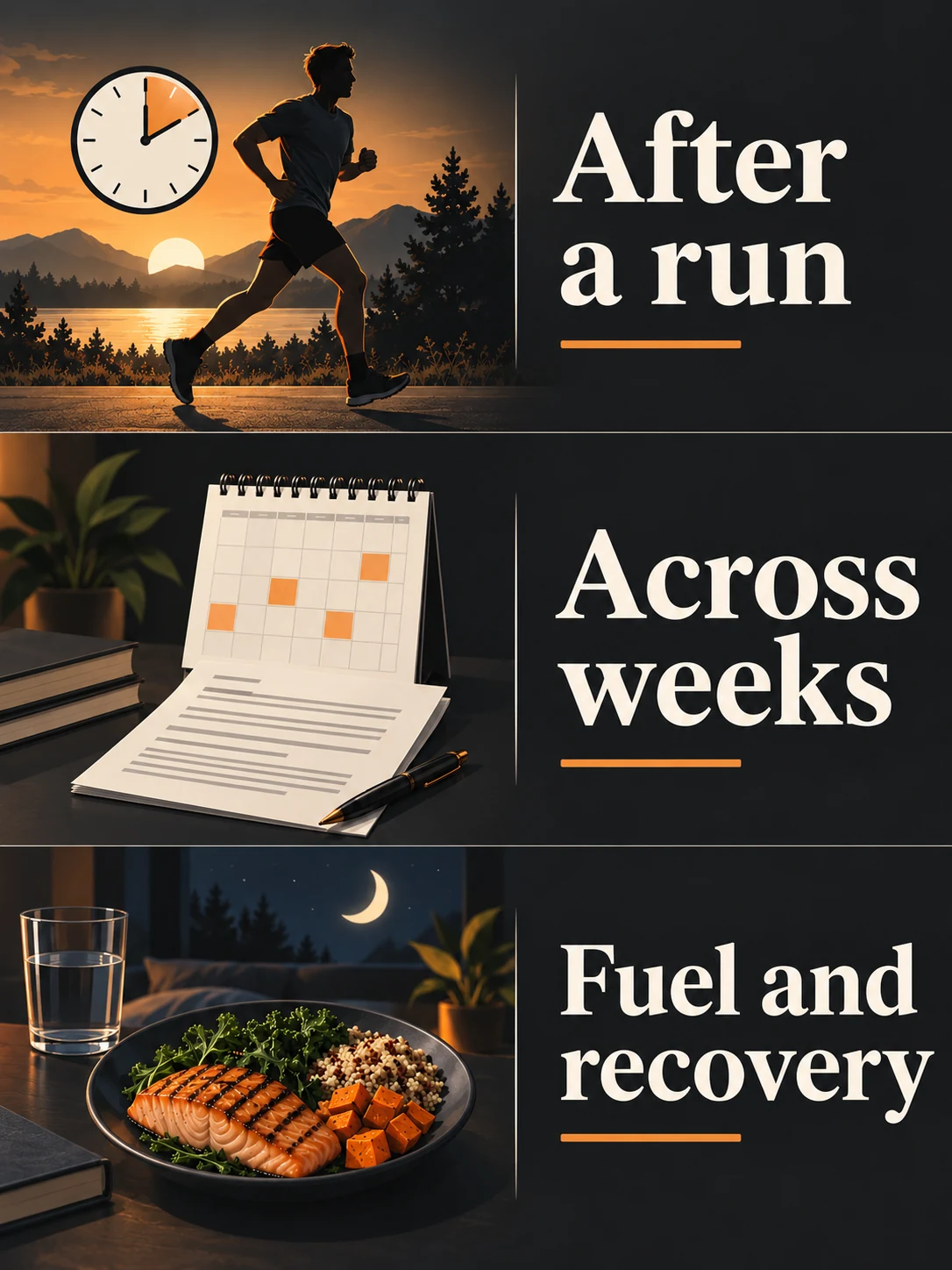
A post-run sample and a resting-level assessment answer different questions. Fuel and recovery belong in a review of the training week. This diagram does not show a hormone response or prescribe a running dose.
Silent, 8.5 seconds. Open the animation directly. Playback pauses offscreen; reduced-motion preferences keep playback manual. Essential explanations remain in readable text.
High volume, under-fueling and recovery
Low energy availability means that too little energy remains for the body’s other functions after the demands of exercise. It can occur when food intake fails to match the workload, intentionally or unintentionally. It is not the same thing as one missed snack or one difficult run.
The 2023 IOC consensus statement on Relative Energy Deficiency in Sport (REDs) describes health and performance consequences in male as well as female athletes. Low testosterone, reduced libido and fewer morning erections can be part of a broader clinical picture in men. These signals do not diagnose REDs by themselves.
Running mileage alone cannot determine whether you are eating enough. Watch estimates are not a validated energy-availability assessment, and a single calorie target cannot cover differences in body size, activity and health. A qualified sports dietitian and clinician can assess persistent concerns without relying on a do-it-yourself score.
What a practical record can capture
- What you actually completed, including duration, effort and an unusually hard or long session.
- Recent changes in weekly workload, schedule, heat or route.
- Food access, repeatedly missed meals or deliberate restriction while training demand increased.
- Sleep and how you felt later that day or the following morning.
- A persistent symptom, injury concern or change that you want to discuss.
The record can make a conversation more specific. It cannot determine a hormone level, prove a cause or clear you to continue training. Our recovery guide and overtraining discussion provide related context, without making those terms interchangeable diagnoses.
Three examples of a better review
A familiar week that is going well
You complete your usual easy sessions and suitable strength work, with no new concern. Keep the workload and record actual time and effort. A hormone claim does not create a reason to add sprints or extend the longest run.
Your next question might be practical: does the route or time of day fit your routine well enough to repeat it?
A return after a long break
Your earlier running pace no longer describes your current starting point. Arrange a suitable gradual plan and instruction, including health guidance when needed. Walking or walk-run practice may fit that plan.
The testosterone research does not tell you the right first-session duration. Record what the agreed plan is and how the activity actually feels.
More training and worse recovery
Your workload rises while meals become less consistent, and fatigue or another change persists. Record the sequence and seek individual guidance. Avoid adding intensity to try to correct a presumed hormone problem.
That pattern raises questions to assess; it does not establish under-fueling, REDs or testosterone deficiency as the diagnosis.
For a familiar cardio session, allow time around the working block. Mayo Clinic’s warm-up and cool-down guidance describes gradually easing into and out of the activity. The exact starting plan still depends on you; this article does not prescribe a fixed week.
Our weekly cardio and strength planner can help schedule an appropriate, familiar activity. Use the home strength guide for the strength portion. Count actual work separately from the plan rather than treating either as proof of recovery.
Choose the question to review
Organize a training or blood-test question and record what actually happened. This helper cannot estimate testosterone, diagnose under-fueling or clear you to exercise. It does not select a running dose.
Record actual session time, observed effort, recent changes, food access and recovery. A post-run measurement needs its collection context. New activity needs a suitable starting plan; persistent symptoms or restrictions need individual guidance. Use the written review examples below.
Do intervals beat easy running for testosterone?
The acute hormone response is not enough to choose an interval session. Intervals and continuous running can serve different fitness purposes and create different demands. The studies above do not establish a universal sprint plan for raising resting testosterone.
If you already use appropriate intervals for a training goal, record them as harder work. If they are unfamiliar, get a suitable introduction before adding them. A claimed hormone benefit should not bypass technique, progression or health considerations.
Use the same measurement check for testosterone changes around weight lifting. An exercise can improve useful aspects of fitness without producing the advertised lasting hormone effect.
Watch Mayo Clinic’s advice for starting a running routine
Mayo Clinic sports medicine physician Chad Asplund discusses health context, gradual walk-to-run practice and shoe comfort. Use the clip for starting considerations, not as a guarantee that a particular timeline suits you. It does not establish a testosterone effect.
Watch this Mayo Clinic clip on YouTube if the embed does not play.
When symptoms or a test result need context
Persistent fatigue, sexual changes or an unexplained decline in function warrant a clinical discussion. They can have several causes. Report recent workload, food restriction, sleep, illness and medicines without deciding that running must be the explanation.
The Endocrine Society’s 2026 statement emphasizes symptoms plus consistently low, accurately measured testosterone for diagnosis. Ask about appropriate preparation and repeat early-morning fasting testing when indicated. A post-run measurement or wearable recovery score cannot establish the diagnosis.
Tell the clinician when the sample was collected relative to exercise and follow their collection instructions. Do not add or avoid a workout to manipulate the result. Ask whether that context changes the interpretation or need for a repeat sample.
Stop exercise for pain or feeling unwell. For possible heart-attack warning signs, including chest discomfort or unusual shortness of breath with concerning accompanying symptoms, call 911 or your local emergency number. The American Heart Association warning-sign guidance explains when to seek emergency help.
Optional tools for recording and carrying essentials
Use equipment you already own when it fits. These three options have distinct jobs: record heart rate, carry water or keep a written log. None raises testosterone or establishes exercise suitability. We have not independently tested these products.
* As an Amazon Associate, PrimeForMen earns from qualifying purchases. Check the current selected option, fit and device compatibility before ordering.
Best for: For a runner who wants a recorded heart-rate signal and has a compatible app or device. Skip if your current setup is sufficient. Current Amazon listing: Polar H10 Heart Rate Monitor Chest Strap - ANT + Bluetooth, Waterproof HR Sensor for Men and Women, Black, M-XXL Best for: For a route where carrying fluid is useful and belt fit works for you. Skip if water access or your existing bottle already suits the route. Current Amazon listing: AiRunTech Hydration Running Belt with Bottles Zero Bounce Design for Running, Triathlon, Marathon, 10K, 5K, Trail Fit for Most Smartphones(2 * 10OZ bottle) Best for: For keeping training notes on paper. Skip if the free worksheet, your phone or an existing notebook already works. Current Amazon listing: Ultimate Workout Journal - Fitness Training Planner for Men and Women * As an Amazon Associate, PrimeForMen earns from qualifying purchases.Recommended Products
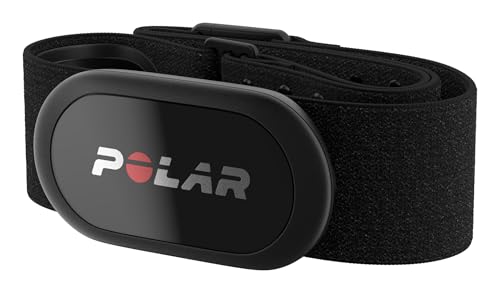
Polar H10 heart-rate chest strap, M-XXL
View on Amazon

AiRunTech hydration belt with two 10 oz bottles
View on Amazon

Ultimate Workout Journal
View on Amazon
Keep your review with you
Use the eight-field running review sheet to record actual time, effort, recent changes and questions. Fill and save it for a training or healthcare discussion; leave anything you have not recorded blank.
Download my running and recovery review (fillable PDF). The helper print button creates a separate record with your current choices, notes and checkmarks.
What to do this week
- Write down the fitness purpose of your current running plan. Keep a hormone claim separate from that purpose.
- Record actual session time, effort and recent changes. Leave unrecorded details blank instead of inventing precision.
- Review whether food access, sleep and the rest of your schedule fit the workload. Get individual guidance for persistent concerns.
- If a blood result concerns you, bring its collection context and symptoms to the clinician. Avoid changing treatment or quitting running on the basis of one number.
Conclusion: use running for its fitness purpose
The testosterone answer depends on the measurement and population. Acute responses do not prove a lasting benefit, while some training populations do show increases. Choose a suitable workload, record its context and get persistent symptoms assessed.
Use our testosterone evidence hub to compare related claims without turning an activity or product into a diagnosis.
Frequently asked questions
Does running raise testosterone after every session?
No consistent personal response is established here. Findings depend on the protocol, population and sampling time. A post-session change does not establish a lasting resting-level increase.
Can running improve resting testosterone?
Some aerobic-training reviews report increases in specific populations, including men with obesity or type-2 diabetes. A broader review of apparently healthy inactive men found little pooled effect. Neither result guarantees your response.
Does running longer than 80 minutes damage testosterone?
The selected duration experiment does not establish that universal limit. Its hormone and ratio findings describe a particular protocol, not a boundary that diagnoses harm in every runner.
Should I replace easy runs with sprints?
The testosterone evidence does not establish that prescription. Choose session types for an appropriate fitness goal and your experience, with individual guidance for unfamiliar work or health concerns.
Should I stop running after a low testosterone result?
A single result needs clinical interpretation. Discuss symptoms, collection timing, workload, food, sleep and other possible contributors before deciding what to change.
Medical Disclaimer
This article and its helper are educational. They do not diagnose low testosterone, REDs or overtraining, calculate an adequate food intake or establish exercise suitability. Persistent symptoms, restrictions and treatment decisions need a qualified healthcare professional.
Affiliate Disclosure
Some product links are affiliate links. PrimeForMen may earn a commission at no additional cost to you. Inclusion does not imply hands-on testing, a hormone benefit or medical suitability.