
Stress relief workouts: compare walking, strength, yoga, mobility, and short intervals, then use a practical weekly plan without adding recovery debt.
- A useful stress workout leaves you more regulated, not more depleted.
- Walking, strength work, yoga, and easy cardio can all fit.
- Persistent or severe symptoms deserve professional support, not harder exercise.
Bottom line Match the workout to your state, use the smallest effective dose, and finish with enough capacity to handle the rest of your day.

Stress Relief Workouts works best when the plan matches the real question, the current training load, and the reader's recovery capacity. The goal is a clear decision and a repeatable next step—not another list of disconnected tips.
Quick Summary: Stress Relief Workouts
- Exercise can reduce perceived stress and support mood, but it is not a cure for every cause of stress.
- Ten minutes of walking or mobility can be enough to change state on a difficult day.
- Strength training works best when the session is controlled rather than taken to failure.
- Hard intervals can help some people, but they can also feel like more stress when sleep and recovery are poor.
- Chest symptoms, panic that feels unsafe, persistent depression, or thoughts of self-harm require qualified help.
The Prime Perspective
The goal is not to prove toughness. A stress-relief session succeeds when your breathing, attention, and muscle tension improve without borrowing energy from tomorrow.
Stress relief workouts are short, manageable exercise sessions chosen to reduce mental rumination, muscle tension, and perceived overload. They can use walking, easy cardio, strength, yoga, mobility, or brief intervals, but the useful dose should improve regulation without creating additional recovery debt.
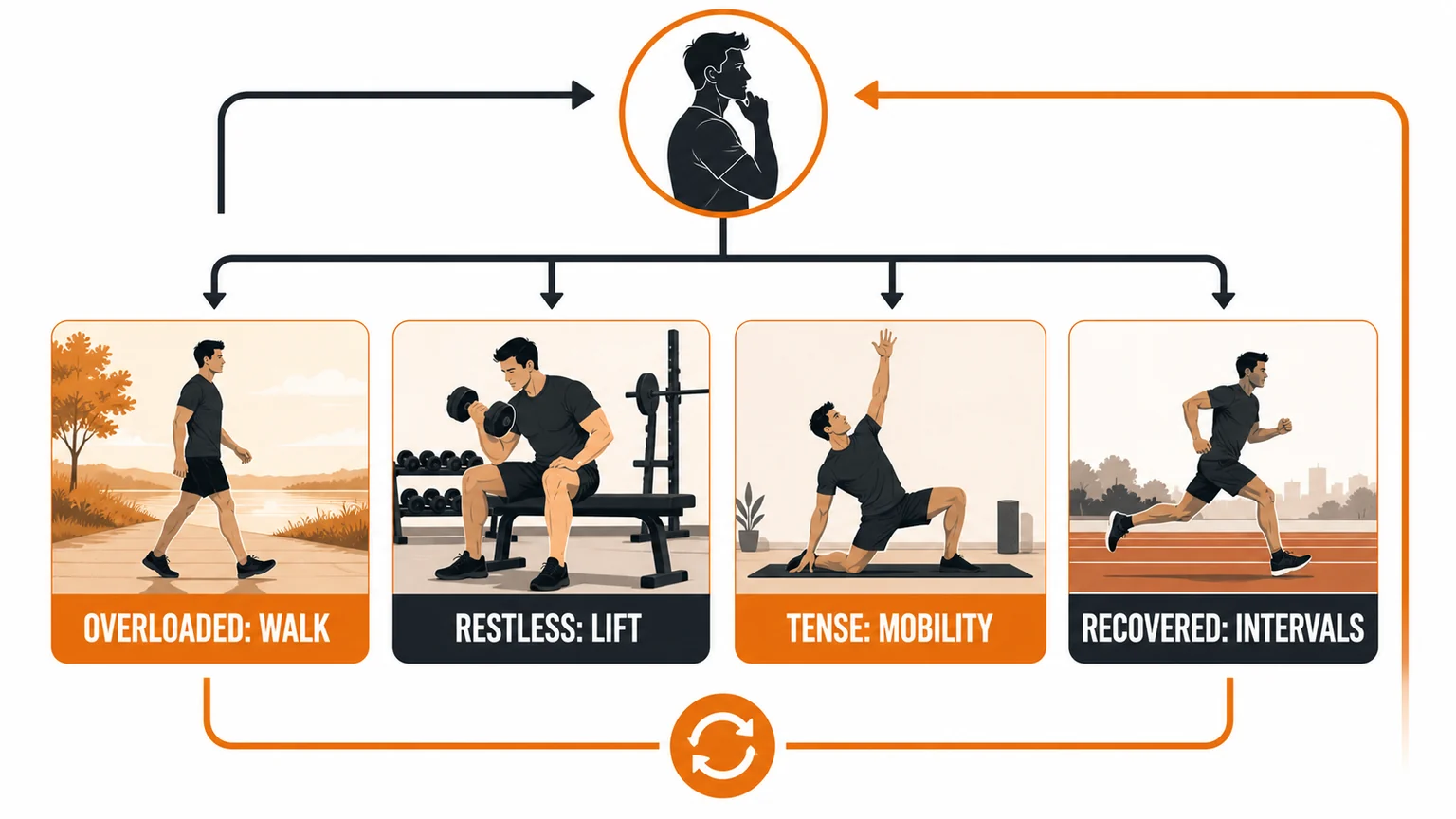
Match the Workout to Your Current State
| Current state | Best starting option | Useful dose | Avoid |
|---|---|---|---|
| Mentally overloaded | Outdoor walk or easy bike | 10–30 minutes | Complex max-effort plan |
| Physically restless | Full-body strength circuit | 20–35 minutes | Training every set to failure |
| Tense and stiff | Mobility or gentle yoga | 10–25 minutes | Forcing painful ranges |
| Low energy | Easy walk plus daylight | 10–20 minutes | Punishing intervals |
| Well recovered but agitated | Short controlled intervals | 15–25 minutes | All-out testing |
Amazon Product Shortlist
These tools reduce setup friction for walking, mobility, and home strength. PrimeForMen has not independently tested them, and none should be treated as a mental-health treatment.
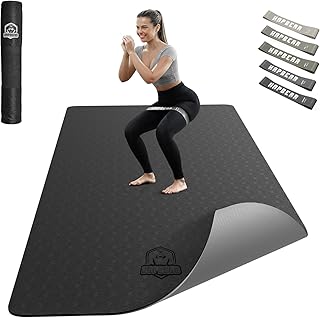
HAPBEAR Large Yoga Mat
For a defined floor space that makes mobility, breathing, and low-impact circuits easier to start.
- Wide 72-by-36-inch format.
- Six-millimeter cushioning for floor work.
- A mat supports practice but does not treat anxiety or depression.

Amazon Basics 18-Inch Foam Roller
For brief self-massage when muscle tightness makes it difficult to settle into movement.
- Compact high-density format.
- Useful for calves, quads, glutes, and upper back.
- Avoid sharp pain, swelling, numbness, and direct pressure on joints.

WHATAFIT Resistance Bands
For a quiet full-body strength session at home when a gym trip adds friction.
- Stackable tubes support smaller load changes.
- Handles and door anchor expand exercise options.
- Inspect bands and anchor direction before every session.
*As an Amazon Associate, PrimeForMen earns from qualifying purchases. Availability and prices can change.
A 10-Minute Reset Workout
- Walk or march easily for two minutes.
- Perform six slow bodyweight squats to a chair.
- Complete six wall pushups and six band or towel rows.
- Walk briskly for three minutes while lengthening the exhale.
- Finish with two minutes of easy walking and relaxed shoulder movement.
The session is deliberately simple. If coordination, breathing, or symptoms worsen, slow down or stop. The objective is a state change, not exhaustion.
Exercise can reduce perceived stress and support mood, although effects vary by person, mode, dose, and the cause of stress. A 2025 network meta-analysis in older adults ranked exercise among promising interventions, while also calling for more high-quality trials.
The older-adult stress network meta-analysis included 23 randomized trials. Exercise showed potential benefits, but the findings do not mean one workout treats every stressor or replaces social, workplace, financial, or clinical support.
For diagnosed major depression, a separate 2024 network meta-analysis of 218 studies found meaningful benefits from walking or jogging, yoga, strength training, and mixed aerobic exercise, while evidence confidence ranged from low to very low for many comparisons. That population and outcome are not identical to everyday stress, so use the result as support—not overreach.
Build a Week That Does Not Become Another Obligation
Monday — 25-minute brisk walk
Conversational pace, preferably outdoors when practical.
Wednesday — 30-minute full-body strength
Two or three sets each of a squat, hinge, push, pull, and carry with two repetitions in reserve.
Friday — 15-minute mobility or yoga
Comfortable ranges, slow transitions, no forced stretching.
Weekend — 30 to 45 minutes of enjoyable activity
Hike, cycle, swim, play a sport, or repeat the walk. Social exercise may add connection as well as movement.
When Hard Exercise Is the Wrong Tool
Sleep loss, illness, low food intake, escalating pain, panic-like symptoms, and unusual cardiovascular signs change the decision. Use quick workouts, beginner home workouts, home cardio exercises, and home core workouts for lower-friction options.
Stop and seek appropriate help for chest pressure, faintness, severe unusual breathlessness, new neurological symptoms, or pain that changes movement. Persistent depression, disabling anxiety, panic, or thoughts of self-harm need prompt professional support.
Exercise changes state, but it may not change the stressor. A walk can help you think clearly; it cannot resolve an unsafe workplace, financial crisis, relationship violence, or untreated mental-health condition. Use the clearer state to take the next real action.
For a deeper look at why movement can improve mood without guaranteeing a dramatic “high,” read our evidence review of endorphins and exercise.
Connect Movement With Recovery
Use cardio workouts, foam-roller guidance, and rest and recovery to build a plan that supports rather than competes with your week.
What to Do This Week
- Rate your energy and tension from one to five.
- Choose walking, strength, mobility, or intervals to match that state.
- Set a 10- to 30-minute limit before starting.
- Finish with two minutes of slow breathing or easy movement.
- Record whether you feel calmer, clearer, unchanged, or more depleted.
Conclusion
Match the workout to your state, use the smallest effective dose, and finish with enough capacity to handle the rest of your day.
Next Step: Keep the Plan Evidence-Based
Use the linked PrimeForMen guides to turn this answer into a practical routine without chasing unsupported shortcuts.
Frequently Asked Questions About Stress Relief Workouts
What exercise is best for stress relief?
The best option is the activity you can perform safely at a manageable effort. Walking, easy cycling, strength training, yoga, and mobility can all help; choose by energy, tension, and recovery.
Can strength training reduce stress?
Yes. Controlled strength training can improve mood and provide a clear focus, but training to failure or stacking excessive volume may feel like more stress when recovery is already poor.
How long should a stress relief workout be?
Start with 10 to 30 minutes. A short session that changes your state is more useful than a long workout that increases fatigue or becomes another obligation.
Should I do HIIT when I feel stressed?
Only if you normally tolerate it and are reasonably recovered. Choose walking, easy cardio, or mobility when sleep is poor, physical tension is high, or hard exercise feels agitating.
Can exercise replace therapy or medication?
No. Exercise can support mental health, but persistent, severe, or safety-relevant symptoms should be discussed with a qualified clinician or mental-health professional.
This article is educational and does not replace individualized medical advice, diagnosis, or treatment. Discuss persistent symptoms, hormone concerns, cardiovascular risk, digestive problems, medications, or exercise restrictions with a qualified clinician.
Some links are affiliate links. PrimeForMen may earn a commission at no extra cost to you. Product inclusion does not override evidence, fit, or safety.