
Does sex boost testosterone? Separate small short-term studies from lasting hormone levels, libido, abstinence claims, symptoms, and proper testing.
- Small studies suggest temporary changes—not a durable baseline boost.
- Testosterone can affect sexual function, so cause and effect run both ways.
- Libido or erection changes deserve context, not shame or internet hormone tests.
Bottom line Treat sex as part of health and relationships—not a hormone protocol—and investigate persistent symptoms with proper clinical assessment.

Does sex boost testosterone? A few small studies suggest testosterone can rise around sexual activity. They do not show that a particular frequency of sex creates a lasting increase, builds more muscle, or treats clinically low testosterone.
This is a topic where confident internet rules routinely outrun the evidence. Sexual desire, erections, relationship context, sleep, medication, vascular health, stress, and hormone status interact.
Quick Summary: Does Sex Boost Testosterone?
- A short-term hormone fluctuation is not the same as higher resting testosterone.
- The best-known intercourse study included only four couples and eleven sex evenings.
- Testosterone can influence libido, making reverse causation a major issue.
- Abstinence claims are not supported as a durable testosterone strategy.
- Persistent sexual or hormone symptoms deserve evidence-based assessment, not shame.
The Prime Perspective
Do not turn intimacy into a laboratory intervention. If sex becomes a duty performed to optimize a hormone number, the advice has already lost sight of health, consent, relationship quality, and the weakness of the evidence.
What the Human Research Actually Shows
A frequently cited 1992 study measured salivary testosterone in four heterosexual couples across eleven evenings with intercourse and eleven without. Testosterone rose on intercourse evenings and fell on no-intercourse evenings. That is interesting, but the sample is far too small to establish a lasting effect, an ideal frequency, or a treatment. Read the original small study.
| Claim | What the evidence can say | What it cannot say |
|---|---|---|
| Sex raises testosterone | A temporary change has appeared in very small studies | That baseline testosterone stays higher |
| Abstinence raises testosterone | Short fluctuations may occur | That long abstinence improves hormones or muscle |
| High testosterone causes more sex | Hormone status can influence desire | That libido is determined by testosterone alone |
| Sex improves gym gains | No useful direct evidence | That frequency changes hypertrophy |
| Low libido proves low T | Low T is one possible contributor | That symptoms diagnose the cause |
Amazon Product Shortlist
These products address sleep, cardiovascular awareness, and strength. PrimeForMen does not recommend sexual-performance pills as a substitute for diagnosis or relationship context.

Contoured Sleep Mask
Best when light exposure is a clear barrier to sleep, recovery, and daytime energy.
- Supports a darker sleep environment.
- Adds no hormone or stimulant ingredient.
- Useful for travel and early daylight.

Upper-Arm Blood Pressure Monitor
Best when cardiovascular risk needs a real home trend instead of hormone guesswork.
- Supports discussions with a clinician.
- Upper-arm format is the practical standard.
- One reading does not establish a diagnosis.
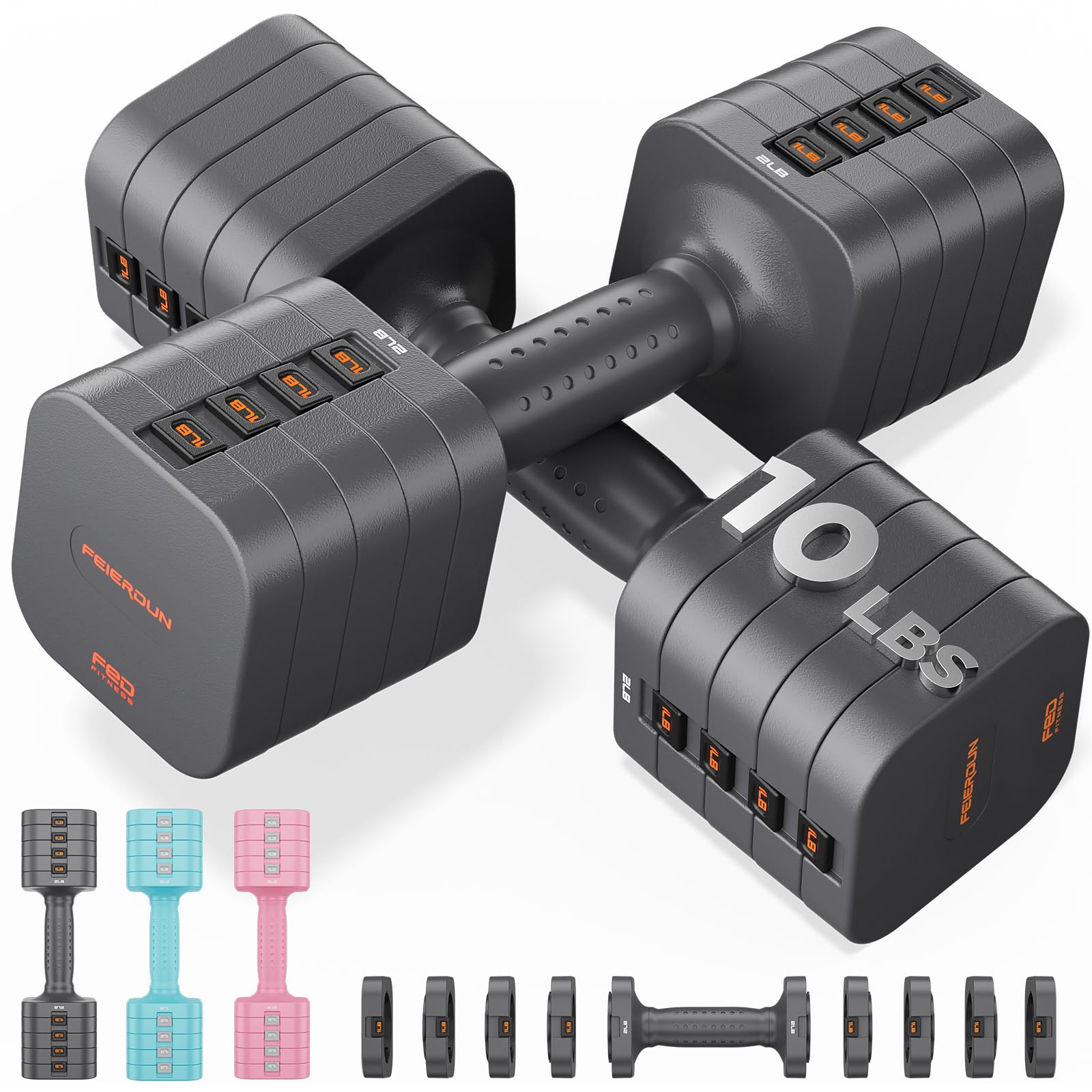
Adjustable Dumbbells
Best for a measurable strength habit that supports function and body composition.
- Covers squat, hinge, row, press, and carry.
- Allows gradual load progression.
- Supports health without sexual-performance hype.
*As an Amazon Associate, PrimeForMen earns from qualifying purchases. Availability and prices can change.
Why Cause and Effect Get Confused
Testosterone treatment can improve some sexual outcomes in men who truly have low testosterone, while it generally does not improve erectile function in men with normal levels. A meta-analysis of controlled trials helps illustrate that baseline status matters; see the testosterone and sexual-function review.
That evidence runs in the opposite direction from the headline claim: testosterone may affect sexual function. It does not prove that increasing sexual activity treats the hormone level.
Sexual function is a whole-system signal. Sleep apnea, diabetes, blood pressure, depression, anxiety, relationship strain, alcohol, pelvic health, medications, vascular disease, and low testosterone can overlap. One symptom rarely identifies one cause.
What Abstinence Claims Get Wrong
Online challenges often cite a single temporary peak and present it as a compounding advantage. Hormones fluctuate across the day and respond to sleep, food, illness, stress, and measurement conditions. Even if a short fluctuation is real, it does not establish better muscle growth, fertility, mood, or long-term testosterone.
Choose sexual frequency based on consent, comfort, health, and relationship context—not a testosterone calendar.
When Symptoms Deserve Medical Attention
Persistent loss of libido, erectile difficulty, absent morning erections, infertility concerns, testicular symptoms, breast changes, unexplained fatigue, or loss of strength can justify evaluation. Seek urgent care for chest symptoms, severe genital pain, trauma, or a prolonged painful erection.
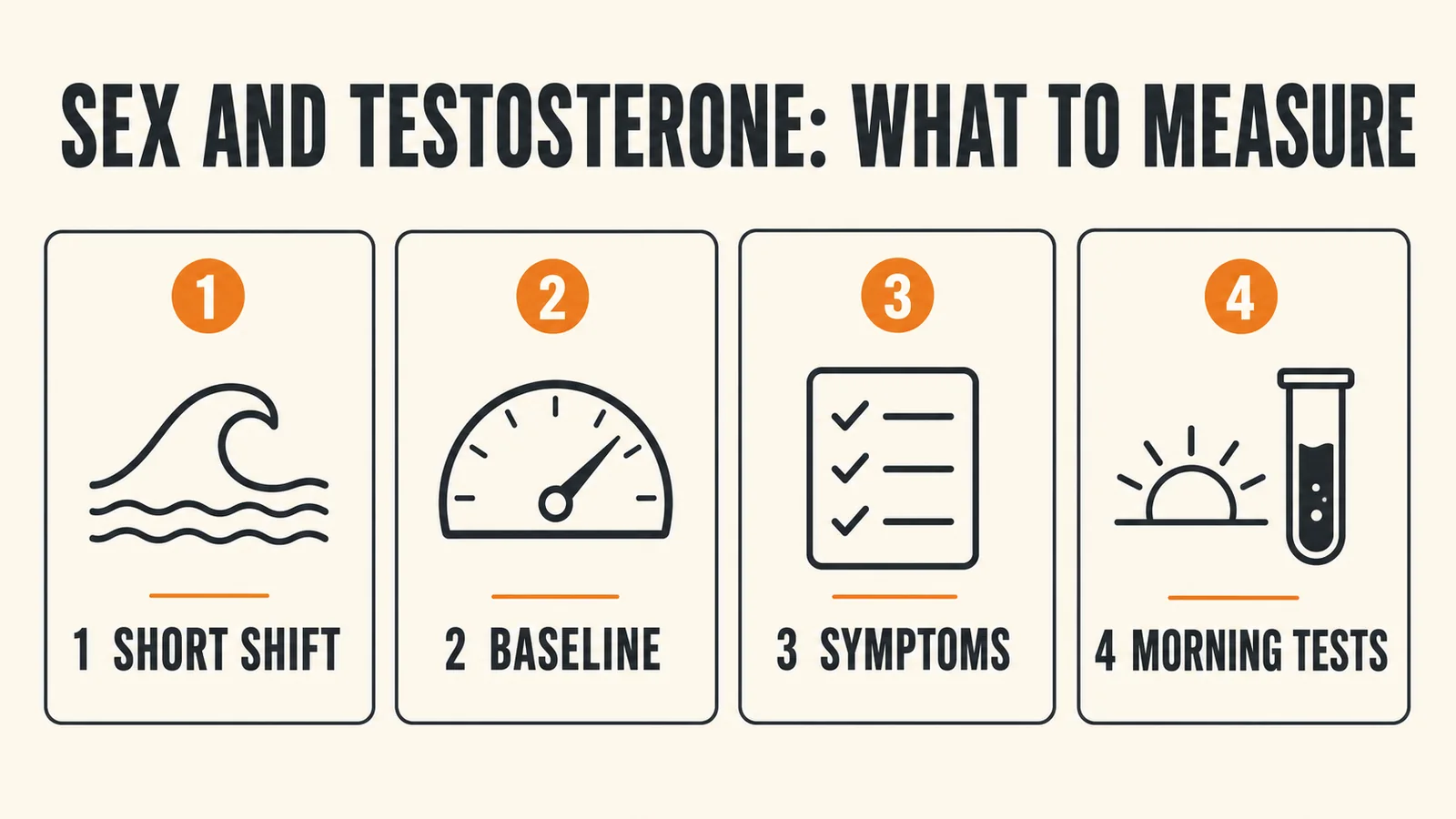
For suspected low testosterone, evaluation generally uses symptoms plus repeat morning blood tests. Review our guides to testosterone-booster safety, testosterone-support ingredients, sleep aids, and weight lifting and testosterone.
A Better Four-Step Check
- Describe the symptom and timeline without labeling the cause.
- Review sleep, medication, alcohol, stress, illness, and relationship context.
- Address cardiovascular risk and maintain regular physical activity.
- Use clinician-guided morning testing if symptoms persist.
Conclusion: Intimacy Is Not a Testosterone Protocol
Sex may cause a temporary hormone fluctuation, but it is not a proven way to raise baseline testosterone. Avoid frequency rules, abstinence myths, and supplement shortcuts. Persistent changes deserve respectful, properly contextualized assessment.
Next Step: Understand Testosterone Without the Myths
Use the PrimeForMen testosterone hub for testing, lifestyle evidence, supplement limits, and medical boundaries.
Frequently Asked Questions About Sex and Testosterone
Does testosterone rise after sex?
A short-lived rise has appeared in very small studies, but the size, duration, and practical significance are uncertain.
Does abstinence increase testosterone?
There is no good evidence that prolonged abstinence creates a durable testosterone increase or better muscle growth.
Can low testosterone reduce libido?
Yes, but libido also changes with sleep, mood, medication, relationship context, illness, and many other factors.
Does more sex build muscle?
No direct evidence shows that sexual frequency meaningfully improves hypertrophy. Training, protein, energy intake, and recovery are the main levers.
Should erectile problems trigger a testosterone test?
They can justify a clinical discussion, but vascular, medication, psychological, sleep, and other causes also need consideration.
This article is educational and does not replace individualized medical advice, diagnosis, or treatment. Discuss persistent symptoms, hormone concerns, cardiovascular risk, digestive problems, medications, or exercise restrictions with a qualified clinician.
Some links are affiliate links. PrimeForMen may earn a commission at no extra cost to you. Product inclusion does not override evidence, fit, or safety.