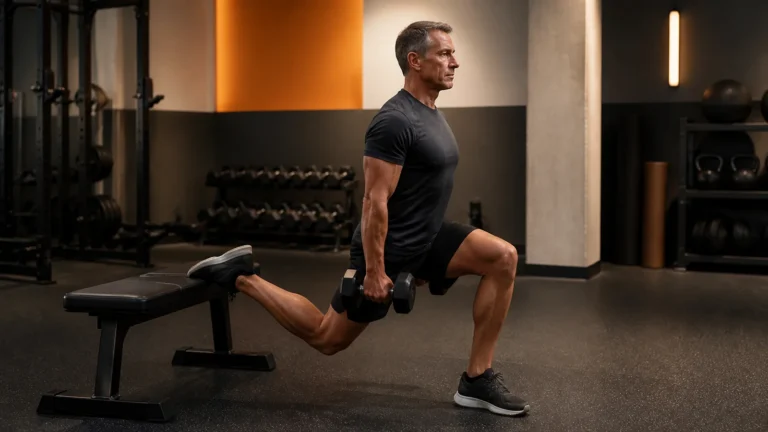
Bulgarian split squats: learn stance, rear-foot height, torso position, regressions, muscle emphasis, programming, and knee-friendly troubleshooting.
- The front leg is primary, but the rear leg still contributes.
- A lower rear-foot support and stable handhold make the exercise easier to learn.
- Control depth and stance before adding dumbbells.
Bottom line Start with a supported split squat, use a modest rear-foot height, keep the front foot planted, and add load only when balance and joint comfort are stable.
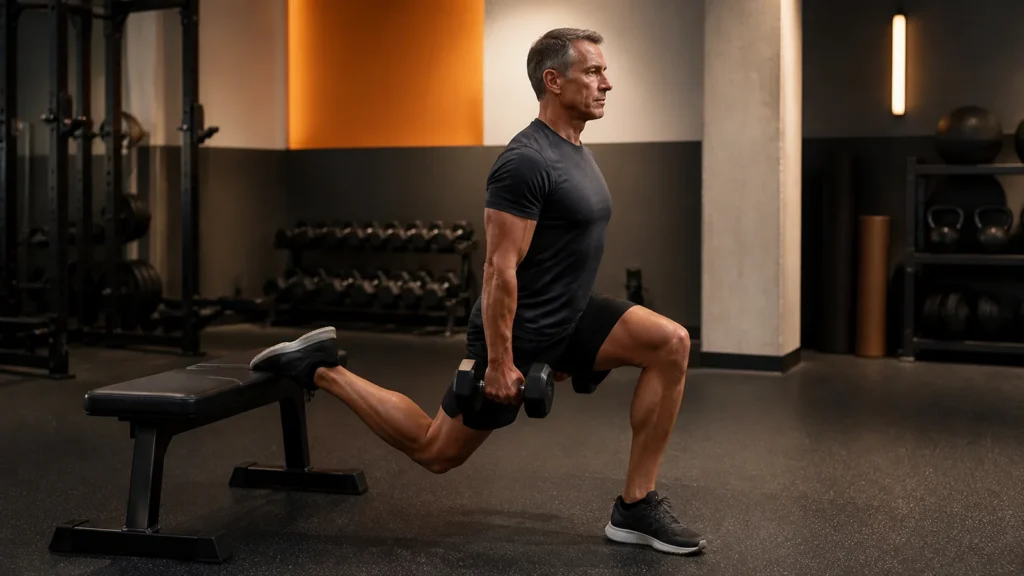
Bulgarian Split Squats should be judged by the result it can realistically produce, the dose or setup required, and the risks that marketing leaves out.
Quick Summary: Bulgarian Split Squats
- Set the stance from the bottom position instead of guessing from standing.
- Use a rail or rack so balance does not hide leg strength.
- A slightly forward torso generally increases hip demand; a more upright torso shifts emphasis toward the knee.
- The rear leg contributes, so do not call the movement purely single-leg.
- Progress range, reps, and load one variable at a time.
The Prime Perspective
The best setup is not the one that looks most dramatic. It is the one that lets the front leg work through a controllable range without foot wobble or joint irritation.
Setup Variable and Its Effect
| Option or variable | What it changes | Decision rule |
|---|---|---|
| Rear support height | Higher increases hip extension demand | Start below knee height |
| Stance length | Too short crowds the knee; too long strains setup | Use a stable bottom position |
| Torso angle | Forward increases hip contribution | Keep spine controlled |
| Front shin | May travel forward safely if heel stays down | Use pain-free range |
| Hand support | Reduces balance demand | Helpful, not cheating |
Amazon Product Shortlist
These tools address load, rear-foot support, and assistance. PrimeForMen has not independently tested them.

PowerBlock Elite EXP Dumbbells
For experienced trainees who need small, repeatable load increases.
- Adjustable pair saves space.
- Supports suitcase or bilateral loading.
- Grip and block shape require practice.

YOLEO Adjustable Weight Bench
A stable support option when the bench already serves the rest of a home gym.
- Multiple positions for other exercises.
- Check rear-foot height before using it.
- Verify floor stability and capacity.

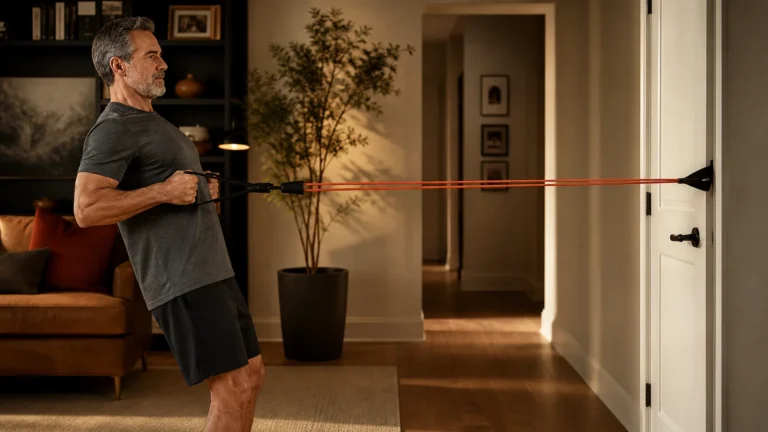
WHATAFIT Resistance Bands
For assisted or resisted split-squat variations when free weights are not ideal.
- Multiple resistance levels.
- Door anchor expands exercise options.
- Inspect bands and anchors before every use.
*As an Amazon Associate, PrimeForMen earns from qualifying purchases. Availability and prices can change.
What the Evidence Supports
A biomechanics study shows that trunk position and loading strategy change joint moments; research also confirms meaningful rear-leg contribution.
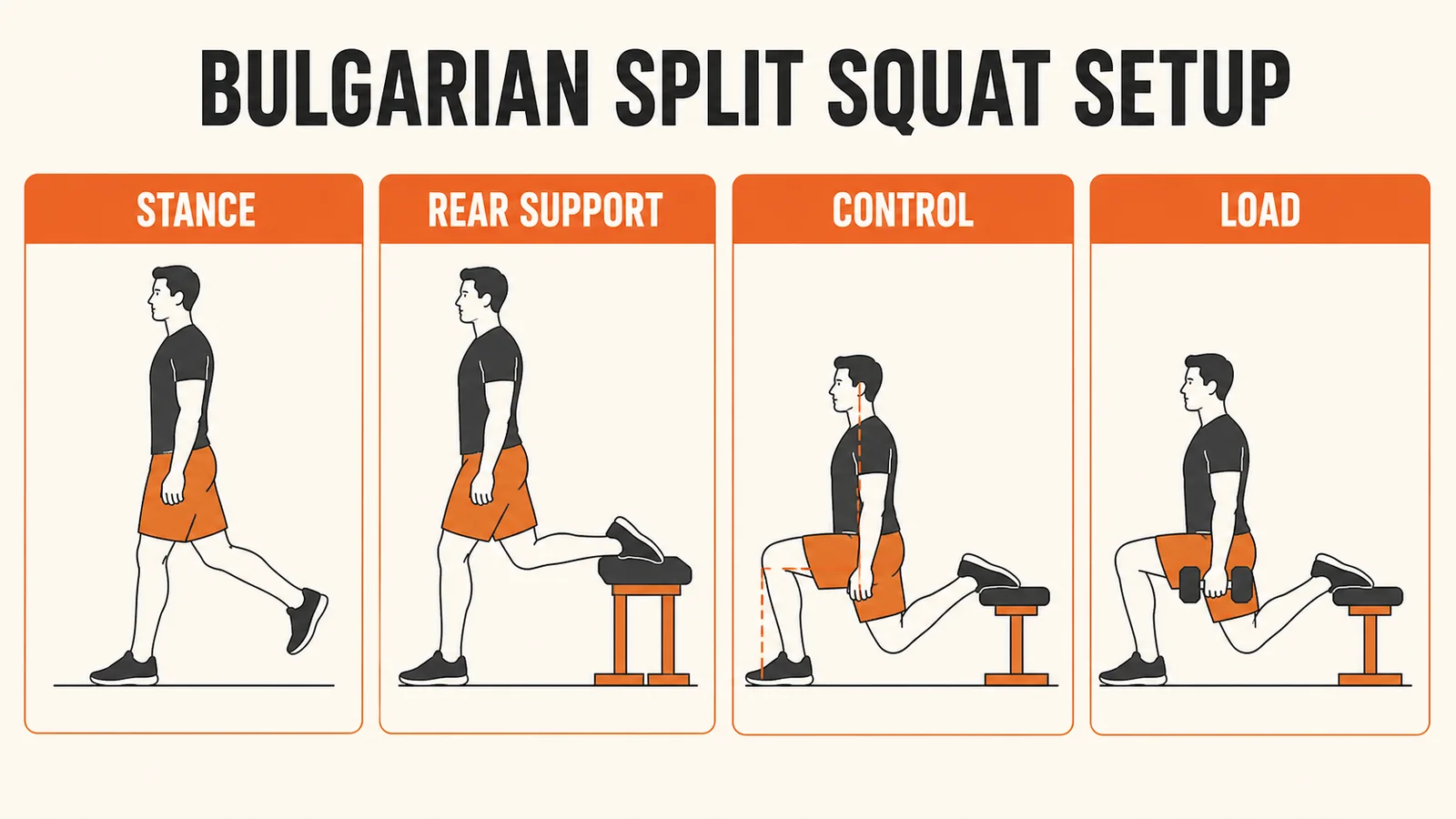
Step-by-Step Setup
- Stand in a split stance and lower into the bottom position with both feet on the floor.
- Adjust until the front heel stays planted and the pelvis remains controlled.
- Place the rear foot on a low stable support without changing the front-foot position.
- Hold a rack lightly, brace, and descend under control.
- Drive through the whole front foot and stop before balance or pain breaks form.
Regressions Before Loading
Use a static split squat, assisted split squat, short-range version, or step-up. If front-knee symptoms appear, reduce depth, check foot position, slow the eccentric, and compare a lower support. Pain that persists, swells, locks, or changes gait needs assessment.
There is no universal perfect stride length. Femur length, ankle motion, hip comfort, rear support height, and the goal all influence the position.
Programming That Progresses
Begin with two or three sets of six to ten controlled reps per side, one or two times weekly. Start with the weaker or less coordinated side and match—not exceed—its clean reps. Link this with our unilateral training guide, strength basics, band training, adjustable dumbbells, and advanced techniques hub.
What to Do This Week
- Practice a supported floor split squat first.
- Set the stance from a stable bottom position.
- Use a low rear-foot support and six slow reps per side.
- Match clean reps to the weaker side.
- Add range or load only after two symptom-free sessions.
Conclusion
Start with a supported split squat, use a modest rear-foot height, keep the front foot planted, and add load only when balance and joint comfort are stable.
Next Step: Use the Full PrimeForMen Guide
Build the decision in context with the nutrition and supplements hub or the advanced fitness techniques hub.
Frequently Asked Questions About Bulgarian Split Squats
Are Bulgarian split squats bad for knees?
Not inherently. Setup, range, load, and individual tolerance determine whether the exercise fits.
How high should the rear foot be?
Start with a low support, often below knee height. Higher is not automatically better.
Should the knee pass the toes?
It can if the heel stays planted and the position is comfortable and controlled.
Where should I feel the exercise?
Mostly in the front-leg quadriceps and glutes, with some rear-leg and trunk contribution.
Are Bulgarian split squats truly unilateral?
They are unilateral-emphasis, but the rear leg still contributes force and stability.
This article is educational and does not replace individualized medical advice, diagnosis, or treatment. Discuss persistent symptoms, hormone concerns, cardiovascular risk, digestive problems, medications, or exercise restrictions with a qualified clinician.
Some links are affiliate links. PrimeForMen may earn a commission at no extra cost to you. Product inclusion does not override evidence, fit, or safety.