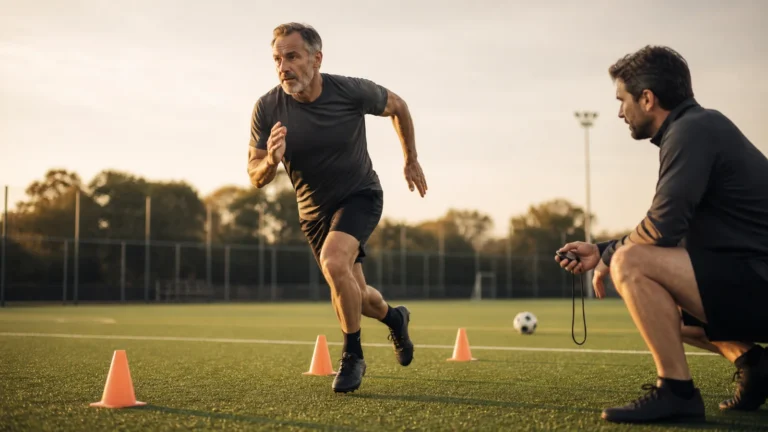
Soccer conditioning guide: build aerobic fitness, repeated-sprint ability, speed, change of direction, strength, and a weekly plan around match day.
- Match fitness is not the same as steady-distance fitness.
- Speed work needs full enough rest to stay fast.
- Matches and hard practices already consume weekly recovery.
Bottom line Build a conversational aerobic base, practice speed while fresh, dose repeated-sprint work sparingly, and reduce conditioning as match day approaches.
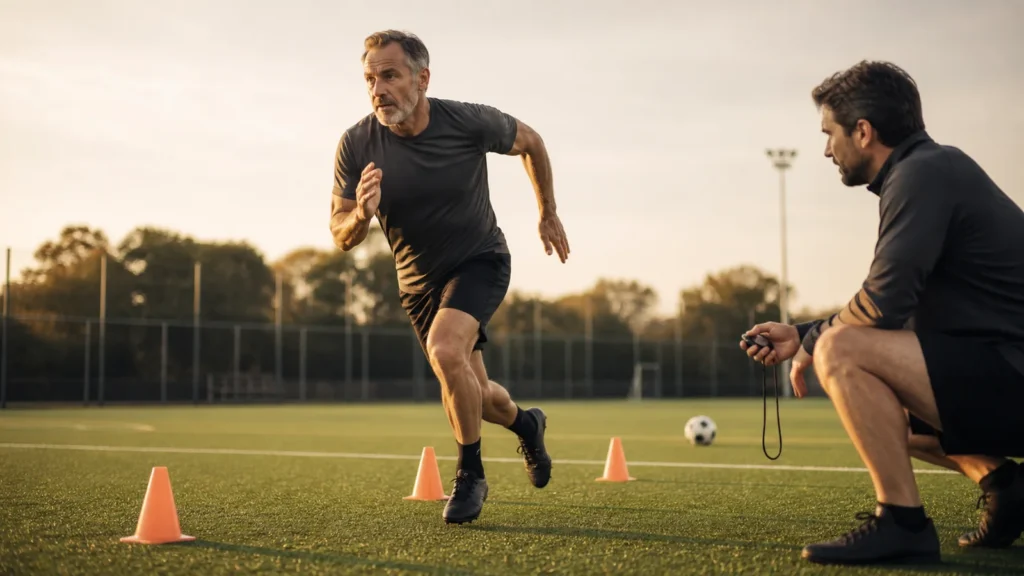
Soccer Conditioning is most useful when the plan separates the skill you are learning from the physical quality you are training. That distinction keeps effort measurable and prevents fatigue from masquerading as progress.
Quick Summary: Soccer Conditioning
- Soccer alternates low-intensity movement with accelerations, stops, turns, and short sprints.
- Easy aerobic work helps recovery between demanding actions and sessions.
- Repeated-sprint training improves qualities that steady jogging alone does not fully cover.
- Strength and unilateral control support force production and braking capacity.
- Return from injury should follow medical and coaching guidance, not a generic conditioning calendar.
The Prime Perspective
Being able to jog for 90 minutes is not the same as staying useful for 90 minutes. Soccer fitness preserves the quality of your next run, turn, duel, and decision as fatigue accumulates.
Soccer conditioning develops the aerobic base, acceleration, high-speed running, repeated-sprint ability, change of direction, strength, and recovery needed to repeat useful actions across a match. It is broader than simply running long distances.
The Five Qualities Behind Match Fitness
| Quality | Why it matters | Example session | Main error |
|---|---|---|---|
| Aerobic base | Recover between actions | 25–40 minutes conversational | Turning every run into a race |
| Acceleration | Reach useful speed quickly | 6–10 sprints of 10–20 m | Too little rest to stay fast |
| Repeated sprint | Repeat intense efforts | 2 sets of 5 x 20 m | Adding it after exhausted practice |
| Change of direction | Brake and re-accelerate | Planned cuts and reactive cues | Ignoring deceleration mechanics |
| Strength | Produce and absorb force | Squat, hinge, split stance, calf | Dropping lifting during the season |
Amazon Product Shortlist
These tools organize field space and ball work. PrimeForMen has not independently tested them, and equipment cannot turn rehearsed foot patterns into true game perception by itself.

20-Foot Adjustable Agility Ladder
For organizing warm-up footwork and low-amplitude coordination drills in a small field area.
- Adjustable rung spacing.
- Carry bag supports field sessions.
- A ladder develops patterns, not automatic game agility.

Super Z Outlet Training Cones
For marking shuttle distances, deceleration zones, and change-of-direction courses.
- Twenty-four high-visibility cones.
- Multiple colors simplify drill cues.
- Keep distances measured rather than guessed.

Adjustable Soccer Rebounder Net
For combining passing and first-touch practice with controlled movement intervals.
- Multiple rebound angles.
- Supports solo ball work.
- Needs secure setup and adequate outdoor space.
*As an Amazon Associate, PrimeForMen earns from qualifying purchases. Availability and prices can change.
Steady running helps build the aerobic base that supports recovery, but it does not fully train acceleration, sprint mechanics, braking, turning, or repeated high-intensity efforts. A complete plan needs both general capacity and soccer-specific actions.
A Weekly Plan Around a Saturday Match
| Day | Main work | Intensity | Reason |
|---|---|---|---|
| Sunday | Recovery walk or easy cycle | Very easy | Restore movement |
| Monday | Strength plus easy aerobic work | Moderate | Build capacity away from match |
| Tuesday | Team practice and short speed | High quality | Fresh fast actions |
| Wednesday | Easy aerobic or rest | Low | Absorb load |
| Thursday | Repeated-sprint or small-sided work | Hard but limited | Match-specific conditioning |
| Friday | Short technical primer | Easy and sharp | Preserve freshness |
| Saturday | Match | High | Primary performance |
If you play more than once per week, remove dedicated conditioning before you add it. A recreational player with one match and two demanding practices may already have three high-load days.
Use Separate Rest Rules for Speed and Conditioning
For acceleration or maximum-speed practice, rest long enough that the next repetition is genuinely fast—often 60 to 180 seconds depending on distance and training age. For repeated-sprint conditioning, rest is deliberately shorter, but stop when times slow markedly or mechanics become sloppy. Do not call a slow shuttle a speed session.
Use short sprints with incomplete but controlled recovery, such as two sets of five 20-meter efforts with about 20–30 seconds between repetitions and several minutes between sets. Begin with less volume and stop when speed or movement quality drops sharply.
A systematic review and meta-analysis of HIIT in male soccer players found benefits for aerobic fitness and repeated-sprint ability, while effects on straight-line sprint time were less clear. This supports separating conditioning from true speed development.
Change of Direction Is a Braking Skill
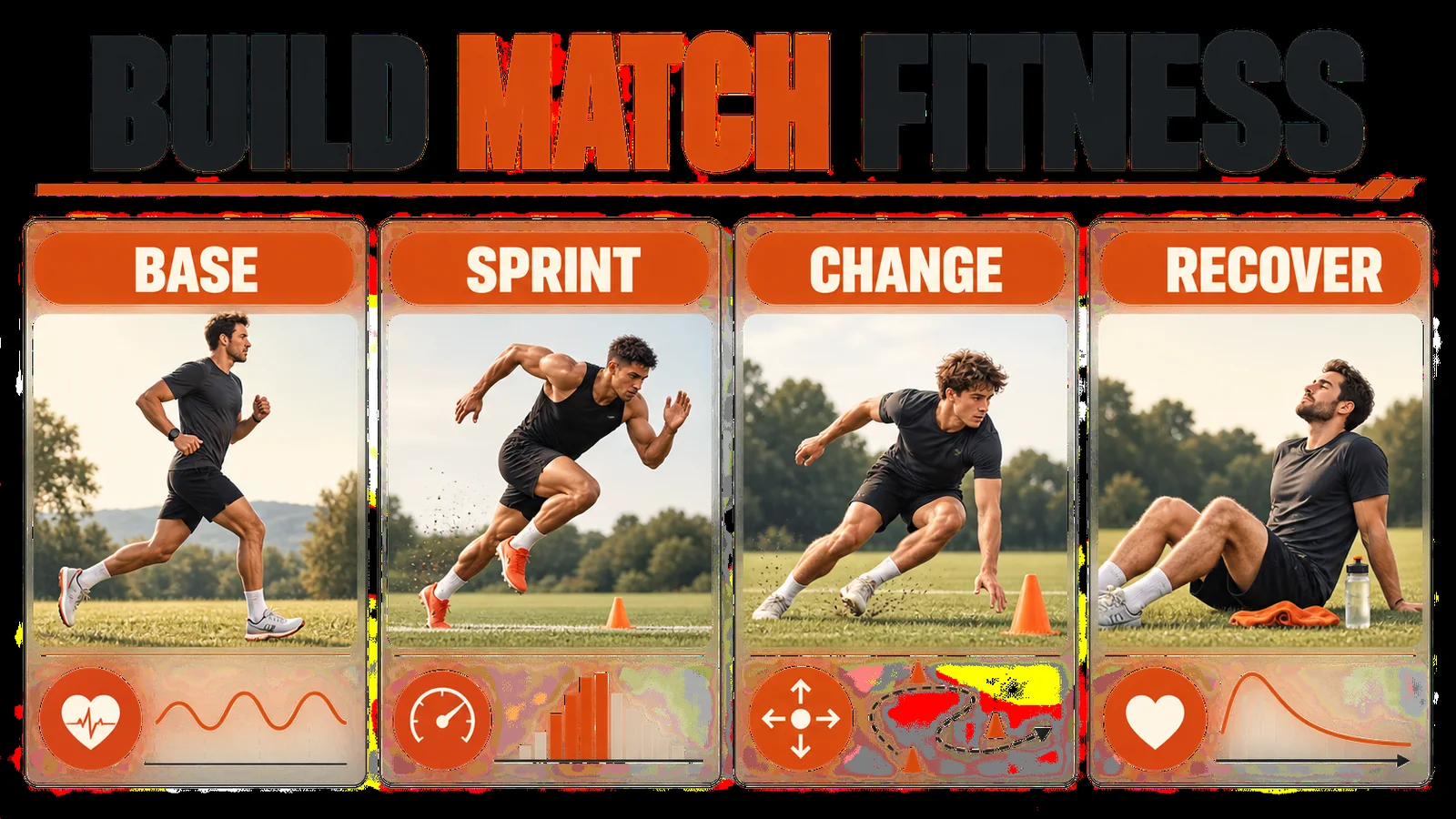
Cones create a route; they do not teach the body how to absorb force. Start with planned cuts at moderate speed. Lower the center of mass before the turn, use several braking steps when space allows, and keep the knee tracking with the foot. Add reactive cues only after the pattern is controlled.
Use our agility ladder drills for low-amplitude coordination, then progress to open drills where a partner, ball, or visual cue decides the direction.
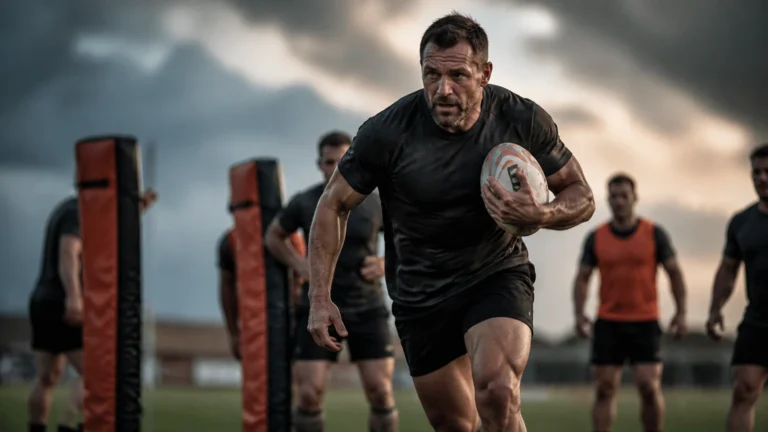
Rugby uses related acceleration, braking, change-of-direction, and repeat-sprint qualities but adds position-specific strength and coached contact skill. Compare the overlap and the differences in our rugby-specific training guide.
Strength Training for Soccer
Two weekly strength sessions work well away from congested competition. Prioritize a squat or step, hinge, unilateral movement, calf work, row, press, and trunk exercise. In-season, one lower-volume maintenance session may preserve qualities without adding excessive soreness.
Link the plan with unilateral training, lower-body home workouts, cardio workouts, quick workouts, and recovery guidance. For another field sport built around short accelerations, braking, and rotational skill, use our softball workouts.
Conditioning load hides inside drills and small-sided games. Count hard practices, matches, and intense ball work before adding intervals. More running can reduce speed quality and increase tissue stress without fixing the real weakness.
What to Do This Week
- Complete one 25- to 35-minute conversational aerobic session.
- Run six to eight short accelerations with full recovery.
- Add one small repeated-sprint session away from match day.
- Perform two strength sessions or one maintenance session during a busy match week.
- Track leg heaviness and sprint quality before adding volume.
Conclusion
Build a conversational aerobic base, practice speed while fresh, dose repeated-sprint work sparingly, and reduce conditioning as match day approaches.
Next Step: Build the Full Training System
Connect this practice to the PrimeForMen advanced fitness techniques guide so skill, strength, conditioning, and recovery support the same goal.
Soccer Conditioning: Frequently Asked Questions
What is soccer conditioning?
Soccer conditioning develops the aerobic capacity, speed, repeated-sprint ability, change of direction, strength, and recovery needed to repeat useful actions throughout a match.
Is jogging enough for soccer fitness?
Jogging can build an aerobic base, but it does not fully train acceleration, braking, turning, or repeated high-intensity efforts.
How often should soccer players do conditioning?
One or two dedicated sessions can be enough when practices and matches are already demanding. The full weekly load matters more than a fixed number.
How long does it take to build match fitness?
Noticeable progress often takes several consistent weeks, but the timeline depends on starting fitness, match schedule, health, and how specific the training is.
Should conditioning be done the day before a match?
Hard conditioning usually belongs earlier in the week. The day before a match should preserve freshness with light movement, mobility, and brief sharp actions if appropriate.
This article is educational and does not replace individualized medical advice, diagnosis, or treatment. Discuss persistent symptoms, hormone concerns, cardiovascular risk, digestive problems, medications, or exercise restrictions with a qualified clinician.
Some links are affiliate links. PrimeForMen may earn a commission at no extra cost to you. Product inclusion does not override evidence, fit, or safety.