Compare home cold plunge tubs by space, insulation, chiller, sanitation, drainage, electrical setup and safety.
- Plan water, power and drainage first.
- Insulation lowers chiller workload.
- Cold exposure is not safe for everyone.
Bottom line The best home plunge is the simplest sanitary system your room can safely support—not the coldest tub.
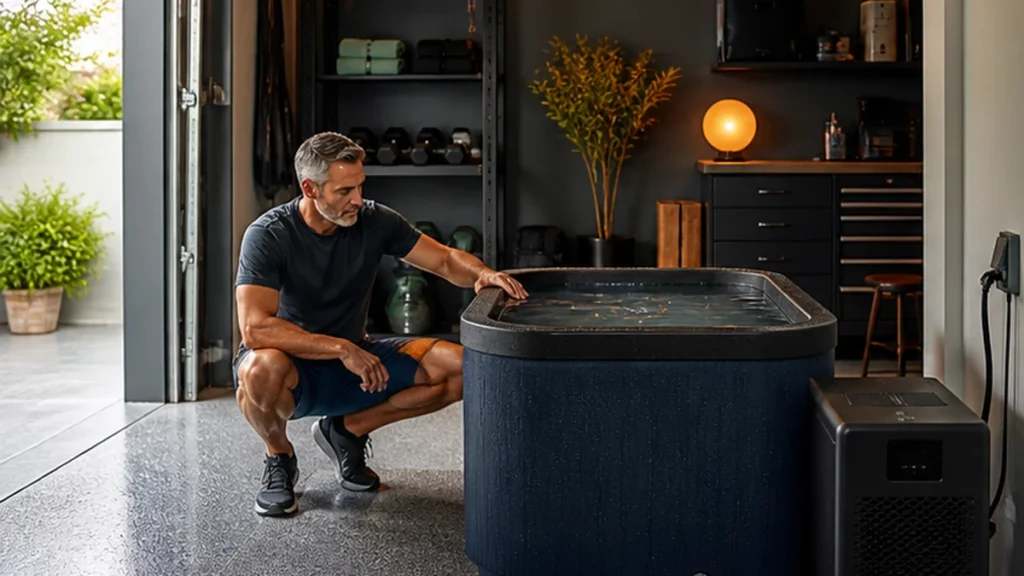
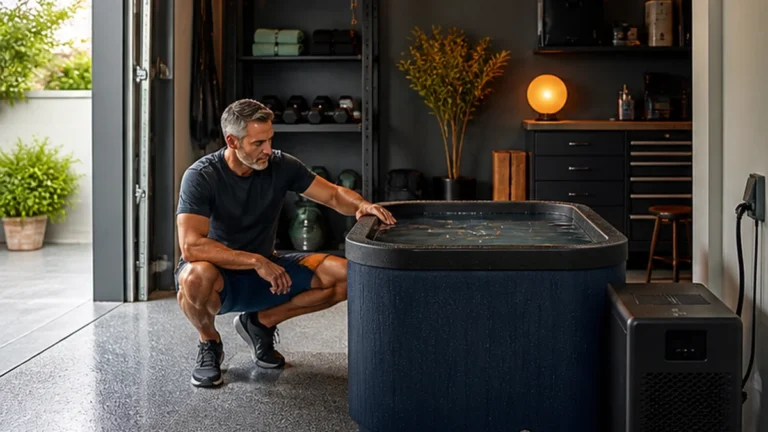
The best cold plunge tub for home use fits the user, drains without flooding the room and keeps water sanitary. A well-insulated pod is the low-cost entry; a rigid tub is easier to enter and clean; a chiller adds consistency but also power, plumbing, noise and maintenance. Do not chase extreme temperatures, and seek medical guidance when cardiovascular, neurologic or other health conditions may raise risk.
Insulated pod with manual ice and a clear cleaning plan.
Rigid insulated tub plus accessible drain.
Match water volume, climate, filtration and duty cycle.
Best cold plunge tubs for home should solve a defined training or ownership problem without adding avoidable risk, maintenance or clutter. PrimeForMen compared current product formats, published specifications, live retail listings and authoritative guidance; we did not personally test every model. Our editorial policy explains that distinction.
Quick Summary: Best Cold Plunge Tubs for Home
- Budget entry: Insulated pod with manual ice and a clear cleaning plan.
- Regular use: Rigid insulated tub plus accessible drain.
- Chiller system: Match water volume, climate, filtration and duty cycle.
- Indoor setup: Protect the floor, ventilation and electrical zone.
- Safety: Use gradual exposure and never plunge alone when risk is uncertain.
The Prime Perspective
The purchase is a water-management system, not a lifestyle prop. A tub that is awkward to drain or sanitize will be used less and can become unhygienic. Consistent moderate cold is more defensible than competition over the lowest temperature.
Which Type Fits Your Use?
| Format | Best for | Main advantage | Main limitation |
|---|---|---|---|
| Portable pod | Low-cost trial | Compact and storable | Harder entry and manual cooling |
| Inflatable rigid-wall | Seasonal home use | More room and insulation | Setup and puncture care |
| Rigid tub | Frequent use | Stable entry and cleaning | Large permanent footprint |
| Integrated chiller | Consistent routine | Automated temperature | Highest cost and maintenance |
Our Buying-Criteria Priority
This chart is not a product score. It shows how heavily we weight each factor when screening a purchase for real home use. A high number means the criterion can veto an otherwise attractive option.
100
95
90
82
35
Fit the use
Start with the person, movement and room. A feature has value only when it solves that use.
Check ownership
Include setup, cleaning, storage, parts, returns and the realistic frequency of use.
Control risk
Favor stable fit, conservative progression and clear manufacturer instructions over dramatic claims.
Compare Current Options on Amazon
Availability, variant details and seller terms can change. Confirm size, dimensions, included parts, warranty and return conditions on the current listing.

The Pod Company Ice Pod Pro
For buyers testing a compact insulated pod before committing to a permanent system.
- Verify body-fit dimensions and water volume.
- Plan a safe drain route before filling.
- Confirm chiller connections if upgrading later.

Yesker 110-Gallon Oval Tub
For users who want a wider portable oval shape and included cover.
- Measure doorways and filled footprint.
- Place on a water-safe level surface.
- Use a written cleaning schedule.

216-Gallon Inflatable Plunge
For taller users needing more room and a chiller-compatible inflatable format.
- Confirm filled weight and floor capacity.
- Check hose sizes before adding a chiller.
- Keep electrical equipment in a dry protected zone.
Affiliate disclosure: PrimeForMen may earn a commission from qualifying purchases at no extra cost to you.
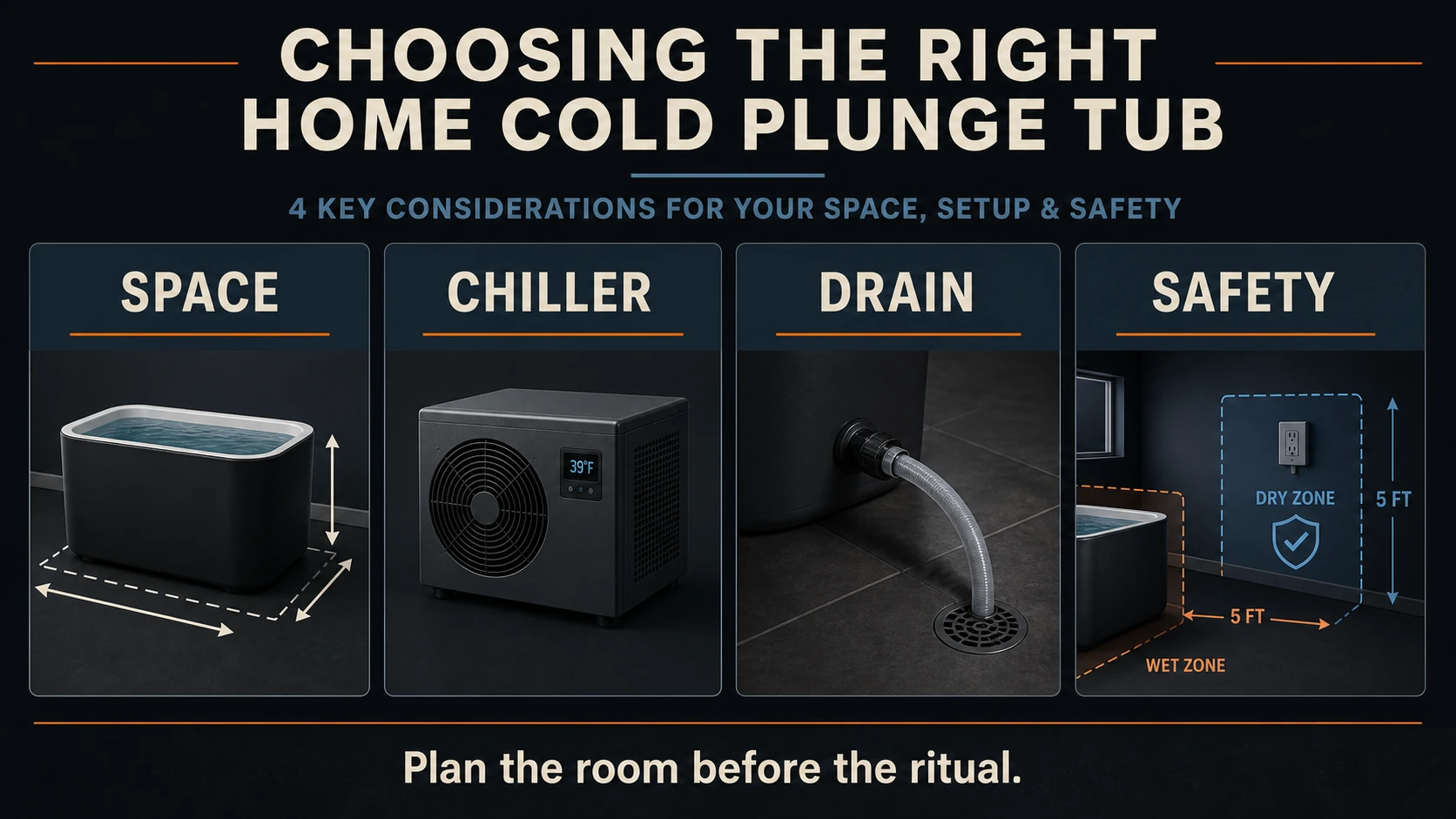
Measure the Complete Wet Zone
Measure the tub, chiller, hoses, service access and the path used to enter and exit. Filled water weight can be substantial, and splashing expands the wet zone. Indoor installations need a water-tolerant floor, drainage contingency and ventilation. Never block an egress route or rely on an extension cord across wet flooring.
Tub Shape, Entry and Stability
Tall round pods minimize footprint but require a higher step and more hip flexion. Oval and rigid tubs allow easier seated entry. Check the user's height, shoulder width and ability to stand from the bottom when cold. A stable step and handhold can be more important than extra water depth.
For the surrounding setup, compare our rest and recovery guide and build muscle after 50.
Chiller, Insulation and Climate
Chiller capacity depends on water volume, starting temperature, ambient heat, insulation and how often the lid opens. A larger advertised horsepower is not the whole answer. Confirm duty cycle, filtration, pump flow, hose diameter, noise and winter storage. Better insulation reduces run time every day.
Sanitation and Maintenance
Cold water still needs maintenance. Follow the manufacturer for filtration, approved sanitizers, water-change intervals and surface cleaning. Shower before use, keep the lid clean and remove debris. If the system smells, clouds or develops surface film, stop using it until the water and plumbing are properly serviced.
Keep the purchase inside a complete plan with the massage gun guide and home gym equipment.
What Most Cold-Plunge Guides Miss
Cold shock can trigger rapid breathing, a blood-pressure response and loss of coordination. Extreme cold is not required for a ritual to feel challenging. Never mix cold exposure with alcohol, sedatives or breath-hold games. People with cardiovascular disease, fainting history, uncontrolled blood pressure or other relevant conditions need individualized medical advice.
A Conservative First Protocol
Use cool rather than extreme water, enter slowly, keep the head out and maintain normal breathing. Start with a short exposure and exit while movement remains controlled. Dry and warm gradually. Record temperature and duration so progression is deliberate instead of emotional. Stop immediately for chest pain, severe breathlessness, confusion, dizziness or loss of coordination.
What Most Buying Guides Miss
A plunge is worthwhile only if the water stays sanitary, the room stays safe and the user can enter and exit under control.
Five-Step Pre-Purchase Check
- Measure the tub, chiller and wet zone.
- Confirm floor load and drainage.
- Create a sanitation schedule before filling.
- Start with moderate cold and short exposure.
- Never combine plunging with breath holds or alcohol.
Evidence and Source Check
We used the PubMed cold-water immersion review for mixed recovery outcomes and the need for conservative interpretation. Product specifications and availability can change, so confirm the live manual and listing before purchase. Evidence about a category does not validate every consumer product or marketing claim.
Who Should Skip This Purchase?
Skip it when the item has no defined role, the room or body fit is uncertain, or the routine depends on motivation rather than a repeatable schedule. Borrow, try a gym version or choose a simpler substitute when the expected use is occasional. A good return policy helps with fit; it does not make an unsuitable category valuable.
Calculate the Real Ownership Cost
The checkout price is only the first line. Add delivery, assembly, floor protection, accessories, replacement wear parts, cleaning supplies, batteries or electricity where relevant. Then divide that realistic total by the number of sessions you expect during the first year. This is not a promise that cost per use will become low; it is a way to expose a purchase that has no credible schedule. Also confirm who pays return freight, whether opened fitness equipment can be returned and which components the warranty excludes.
Make a One-Page Decision Before Checkout
Write down the primary user, primary exercise or use, room location, minimum acceptable fit, three veto criteria and the exact model or variant. Save the current manual, dimension diagram and warranty rather than relying on a marketplace title. Photograph the measured space and keep the packaging until fit, function and condition have been checked. Finally, schedule the first four uses. If you cannot describe when and how the product enters the routine, the strongest decision is to wait rather than let a limited-time discount decide.
Conclusion
Buy the cold plunge system your room and maintenance habits can support. Favor safe entry, insulation, drainage and sanitation over extreme temperature. A conservative repeatable setup is more useful than an impressive tub that creates water or health risk.
Place This Purchase Inside the Full Training Plan
A product decision works better when it connects to your room, program and recovery priorities. Use the pillar that matches the constraint you are solving next.
Frequently Asked Questions About Best Cold Plunge Tubs for Home
Do I need a chiller for a cold plunge?
No. Ice can work for occasional use. A chiller improves consistency but adds cost, plumbing, power and maintenance.
How cold should a home cold plunge be?
There is no prize for the lowest temperature. Start cool, keep exposure brief and seek medical guidance if health risks are present.
How often should cold-plunge water be changed?
Follow the exact tub, filter and sanitizer instructions. Usage, showering, cover hygiene and filtration all change the interval.
Can a cold plunge stay indoors?
Only with adequate floor load, splash control, drainage, ventilation and code-compliant electrical separation.
Are cold plunges safe for men over 50?
Age alone does not decide safety, but cardiovascular and other health conditions become more common. Discuss cold exposure with a clinician when risk is uncertain.
Follow the current manufacturer instructions, inspect equipment before use, progress conservatively and stop for pain, dizziness, numbness or loss of control.
This guide is educational and does not diagnose or treat a condition. Ask a qualified clinician whether this equipment or practice is appropriate for your health history, symptoms and medications.
Some links are affiliate links. PrimeForMen may earn a commission from qualifying purchases at no additional cost to you.