Compare pneumatic recovery boots by fit, chambers, pressure, controls, portability and realistic recovery evidence.
- Fit the leg before comparing pressure.
- More pressure is not automatically better.
- Sleep and training load remain the foundation.
Bottom line A correctly sized sequential four-chamber system with low pressure control is the value choice for frequent home use.
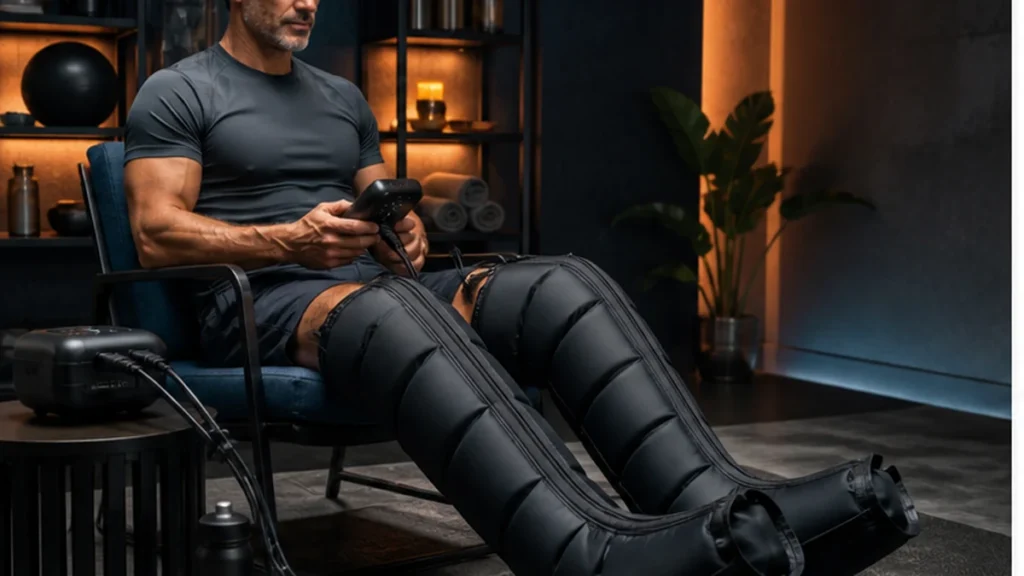
The best recovery boots for athletes fit from foot to thigh without gaps, inflate sequentially and let the user start at low pressure. Cordless integrated boots are easiest to travel with; separate-pump systems usually cost less and are easier to service. Evidence suggests small or variable benefits, mainly for perceived soreness, so boots should support—not replace—sleep, nutrition and sensible training load.
Sequential full-leg system with simple pressure control.
Integrated cordless boots and a realistic carry case.
Replaceable size sleeves and clear hygiene rules.
Best recovery boots for athletes should solve a defined training or ownership problem without adding avoidable risk, maintenance or clutter. PrimeForMen compared current product formats, published specifications, live retail listings and authoritative guidance; we did not personally test every model. Our editorial policy explains that distinction.
Quick Summary: Best Recovery Boots for Athletes
- Frequent home use: Sequential full-leg system with simple pressure control.
- Travel: Integrated cordless boots and a realistic carry case.
- Multiple users: Replaceable size sleeves and clear hygiene rules.
- Budget: Wired pump with fewer modes but reliable fit.
- Health risk: Seek medical guidance for vascular, clotting or swelling concerns.
The Prime Perspective
Recovery boots sell a feeling of action during rest. That can be pleasant and useful, but it does not prove faster tissue repair or better performance. Buy them only after the recovery basics are already in place and the expected use justifies the storage and cost.
Which Type Fits Your Use?
| Format | Best for | Main advantage | Main limitation |
|---|---|---|---|
| Separate pump | Home value | Serviceable and lower cost | Hoses and outlet required |
| Cordless integrated | Travel | Fast setup and no hoses | Higher price and battery aging |
| Full leg | Broad lower-limb coverage | Foot-to-thigh sequence | Sizing is critical |
| Calf-only | Compact targeted use | Easy to carry | Less complete coverage |
Our Buying-Criteria Priority
This chart is not a product score. It shows how heavily we weight each factor when screening a purchase for real home use. A high number means the criterion can veto an otherwise attractive option.
100
94
90
77
40
Fit the use
Start with the person, movement and room. A feature has value only when it solves that use.
Check ownership
Include setup, cleaning, storage, parts, returns and the realistic frequency of use.
Control risk
Favor stable fit, conservative progression and clear manufacturer instructions over dramatic claims.
Compare Current Options on Amazon
Availability, variant details and seller terms can change. Confirm size, dimensions, included parts, warranty and return conditions on the current listing.

QUINEAR Sequential Recovery System
For home users seeking a conventional separate-controller full-leg system.
- Choose size from the current chart.
- Begin at the lowest comfortable pressure.
- Route hoses where they cannot be kinked.

QUINEAR Cordless Recovery Boots
For travelers prioritizing faster setup and fewer external hoses.
- Check battery runtime for your routine.
- Confirm both boots charge correctly.
- Pack only after sleeves are dry.

SHINE WELL Compression System
For budget comparison against other multi-chamber wired systems.
- Verify sleeve length and circumference.
- Use pressure for comfort, not pain.
- Review warranty and replacement-part access.
Affiliate disclosure: PrimeForMen may earn a commission from qualifying purchases at no extra cost to you.
Fit Before Features
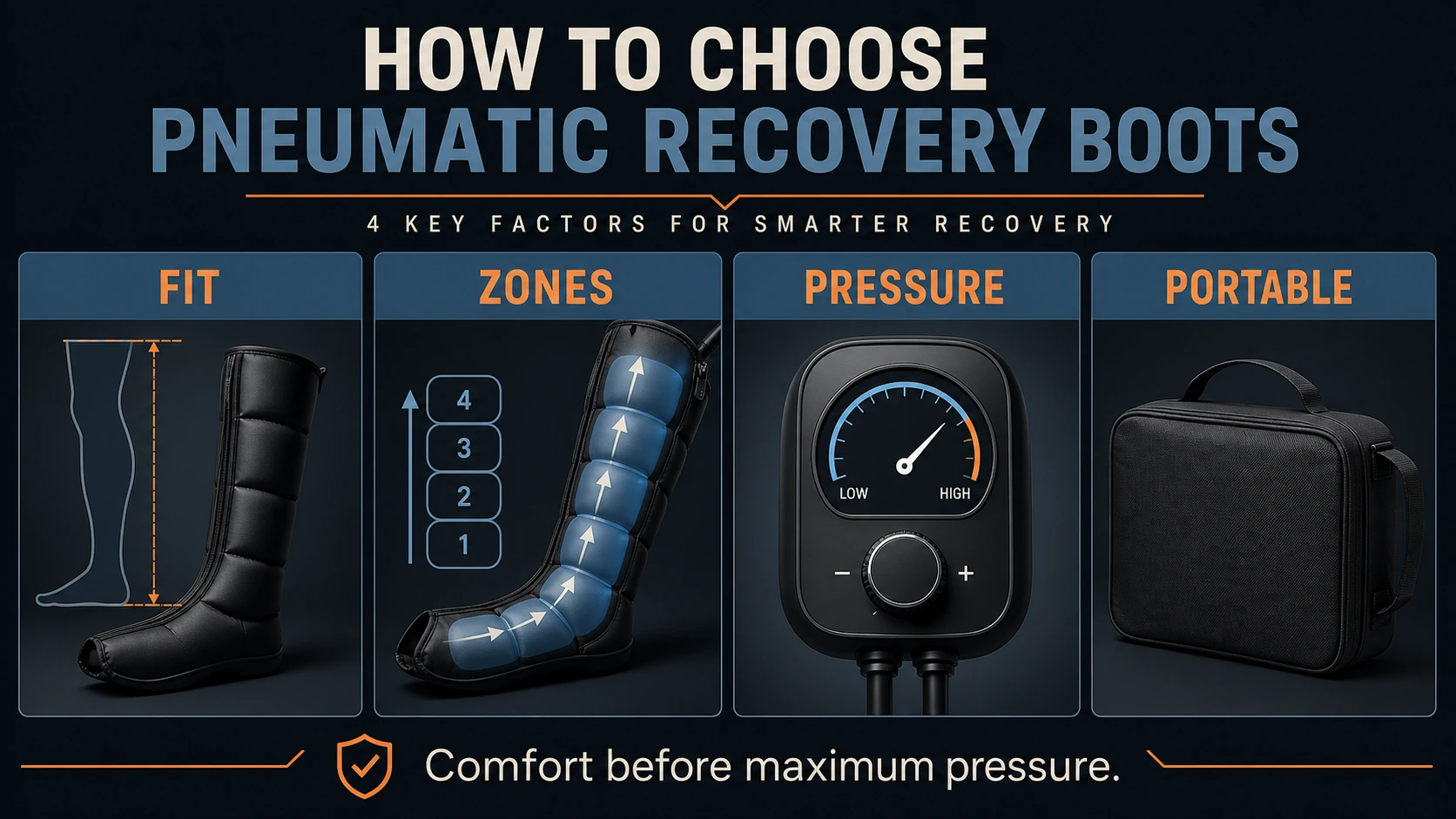
Measure leg length and thigh circumference as directed while comparing sitting position and foot size. Boots should reach the intended upper leg without folding at the groin or leaving the foot loose. Too-short sleeves reduce coverage; too-tight sleeves create pressure before inflation. Check whether size extensions are available.
Chambers and Inflation Sequence
Sequential systems inflate from the foot upward through overlapping chambers. Overlap helps avoid obvious pressure gaps. More zones can refine control, but clear sequence and reliable valves matter more than a large count. Listen for leaks and confirm both legs inflate similarly during the return period.
For the surrounding setup, compare our rest and recovery and build muscle after 50.
Pressure and Session Control
Start at the lowest comfortable setting. Pressure should feel firm and rhythmic, never painful, numb or sharp. Independent zone control is useful when one area is sensitive. Automatic shutoff, readable controls and an easy emergency release matter more than a maximum millimeter-of-mercury claim.
What the Evidence Supports
A recent systematic review found trivial-to-small effects for muscular function, trivial-to-moderate effects for pain and soreness, and variable muscle-damage markers. That supports cautious language: boots may improve perceived recovery for some athletes, but they are not proven to transform performance. A relaxing routine can still have value when expectations match the evidence.
Keep the purchase inside a complete plan with the massage gun guide and overtraining syndrome.
What Most Recovery-Boot Guides Miss
Compression is not appropriate for every person or every symptom. Unexplained one-sided swelling, suspected clot, severe vascular disease, infection, open wounds or certain cardiac conditions require medical assessment. Do not use boots to self-treat a new swollen or painful leg.
Ownership, Hygiene and Portability
Consider where long sleeves and hoses dry, whether the pump fits beside the chair and how many steps precede a session. Cordless boots reduce setup but add batteries that age. Wipe the interior as directed, let it dry fully and avoid sharing without a hygiene plan. Check replacement sleeves and charger availability before buying.
What Most Buying Guides Miss
Comfortable sequential pressure may improve how recovery feels. It does not buy back inadequate sleep or erase excessive training load.
Five-Step Pre-Purchase Check
- Measure leg length and thigh circumference.
- Start at the lowest pressure.
- Check even sequential inflation.
- Limit use to comfortable symptom-free sessions.
- Stop and seek care for unexplained swelling or pain.
Evidence and Source Check
We used the PubMed systematic review of intermittent pneumatic compression for small and variable sports-recovery effects. Product specifications and availability can change, so confirm the live manual and listing before purchase. Evidence about a category does not validate every consumer product or marketing claim.
Who Should Skip This Purchase?
Skip it when the item has no defined role, the room or body fit is uncertain, or the routine depends on motivation rather than a repeatable schedule. Borrow, try a gym version or choose a simpler substitute when the expected use is occasional. A good return policy helps with fit; it does not make an unsuitable category valuable.
Calculate the Real Ownership Cost
The checkout price is only the first line. Add delivery, assembly, floor protection, accessories, replacement wear parts, cleaning supplies, batteries or electricity where relevant. Then divide that realistic total by the number of sessions you expect during the first year. This is not a promise that cost per use will become low; it is a way to expose a purchase that has no credible schedule. Also confirm who pays return freight, whether opened fitness equipment can be returned and which components the warranty excludes.
Make a One-Page Decision Before Checkout
Write down the primary user, primary exercise or use, room location, minimum acceptable fit, three veto criteria and the exact model or variant. Save the current manual, dimension diagram and warranty rather than relying on a marketplace title. Photograph the measured space and keep the packaging until fit, function and condition have been checked. Finally, schedule the first four uses. If you cannot describe when and how the product enters the routine, the strongest decision is to wait rather than let a limited-time discount decide.
Conclusion
Choose recovery boots by fit, low-pressure control, chamber sequence and realistic use frequency. Expect a comfort tool with possible small soreness benefits—not a substitute for recovery fundamentals or medical care.
Place This Purchase Inside the Full Training Plan
A product decision works better when it connects to your room, program and recovery priorities. Use the pillar that matches the constraint you are solving next.
Frequently Asked Questions About Best Recovery Boots for Athletes
Do compression recovery boots work?
They may modestly reduce perceived soreness for some athletes, but performance and muscle-damage effects are small or variable.
How much pressure should recovery boots use?
Start with the lowest comfortable setting and follow the device instructions. Higher pressure is not automatically better.
How long should a session last?
Follow the maker and clinician guidance. Research often uses roughly 20 to 30 minutes, but individual suitability matters.
Can recovery boots help after leg day?
They may feel relaxing and reduce perceived soreness, but sleep, nutrition and load management remain more important.
Who should not use compression boots?
People with suspected clots, unexplained swelling, significant vascular or cardiac conditions, infection or wounds should seek medical advice first.
Follow the current manufacturer instructions, inspect equipment before use, progress conservatively and stop for pain, dizziness, numbness or loss of control.
This guide is educational and does not diagnose or treat a condition. Ask a qualified clinician whether this equipment or practice is appropriate for your health history, symptoms and medications.
Some links are affiliate links. PrimeForMen may earn a commission from qualifying purchases at no additional cost to you.